The Victorian Hairstyles era, spanning the reign of Queen Victoria from 1837 to 1901, represents a period of profound transformation in hair fashion, reflecting societal norms, technological changes, and evolving feminine ideals. Throughout these decades, hair was overwhelmingly considered a woman’s “crowning glory” and was rarely cut, making long, voluminous tresses a prerequisite for achieving the popular looks of the day. The styles themselves underwent several major shifts, moving from the modest, ear-covering buns and coils of the early Romantic period to the highly elaborate, structured updos of the mid-Victorian era, culminating in the softer, voluminous Gibson Girl aesthetic near the turn of the century. Cleanliness, neatness, and the appearance of natural abundance were paramount, often achieved through clever manipulation, the use of hairpieces, or “rats” made of collected hair to add fashionable fullness.
Mastering Victorian Hairstyles today is about appreciating the intricate artistry and the emphasis on volume, especially at the sides or the crown. These looks were fundamentally built around the principle of having hair updo styles for respectable, adult women in public, with loose hair reserved only for children, actresses, or romantic art.
Victorian Hairstyles
Whether drawing inspiration for a historical recreation or a modern bridal hairstyle, these looks remain a testament to the structured beauty and romantic elegance that defined the age, offering a perfect blend of modesty and intricate detail.
1. The Early Victorian Knot (1840s)
The Early Victorian Knot, popular during the 1840s, embodies the Romantic Era’s emphasis on demureness and simplicity, contrasting with later, more complex Victorian Hairstyles. This style features a crisp, clean center part, with the hair smoothed tightly over the temples, often obscuring the ears to frame the face softly. The length of the hair was then gathered low at the nape of the neck and twisted into a tight, neat bun or knot. Occasionally, the sides would incorporate smooth, tight twists or finger waves before being incorporated into the knot, ensuring every strand was contained and polished.
This aesthetic prioritized sleekness and modesty, perfectly complementing the fitted bodices and wide, bell-shaped skirts of the period. For a contemporary take on historical hair styling, the Early Victorian Knot is an excellent choice, as it requires minimal embellishment, relying instead on the precise, clean lines of the middle parting and the smooth texture of the hair. It’s a foundational look among 19th century hairstyles, serving as a testament to the early Victorian ideal of restrained elegance, making it a sophisticated choice for formal events where a neat, classic hair updo is desired.
2. The Banded Side Rolls (1850s)
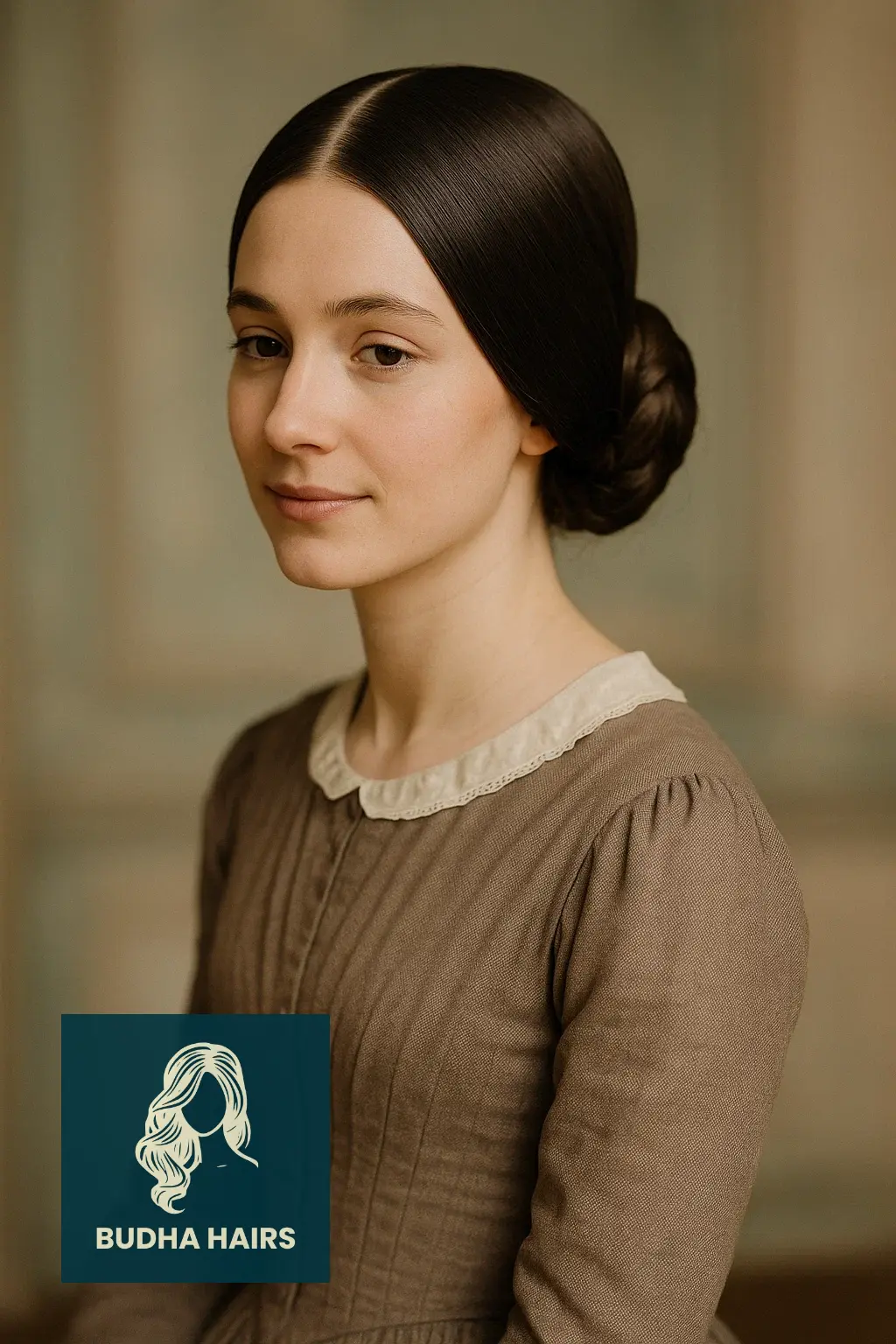
The Banded Side Rolls, or “Wings,” were a prominent feature of Victorian Hairstyles during the 1850s, evolving to match the increasing width of the crinoline skirts. This style retains the characteristic middle part but introduces significant horizontal volume around the sides of the head. Hair on either side of the part was drawn back and rolled or puffed over a padding known as a “rat” or wire frame, creating prominent, voluminous rolls that extended outward over the ears.
This widening effect was essential for balancing the expansive silhouette created by the hoop skirt, ensuring the head did not appear disproportionately small. The back of the hair was still secured in a relatively neat, low bun or braid, but the focus was undoubtedly on the dramatic side volume. The Banded Side Rolls are a wonderful example of how 19th century hairstyles interacted directly with fashion trends. To modernize this period updo, one might loosen the rolls slightly, allowing for a softer texture while maintaining the necessary side-to-side width for a distinctive historical hair styling look.
3. The Chignon with Hair Net (1860s)
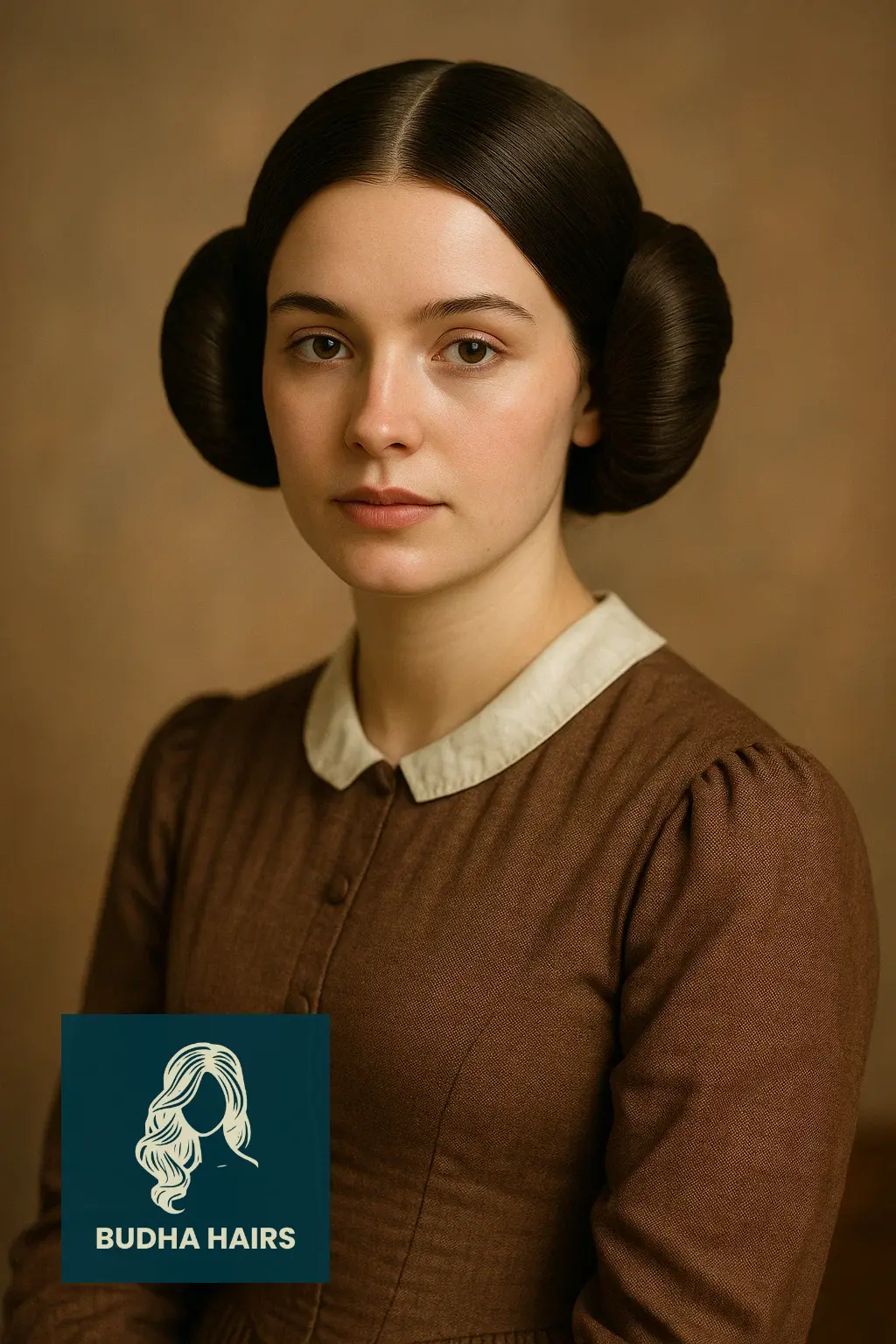
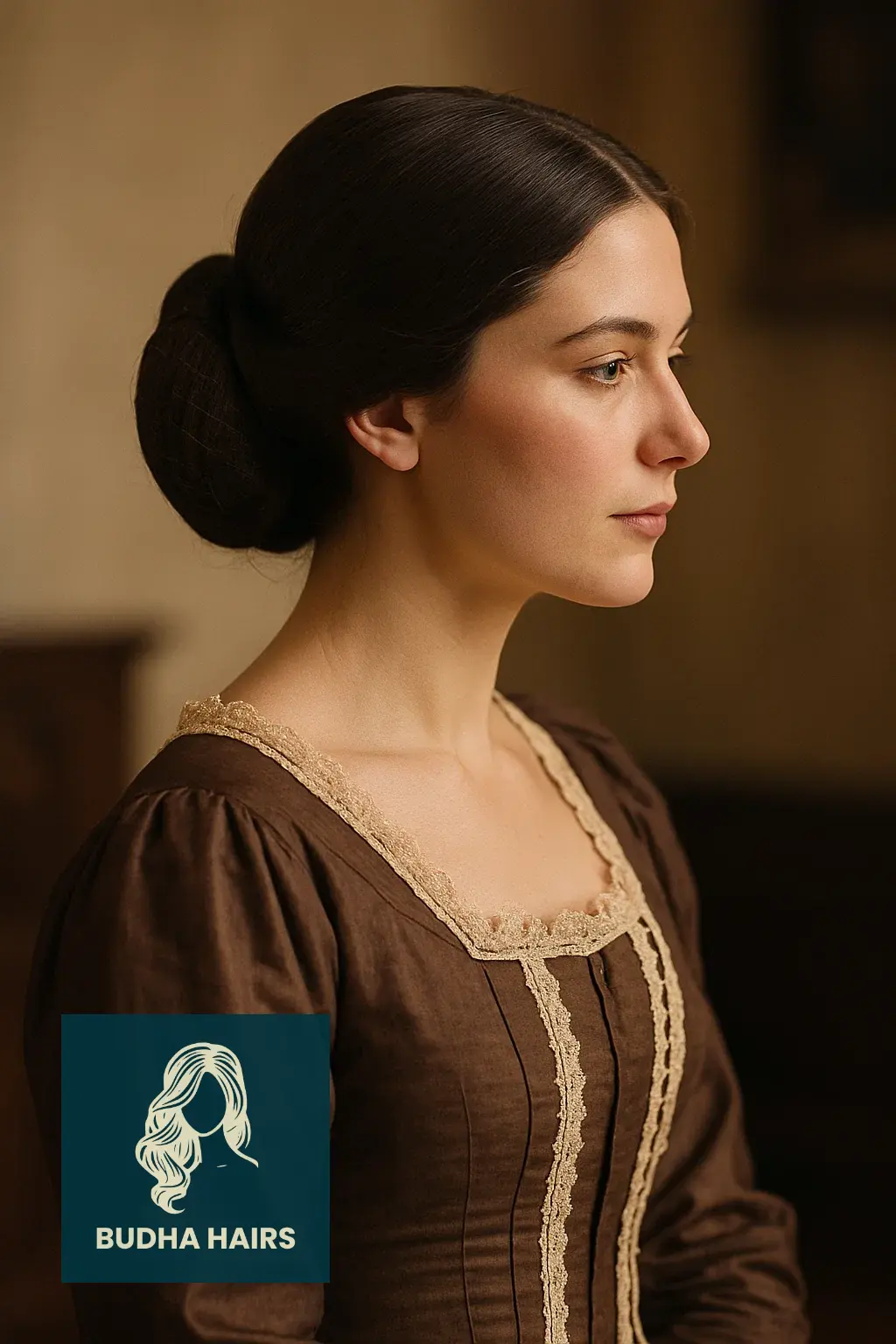
The Chignon with Hair Net, popular in the 1860s, simplified the voluminous side rolls while increasing the complexity and size of the back component, a reflection of changing dress silhouettes. The hair was usually parted in the center and sleekly pulled back behind the ears. The primary volume was concentrated low at the back of the neck in a large, often padded chignon, a hair updo that could incorporate braids or coils of natural or false hair to achieve impressive bulk.
The signature element of this period’s Victorian Hairstyles was the use of a decorative hair net, or snood, often crocheted from silk, chenille, or adorned with beads and jewels. This net typically covered the entire chignon, adding a touch of visual interest and keeping the bulky structure neat. This historical hair styling is an elegant option for those with long hair, providing a classic, structured look. The combination of the sleek sides and the intricately contained chignon provides a distinct, refined aesthetic among 19th century hairstyles.
4. The Basket Weave Crown (Late 1870s)
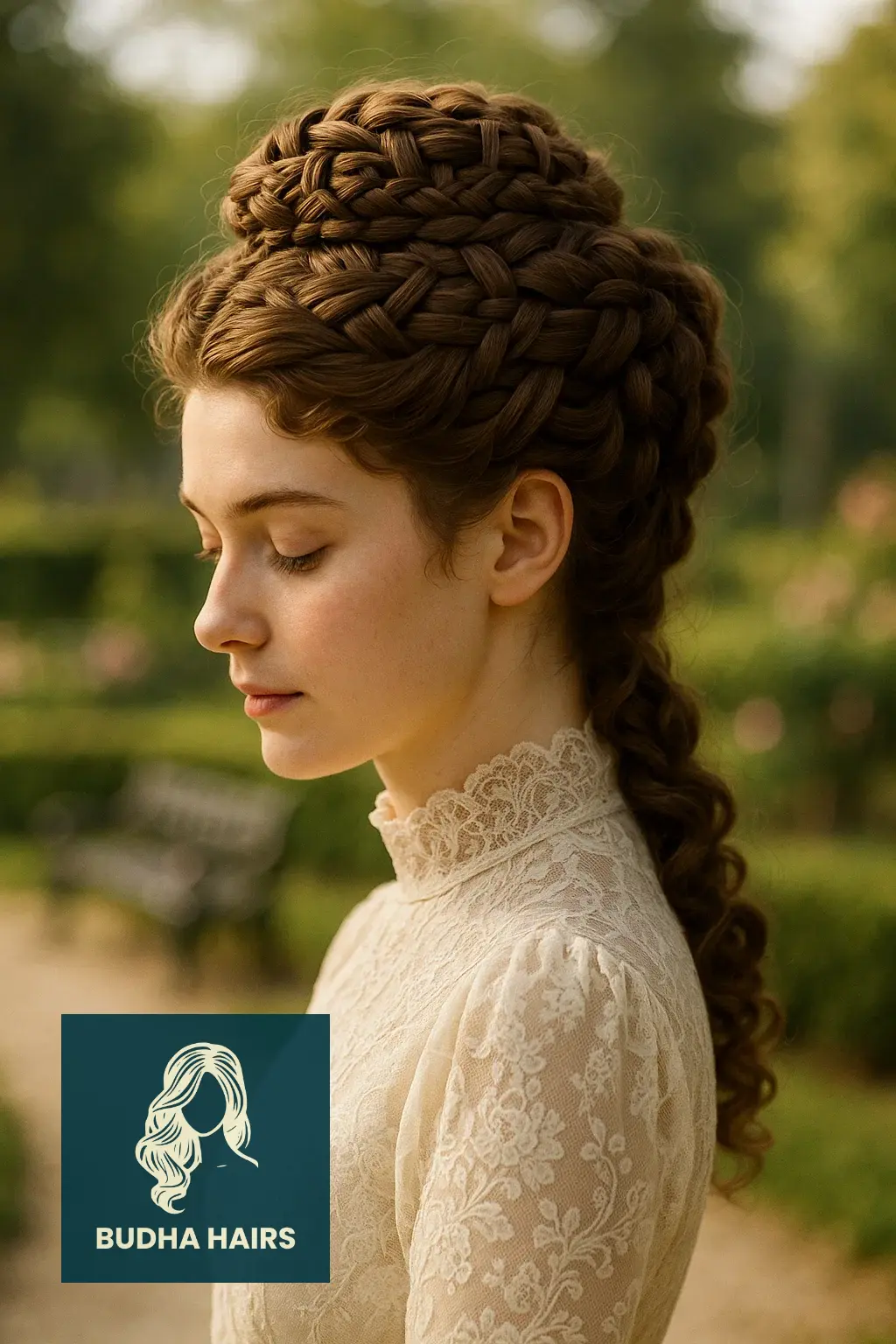
The Basket Weave Crown emerged as a particularly elaborate expression of Victorian Hairstyles in the late 1870s when the bustle replaced the crinoline, shifting volume to the back. This intricate hair updo required significant skill and often incorporated false hairpieces to achieve the necessary thickness. The hair was divided into several sections, with a complex arrangement of braids—often simple three-strand or flat French braids—woven tightly across the crown and around the back of the head.
The weaving created a textured “basket” or halo effect, concentrating height and detail on the top and back to mirror the voluminous bustle dress underneath. Loose pieces and small tendrils were strictly avoided in this very formal style of historical hair styling. Recreating the Basket Weave Crown today is a statement piece, perfect for a bridal hairstyle or historical events, highlighting the intricate detail and dedication to complex structure that defined many late 19th century hairstyles.
For modern, travel-friendly adaptations, Airport Hairstyles for Short Hair offers simple and practical styles that contrast beautifully with classic Victorian looks.
5. The Grecian Twist (Romantic Influence)
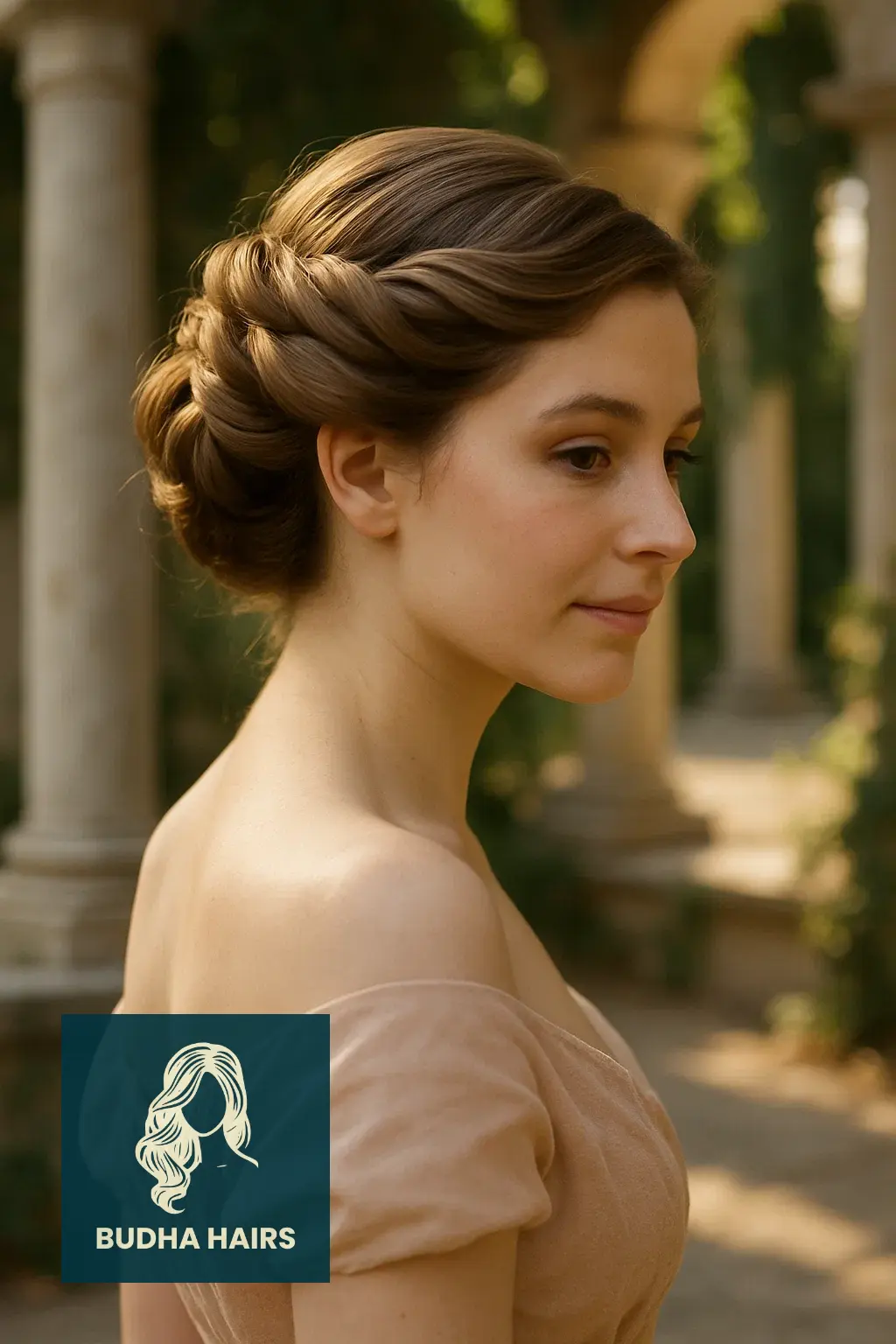
The Grecian Twist, while drawing on classical antiquity, remained a romantic and refined option among Victorian Hairstyles throughout the era, particularly for evening wear or special occasions. This style focuses on creating soft, continuous twists that wrap around the back of the head, culminating in a low, textured bun or chignon at the nape. The hair around the face was often softened with subtle curls or a few loose, long ringlets allowed to fall near the neck, lending a softer feel than the daytime formal styles.
This is an incredibly versatile period updo that lends itself well to accessorizing with ribbons, flowers, or jeweled hair combs, maintaining the Victorian love of detail. The soft lines and rolled effect of the Grecian Twist provide an elegant, timeless quality. Modern interpretations of this historical hair styling are frequently seen in contemporary wedding hairstyles due to its inherent softness and ability to hold decorative elements beautifully.
6. The Frizzy Bangs and Pompadour (1880s)
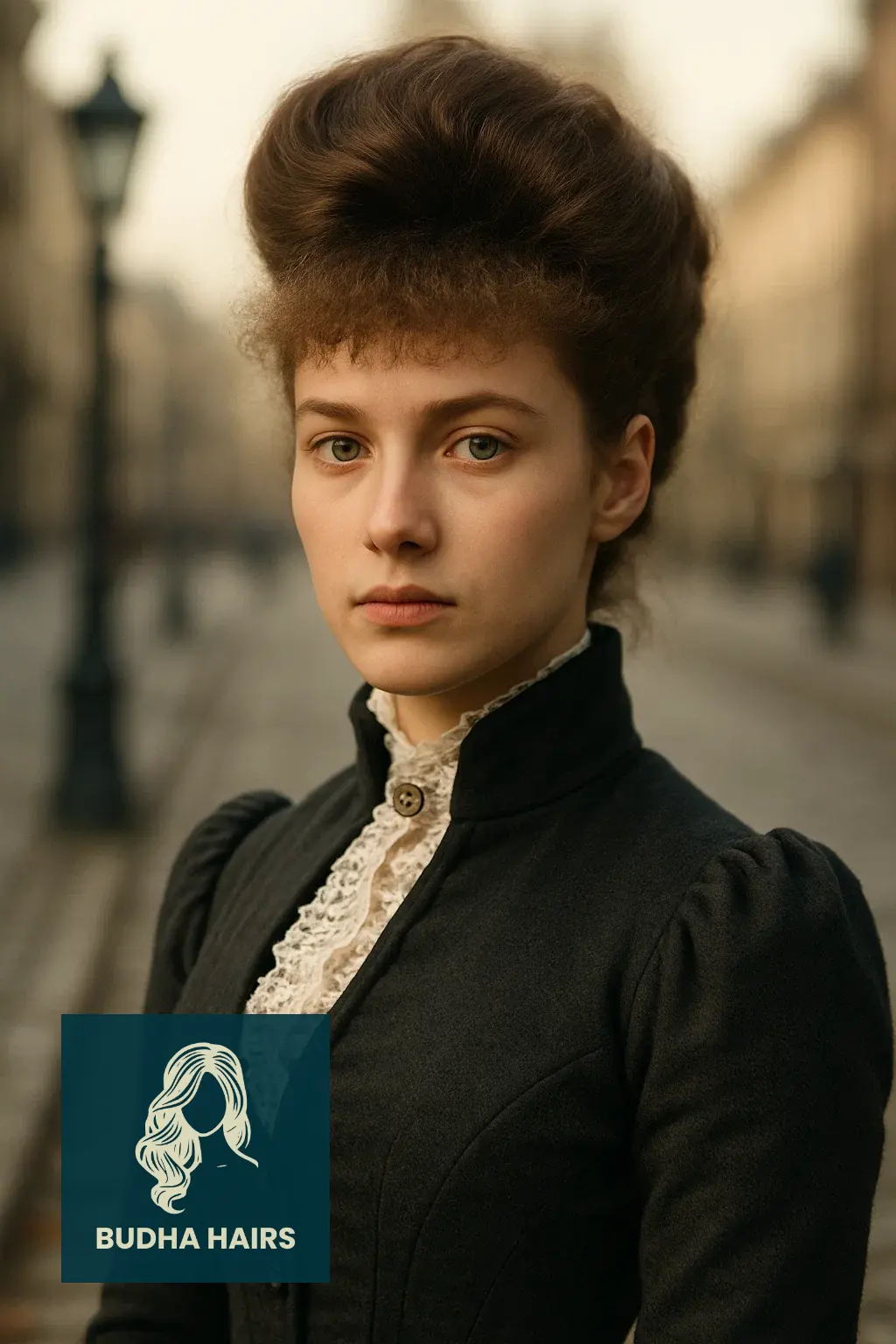
The Frizzy Bangs and Pompadour combination signaled a dramatic departure in Victorian Hairstyles during the 1880s. The once-sacred middle part was abandoned for a high, voluminous look that concentrated height at the forehead. The pompadour section involved lifting the hair back from the forehead and padding or teasing it to create a distinctive forward roll, known as a ‘pouf’ or a soft, vertical wave.
Crucially, this period saw the introduction and popularity of “frizzy bangs” or fringe—short, often tightly curled hair pieces worn across the forehead. This style was playful and visually busy, moving away from the smooth severity of previous decades. The combination of the lifted pompadour and the messy Victorian Curls of the bangs made this a recognizable and popular style, marking a shift toward the more relaxed volume that would dominate the Edwardian era.
7. The Cascade of Curls (Evening Wear)
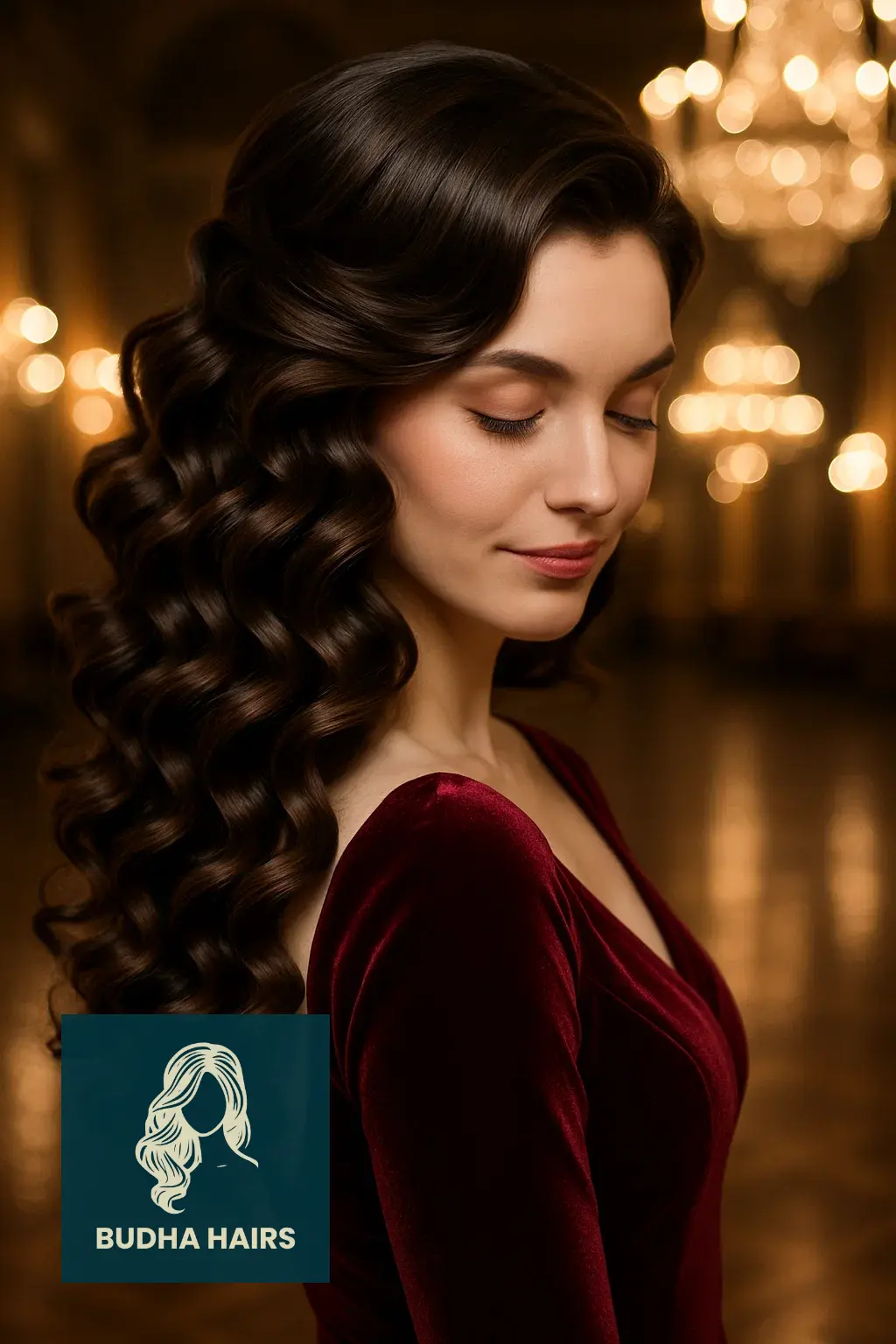
The Cascade of Curls was primarily an evening or private-wear staple among Victorian Hairstyles, contrasting sharply with the restrictive neatness of daytime hair updo styles. This style allowed the long hair, a source of pride for Victorian women, to be displayed, though it was still highly styled. The hair was gathered high at the back of the head, either in a small coil or half-up knot, and then the remaining length was tightly curled into long, bouncing ringlets that cascaded down the back and over the shoulders.
These ringlets, often achieved using heated irons or rag rollers, were meticulously uniform. Though less structured than a traditional period updo, the Cascade of Curls was far from loose, emphasizing volume and controlled texture. This dramatic, romantic look is a perfect example of a formal historical hair styling choice that showcases the woman’s long hair, making it a spectacular look for an elaborate bridal hairstyle inspiration today.
8. The High Coil Updo (Mid-Victorian)
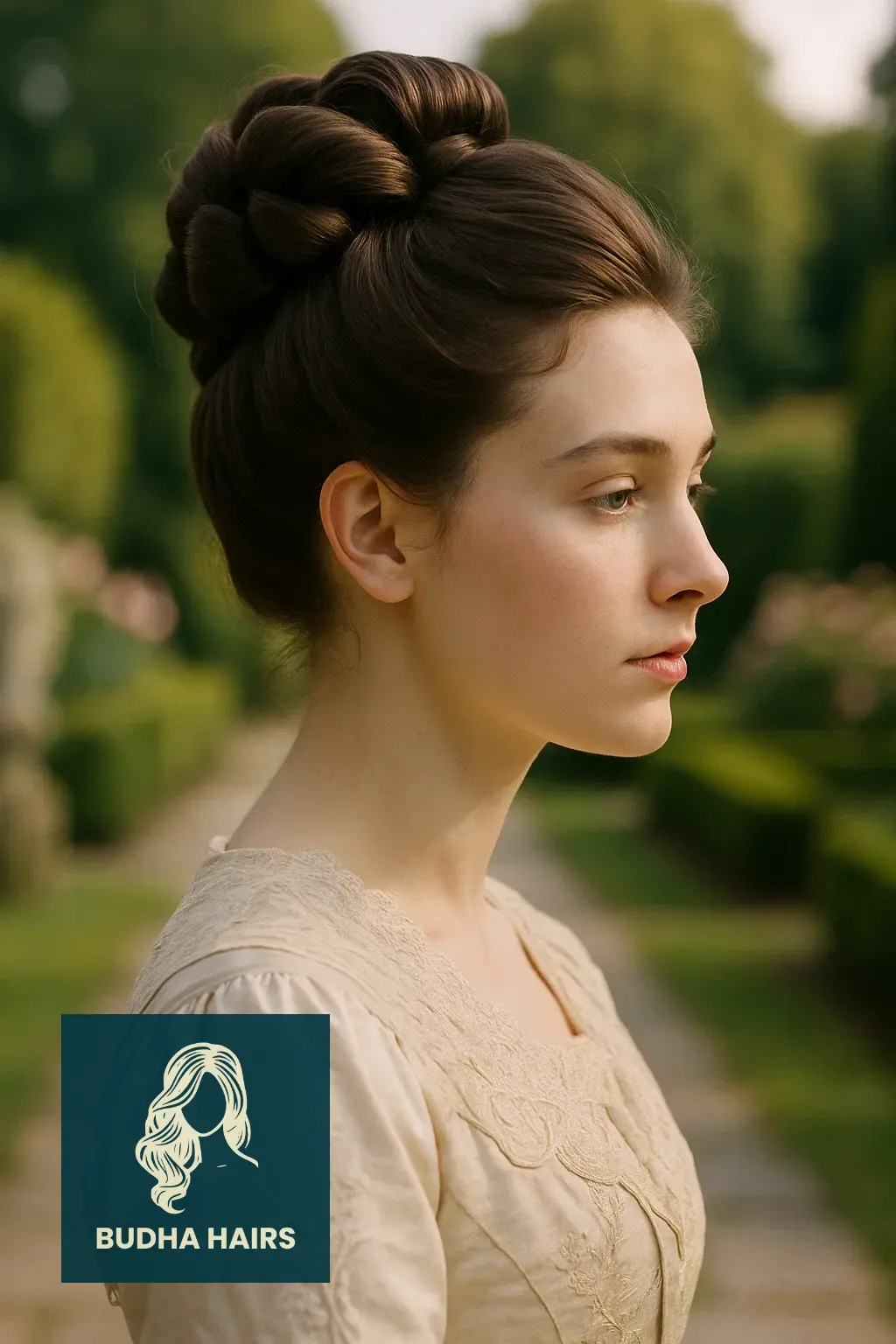
The High Coil Updo represents the mid-Victorian love for placing volume high on the head, often seen in the 1870s and 1880s. Unlike the low chignons of the earlier decades, this style involved gathering the hair into a series of large, neat coils or twists positioned right on the crown or high at the back of the head. The hair was pulled back very smoothly from the face and temples, ensuring all volume was focused high up to achieve a more vertical silhouette.
The placement of this hair updo was vital, aiming to create an almost cylindrical shape that added height and presence. False hair or padding was frequently used to ensure the coils were large and perfectly rounded. This is one of the most structured and formal 19th century hairstyles, requiring significant skill and hairpins to maintain its stature, reflecting the era’s focus on meticulous grooming and dramatic structure.
9. The Gibson Girl Roll (Late 1890s Transition)
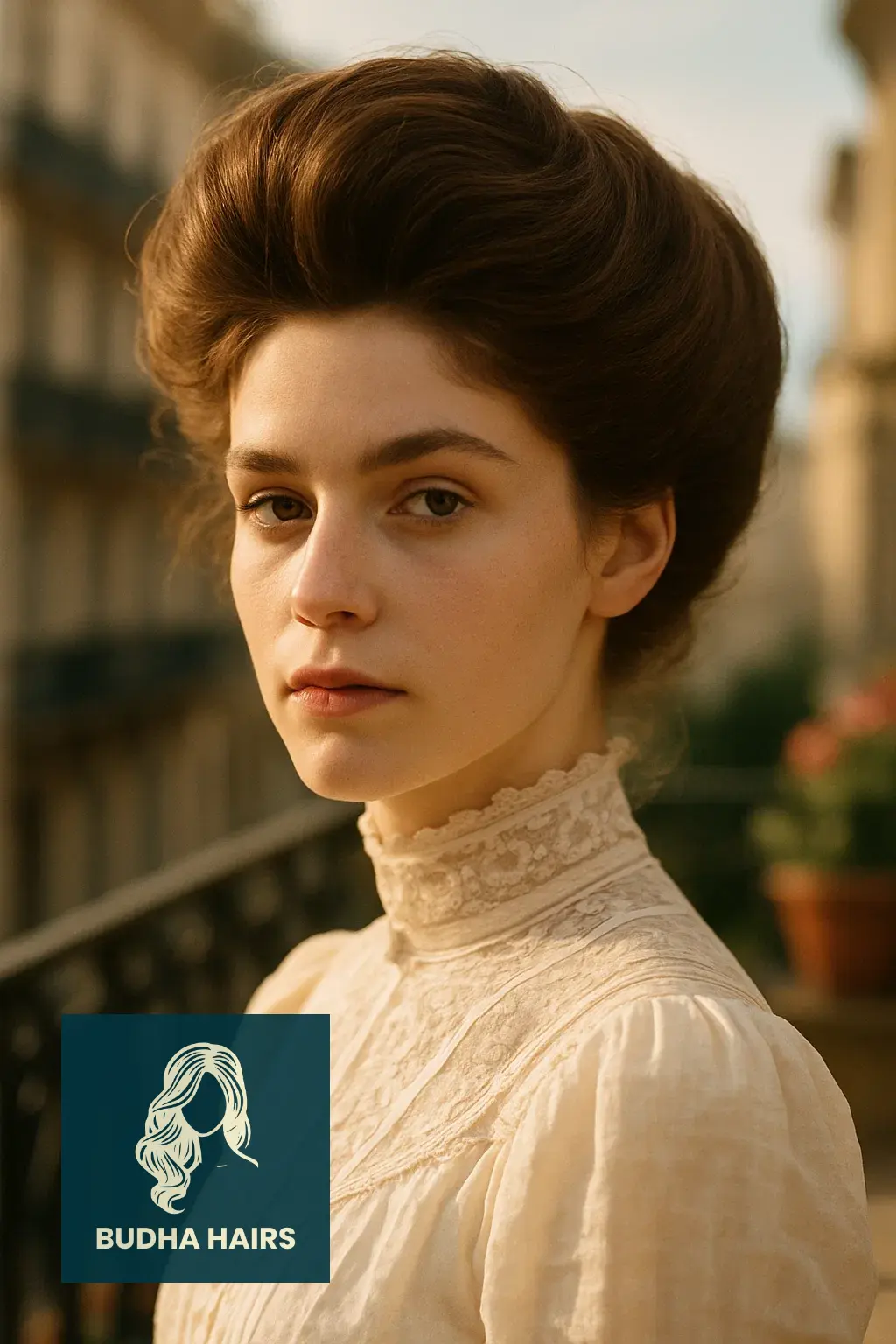
The Gibson Girl hairstyle, popularized by the illustrations of Charles Dana Gibson, was the transitional look of the late 1890s and a defining feature of the approaching Edwardian era, making it a key element in understanding late Victorian Hairstyles. This style is characterized by its soft, enormous volume achieved through generous amounts of padding and teasing, creating a loose, billowing roll that encircled the head or was piled high on the crown.
The key difference from earlier styles was the softness and deliberate messiness, giving the appearance of carefree, natural abundance, though it was heavily structured underneath. The Gibson Girl hairstyle featured waves and a central poof, often accompanied by soft, feminine waves or a slight puff over the forehead. This voluminous, slightly less severe period updo represents a shift towards a more athletic and relaxed, yet still elegant, feminine ideal.
10. The Braided Coronet (Formal Daytime)
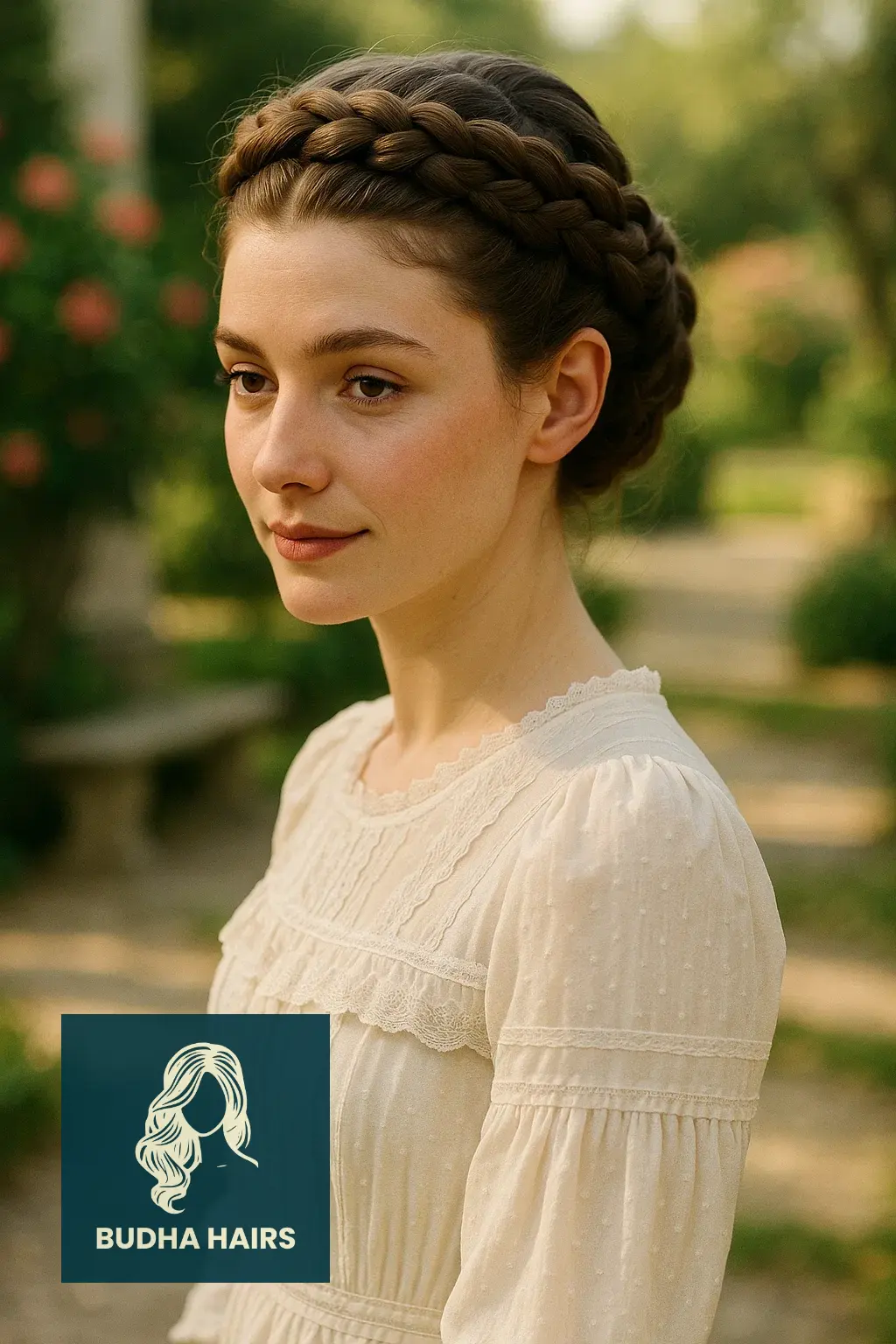
The Braided Coronet was a favored formal daytime style throughout the Victorian era, particularly for middle- and upper-class women, offering a timelessly elegant hair updo. This style involves dividing the long hair into two or more sections, braiding each tightly (often as a French or Dutch braid), and then wrapping the braids up and around the crown of the head to create a halo or “coronet” effect.
This look is beautiful, neat, and highly effective at securing very long hair, which was essential for active Victorian life. The textured band of the braid across the top of the head provided natural volume and a decorative element, often adorned with simple ribbons or small pins. The Braided Coronet is one of the most achievable historical hair styling looks today, providing a majestic and polished finish that defines the sophisticated side of Victorian Hairstyles.
11. The Finger Wave Frame (Early 1890s)
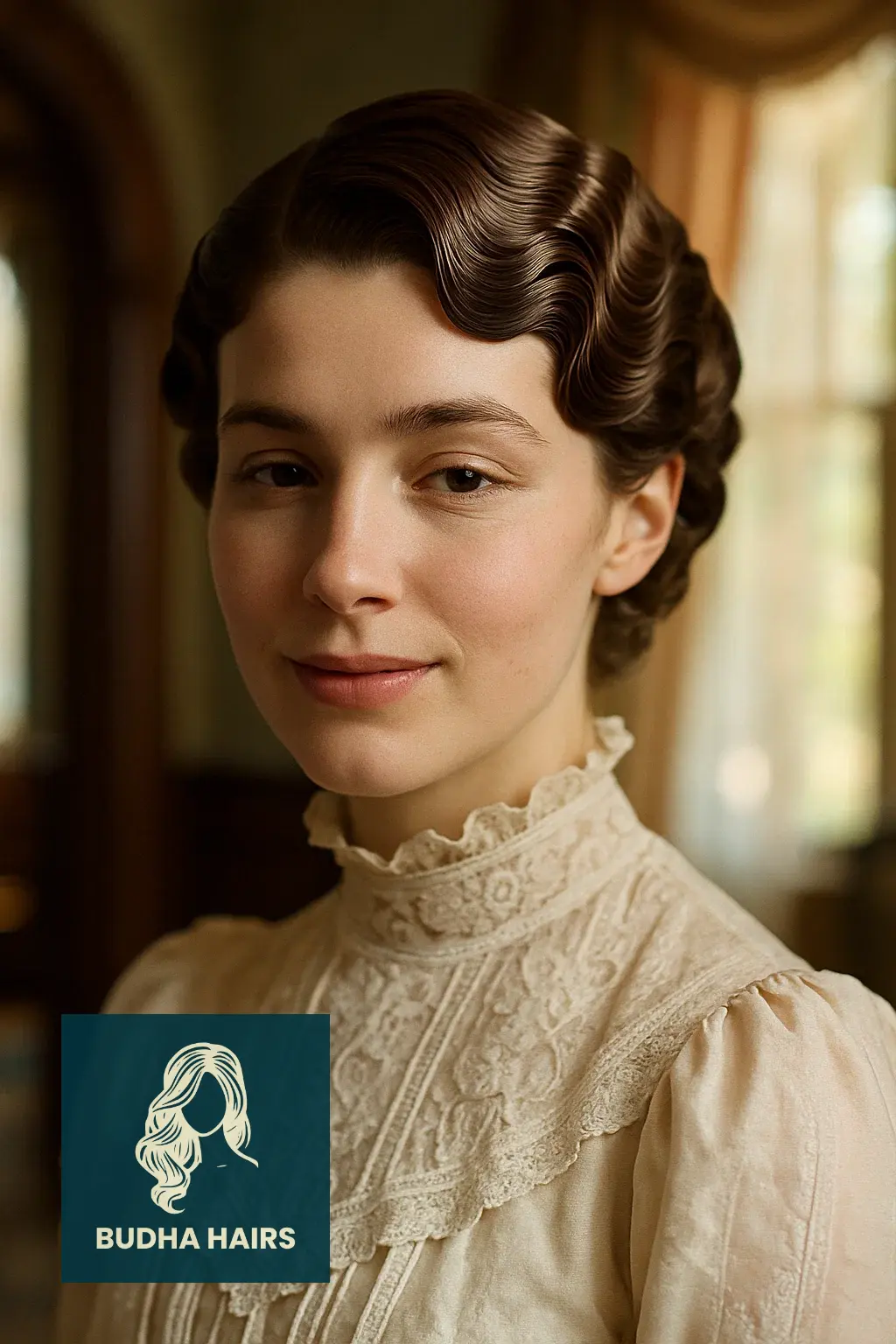
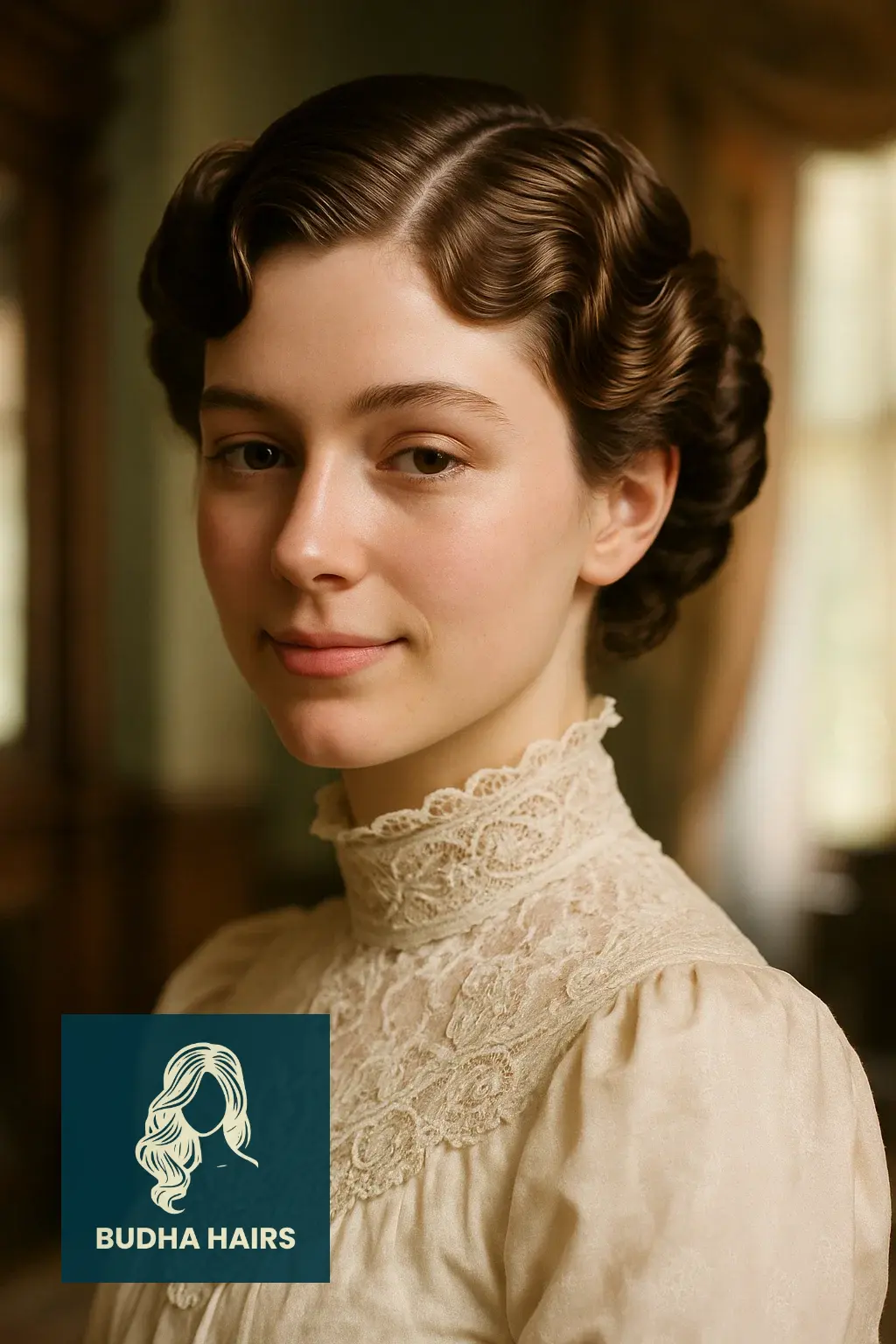
The Finger Wave Frame became increasingly prominent in Victorian Hairstyles during the 1890s, showcasing a move toward controlled texture around the face before the hair was gathered up. This technique involved setting wet hair close to the scalp in defined S-shaped waves, or finger waves, using the fingers and a comb. These waves typically framed the forehead and temples, adding a sleek, sophisticated texture right at the front, which contrasted nicely with the volume at the back of the head.
This look added a touch of Art Nouveau linearity and elegance to 19th century hairstyles, moving away from the more artificial-looking frizz of the 1880s. The rest of the hair would be pulled back into a simple, neat roll or chignon low on the nape. For modern historical hair styling, the Finger Wave Frame offers an instant sense of period drama and polish, perfect for updating a basic hair updo with high-contrast texture and an era-specific sophistication that defines later Victorian Hairstyles.
12. The Figure-Eight Chignon (Mid-Victorian Formal)
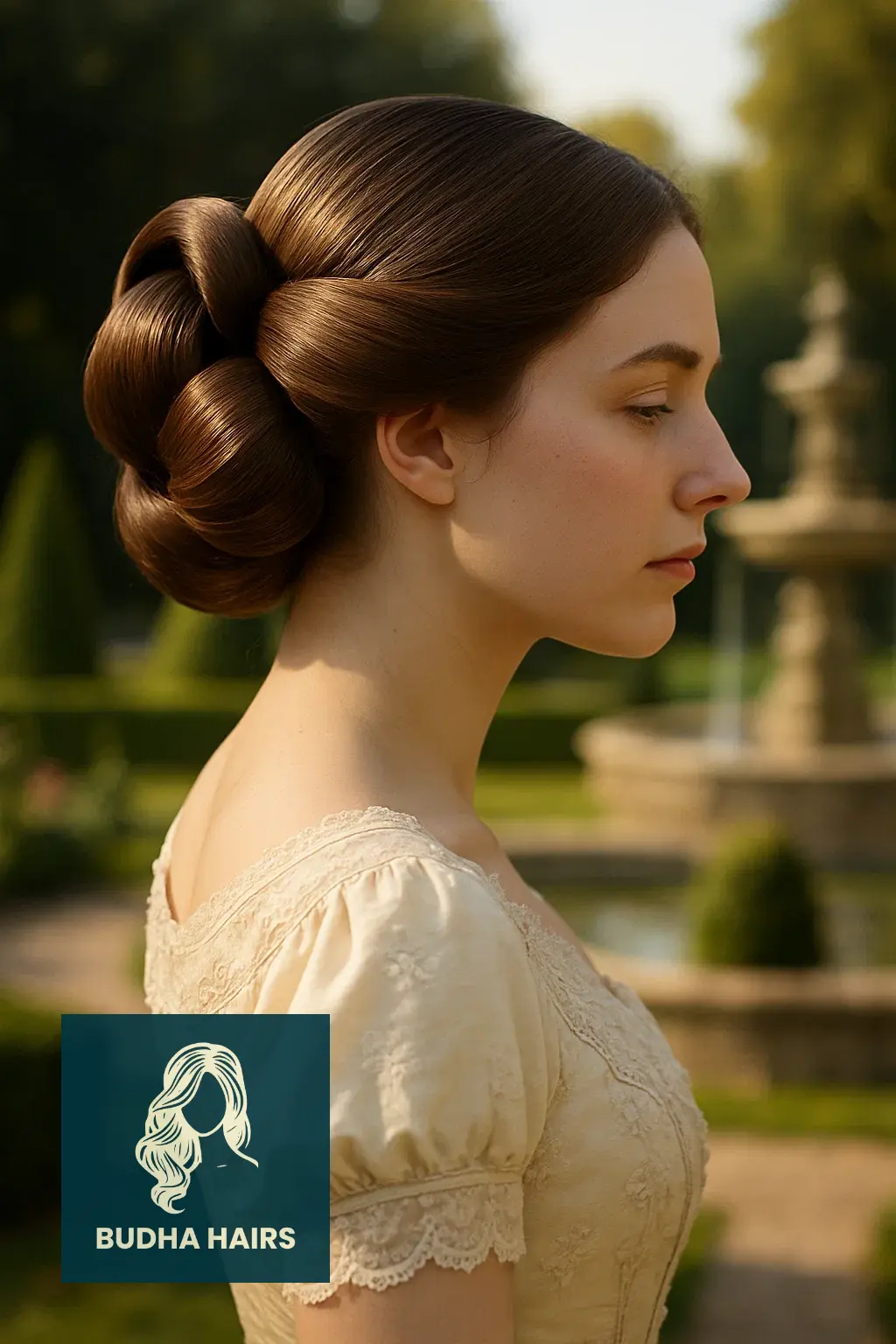
The Figure-Eight Chignon was a particularly neat and formal hair updo prevalent during the middle of the Victorian era. As one of the more structurally defined Victorian Hairstyles, it involved dividing the hair into two sections, twisting or braiding them tightly, and then meticulously crossing and looping them into a flat figure-eight shape directly over the nape of the neck. This style was praised for its symmetry and flawless neatness, crucial to the aesthetic standards of the time.
Often accessorized with pearl pins or delicate lace, the Figure-Eight Chignon allowed for a highly structured appearance while keeping the hair completely contained. It demonstrated the wearer’s dedication to perfect grooming. This period updo is a classic example of how complexity was hidden behind an appearance of flawless simplicity in 19th century hairstyles, making it an enduring inspiration for a clean, elegant bridal hairstyle even today.
13. The Artful Loose Braid Updo (Late Victorian)
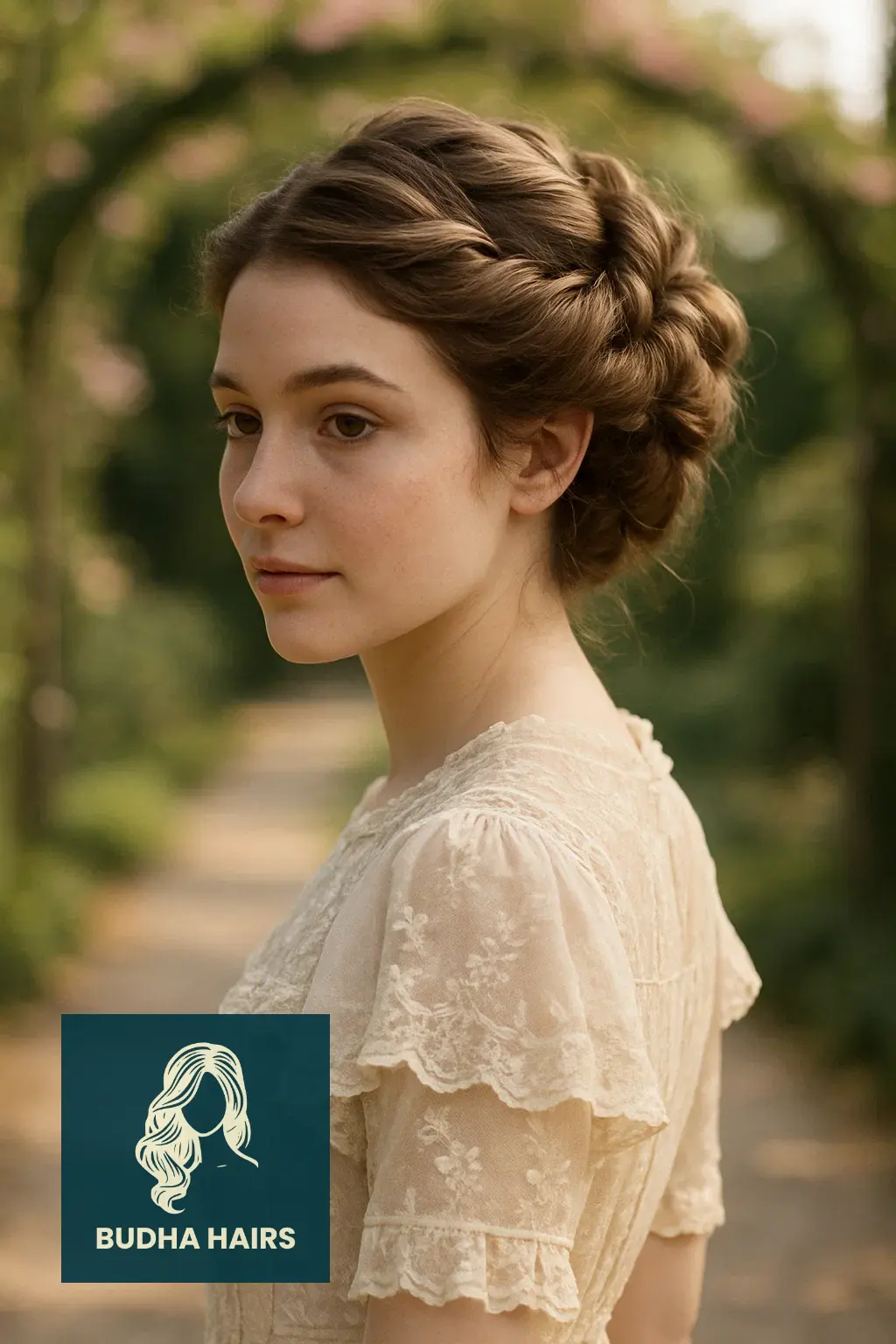
As the Victorian era drew to a close, Victorian Hairstyles began to adopt a slightly looser, more “artful” appearance, reflecting the softer lines of the Gibson Girl hairstyle. The Artful Loose Braid Updo involves incorporating one or more thick, softly textured braids that are coiled or pinned loosely high on the crown, allowing strands to gently escape or create a halo of soft volume. The aim was to look effortlessly beautiful rather than rigidly constructed.
This style relies on volume and texture, achieved through soft back-combing before braiding. The braid itself provides structure, while the surrounding puffs of hair give it the desirable, voluminous profile of the late 19th century hairstyles. This is a great historical hair styling option for women with naturally thick hair who want a romantic yet contained hair updo that captures the feminine elegance of the final years of Queen Victoria’s reign.
14. The Heart-Shaped Roll (Romantic Era Detail)
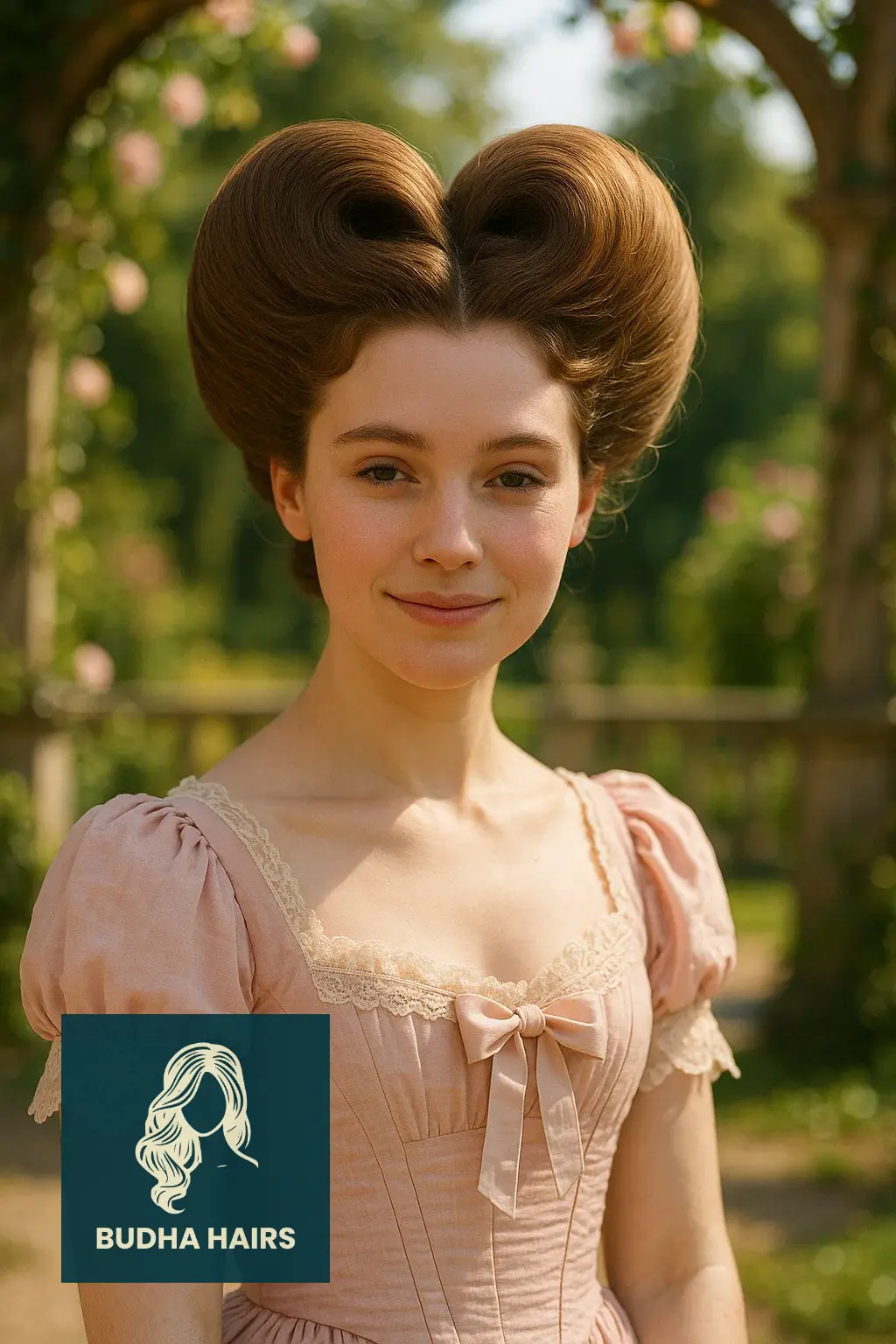
The Heart-Shaped Roll, while not a mainstream style, appeared as a sweet and sentimental detail in early and mid-Victorian Hairstyles, often incorporated into the front or back sections. It involves isolating two equal sections of hair near the temples or at the back of the crown, twisting them, and pinning them precisely to form the curves of a small, distinct heart shape before the rest of the hair is gathered into the main chignon.
This particular style of historical hair styling speaks to the romanticism prevalent in the early Victorian period, where symbolic gestures in dress and hair were appreciated. It is a niche, delicate period updo detail perfect for creating a truly unique and charming bridal hairstyle. It demonstrates the capacity of Victorian Hairstyles to incorporate subtle, personal, and artistic elements into an otherwise formal structure.
15. The Waterfall Braid Detail (Adaptation)
While true Waterfall Braids as we know them today are more contemporary, the underlying technique of letting strands cascade through a braid was adapted into some highly ornamental late Victorian Hairstyles to add texture to the bulky hair updo. A thick braid would be wrapped around the head, with occasional loose, long Victorian Curls or twists pulled through or threaded beneath the braid, creating a rich, flowing effect.
This style was complex and often reserved for evening galas where elaborate hair was expected. It maximized the appearance of abundant, luxurious hair by allowing some length to escape the confines of the main bun while still maintaining a formal boundary. This kind of textured complexity highlights the intricate craftsmanship of the later 19th century hairstyles and makes for a stunningly detailed historical hair styling choice.
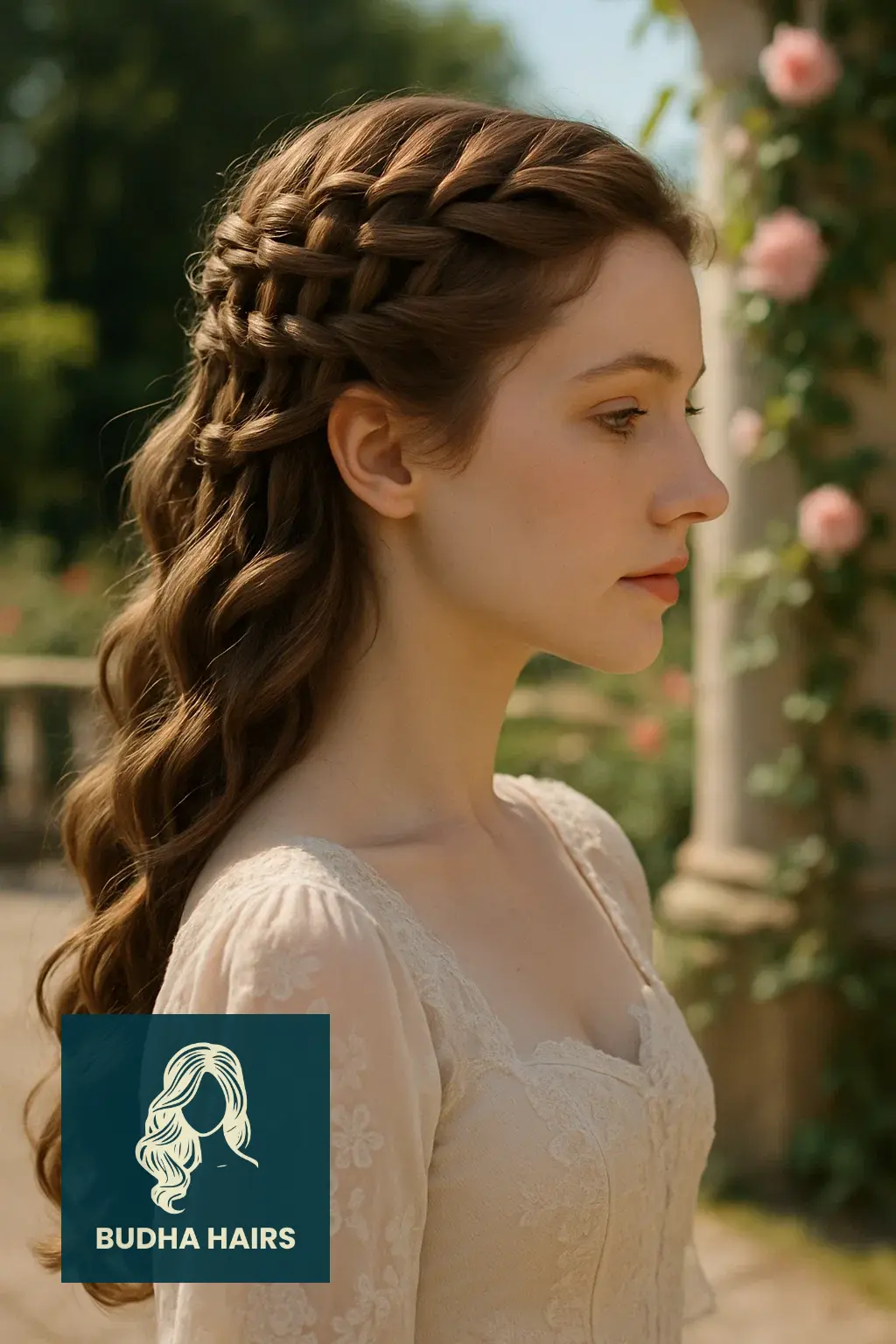
16. The Sleek Low Pony-Bun (Functional Style)
The Sleek Low Pony-Bun was the most functional and understated of all Victorian Hairstyles, worn primarily by women needing practical containment—such as nurses, shop workers, or during domestic chores. It involves pulling the hair back tightly from the face into a very low ponytail at the nape, then coiling that ponytail into a small, tight, flat bun that lays close to the neck.
This style strictly enforced the Victorian rule that hair must be contained during the day but avoided the elaborate padding of the formal period updo styles. It remains a beautiful example of streamlined historical hair styling that relies entirely on a clean part and smooth texture. Although simple, this neat hair updo is an essential piece of the puzzle when discussing all levels of 19th century hairstyles.
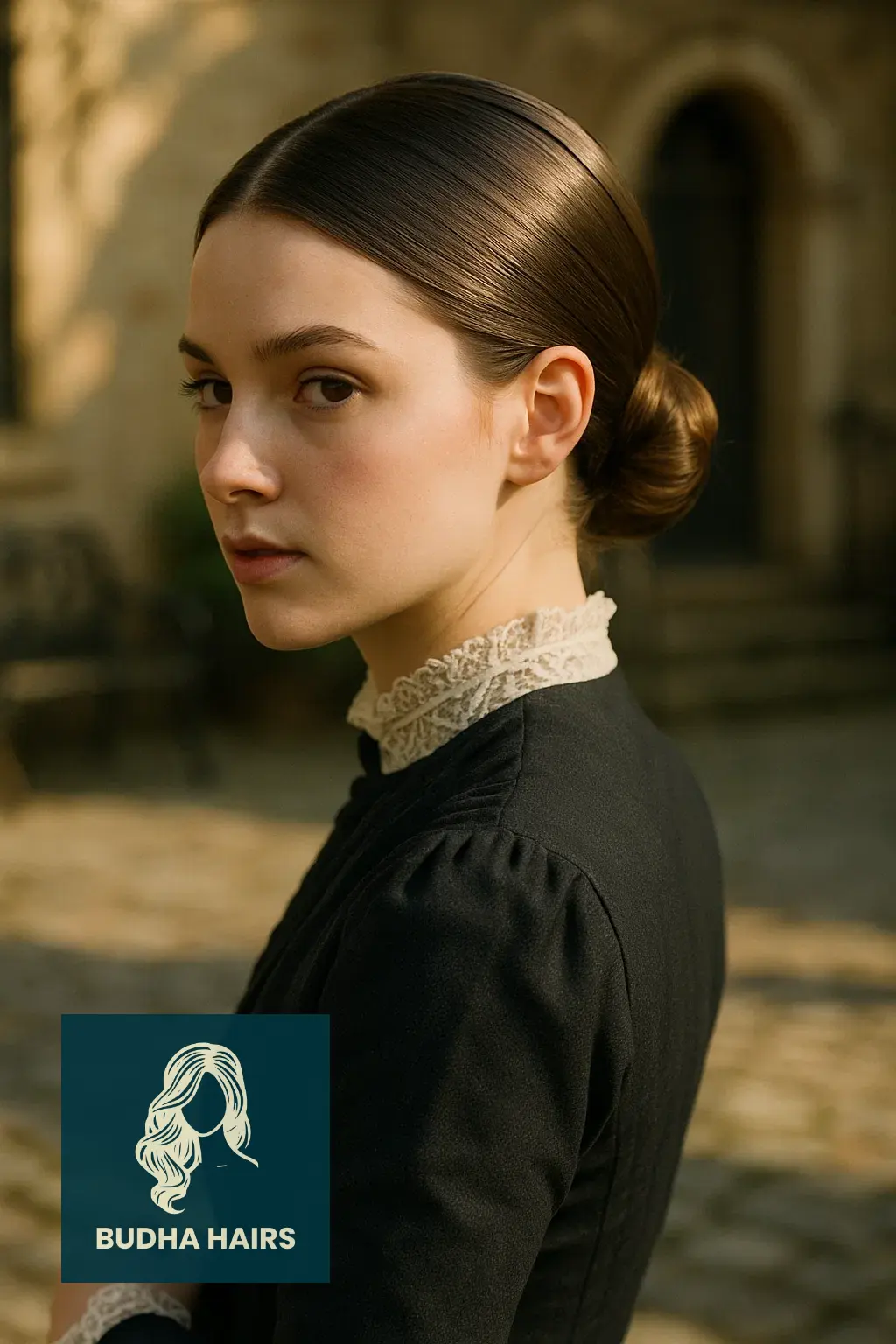
If you enjoy bold, contemporary twists, Locs with Undercut Women Styles showcases edgy hairstyles that reimagine tradition with confidence.
17. The High Teased Roll (Theatrical Volume)
The High Teased Roll, dominant in the 1880s and transitioning into the early Gibson Girl hairstyle look, focused on achieving maximum height and width on the crown. Hair was aggressively back-combed or teased (a technique called ‘crimping’) and then gently rolled back over a large pad or wire frame to create a massive, soft pompadour that extended high above the forehead and often slightly forward, shadowing the face.
This style was bold and required a significant amount of structural support. The sheer vertical volume distinguished it from earlier, lower styles. For Victorian Hairstyles seeking dramatic impact, the High Teased Roll is the definitive choice, often combined with small ringlets or Victorian Curls tucked behind the ears. It is a stunning display of late 19th century hairstyles’ obsession with grandeur and vertical dimension.
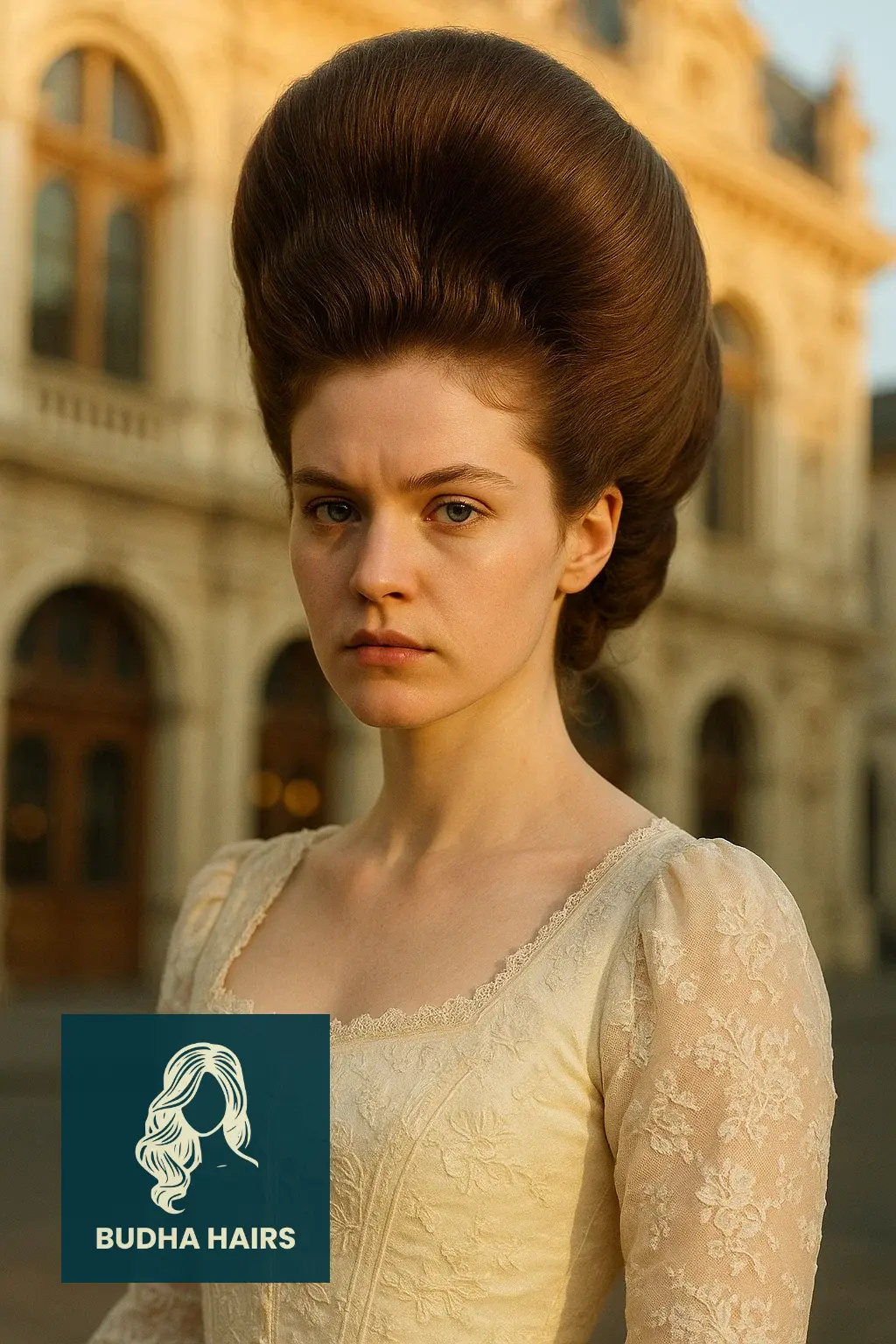
18. The Crown of Coils (A Royal Favorite)
The Crown of Coils was a regal and highly symmetrical hair updo frequently seen in formal portraits and among aristocracy, fitting perfectly into the more structured Victorian Hairstyles of the mid-to-late era. This style involved dividing the length into numerous small sections, coiling each one tightly, and then meticulously arranging these tight coils to form a solid, elaborate dome or “crown” high on the back of the head.
The coils were meant to be perfectly uniform, creating a textured, almost sculpted effect. No flyaways were tolerated in this precise period updo. The Crown of Coils maximized volume and intricacy, making it a powerful statement of wealth and leisure, as such intricate historical hair styling demanded time and assistance. It’s an ultimate example of the meticulous craftsmanship found in 19th century hairstyles.
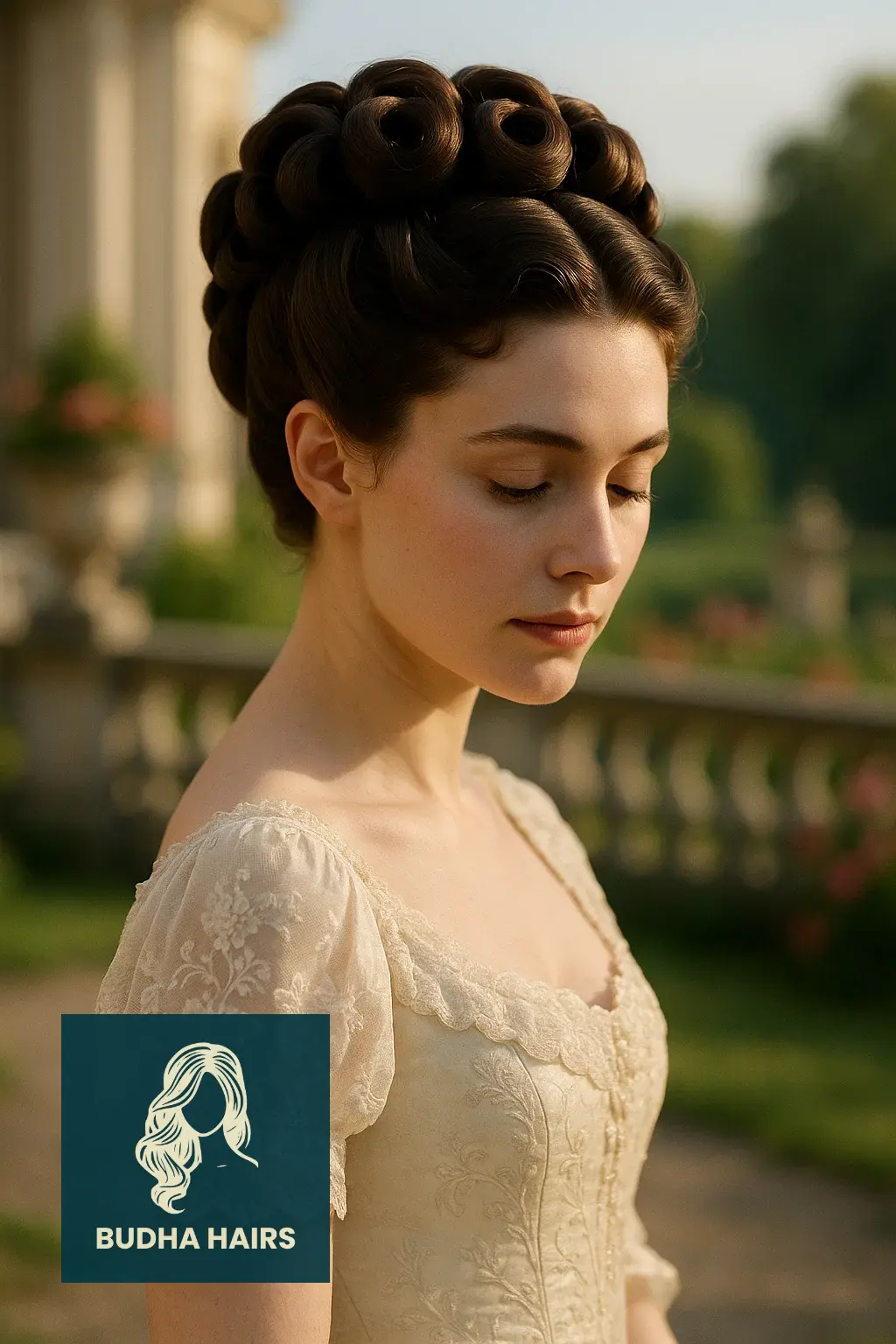
19. The Face-Framing Corkscrew Curls (Youthful Style)
Victorian Curls, specifically the long, tightly wound corkscrew variety, were used predominantly to soften the severe lines of adult Victorian Hairstyles, often falling in front of the ears or down the neck. While adult women wore them minimally, this look defined younger girls’ hair and was sometimes adopted by older women for very romantic evening looks. The curls were deep, defined, and usually reached shoulder length.
These defined, bouncing curls contrasted with the sleekness of the main hair updo, adding a touch of playful femininity. When used as an accent on an adult period updo, they were deliberately placed to frame the face softly, moving away from the tight ear coverage of the 1840s. These beautiful curls are key components in creating authentically romantic historical hair styling that embodies the youthful spirit within 19th century hairstyles.
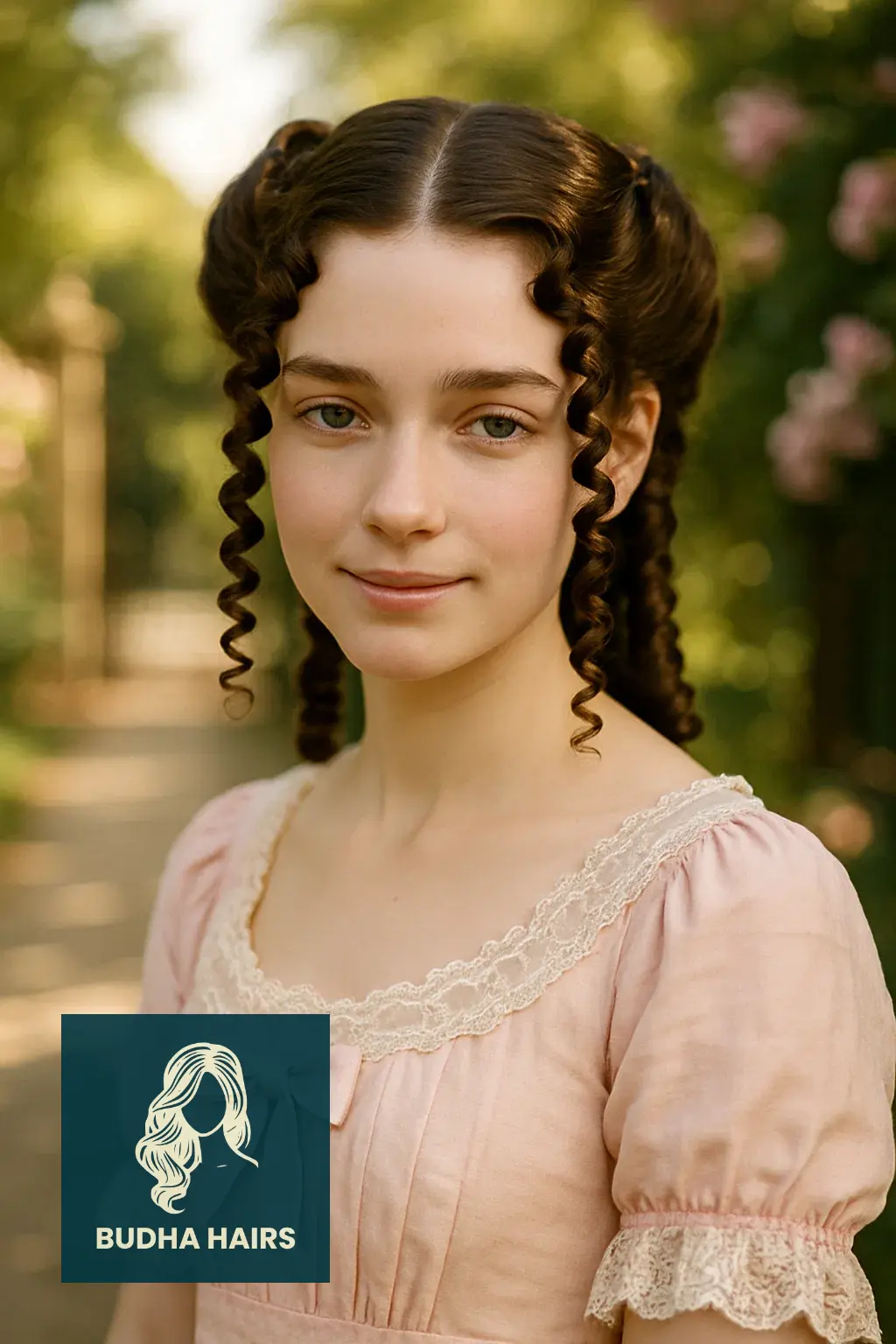
20. The Turban Wrap Updo (Exotic Influence)
The Turban Wrap Updo, influenced by the era’s fascination with the Orient and colonial expansion, offered a unique exotic twist to formal Victorian Hairstyles. This style involved wrapping the hair, often combined with a scarf, fabric, or ribbon, tightly around the head in layers, mimicking the look of a turban before the ends were tucked neatly into a low roll or chignon.
This style was highly fashionable for evening wear or for exotic themed parties, providing color and texture that hair alone could not. The tight wrapping technique inherently created a sleek hair updo that minimized flyaways. The Turban Wrap Updo demonstrates how 19th century hairstyles were occasionally influenced by global trends, providing a creative, accessory-focused take on a formal period updo.
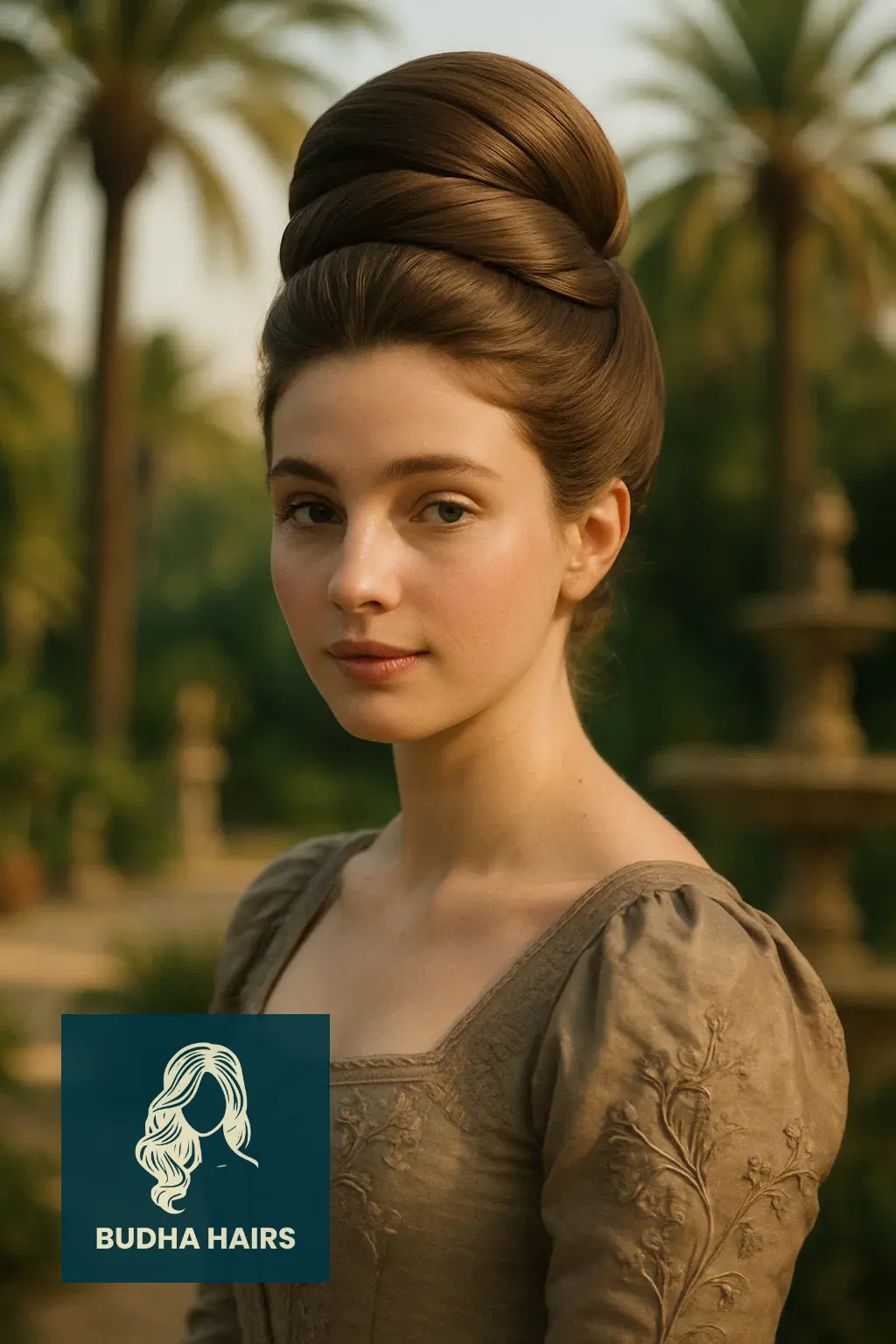
21. The Half-Down Grecian Curls (Young Women)
The Half-Down Grecian Curls style was a romantic concession to youth, primarily worn by young, unmarried women who were still allowed to wear their hair partially down, though it was still intricately styled. The top section of hair was pulled back very smoothly, often braided or twisted into a small coil high on the crown, creating a half hair updo. The remaining hair was then arranged into loose, flowing ringlets or soft waves that fell down the back and shoulders.
This style captured the youthful femininity cherished in the early and mid-Victorian periods, providing a softer alternative to the severe, fully pinned Victorian Hairstyles expected of married women. The combination of the sleek crown and the voluminous Victorian Curls provided an ideal look for balls and social gatherings. It remains a key example of a transitional historical hair styling choice within the broader category of 19th century hairstyles.
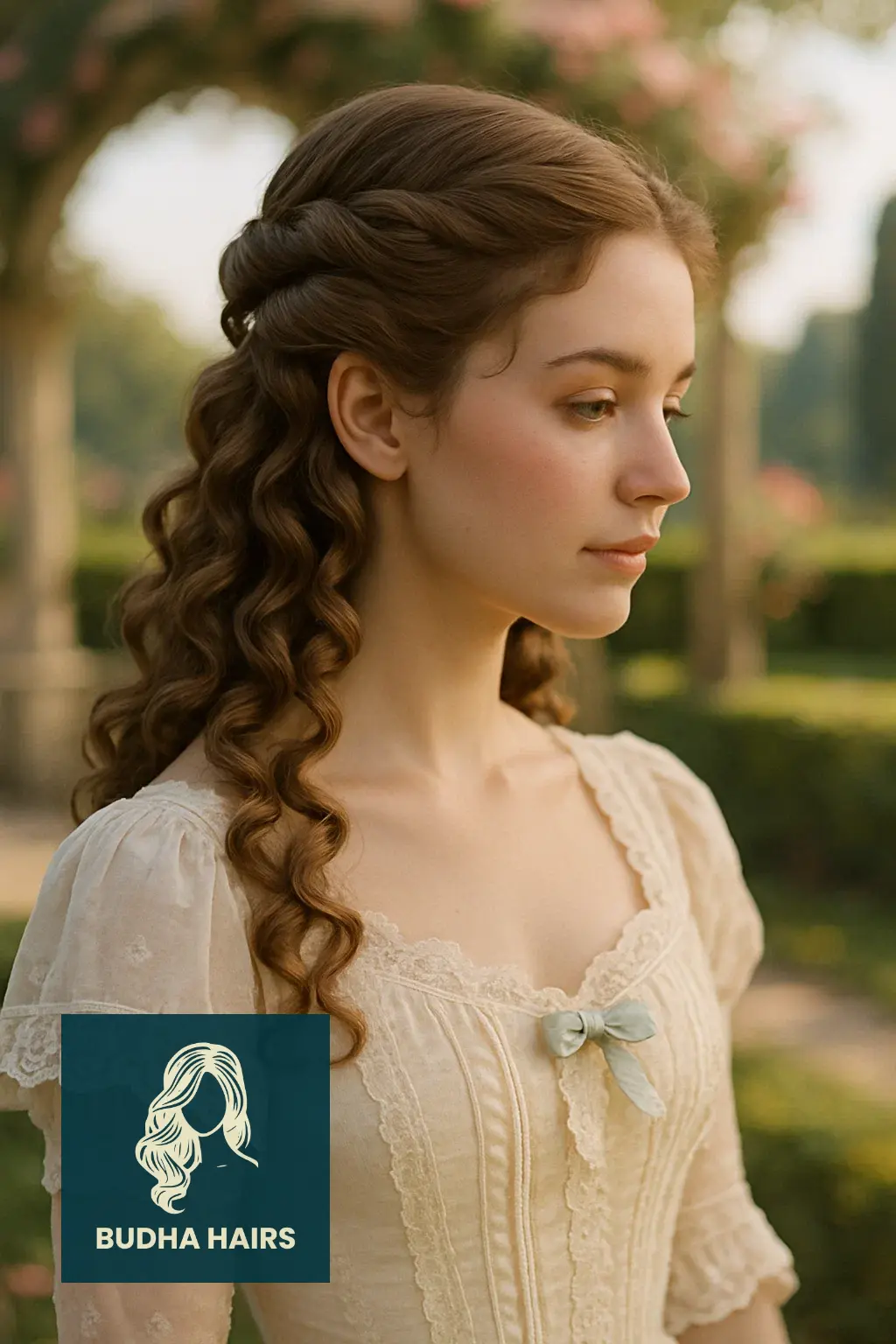
22. The Double Shell Roll (Late 1880s)
The Double Shell Roll was a complex and structured style from the late 1880s, where the hair was divided horizontally. The top section was combed back and rolled up and under, forming a large, neat cylinder or roll that sat high on the crown, similar to a pompadour. The hair from the nape was then rolled upward and inwards to meet the upper roll, creating a dramatic, vertically oriented hair updo that looked like two interlocking shell shapes.
This style was often padded significantly to achieve height and fullness, perfectly aligning with the increasing vertical emphasis of late Victorian Hairstyles. The symmetry and impressive stature of the Double Shell Roll made it a popular choice for formal portraits and evening events. This intricate period updo is a challenging but rewarding look to recreate, showcasing the structured artistry inherent in late 19th century hairstyles.
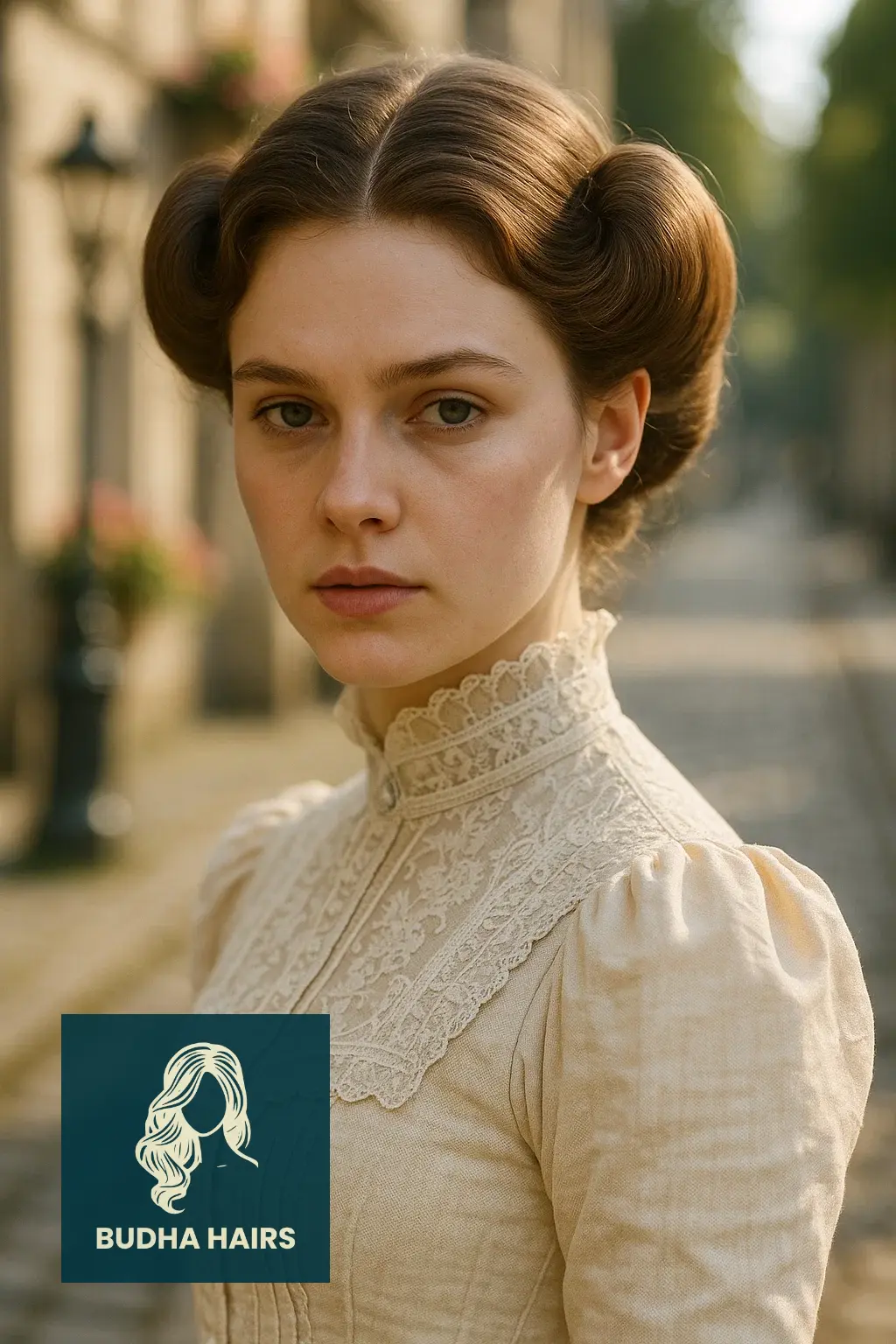
23. The Loose Knot with Side Tendrils (1890s Softness)
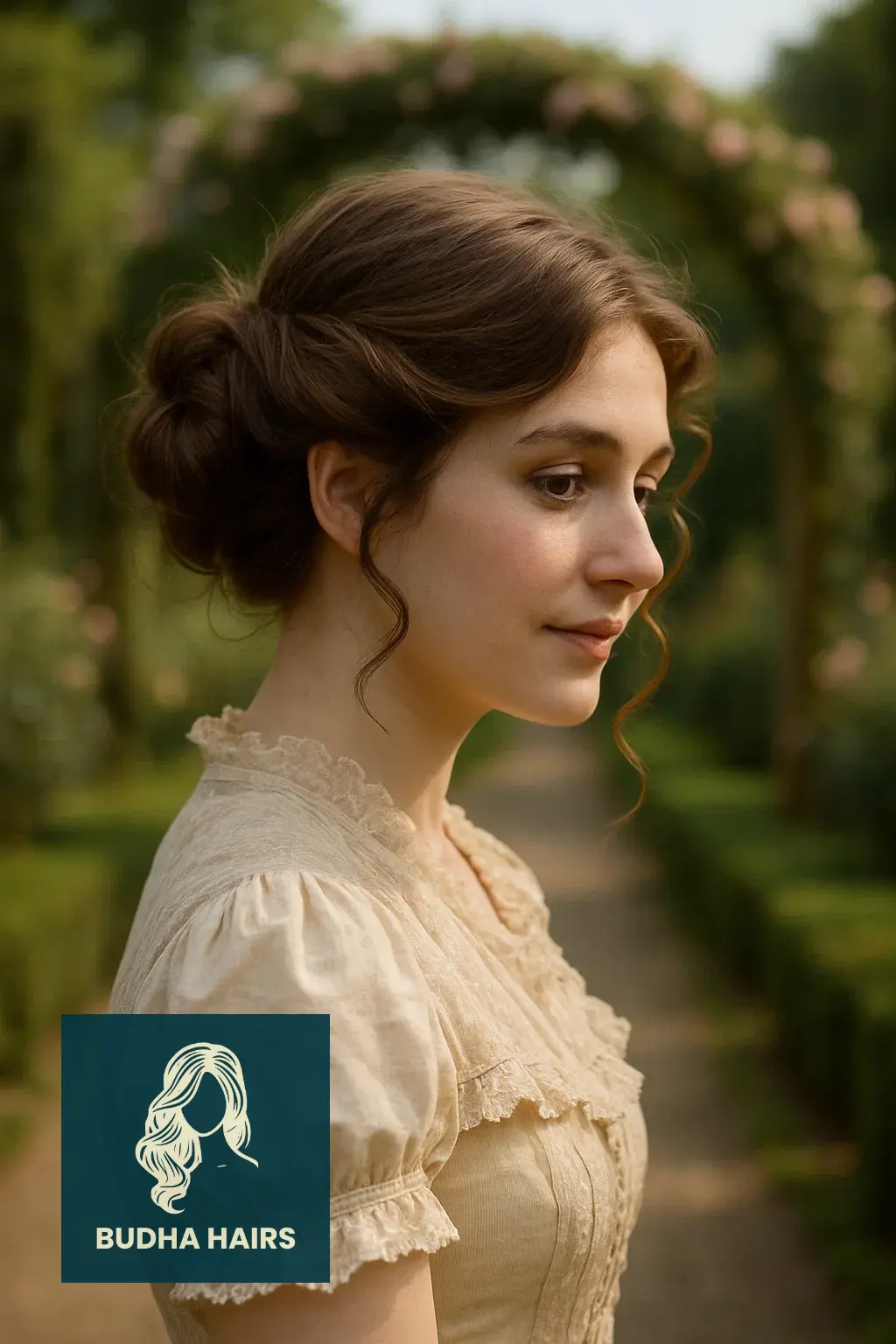
Reflecting the approaching softness of the Gibson Girl hairstyle, the Loose Knot with Side Tendrils emerged as a more relaxed option in the 1890s. The main body of the hair was gathered into a large, slightly messy knot or soft chignon placed either high or low on the head. Crucially, several strands of hair were deliberately pulled out around the temples and neck and styled into gentle, curling tendrils or soft waves.
These loose strands provided a romantic, framing effect that contrasted with the rigid styles of previous decades. This style embraced a more naturalistic beauty, which became fashionable as the Victorian era concluded. The softer appearance made this one of the most approachable historical hair styling choices, offering a blend of formality and flowing femininity that defines the final phase of Victorian Hairstyles.
24. The Marcel Wave Frontispiece (1890s Texture)
While the Marcel Wave technically gained prominence in the Edwardian era, its precursor began appearing in late Victorian Hairstyles in the 1890s, particularly used only on the front section of hair. This technique involved using specially heated tongs to create deep, consistent, and lasting waves close to the scalp, acting as a structured, textural frame for the face. The back hair was invariably swept into a large, smooth hair updo.
The Marcel Wave offered a polished and sophisticated texture that was a step up from the rougher crimps and frizz of the 1880s. It added a sense of high-end fashion and deliberate styling to the look. The combination of the smooth wave at the front and the voluminous bun at the back created a highly stylish and transitional look within 19th century hairstyles.
25. The Spiked Hairpin Updo (Accessory Focus)
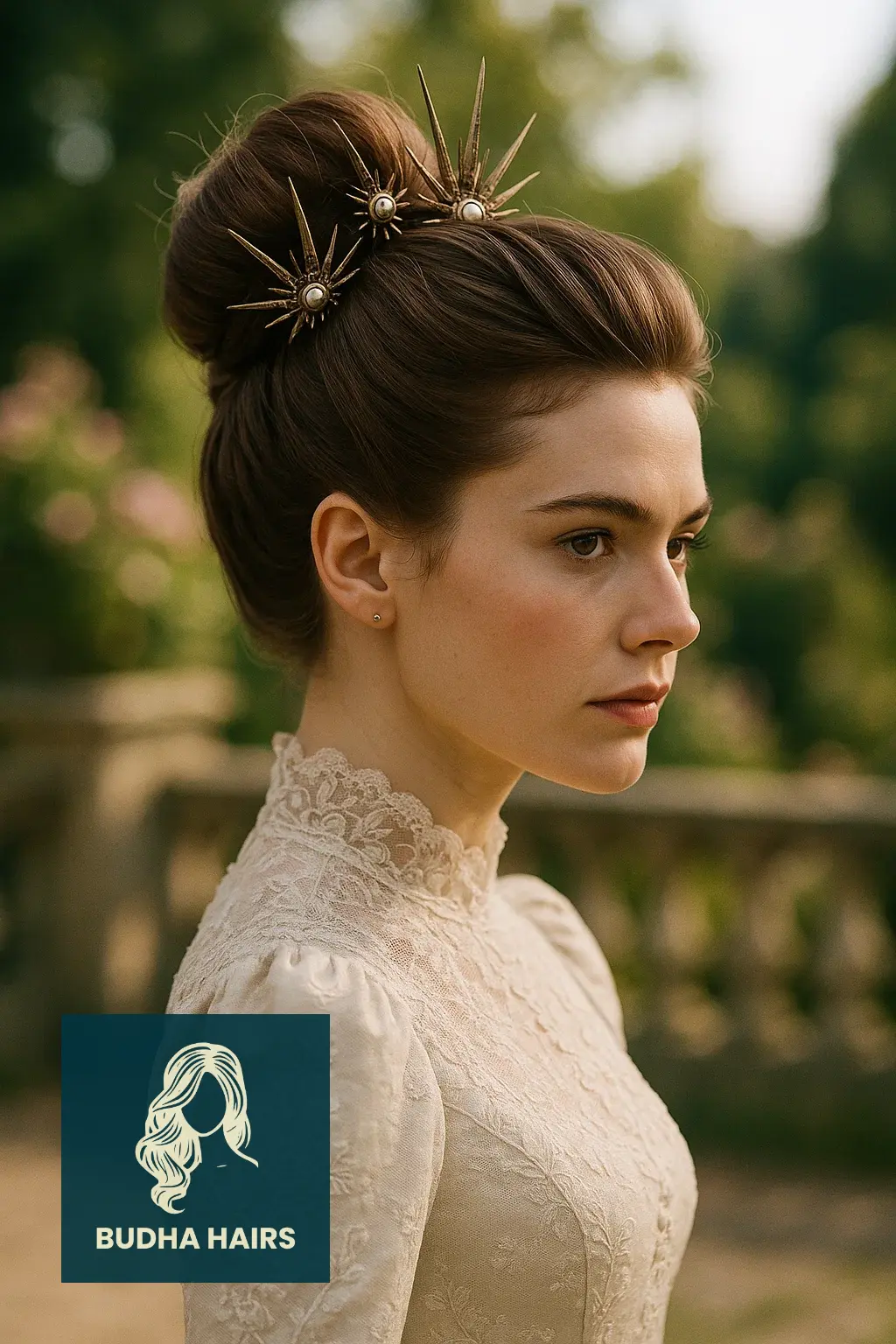
The Spiked Hairpin Updo emphasized accessorization, a key part of many elaborate Victorian Hairstyles. This style involved creating a relatively simple, high chignon or coiled bun, and then aggressively decorating it with long, ornate hairpins. These pins, often featuring jewels, faux tortoiseshell, or intricate metalwork, were placed so their decorative tops protruded outwards, creating a textured, almost spiky silhouette.
This style was highly popular for evening events, as the jewels and decorative pins would catch the light, adding sparkle and dimension to the period updo. The pins not only held the heavy hair in place but became the defining decorative element of the hairstyle. This focus on ornamentation is essential to understanding the luxury aspect of many historical hair styling choices in the Victorian era.
26. The Low Braided Halo (Simple Elegance)
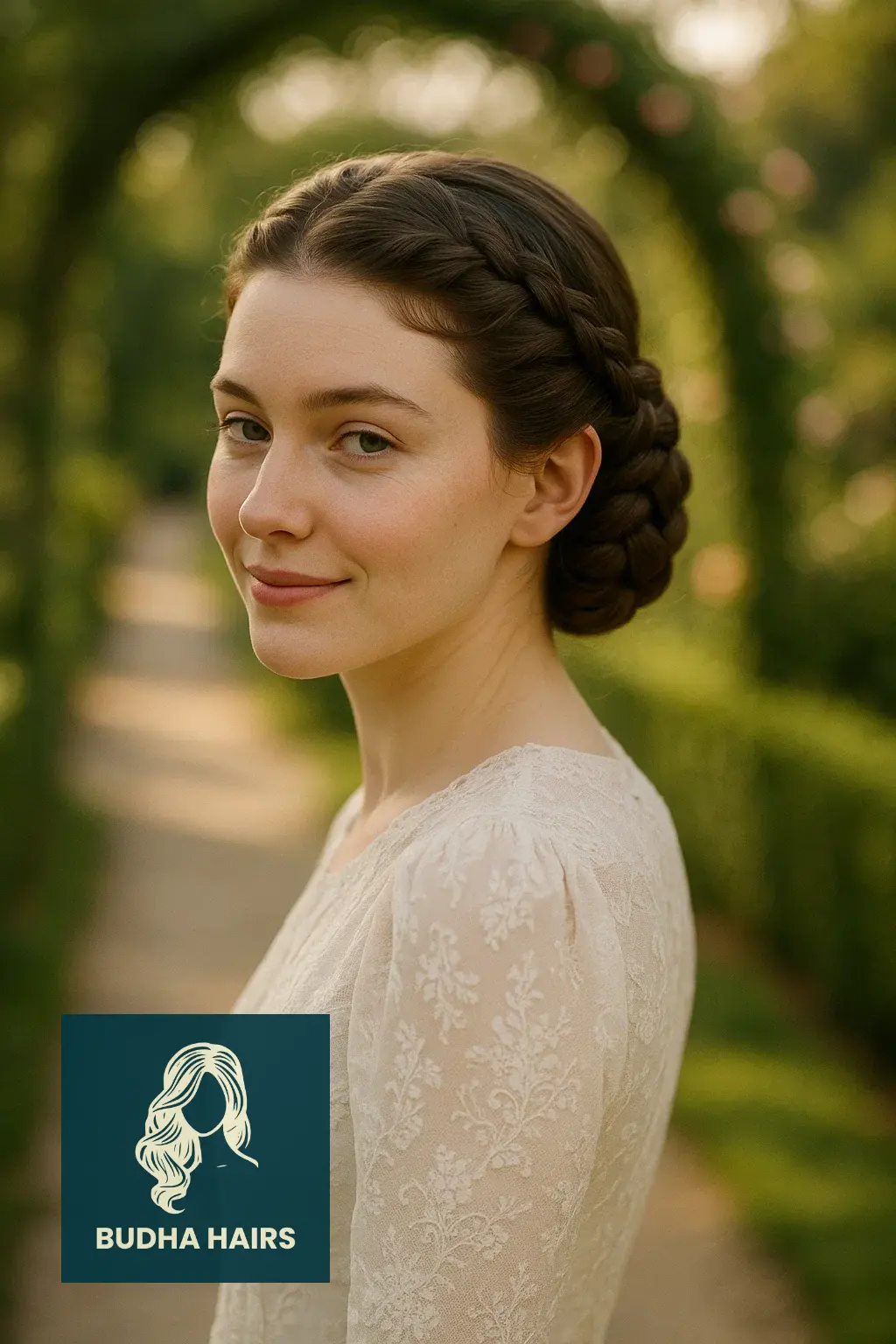
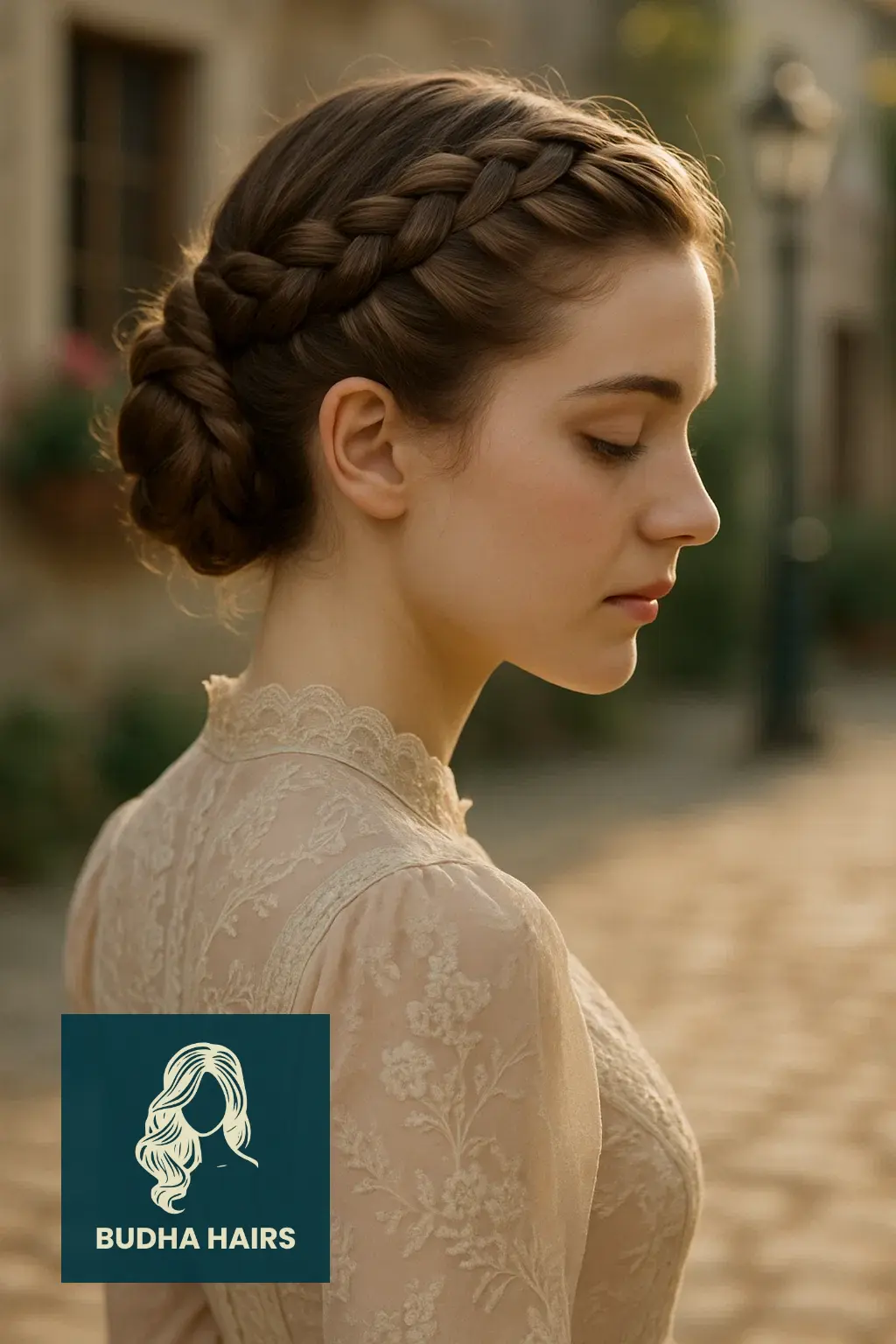
The Low Braided Halo is a simple yet elegant variation of Victorian Hairstyles that featured a braid wrapped low around the head, just above the nape of the neck. Instead of wrapping the braid high over the crown (like the Coronet), this style keeps the braid discreetly framing the low bun or chignon, adding texture to the perimeter while maintaining a sleek, unadorned crown.
This refined hair updo was perfect for daytime activities or for women who preferred a less voluminous appearance. The neatness of the braid provided both control and a delicate decorative element. It’s a classic example of a contained, tidy 19th century hairstyles choice that is easily achievable and exudes quiet Victorian grace.
For polished everyday inspiration, Hat Hairstyles for Work highlights neat and professional options that pair well with structured hairstyles.
27. The Double French Braid Updo (Structured Back)
The Double French Braid Updo offered a structurally detailed back view for Victorian Hairstyles in the mid-to-late period. The hair was parted down the middle or slightly off-center, and a French braid was started high on each side of the head. These two braids were brought down the back of the head, meeting and being coiled into a single, neat bun or figure-eight low on the nape.
This style was incredibly secure, making it ideal for days that required activity or for long hours of wear. The French braids added intricate texture that was visible from the sides and back, transforming a simple low chignon into a more complex, beautiful period updo. The careful construction of these Victorian Hairstyles highlighted the skill and patience of the wearer or her maid.
28. The Padded Gibson Cascade (Extreme Volume)
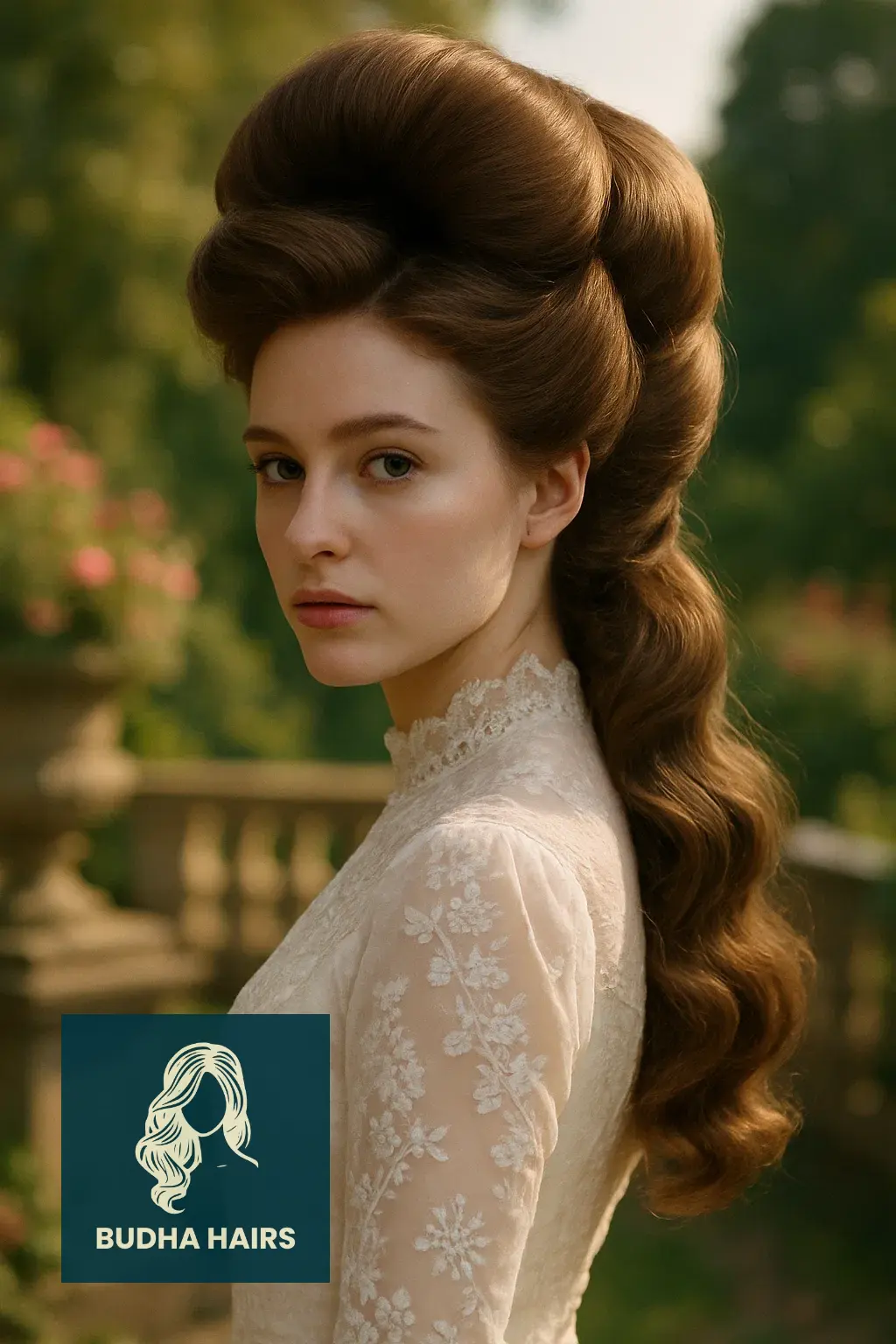
The Padded Gibson Cascade represents the extreme end of the Gibson Girl hairstyle trend, where the volume was exaggerated to its maximum. The hair was heavily padded and rolled up and under, creating a massive, pillowy poof high on the crown and across the back. The back section, instead of being a tightly pinned roll, was allowed to cascade slightly into a structured wave or loose curl pattern, giving the impression of impossible volume and freedom.
This style required substantial use of “rats” (hair padding) and was the ultimate expression of the fashionable silhouette of the 1890s. The sheer scale of this hair updo made a powerful, definitive statement, marking it as a key transition point in the history of 19th century hairstyles.
29. The Woven Hairpiece Chignon (Faux Bulk)
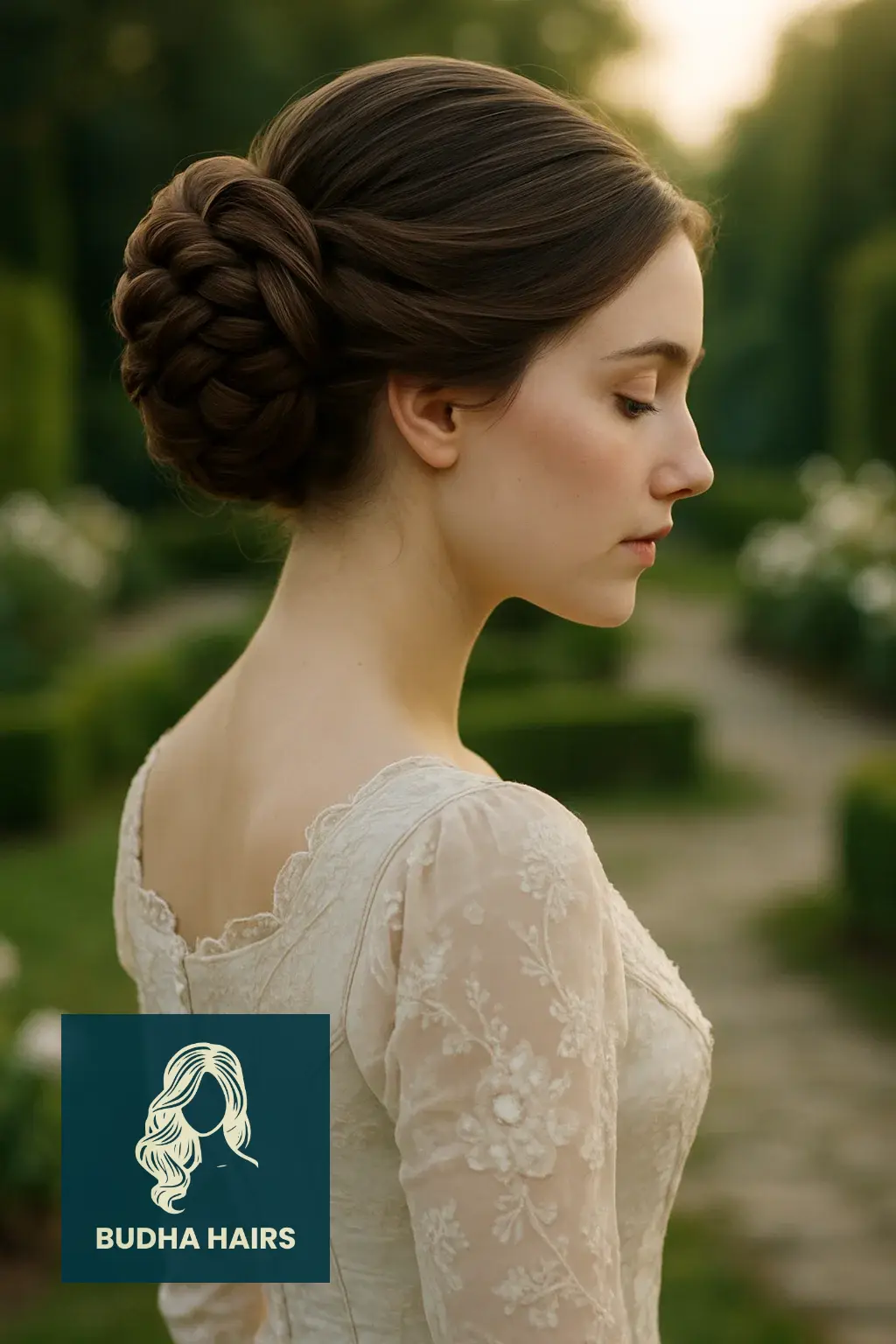
The Woven Hairpiece Chignon acknowledges the heavy reliance on false hair to achieve fashionable Victorian Hairstyles. This style involved securing the natural hair into a small, tight bun, and then attaching a pre-woven, thick hairpiece—often a coiled braid or a complex knot—over the natural bun. The hairpiece provided instant, often immense, bulk without requiring the wearer to have exceptionally thick hair.
The addition of the woven hairpiece allowed for elaborate historical hair styling and intricate texture that was guaranteed to look perfect and uniform. This reflects the Victorian obsession with appearance and flawless execution in their period updo styles, demonstrating that the abundance of hair seen in Victorian Hairstyles was often achieved through cunning artifice.
30. The Simple Snood Bun (Comfort and Containment)
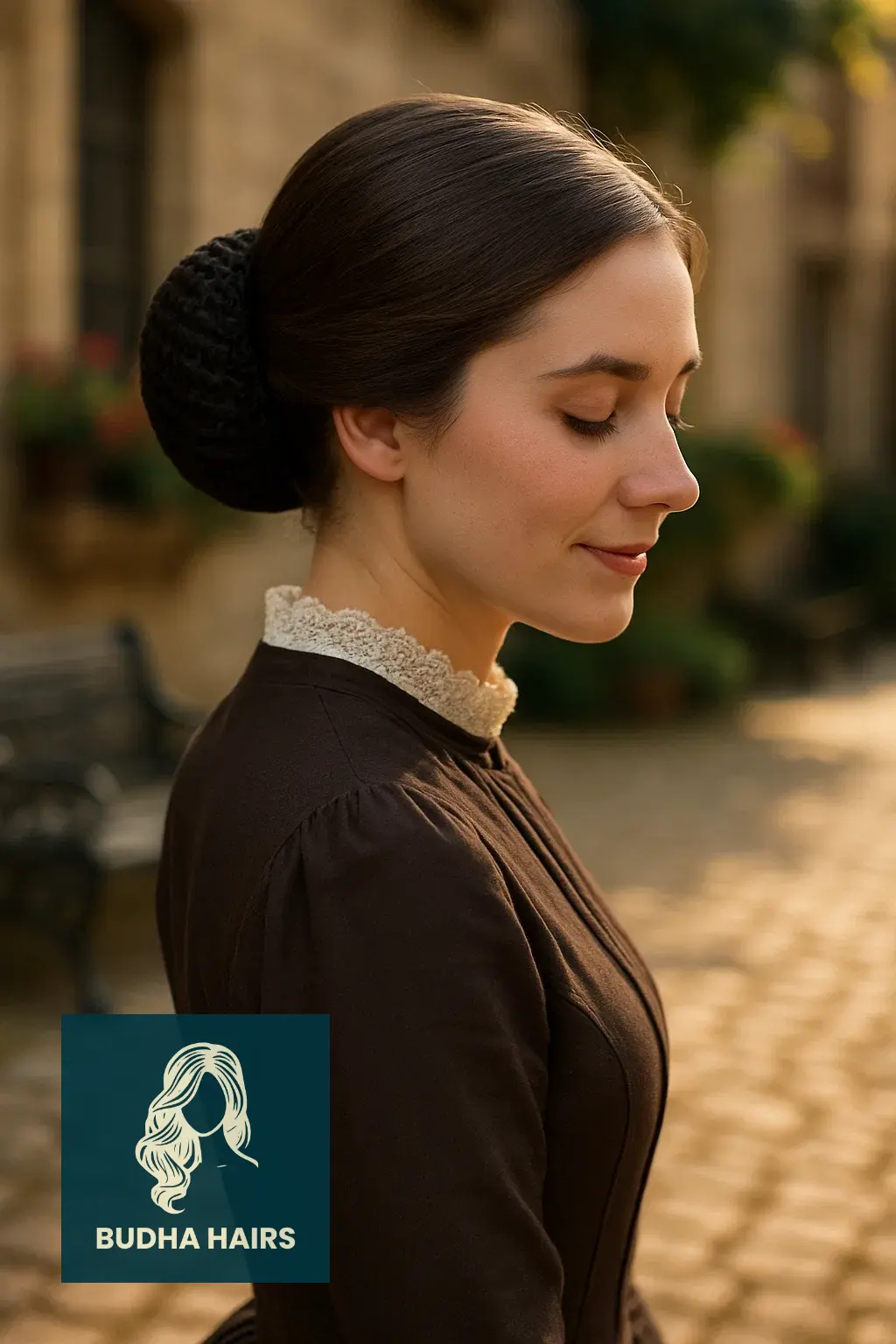
The Simple Snood Bun was a practical and modest style that was foundational to everyday Victorian Hairstyles throughout the era. The hair was pulled back into a basic, low bun at the nape and then fully covered by a plain, often black or dark colored, crocheted snood or hairnet. This covering ensured total containment and neatness, minimizing distraction and flyaways.
This style was the workhorse of 19th century hairstyles, worn by women across all social classes for day-to-day activities. While lacking the ornamentation of the formal hair updo, it perfectly encapsulated the Victorian mandate for women’s hair to be tidy, modest, and securely contained at all times when in public.
Pro Tips for Achieving Authentic Victorian Hairstyles
- Prep for Volume: Authentic Victorian Hairstyles require serious volume. Before styling, use thickening mousse or dry shampoo, and lightly back-comb the roots (teasing) in sections where you need height (like the pompadour or Gibson Girl hairstyle roll).
- Invest in Hair Padding (“Rats”): To achieve the large, pillowy rolls and chignons of the mid-to-late Victorian era without damaging your hair, invest in foam padding, sock buns, or modern hair donuts. These are essential for creating the structured silhouette of a period updo.
- Master the Middle Part: For styles from the 1840s through the 1870s, the center part must be razor-sharp and straight. Use a rattail comb and a mirror to ensure perfect symmetry, as neatness was paramount to early Victorian Hairstyles.
- Accessorize with Purpose: Use period-appropriate accessories. For daytime hair updo styles, use simple velvet ribbons or jeweled pins tucked into the bun. For evening, opt for jeweled combs, flowers, or a snood to cover a large chignon.
- Achieve Authentic Curls: For the tight Victorian Curls or ringlets, use thin rollers or a small-barrel curling iron. The curls should be uniform and very tight, not loose or beachy, to maintain historical accuracy for a historical hair styling look.
- Focus on the Nape and Crown: Pay close attention to the placement. Early styles focus volume low at the nape, while later 19th century hairstyles concentrate volume high on the crown and slightly forward (the late Victorian Gibson Girl hairstyle).
FAQs
Conclusion
The history of Victorian Hairstyles is a fascinating study of intricate artistry and shifting social norms. These 19th century hairstyles transformed dramatically over six decades, moving from the restrained, ear-covering knots of the 1840s to the high, soft, and voluminous rolls of the late 1890s, epitomized by the iconic Gibson Girl hairstyle. What remains constant across all styles is the emphasis on containing long hair within a meticulously neat hair updo that projected modesty, grace, and structure. Recreating these historical hair styling looks today requires mastering padding and texture, offering a stunning way to incorporate the dramatic elegance of the past into a modern bridal hairstyle or formal period updo. The enduring legacy of Victorian Hairstyles lies in their detailed beauty and powerful visual language.
I’m Budha Styler, a hair enthusiast who loves creating beautiful, confidence-boosting looks that feel true to who you are. I’m passionate about exploring new trends, techniques, and textures, and I enjoy turning that knowledge into simple, inspiring ideas anyone can try. Through my work, I hope to help you express your unique style, feel amazing in your own hair, and discover everyday looks that make you shine.