
Detangling is the most critical step in any curly hair routine. Because of the spiral structure of the hair shaft, curls naturally wrap around each other, creating “lock-points” that can easily turn into mats. If handled incorrectly, detangling becomes the primary cause of mechanical breakage and split ends. The goal is not just to remove the knots, but to do so without snapping the hair fiber or disrupting the curl pattern.
15 Expert Tips for Detangling Curly Hair
This guide breaks down the physics of “slip” and tension to provide you with a safe, effective roadmap for managing your textured hair.
1. The “Wet Hair” Rule
Never, ever try to detangle curly hair when it is bone dry. Dry curls are brittle and lack elasticity. If you pull a knot when dry, the hair will snap. Always ensure your hair is soaked with water and conditioner before your comb touches it. The water swells the cuticle, making it smoother, while the conditioner provides the lubrication needed for strands to glide apart.
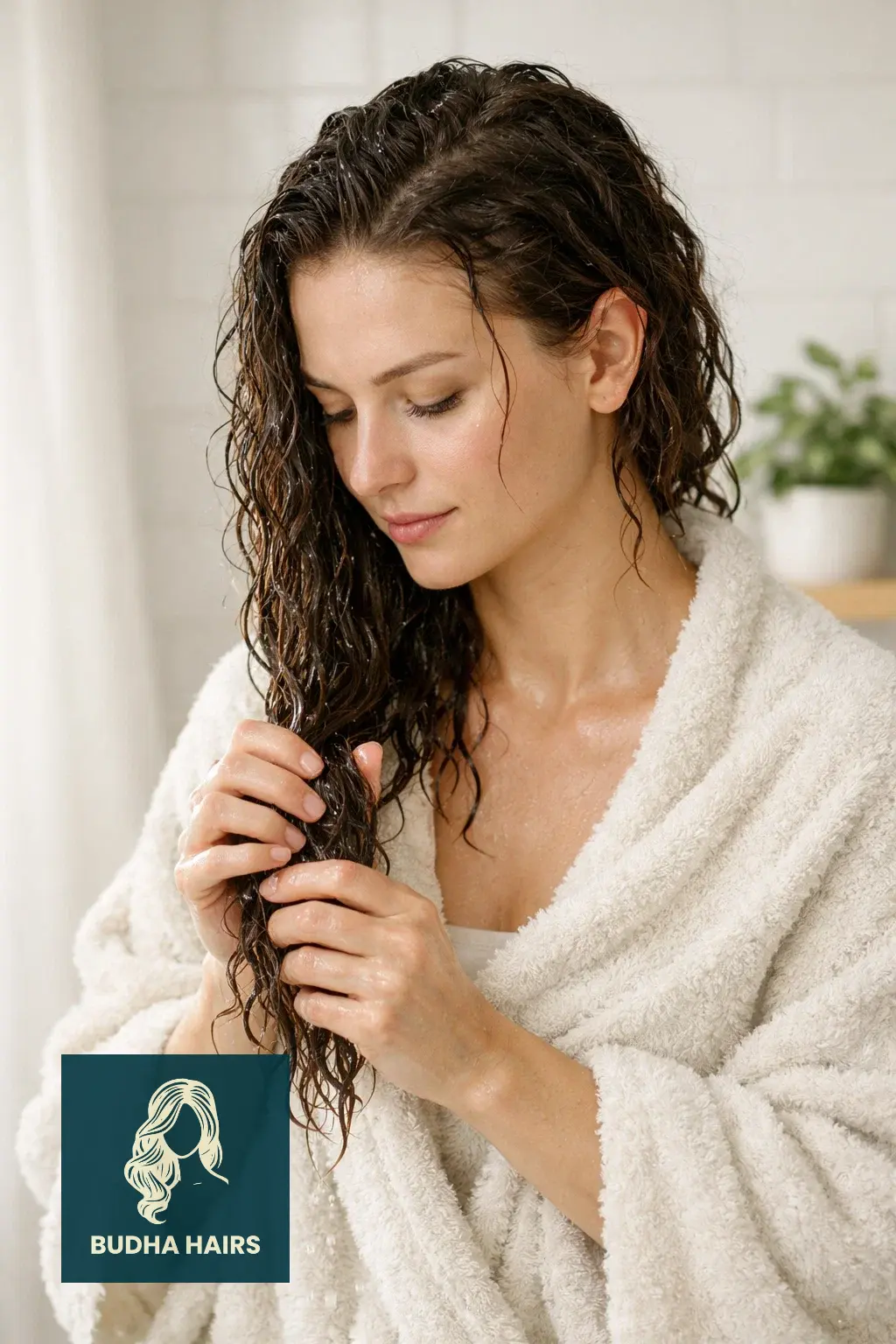
Tips for detangling curly hair focus on reducing tension, preventing breakage, and maintaining curl definition. Gentle handling techniques used in How to Grow Thicker Eyebrows Naturally highlight the importance of care and patience when working with delicate hair.
2. Finger Detangle First
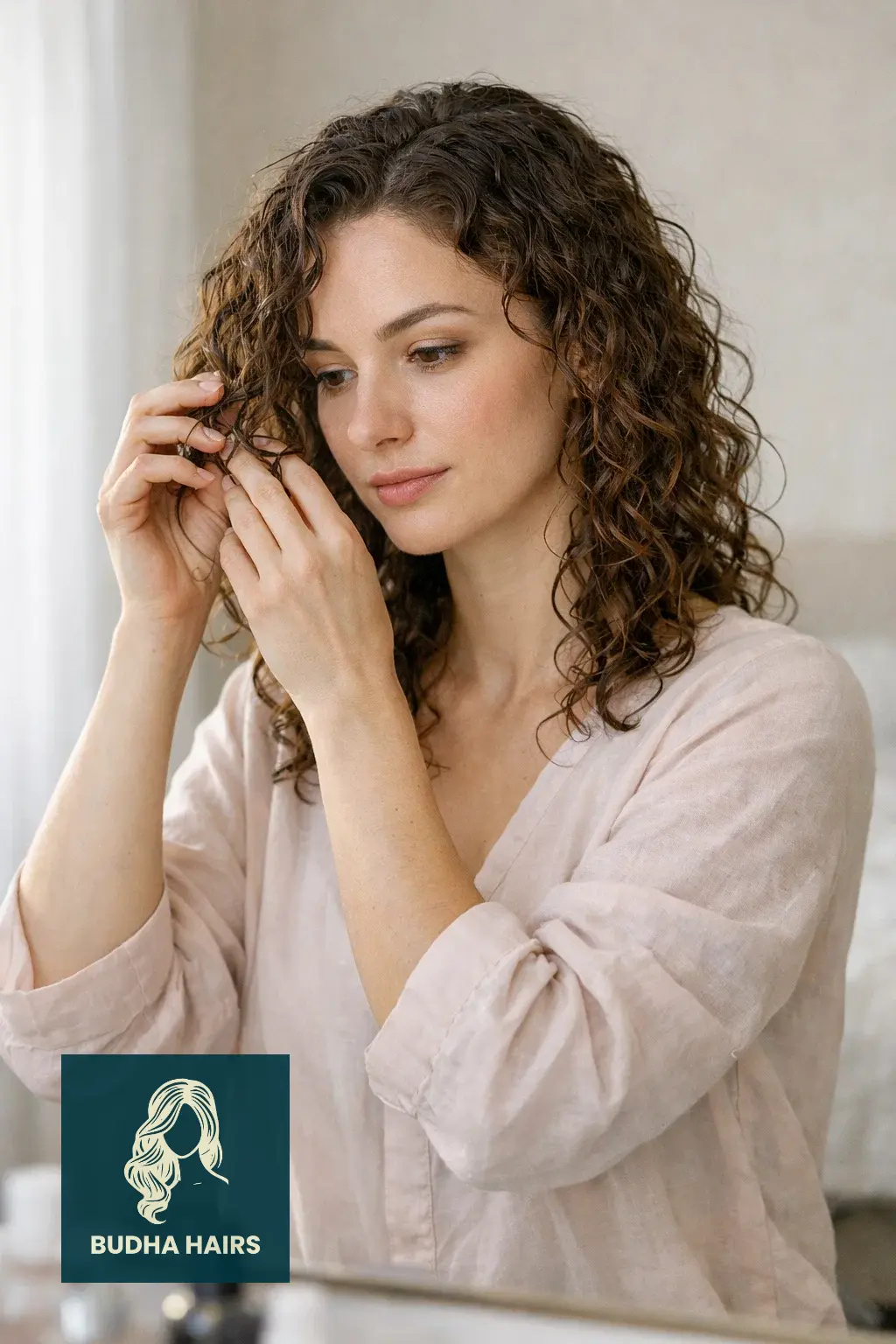
Before picking up a tool, use your fingers. Your fingers are the most sensitive tool you own; they can feel a knot before you rip through it. Gently separate large clumps of hair and gently pry apart major tangles with your hands. This “pre-detangling” saves you a significant amount of pain and breakage later.
3. Start from the Ends (Bottom-Up)
It is instinctual to start brushing from the root, but this packs the knots down toward the ends, creating a massive, unmovable mat. Always start detangling at the very tips of your hair. Once the bottom inch is clear, move up another inch and work your way down again. Repeat this process until you reach the root.
4. Use Products with “Slip”
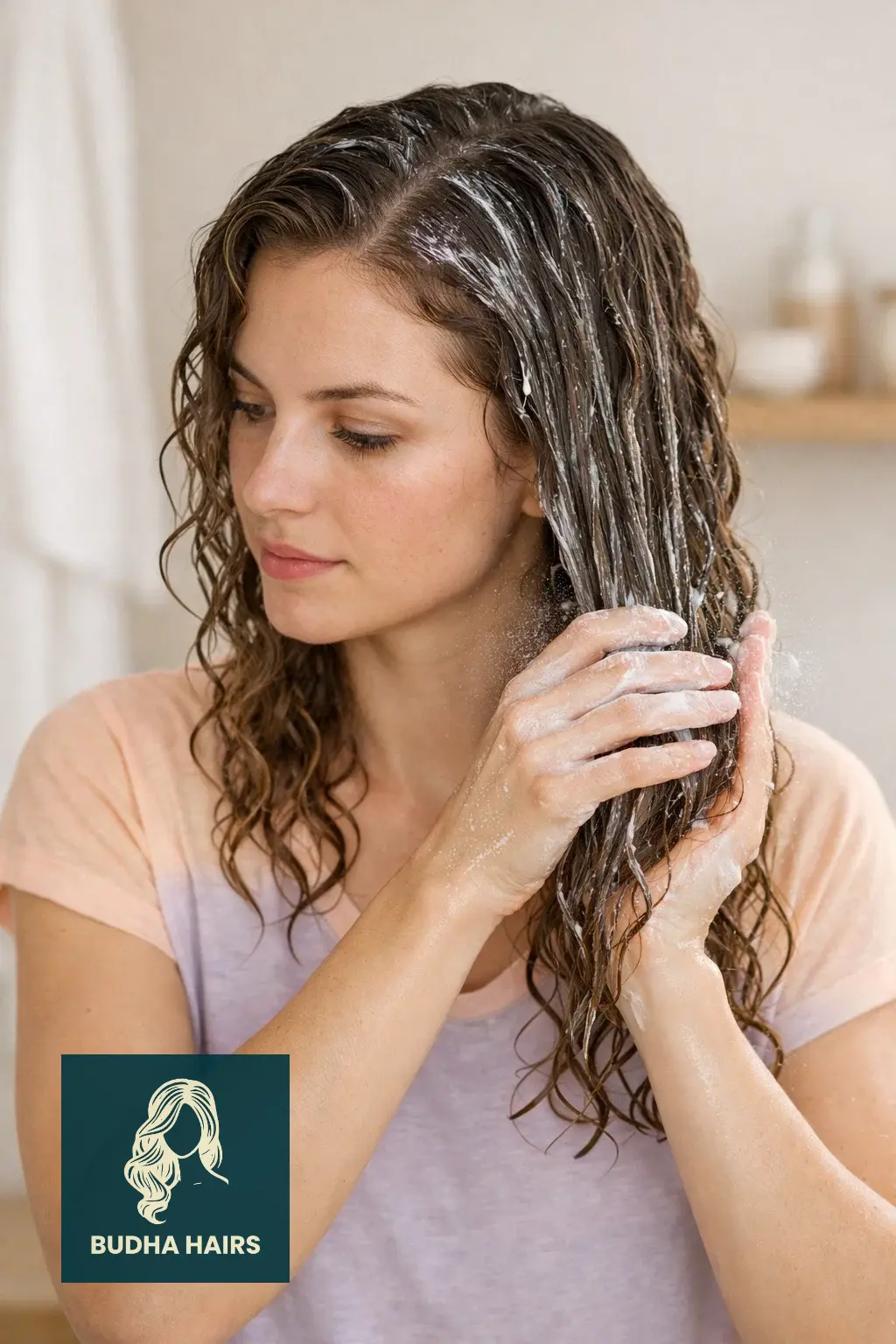
Not all conditioners are created equal. You need a product specifically formulated for “slip”—meaning it reduces friction between strands. Look for ingredients like Marshmallow Root, Slippery Elm, or Behentrimonium Methosulfate. These coat the hair in a mucilage-like layer that allows knots to unravel effortlessly.
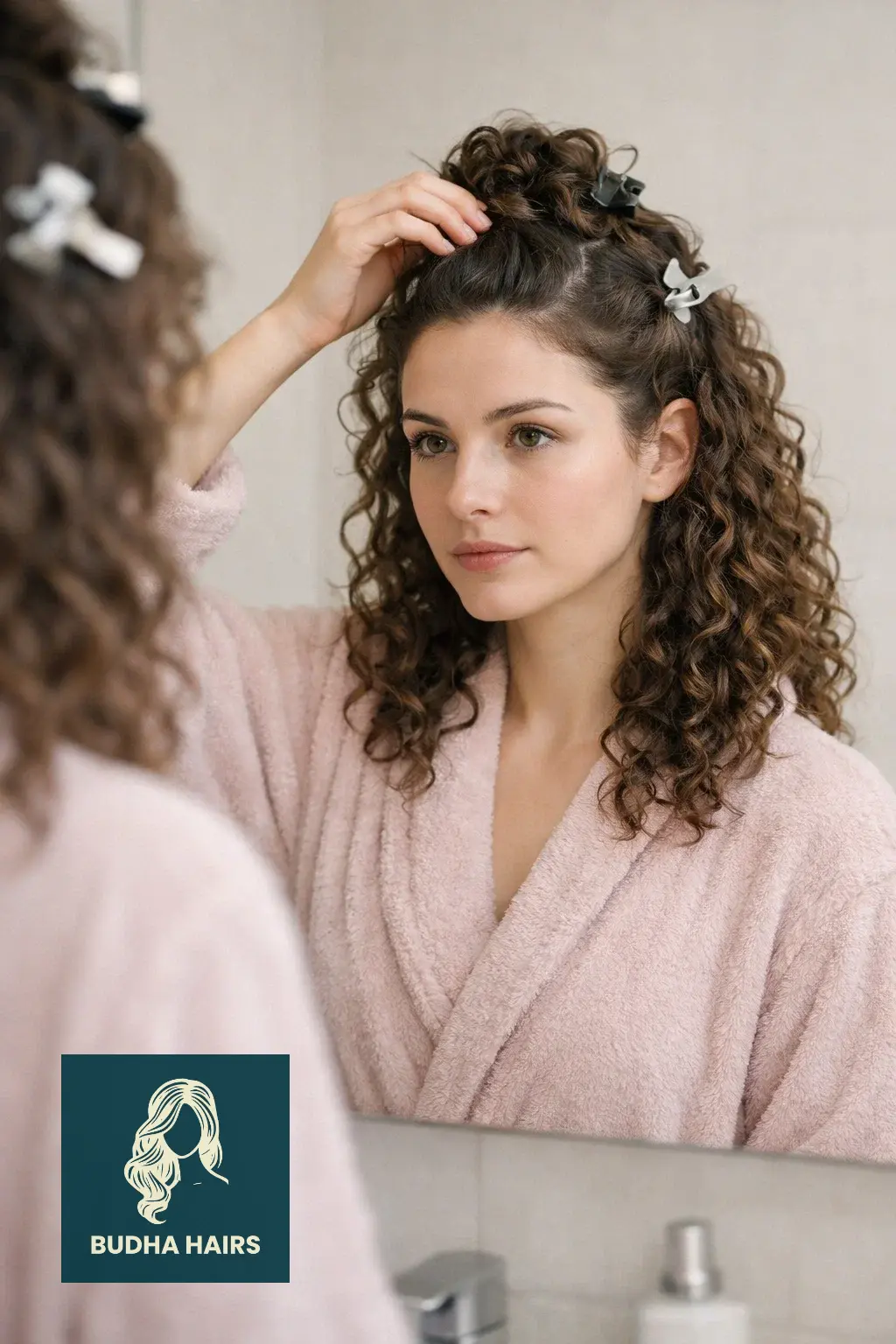
5. Section Your Hair
Trying to detangle a whole head of thick curls at once is overwhelming and ineffective. Divide your hair into 4 to 8 manageable sections using clips. Work on one section at a time, keeping the others clipped away. This ensures you are thorough and prevents dry, detangled hair from getting tangled again with wet hair.
6. The “Praying Hands” Method
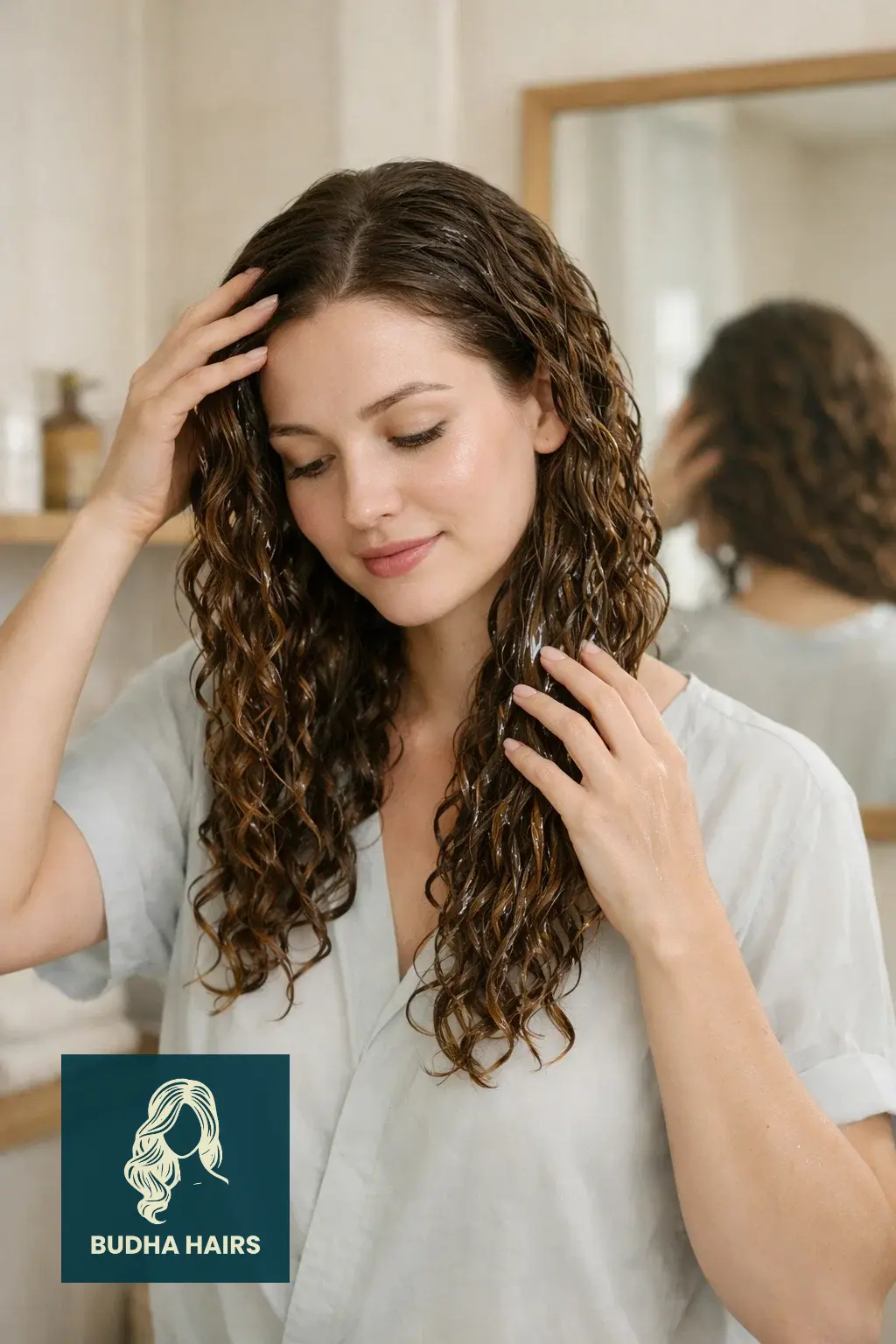
After applying your detangler, smooth the product down the hair shaft using the “praying hands” technique (clasping your hands together over the hair section and sliding down). This aligns the cuticles and helps to elongate the curl, making it easier to spot where the actual knots are hiding.

7. Pre-Poo with Oil
If your hair is severely matted, apply a penetrating oil like Coconut Oil or Babassu Oil to your dry hair before you shower. Let it sit for 30 minutes. The oil softens the hardened sebum and dirt within the knots, making them looser and easier to wash out during the cleansing process.
Improper detangling can lead to damage in fragile areas, especially near the crown. Applying advice from How to Stop Hair Breakage at the Crown helps protect curls while maintaining overall hair strength.
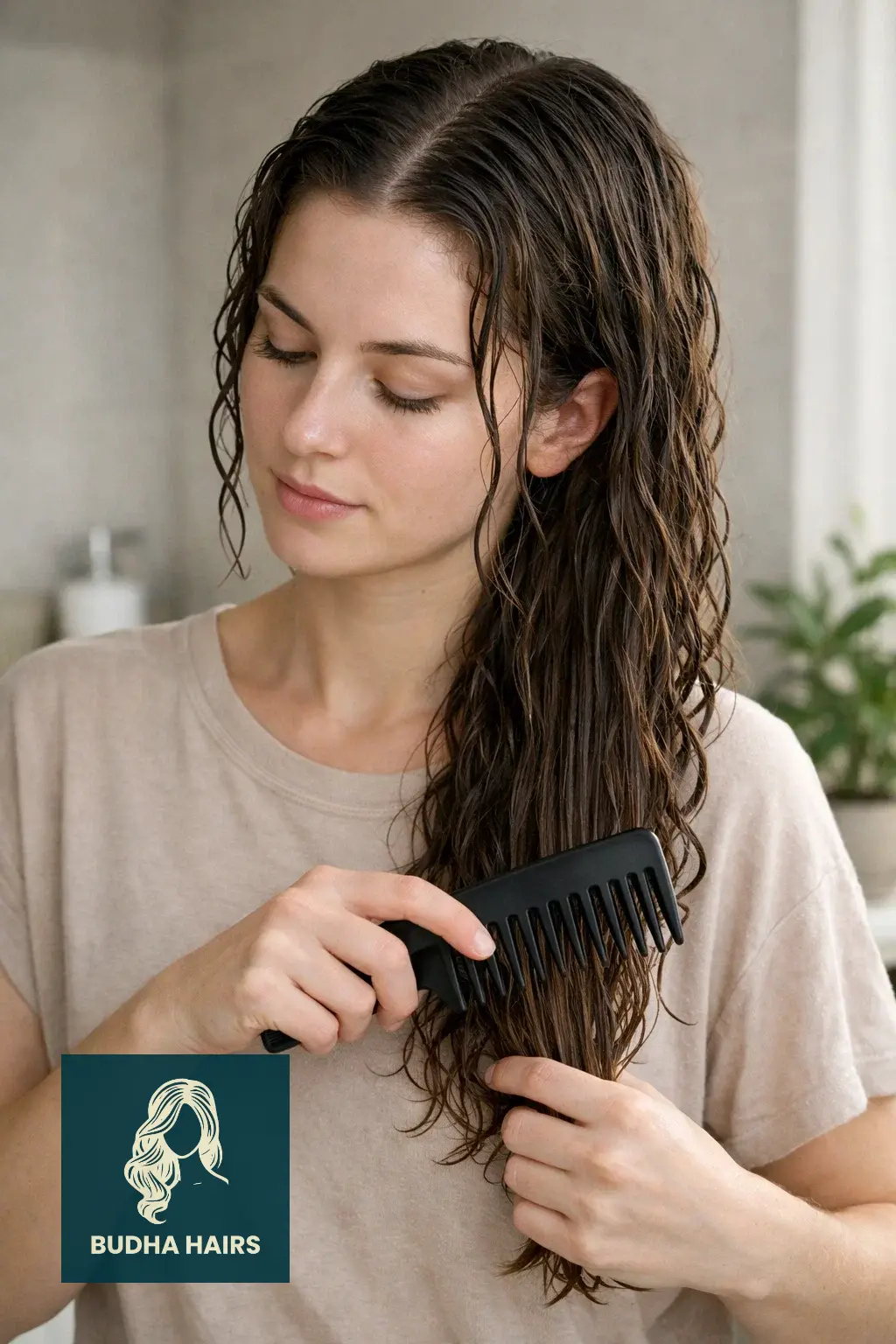
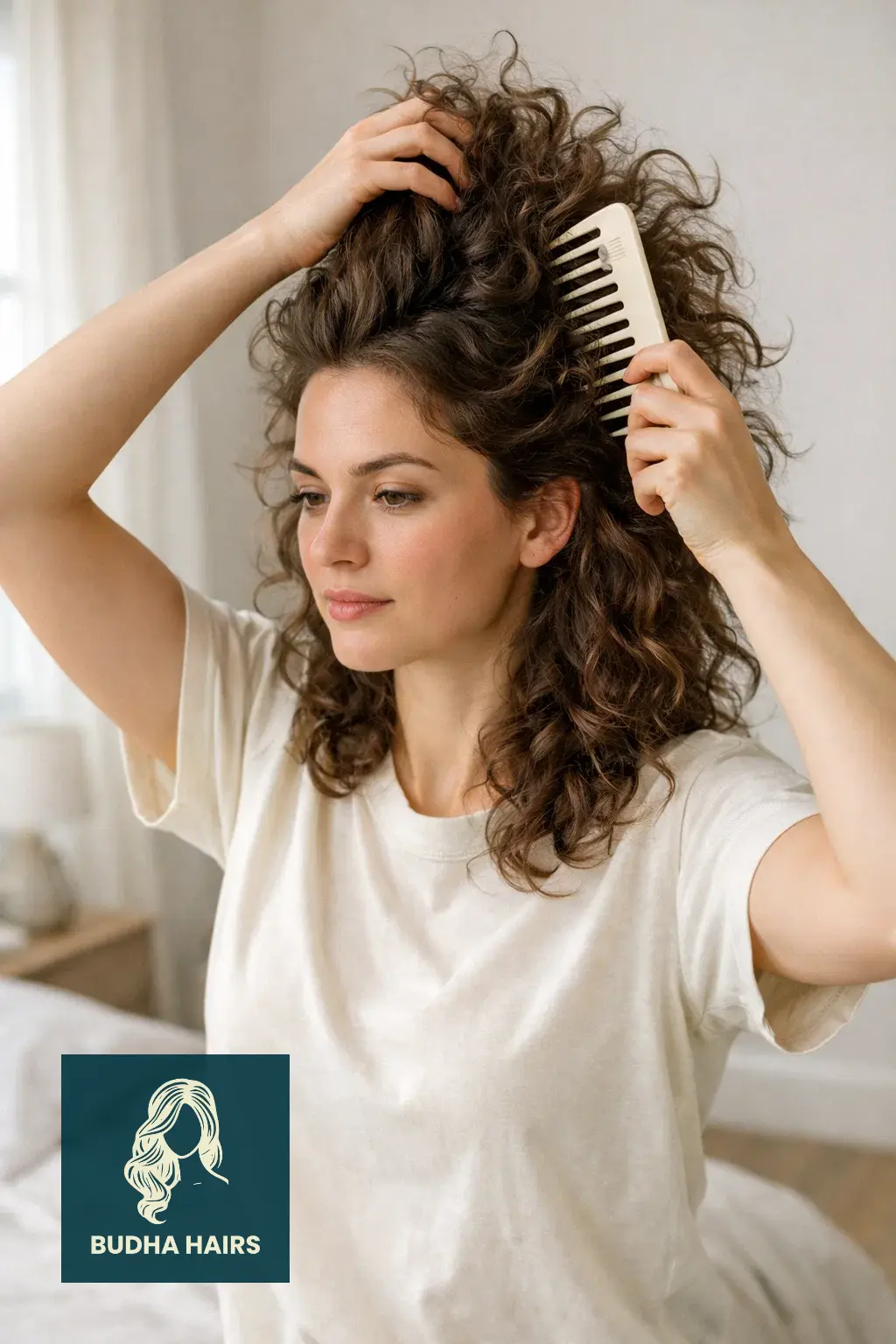
8. Use a Wide-Tooth Comb
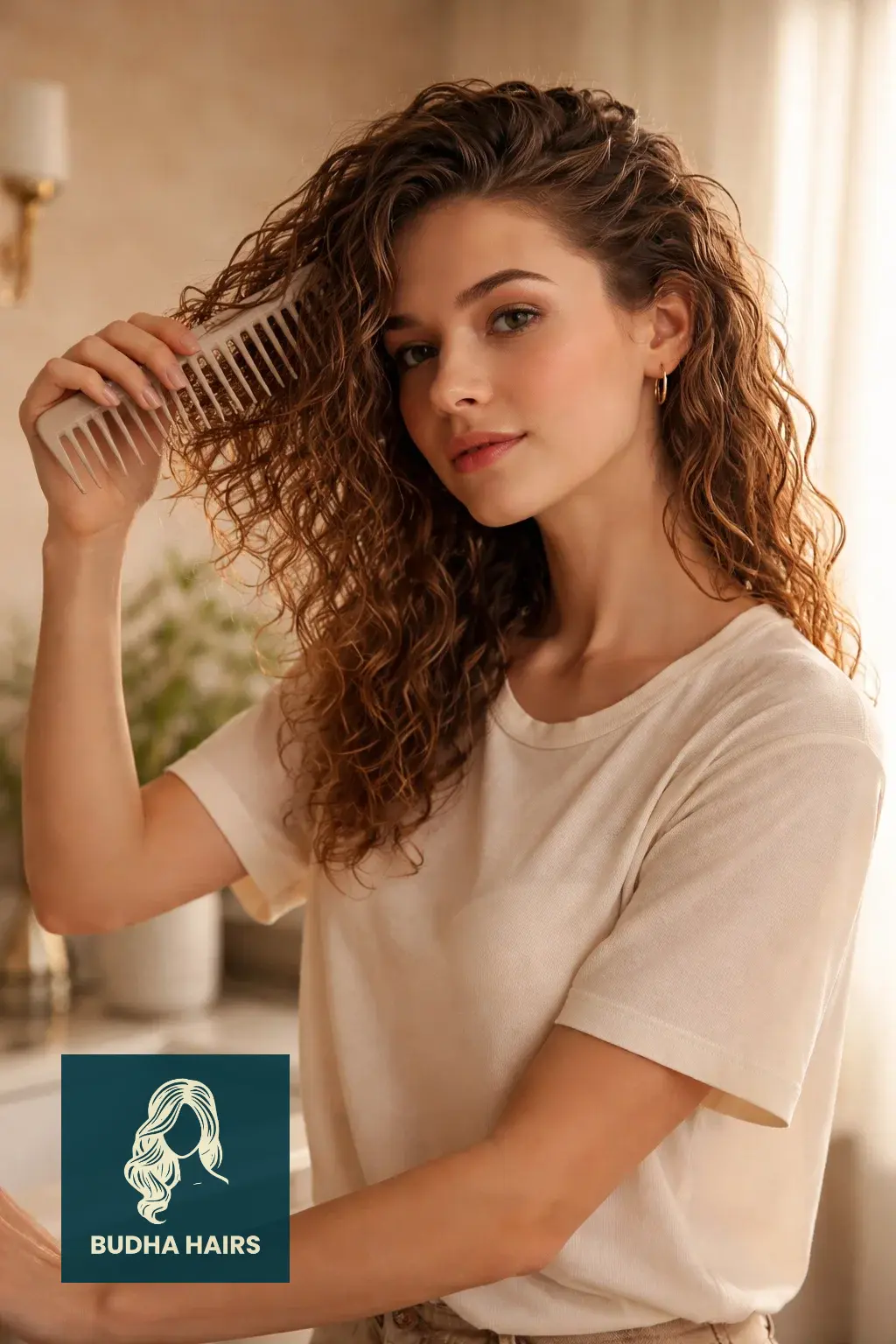
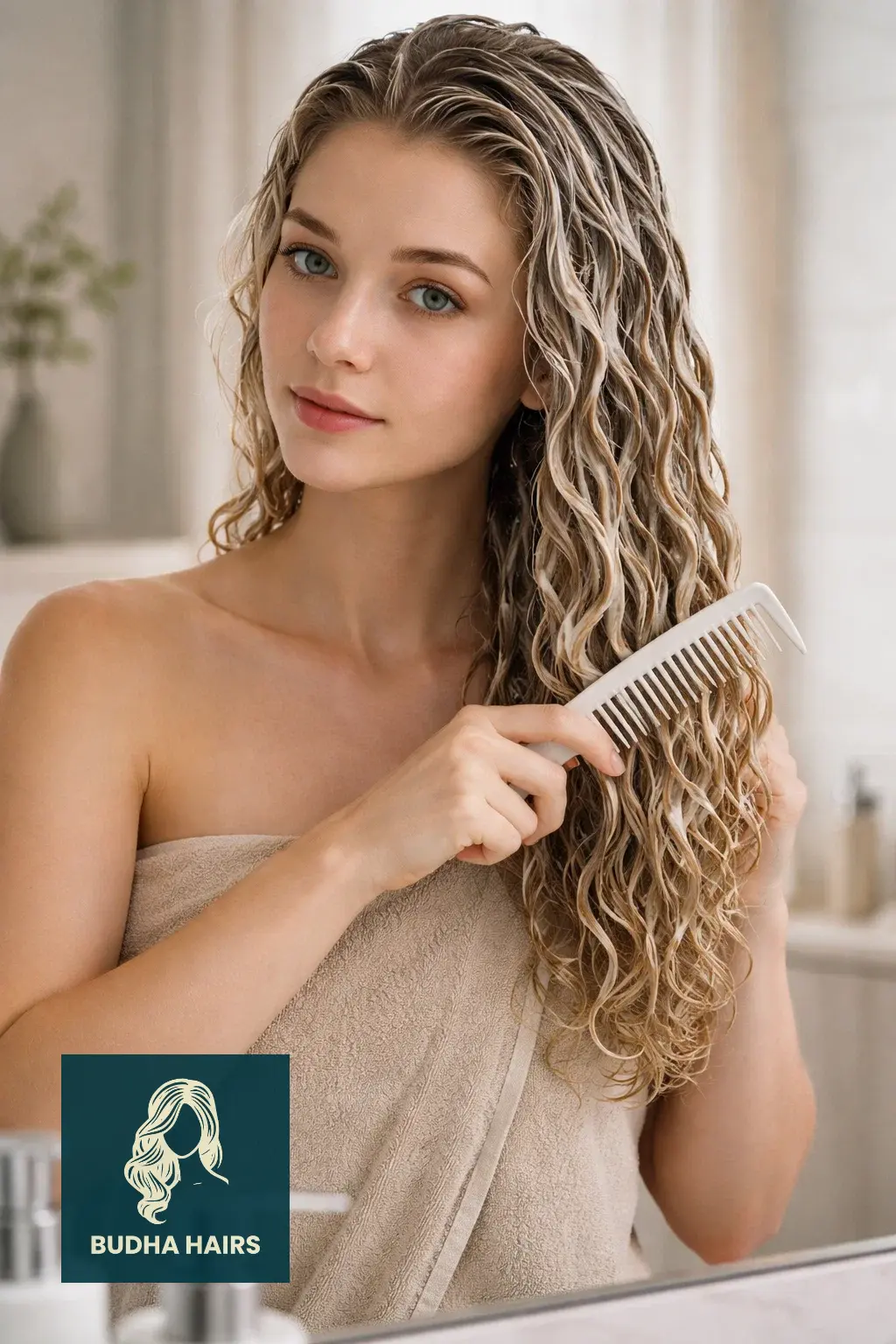
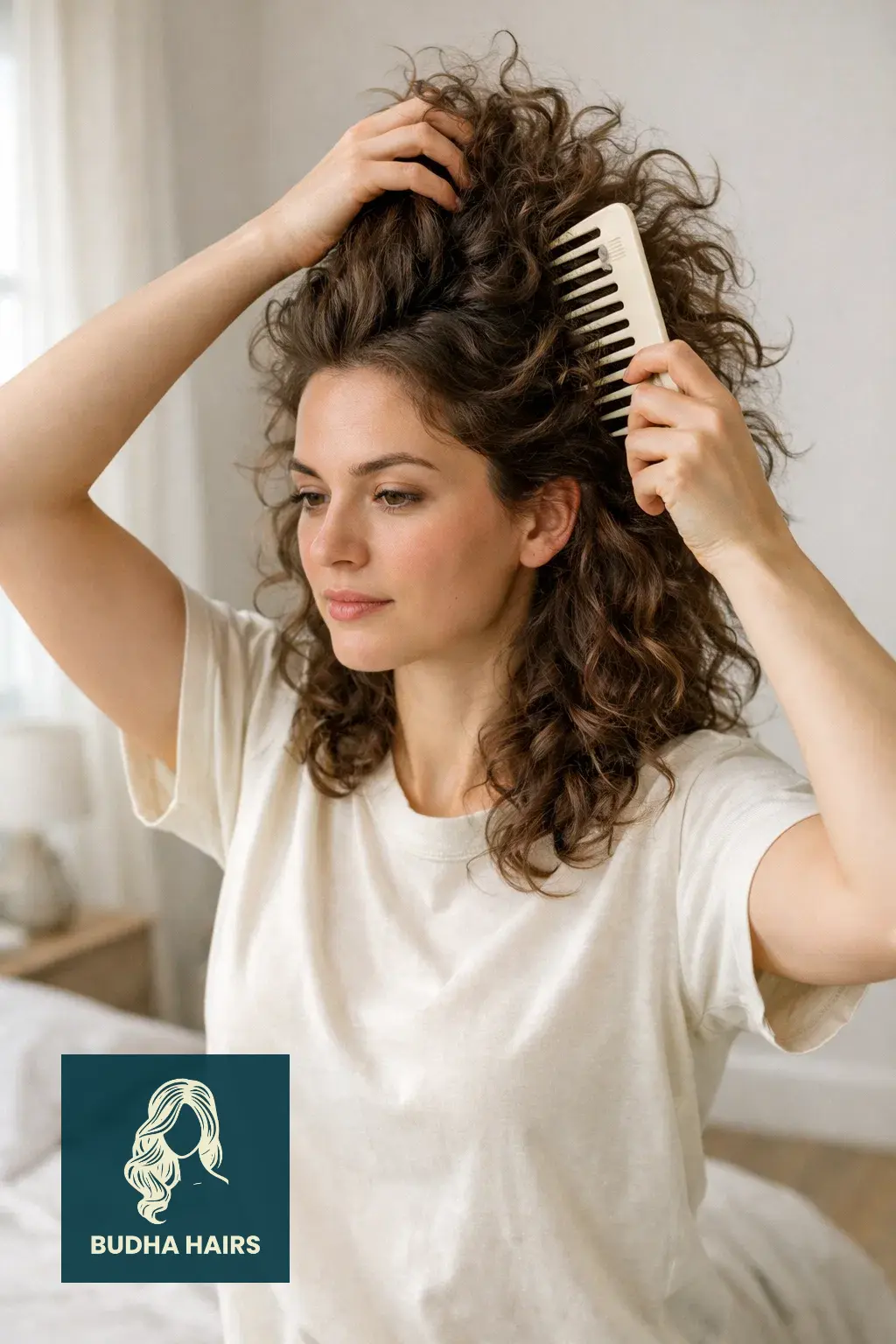
Fine-tooth combs are the enemy of textured hair. Use a sturdy, wide-tooth comb to gently work through the sections. The wide spaces allow the curls to pass through without shredding, whereas fine teeth will snag on every single spiral.
9. Vertical Brushing
If you use a specialized detangling brush (like a Denman or Tangle Teezer), hold the brush vertically (parallel to the hair length) rather than horizontally. This allows the bristles to move with the curl pattern rather than hacking against it, reducing tension and breakage.
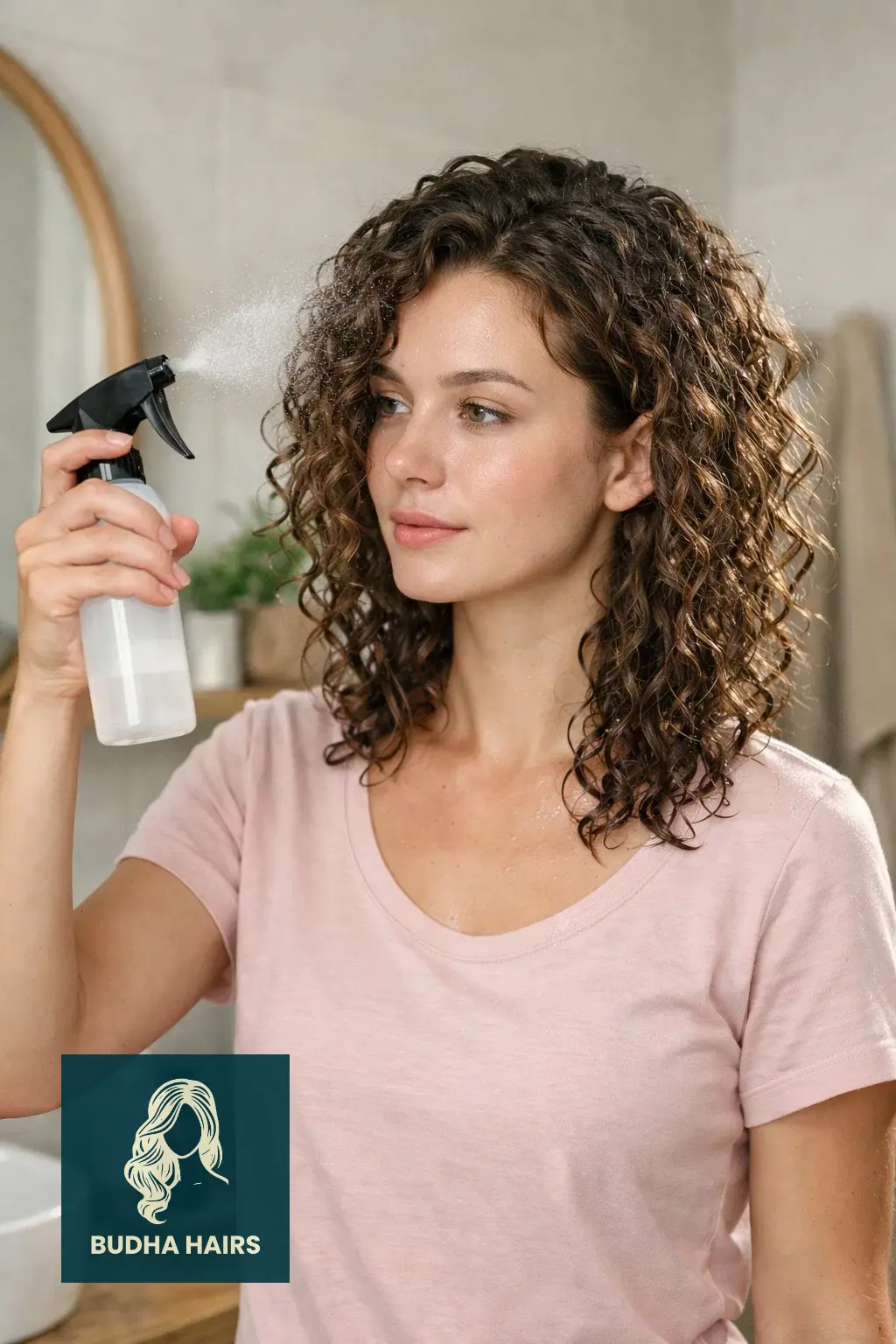
10. Keep a Spray Bottle Handy
Curly hair dries quickly. If a section starts to feel tacky or dry while you are working on it, re-wet it immediately with a continuous mist spray bottle. The hair must remain slippery and wet throughout the entire process to prevent damage.
11. Detangle While Conditioning
The best time to detangle is in the shower while your deep conditioner is sitting on your hair. The steam from the shower opens the hair cuticle, allowing the conditioner to penetrate deeper, and the water pressure helps to weigh the hair down, naturally stretching the curls out.
12. Watch Out for “Fairy Knots”
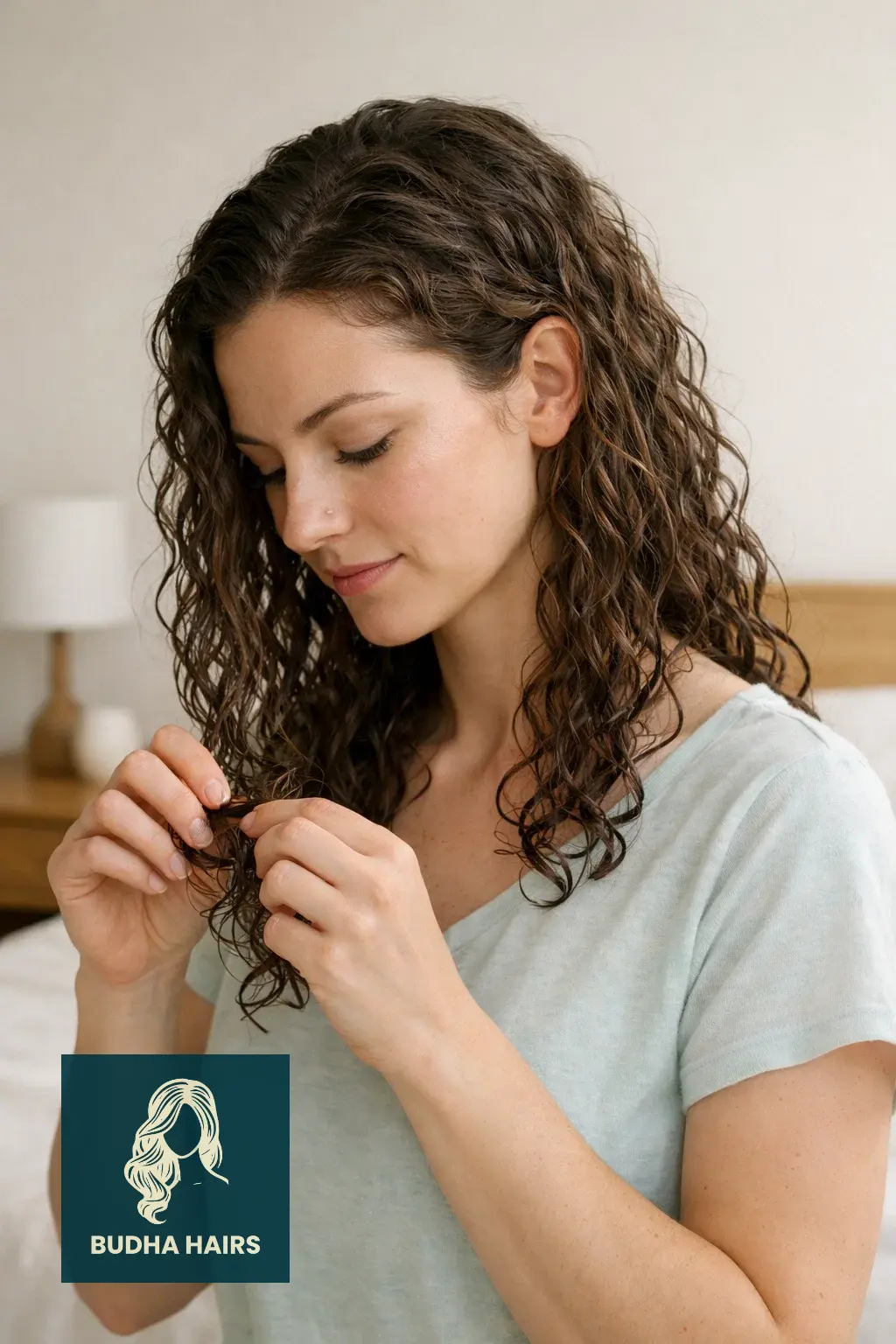
Single-strand knots (tiny knots on a single hair) are common in curly hair. Do not try to untie these; you will damage the hair shaft. The only safe way to remove a fairy knot is to take sharp hair shears and snip it off cleanly just above the knot.
13. Patience is a Tool
Rushing leads to ripping. If you encounter a stubborn knot, do not yank. Stop, apply more conditioner directly to that spot, and use the end of a rat-tail comb (or your fingers) to gently pick the knot apart strand by strand.

Detangling works best when paired with the right post-wash routine. Following guidance from What to Do With Hair After Washing ensures curls stay moisturized, manageable, and less prone to knots.
14. Rinse with Cool Water
After detangling, rinse your hair with cool water. This seals the cuticle (the outer layer of the hair), locking in the moisture and slip you just created. A smooth, closed cuticle is less likely to snag on other hairs and create new tangles as it dries.
15. Sleep Protectively (Prevention)
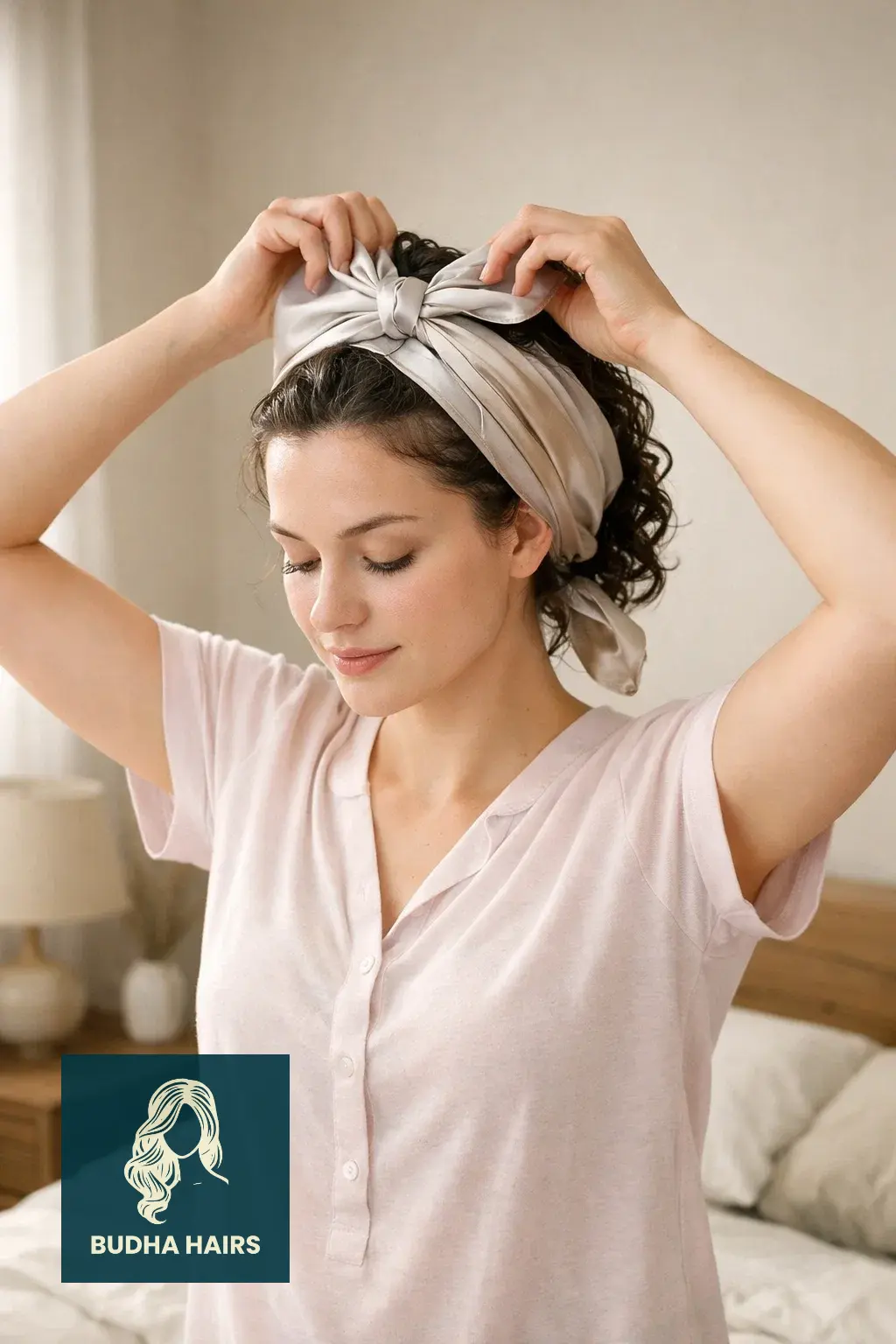
The best way to detangle is to prevent tangles in the first place. Never sleep with loose curls. Pineapple your hair (high loose ponytail) and use a satin bonnet or pillowcase. This prevents the friction that creates “bedhead” mats during the night.
Expert Takeaways: The Golden Rules
- Lubrication is Law: If you hear a “snapping” sound, your hair is too dry. Add more water and conditioner immediately.
- Tools Matter: Fingers > Wide-Tooth Comb > Brush. Always prioritize the gentlest tool first.
- The “Anchor” Technique: When brushing a tough knot, hold the hair firmly at the root with one hand to anchor it. This prevents the tension from pulling on your scalp and causing pain.
- Regular Trims: Split ends act like Velcro, latching onto healthy strands and causing tangles. If you are tangling excessively, you likely need a trim.
FAQs
Conclusion
Detangling curly hair is a delicate art that requires the right environment (wet and conditioned) and the right technique (bottom-up and gentle). By prioritizing “slip” using ingredients like marshmallow root and utilizing mechanical advantages like sectioning, you can transform a painful chore into a damage-free ritual. Remember, the goal is to preserve the integrity of the curl; treat your hair like expensive silk, and it will grow long and defined.

I’m Budha Styler, a hair enthusiast who loves creating beautiful, confidence-boosting looks that feel true to who you are. I’m passionate about exploring new trends, techniques, and textures, and I enjoy turning that knowledge into simple, inspiring ideas anyone can try. Through my work, I hope to help you express your unique style, feel amazing in your own hair, and discover everyday looks that make you shine.