Choosing the perfect Short Pixie Haircuts for Thin Fine Hair can be a liberating experience that instantly transforms a flat, lifeless mane into a style full of body, structure, and personality. When we deal with fine textures, the weight of longer strands often drags the roots down, exposing the scalp and making the hair appear even thinner than it actually is. By cropping the length significantly, we remove that excess weight, allowing the hair to spring up naturally at the root and creating an immediate boost in volume. I find that a well-executed pixie cut creates a strong internal structure that supports the hair, making it look denser and more substantial without requiring hours of styling time or excessive heat damage. The key lies in strategic texturizing and layering techniques that manipulate the hair’s silhouette to fool the eye into seeing a thicker mane.
Furthermore, exploring Short Pixie Haircuts for Thin Fine Hair opens up a world of versatile styling options, from sleek and polished looks to messy, bedhead textures that embrace the natural movement of fine strands. We can utilize specific cutting methods like point cutting, graduated napes, and deep side parts to build weight exactly where it is needed most. I have noticed that adding dimensional color, such as highlights or a shadow root, further enhances these cuts by adding visual depth that mimics the density of thicker hair. Whether you are looking for a bold undercut pixie or a soft feathered pixie, the goal is always to maximize the hair’s potential.
Short Pixie Haircuts for Thin Fine Hair
This guide will walk you through 40 stunning variations designed specifically to amplify fine hair, proving that you do not need thick locks to rock a short, confident style.
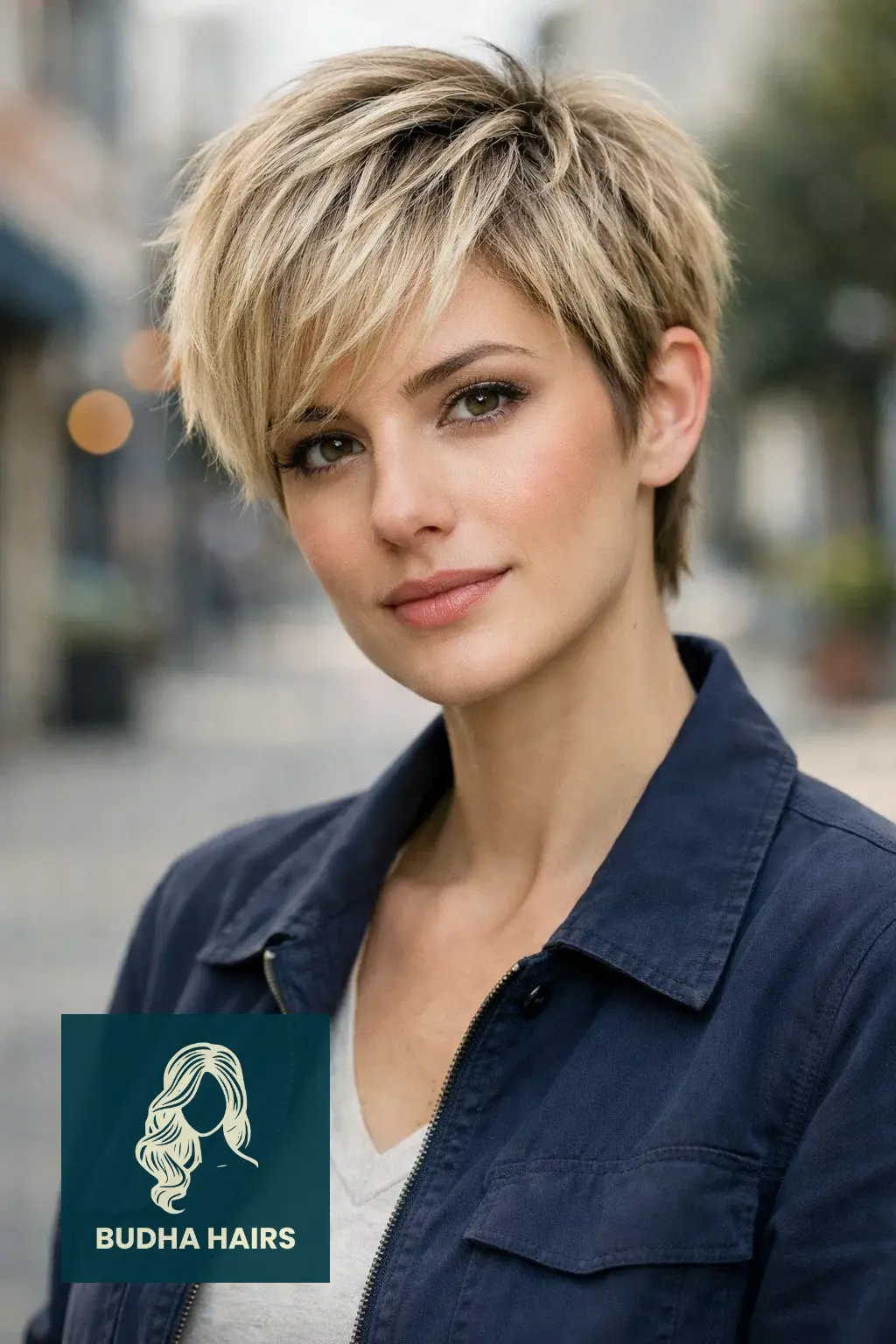
1. The Textured Pixie with Choppy Layers
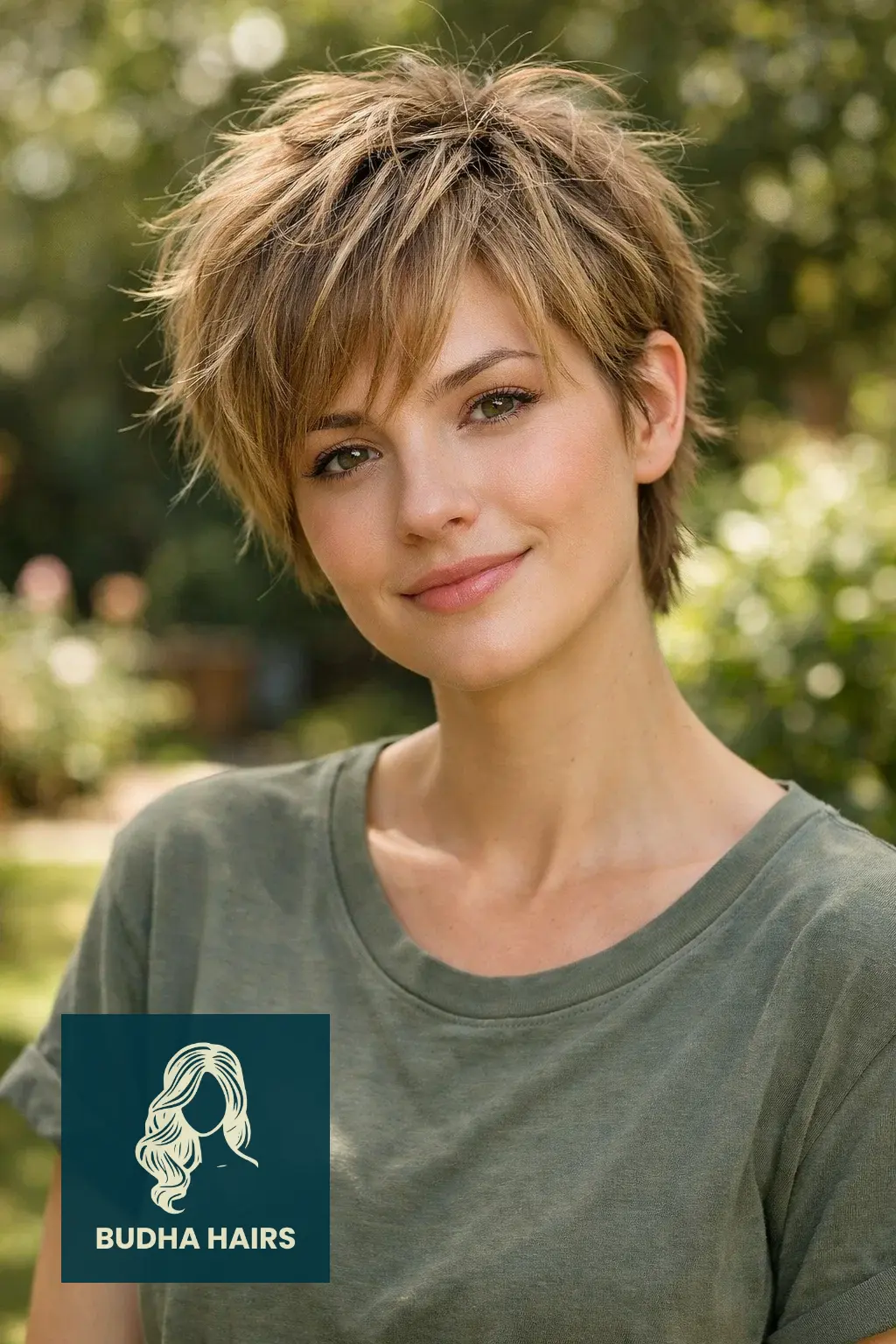
The Textured Pixie is arguably the most effective weapon in our arsenal for combating limp hair because it utilizes choppy layers to create separation and lift. Instead of cutting the hair in one uniform length, which can look transparent on fine hair, we use point-cutting techniques to shatter the ends and create irregular lengths that stack on top of one another. This internal scaffolding props up the hair, preventing it from lying flat against the scalp and exposing thin patches. I find that this jagged, uneven structure is essential for capturing light and creating shadows within the hair, which visually creates a sense of depth and density that a smooth, blunt cut simply cannot achieve on this hair type.
Styling this cut focuses on enhancing that separation to maintain the illusion of thickness throughout the day. We rely on lightweight texturizing pastes or clays rather than heavy gels or oils, which would only weigh the fine strands down and destroy the volume. By warming a small amount of product between the fingers and working it through the dry hair from root to tip, we can define the choppy layers and pull pieces outward to create width. I find that creating this kind of “controlled chaos” distracts the eye from the fineness of the individual strands and instead draws attention to the bold, edgy silhouette of the textured pixie.
2. The Deep Side-Part Asymmetrical Pixie
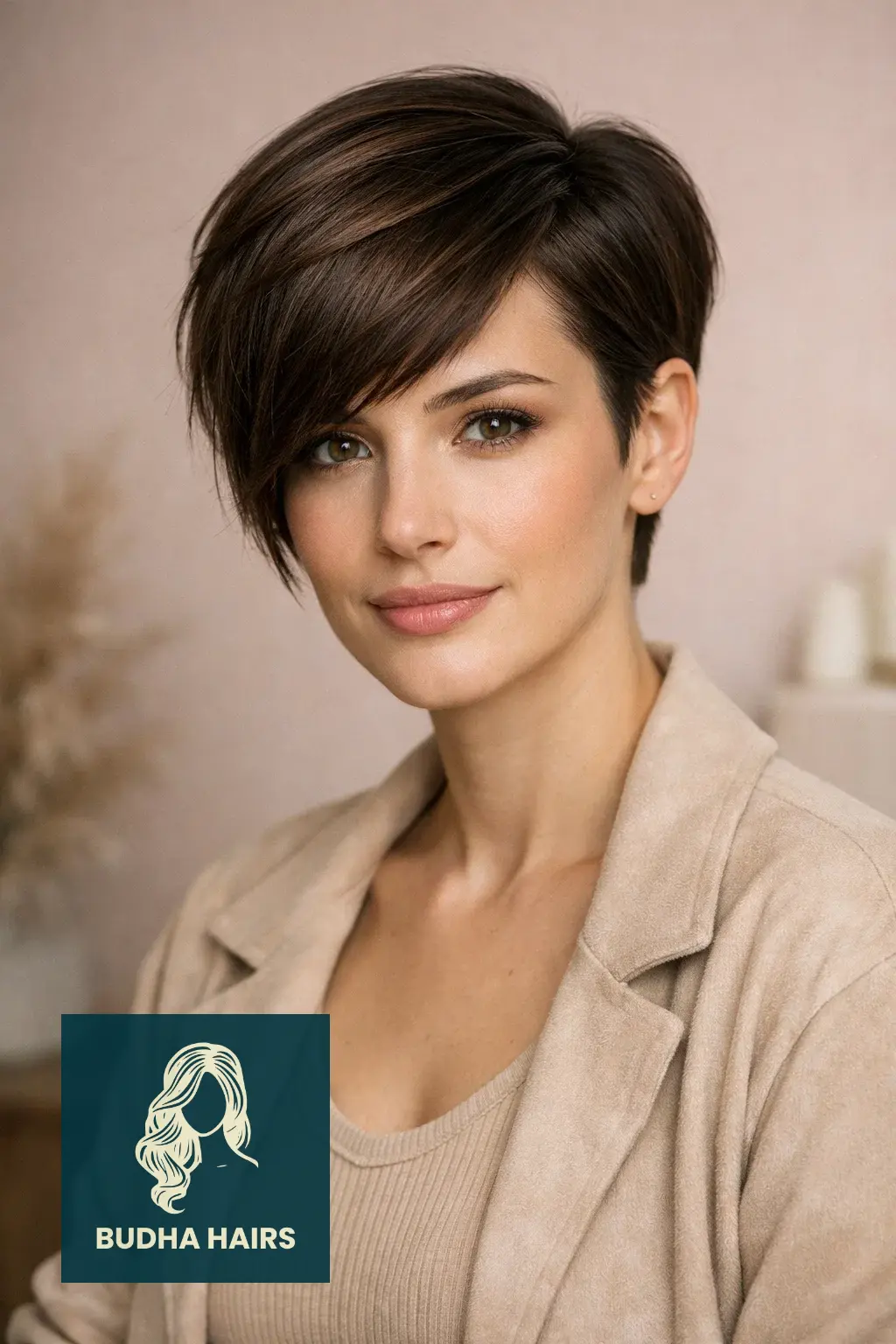
The Asymmetrical Pixie creates a dramatic visual impact by piling the majority of the hair’s weight onto one side of the head, instantly doubling the perceived volume in that area. By incorporating a deep side part, we force the hair against its natural fall, which creates a massive amount of root lift and volume right at the parting line. The contrast between the closely cropped side and the longer, sweeping side creates a dynamic imbalance that makes the hair look intentionally styled and thick, rather than sparse. I find that this style is particularly flattering for fine hair hairstyles because it concentrates the density where it matters most—framing the face—while keeping the thinner areas at the back and sides neatly tapered and controlled.
Maintenance for this look is surprisingly low, despite its high-fashion appearance, making it a favorite for those who want maximum impact with minimum effort. We simply need to blow-dry the longer fringe section with a round brush to smooth it out and create a sweeping curve that hugs the cheekbone. The shorter side requires almost no styling, just a quick trim every few weeks to keep the perimeter sharp and clean. I find that the asymmetrical pixie distracts observers from the texture of the hair by drawing the eye to the bold geometry of the cut, making it a brilliant optical illusion for anyone struggling with thin fine hair.
3. The Undercut Pixie with Voluminous Top
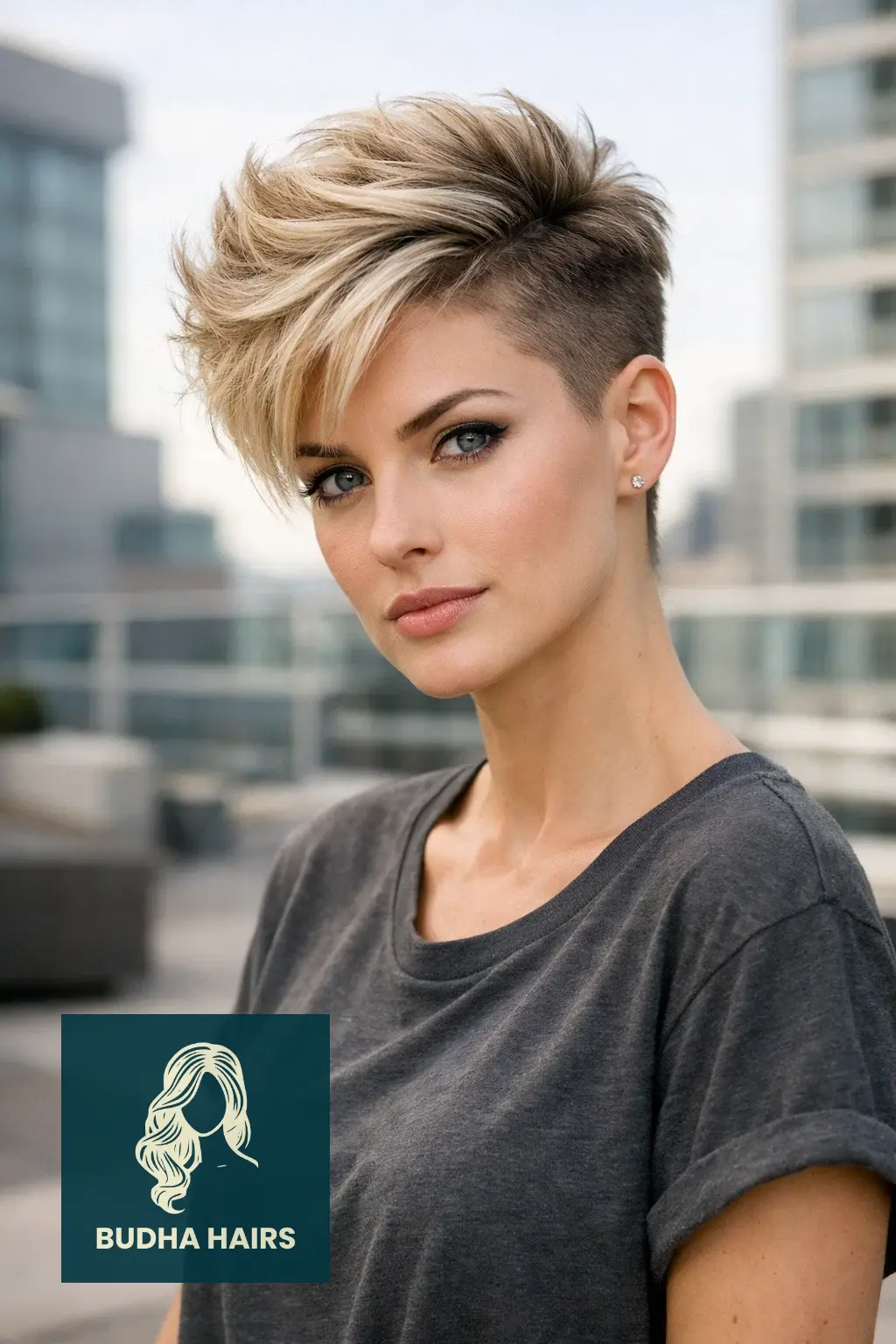
For those who want to make a bold statement while solving the problem of thinness at the hairline, the Undercut Pixie is a powerful and modern solution. By shaving or closely buzzing the sides and back, we eliminate the wispiest, thinnest parts of the hair that often sit around the ears and nape, leaving a stark, clean canvas. This severe reduction of bulk at the perimeter creates a high-contrast backdrop that makes the longer hair on top appear significantly thicker and more voluminous by comparison. I find that removing the “weak” hair at the edges forces all the attention upward to the crown, where we can concentrate our styling efforts on creating height and texture.
Styling the top section of an undercut pixie allows for immense versatility, ranging from a faux-hawk to a soft, forward-swept fringe. Because there is less hair overall to manage, we can spend more time blow-drying the top section with a root-lifting mousse to achieve incredible vertical volume that holds all day. The disconnect between the shaved sides and the long top allows for better airflow to the roots, keeping them dry and lifted. I find that this edgy style exudes confidence and completely hides the fragility of fine strands, replacing them with a look of strength and intentional design that defines modern short hairstyles for women.
4. The Classic Feathered Pixie
The Classic Feathered Pixie creates a soft, ethereal silhouette that embraces the natural lightness of fine hair rather than fighting against it. This cut features longer layers that are skillfully razor-cut or textured to flick backward, creating a wind-swept effect that opens up the face. Feathered layers are instrumental in building soft volume because they allow the hair to stack gently without the harsh lines that can make thin hair look stringy. I find that this style is timeless and sophisticated, offering a mature yet fresh look that maximizes the coverage of the scalp while maintaining a light, airy feel that prevents the hair from looking weighed down.
To achieve the signature swept-back look, styling requires a medium round brush and a blow dryer to direct the hair away from the face while lifting at the roots. We focus on bending the ends of the hair backward to create that beautiful, feathered movement that looks so elegant. A light-hold hairspray is usually all that is needed to set the style, as heavy waxes would collapse the soft layers. I find that the feathered pixie is perfect for those who want a softer transition into short pixie haircuts, as it retains enough length to feel feminine and versatile while providing the necessary structural support for fine textures.
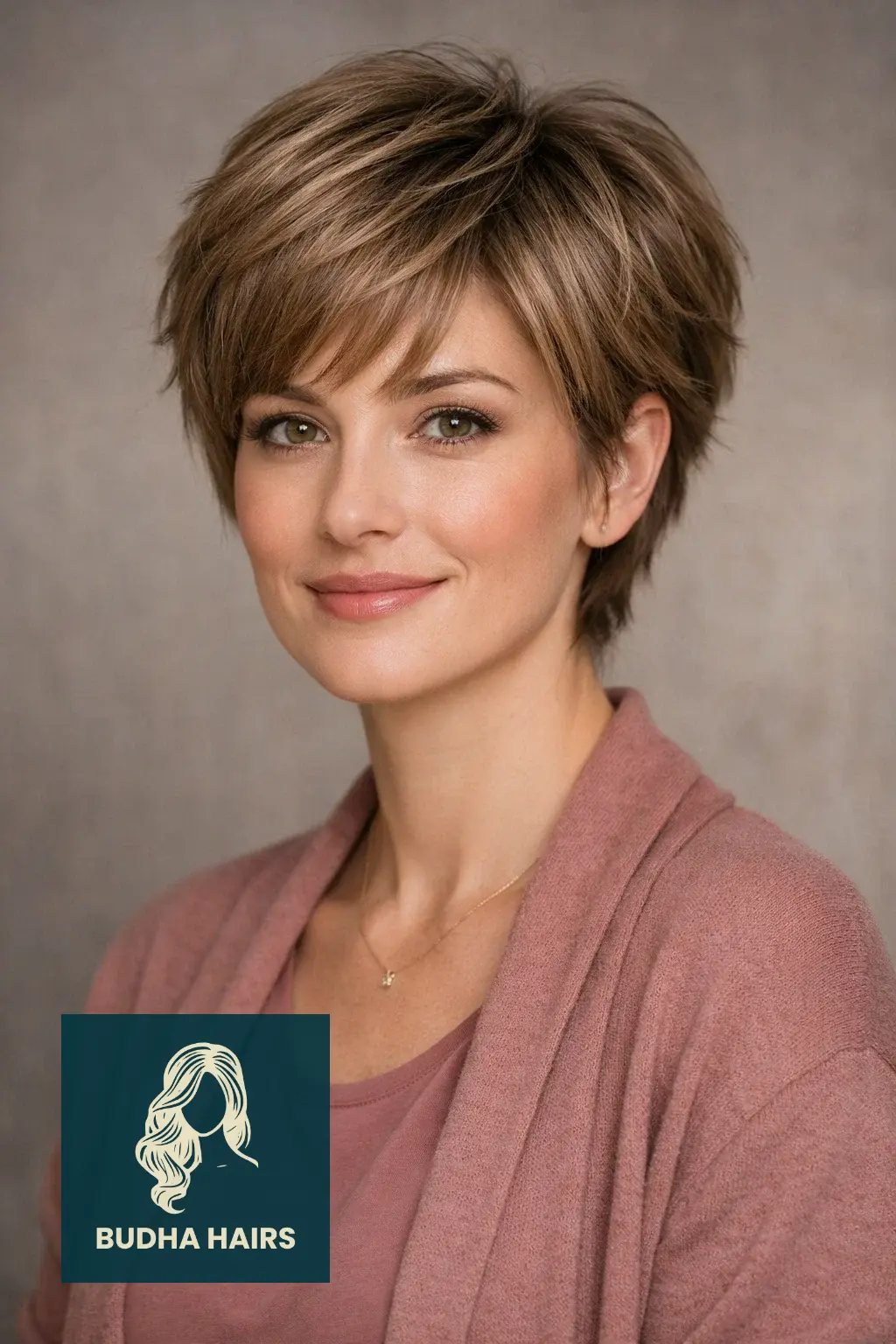
5. The “Bixie” (Pixie Bob Hybrid)
The Bixie, or Pixie Bob, is an excellent transitional style that sits comfortably between a traditional short crop and a bob, offering the best of both worlds for thin fine hair. This cut maintains a bit more length around the ears and nape, similar to a bob, but incorporates the short, volumizing layers of a pixie throughout the crown and interior. This combination prevents the “triangle shape” that bobs can sometimes create on fine hair and instead offers a rounded, fuller profile. I find that the extra length provides more surface area to play with texture, while the internal layering ensures the roots aren’t dragged down by gravity.
Styling a Bixie offers incredible versatility, allowing for tucking behind the ears for a sleek look or using a curling wand to add waves for extra body. Because the hair is slightly longer, we can use a volumizing mousse on damp hair and blow-dry with a large round brush to create a smooth, bevelled shape that looks incredibly lush. The graduated layers at the back help to build a weight line that gives the illusion of thickness at the nape. I find that this style is particularly approachable for those who are nervous about going super short, as it retains the face-framing softness of a bob while delivering the root lift of a textured pixie.
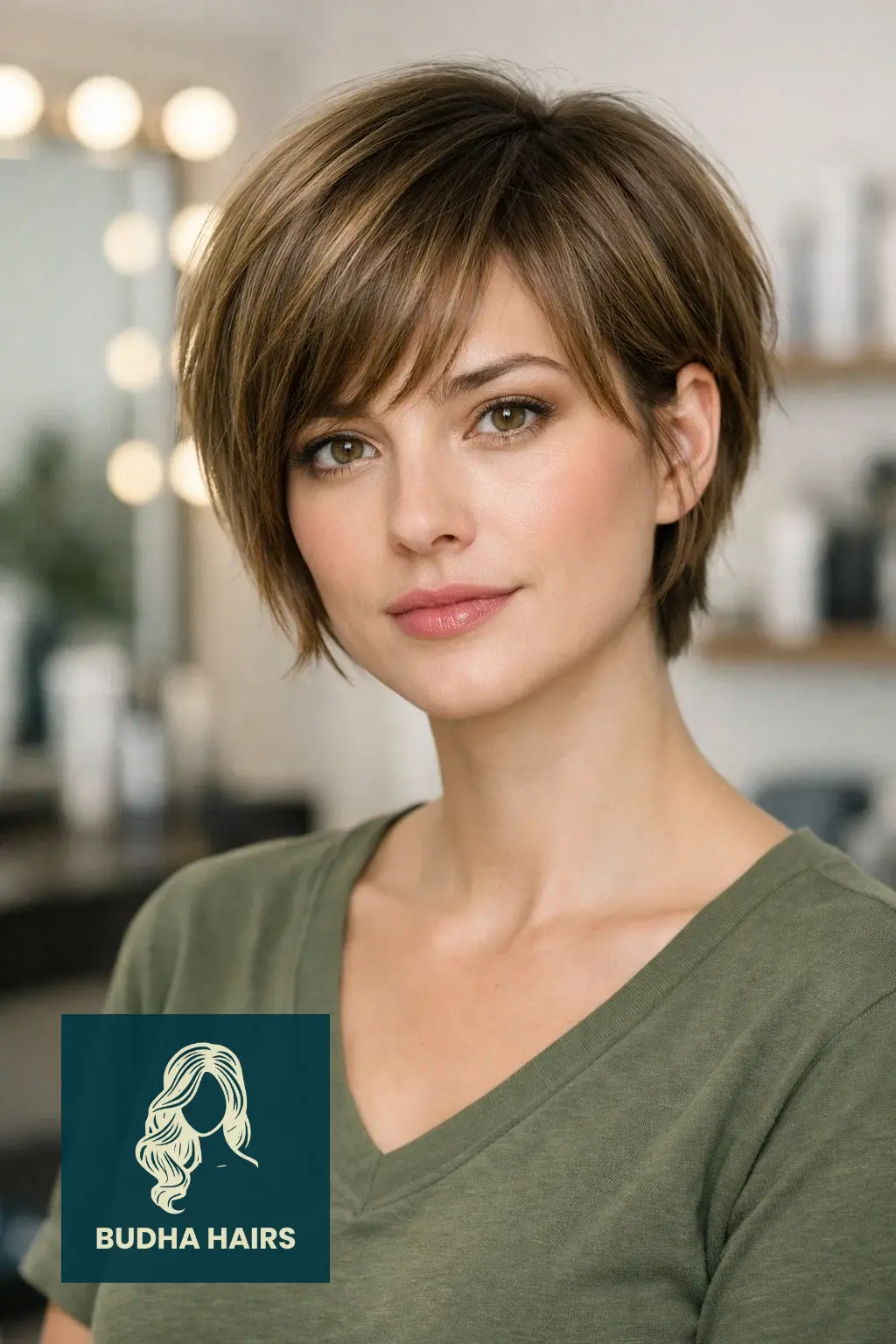
6. The Spiky Pixie with Tapered Nape
The Spiky Pixie focuses on verticality and separation to distract from the lack of density, creating a playful and energetic aesthetic. By cutting the hair short all over and texturizing the tips, we encourage the strands to stand upright rather than lying flat against the head. The tapered nape is kept very tight and clean, which pushes the visual weight of the haircut upward toward the crown, effectively lifting the entire silhouette. I find that creating spikes allows light to pass through the hair in a way that looks intentional and airy, creating a “shattered” texture that masks the scalp visibility that often plagues fine hair.
Styling this look is quick and efficient, relying on a strong-hold matte wax or pomade to define the individual spikes. We apply the product to dry hair, twisting small sections with our fingertips to create separation and height at the root. The key is to keep the product at the ends and mid-lengths to avoid greasing up the roots, which defeats the purpose of the volume. I find that the spiky pixie is one of the most low-maintenance options among Short Pixie Haircuts for Thin Fine Hair, as it essentially styles itself with just a bit of hand manipulation, making it perfect for busy lifestyles.
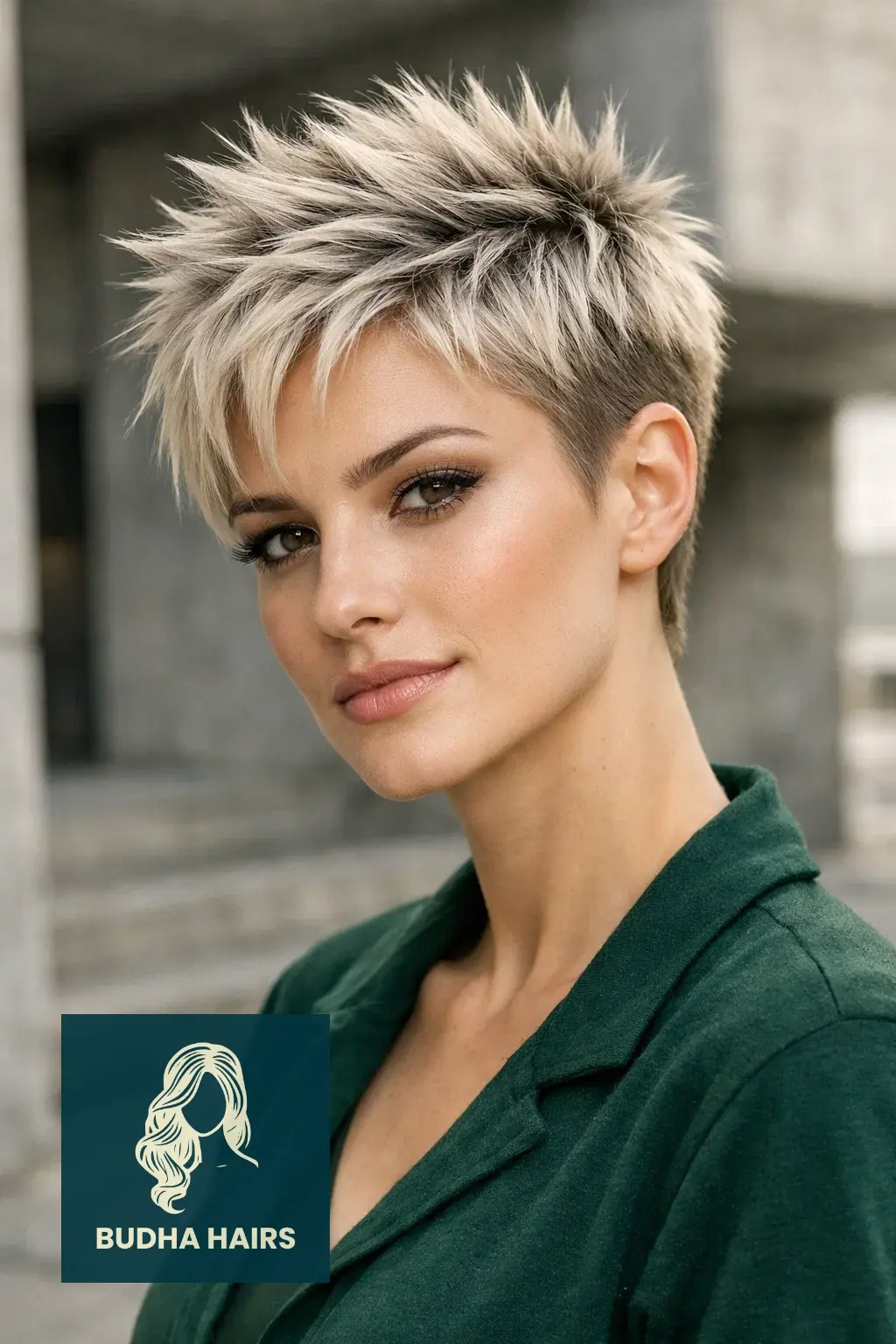
7. The Platinum Blonde Pixie with Shadow Root
Color plays a massive role in the perception of hair thickness, and the Platinum Blonde Pixie utilizes the science of hair coloring to physically thicken the strands. The process of bleaching the hair to platinum swells the hair cuticle, creating a rougher texture that naturally holds more volume and grips better when styled. To enhance this effect, we incorporate a shadow root—keeping the roots darker than the ends—to create an optical illusion of depth and density at the scalp. I find that this contrast tricks the eye into seeing a denser head of hair because the darkness at the base mimics the look of thick hair growth shadows.
Maintaining this look involves regular toning to keep the blonde icy and fresh, which keeps the hair looking deliberate and high-fashion. The texturized, bleached strands respond beautifully to dry shampoo and texture sprays, which add even more grit and volume. We can style this cut sleek and smooth for a high-impact modern look, or messy and tousled to maximize the swelling effect of the bleach. I find that combining a bold color change with a choppy pixie cut is a transformative strategy that completely reinvents fine hair, turning a potential insecurity into a striking style statement.
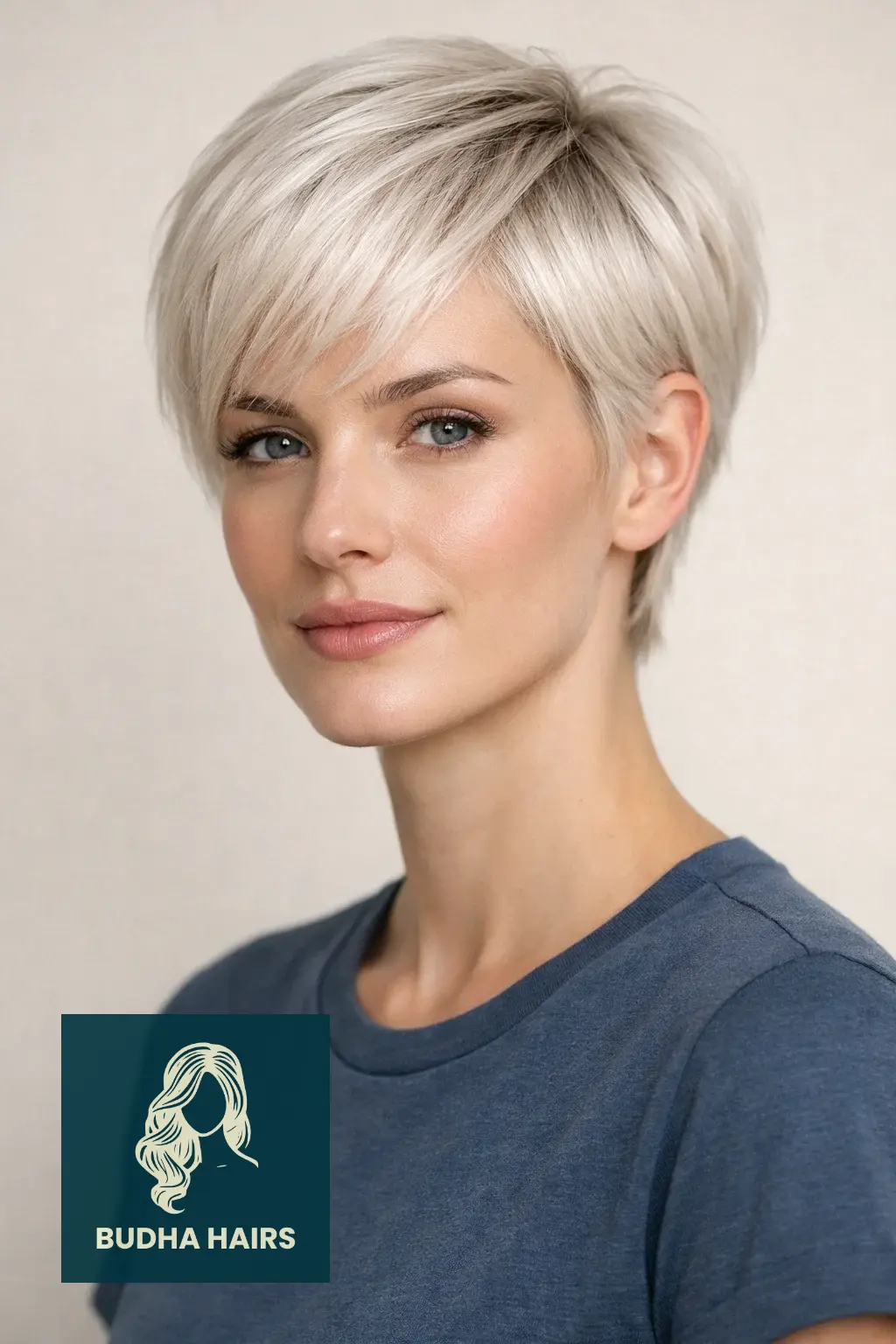
8. The Shaggy Pixie with Curtain Bangs
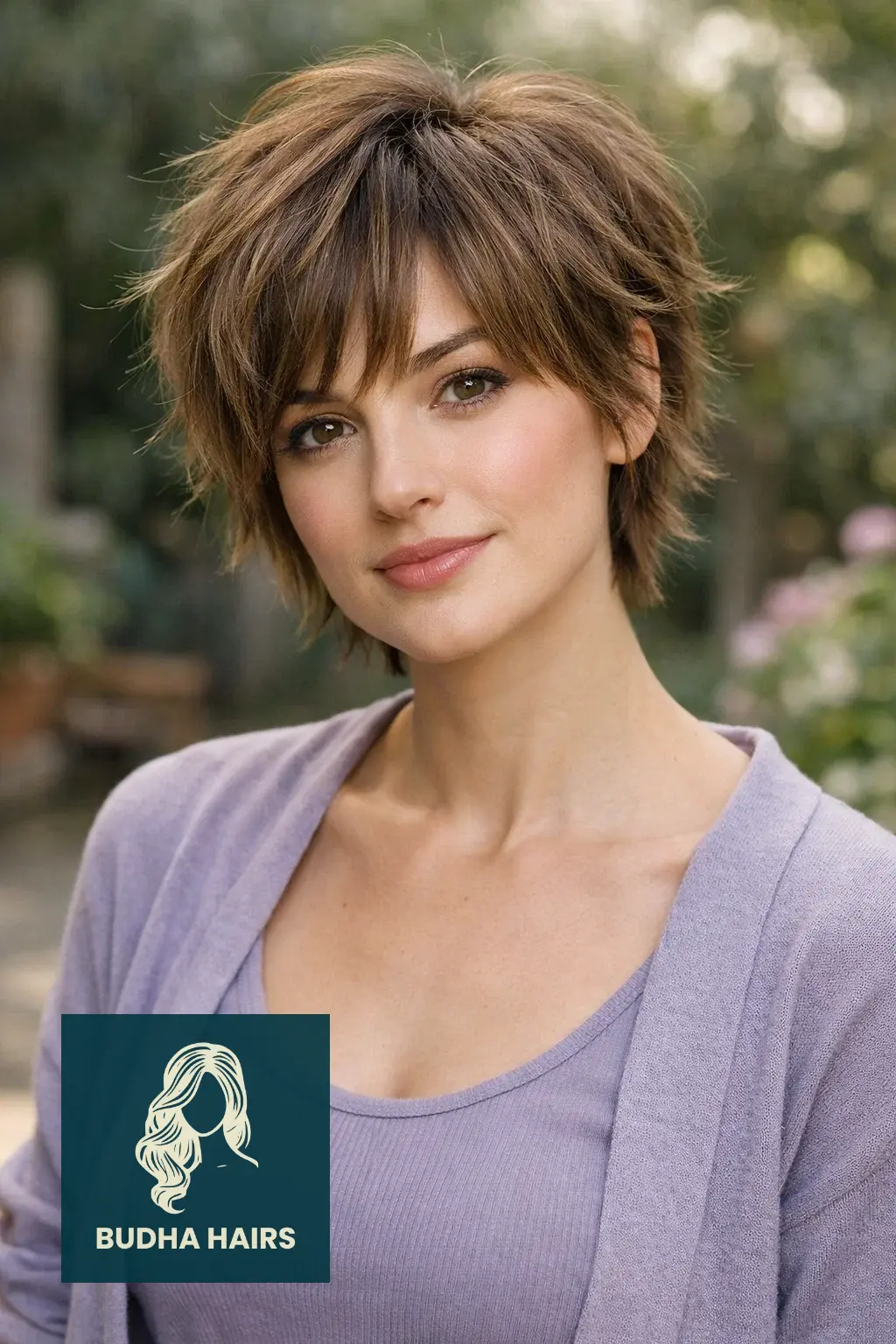
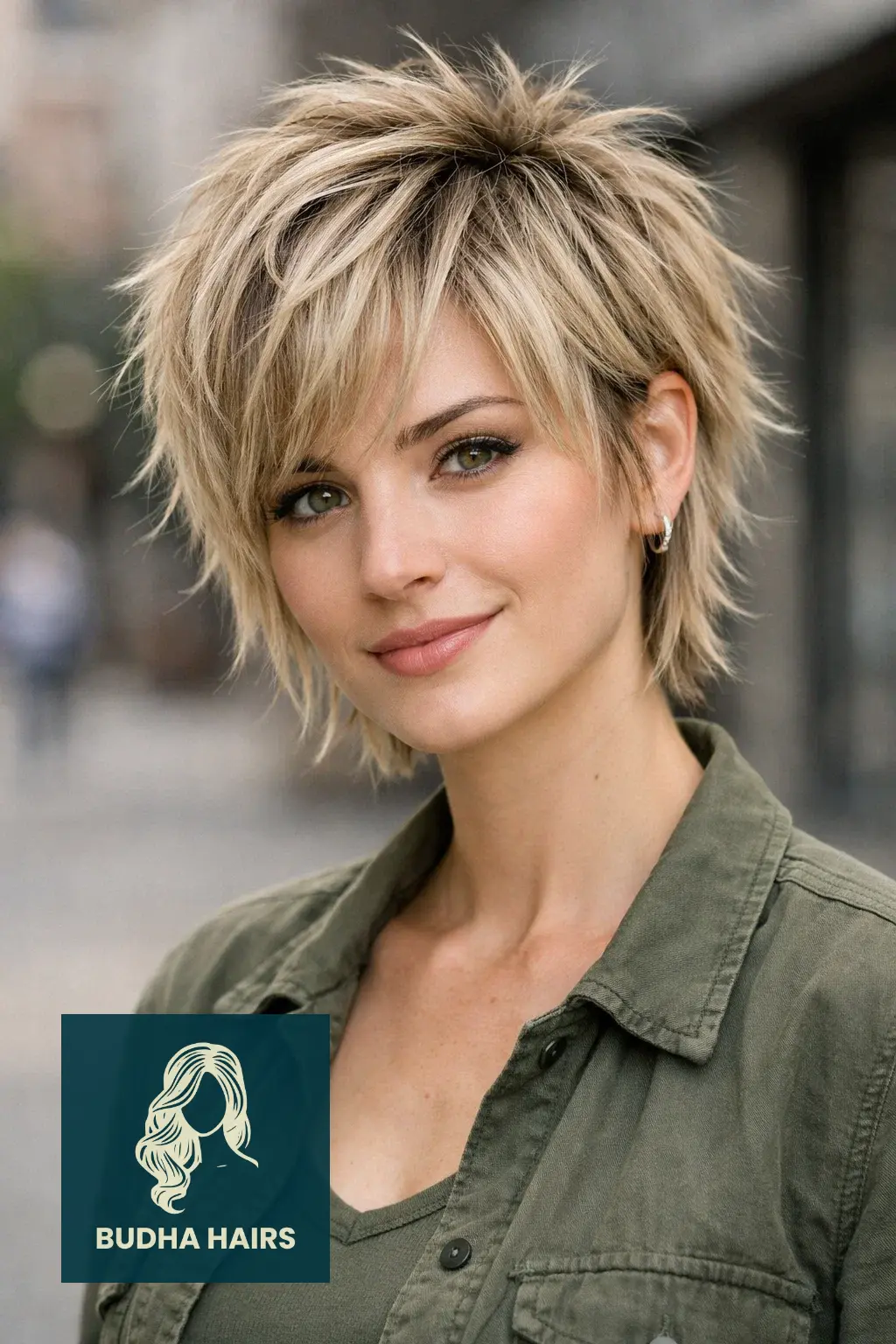
The Shaggy Pixie embraces a messy, rock-and-roll aesthetic that is perfect for disguising the delicate nature of fine hair. This cut features varying lengths, with longer pieces around the ears and nape, and shorter, jagged layers at the crown. We pair this with soft curtain bangs that frame the face and blend seamlessly into the longer side pieces. I find that the “shag” element introduces a lot of natural texture and movement, making the hair appear fuller because it occupies more space around the head than a sleek cut would. The curtain bangs also add coverage to the forehead, hiding a potentially sparse hairline.
To style the Shaggy Pixie, we lean heavily on sea salt sprays or texture mists to encourage that gritty, lived-in finish. Rough-drying the hair with fingers rather than a brush helps to bring out any natural wave or bend, enhancing the messy vibe. The curtain bangs can be lightly blow-dried with a round brush to sweep them away from the face, creating a soft, retro look. I find that this style is incredibly forgiving for thin fine hair, as it relies on imperfection and frizz-free texture to create body, meaning you don’t have to strive for a perfectly polished finish every day.
For a fun and imaginative twist, Elf Hairstyles showcase whimsical cuts that can inspire creative pixie variations.
9. The Blunt Cut Pixie with Micro Bangs
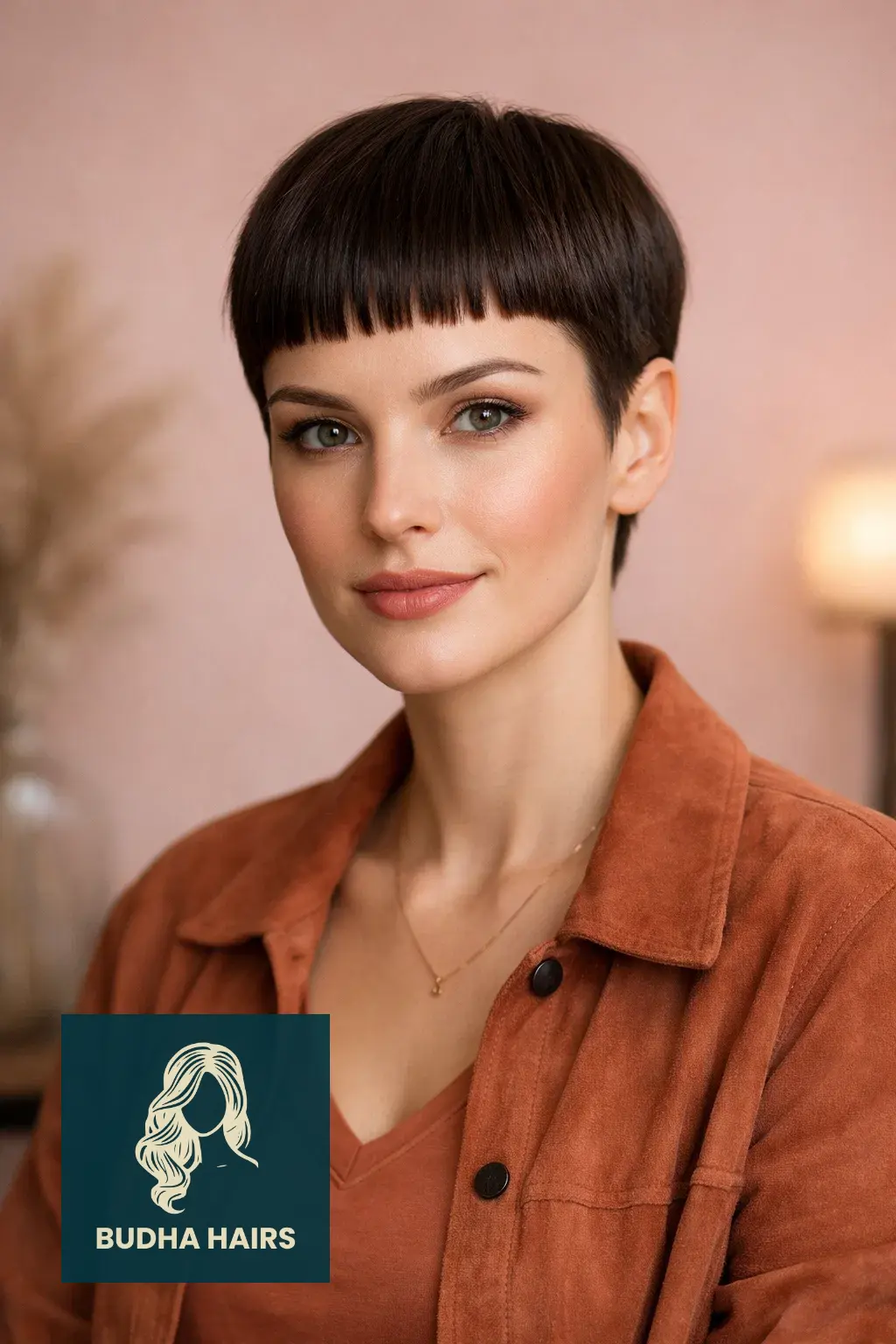
While layers are usually the go-to for volume, the Blunt Cut Pixie uses precise, sharp lines to build weight at the perimeter, making the ends look thicker and healthier. This style features a solid line around the ears and nape, paired with edgy micro bangs cut straight across the forehead. By avoiding thinning shears and keeping the ends blunt, we create a “hard” edge that creates a visual boundary, making the hair appear substantial rather than wispy. I find that this architectural approach works wonders for fine hair because it consolidates the thin strands into solid blocks of hair that look denser.
Styling this bold cut is about maintaining smoothness and shine to highlight the precision of the lines. We use a flat iron on low heat to smooth out any kinks and a lightweight shine spray to give the hair a glass-like finish. The micro bangs open up the face completely and make a strong fashion statement that distracts from the hair’s density. I find that the blunt cut pixie requires confidence to wear, but the payoff is a chic, high-fashion look that turns fine hair into a deliberate stylistic choice rather than a limitation, proving that short hairstyles for women can be bold and structured.
10. The Curly Pixie for Fine Wavy Hair
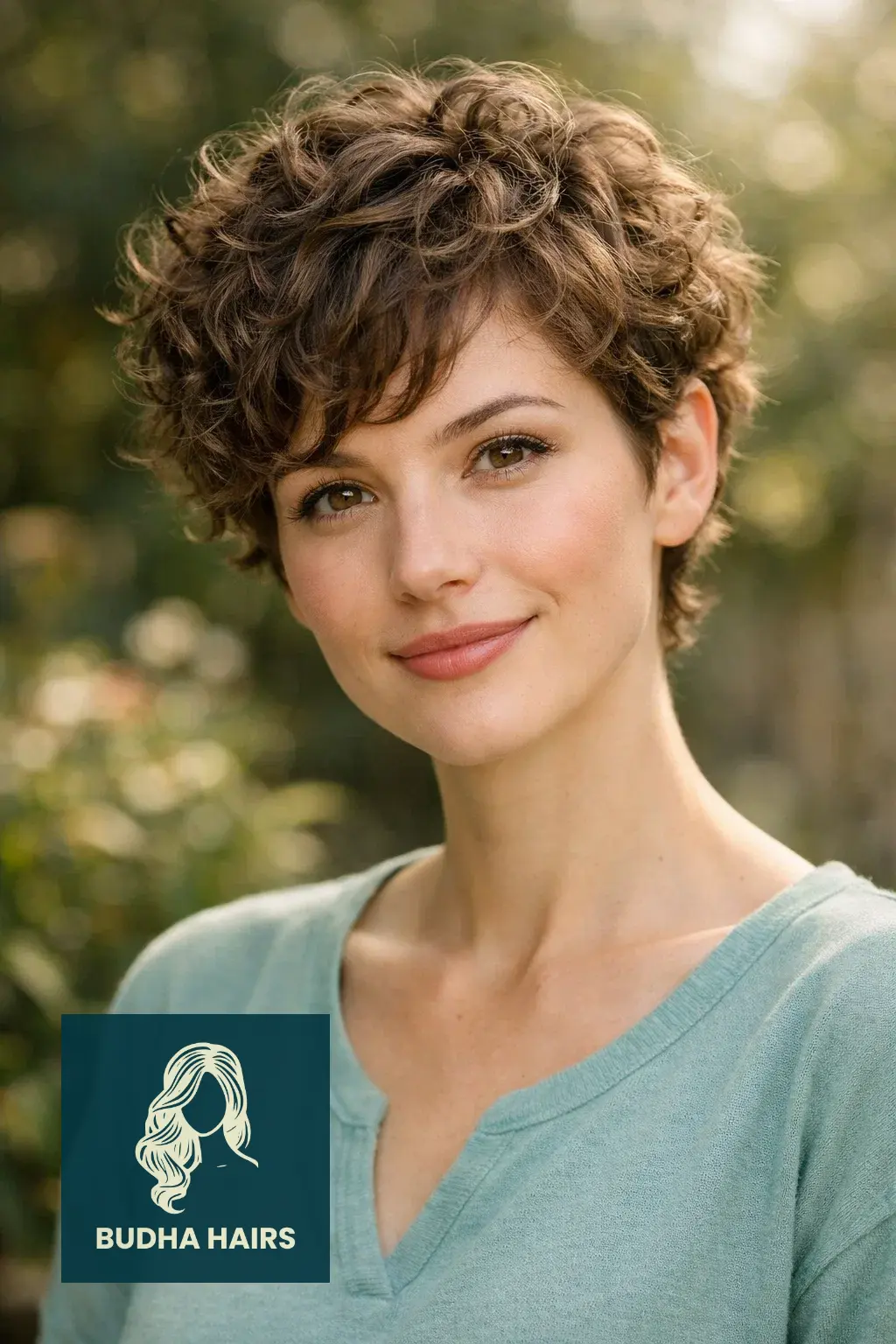
For those who have fine hair with a bit of natural bend or wave, the Curly Pixie is the best way to utilize that texture to create volume. We cut the hair in rounded layers that follow the head shape, allowing the curls to spring up and stack on top of each other. Removing the length takes the weight off the waves, allowing them to tighten and become more defined, which naturally occupies more space and looks fuller. I find that working with the natural texture is always easier and more effective than fighting it, and a short crop allows fine waves to reach their maximum potential for bounce.
Styling the Curly Pixie requires a delicate touch with products to avoid weighing the curls down. We use lightweight curl creams or mousses applied to damp hair, followed by drying with a diffuser attachment to encourage the curl pattern without blowing it straight. Scrunching the hair gently while it dries helps to enhance the volume and definition. I find that this style looks incredibly soft and romantic, and the natural separation of the curls hides the scalp effectively. It is a fantastic, low-heat option for Short Pixie Haircuts for Thin Fine Hair that keeps the hair healthy and voluminous.
11. The Side-Swept Pixie with Hidden Undercut
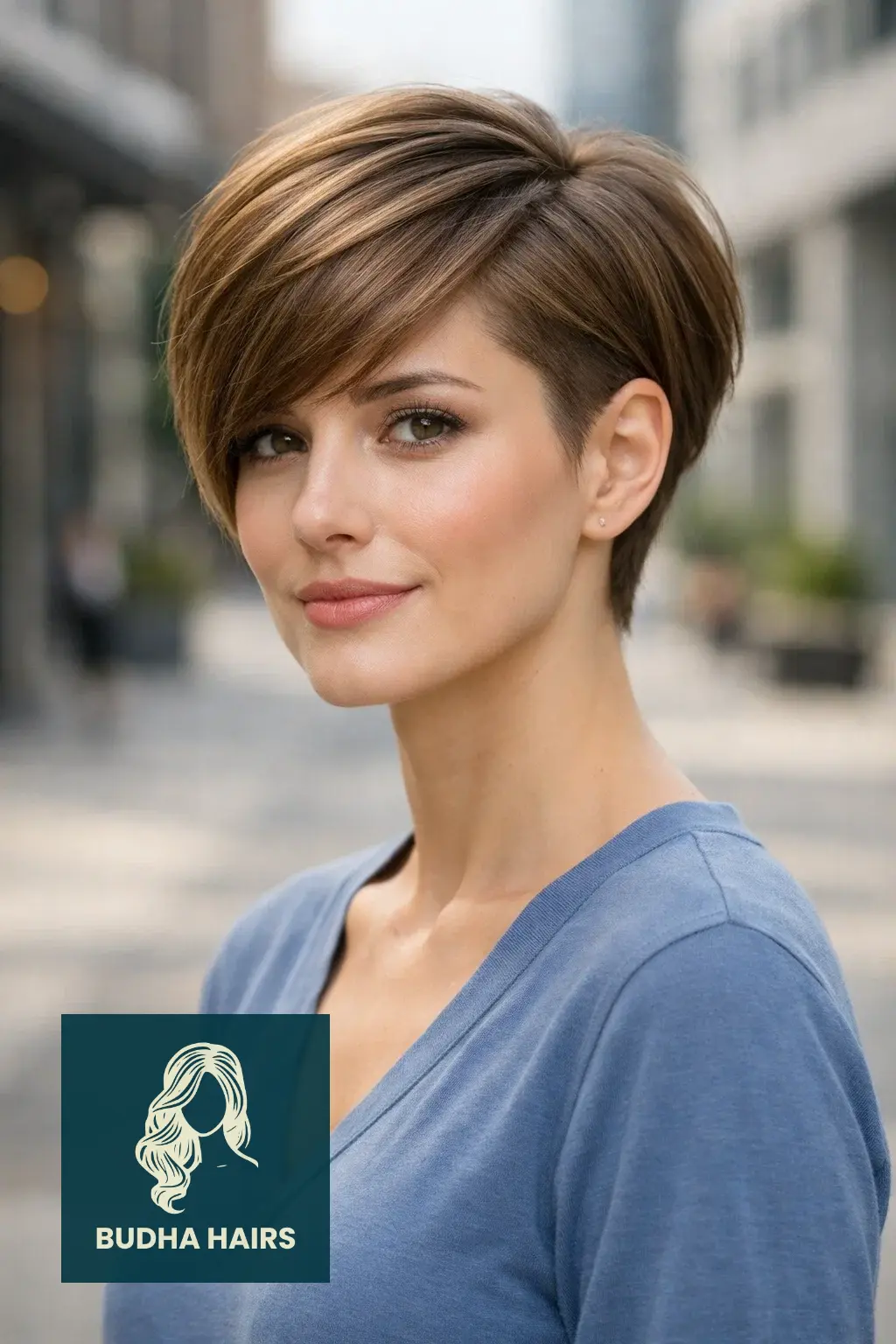
The Side-Swept Pixie with Hidden Undercut is a masterclass in weight redistribution, specifically designed to counter the lack of volume inherent in fine hair types. By incorporating a discreet undercut on the side or at the nape, we remove the bulk from the areas that tend to look wispy or lay flat, allowing the longer hair on top to fall over it with more bounce and freedom. I find that this creates a seamless, polished look where the undercut pixie elements are only visible when we intentionally tuck the hair behind the ear, offering a versatile “peek-a-boo” effect. This structural choice forces the remaining hair to act as a “canopy,” which appears thicker because it isn’t competing with the hair underneath for space or shape, making it a brilliant variation of Short Pixie Haircuts for Thin Fine Hair.
When styling this look, we focus on sweeping the longer top section dramatically across the forehead to create a heavy, face-framing fringe. Using a round brush to blow-dry the hair in the opposite direction of its natural fall creates incredible root lift before sweeping it back over to the preferred side. I find that this “over-direction” technique is crucial for fine hair hairstyles, as it prevents the hair from sticking to the scalp. The hidden undercut reduces styling time significantly since there is less hair to manage, allowing us to focus entirely on perfecting the sleekness and volume of the side-swept bangs, ensuring a chic and effortless finish that lasts all day.
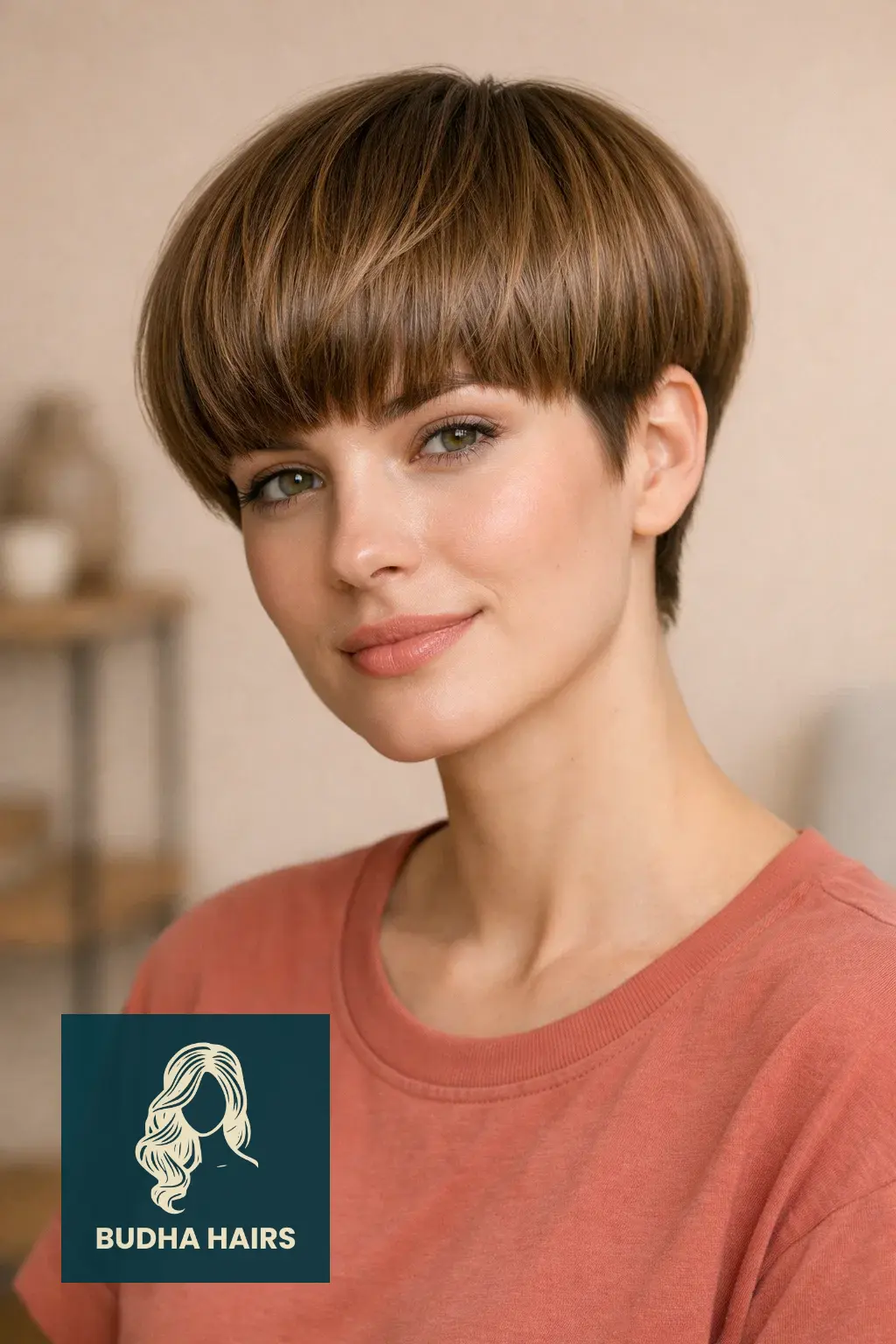
12. The Rounded Mushroom Pixie (Modern Bowl Cut)
The Rounded Mushroom Pixie, often referred to as a modern bowl cut, utilizes a heavy weight line to create the illusion of thickness around the crown and temples. Unlike the severe bowl cuts of the past, this modern iteration features subtle texturing at the ends to soften the perimeter while maintaining that crucial rounded shape that builds bulk. I find that maintaining a continuous line from the bangs to the sides creates a “stack” of hair that looks incredibly dense, which is why this is one of the most effective Short Pixie Haircuts for Thin Fine Hair. The hair is cut to fall from the crown in a uniform manner, mimicking the natural fall of thicker hair and covering any sparse areas at the top of the head.
Styling the bowl cut pixie requires smooth, straight blow-drying to emphasize the geometric shape and the glossy finish of the hair. We use a smoothing cream or serum to tame flyaways and ensure the hair lies sleekly, creating a glass-like surface that reflects light and adds to the perception of density. I find that this style works best with a slight undercut at the nape to keep the silhouette tight and elevated at the back. It is a bold, fashion-forward choice that creates a distinct “helmet” of volume (in a good way), turning the delicate texture of thin fine hair into a structured, architectural asset that commands attention.
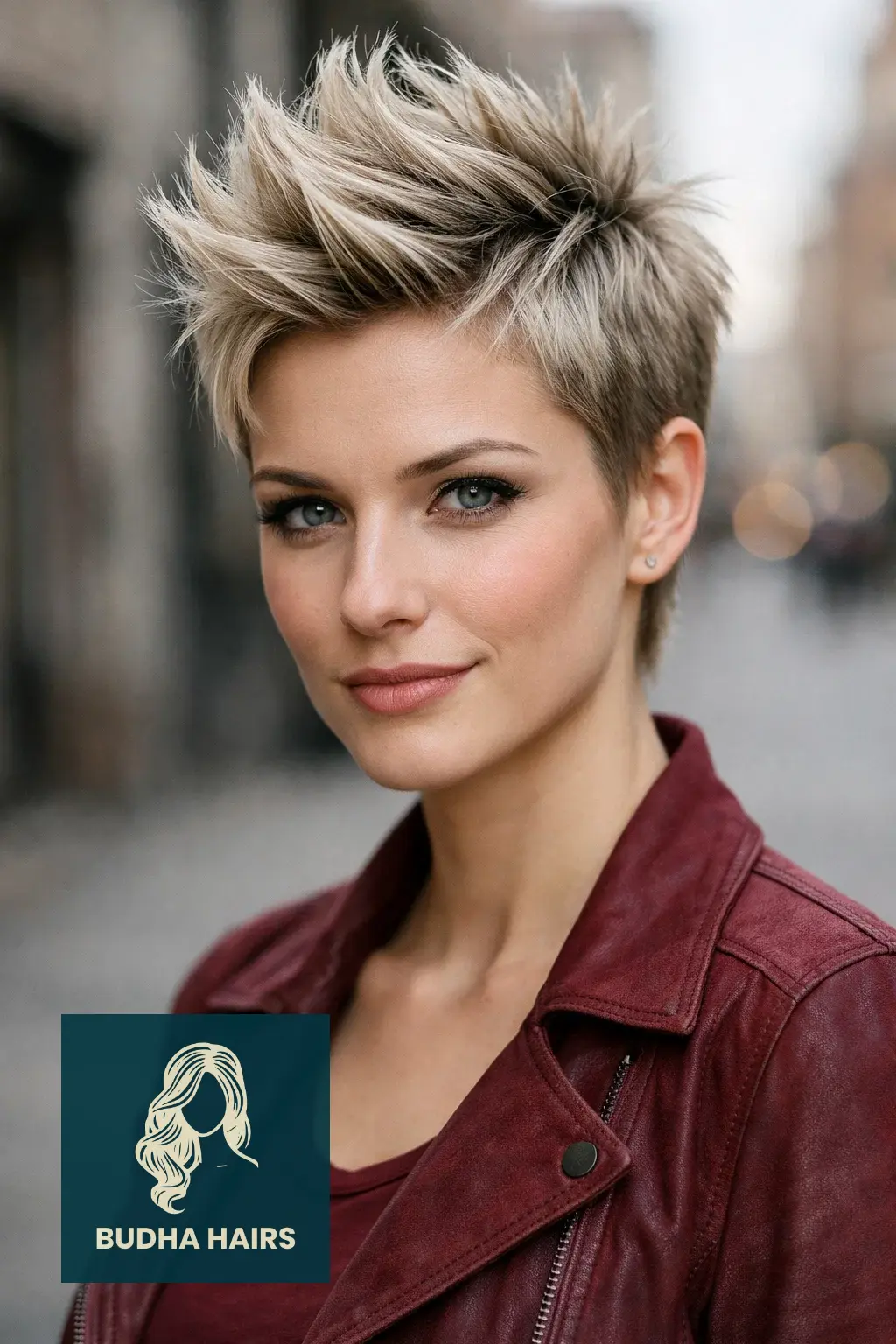
13. The Edgy Faux Hawk Pixie
For those looking to add vertical height and an edgy vibe, the Faux Hawk Pixie is an outstanding choice that draws the eye upward and away from the scalp. This cut features much shorter sides—often faded or tapered—while leaving a significant strip of length running from the forehead to the nape. By concentrating all the volume and length in the center, we create a focal point that looks thick and robust. I find that pulling the hair toward the center line masks the thinness of the sides and creates a dense “ridge” of hair, making it a go-to option when recommending Short Pixie Haircuts for Thin Fine Hair for clients who want a rock-and-roll aesthetic without the commitment of a full shaved mohawk.
To style this spiky pixie, we need products that provide grit and hold, such as a matte styling paste or a texturizing powder. We apply the product to the roots of the central section and use our fingers to rake the hair upwards and towards the middle, creating a messy, spiked ridge. I find that the messier the texture, the thicker the hair appears, as the separation between strands creates shadows and depth. This style is incredibly freeing for fine hair because it doesn’t rely on smoothness or perfection; instead, it uses the lightweight nature of fine strands to achieve gravity-defying height that thicker hair often struggles to hold, proving that female loc styles aren’t the only way to get edgy volume.
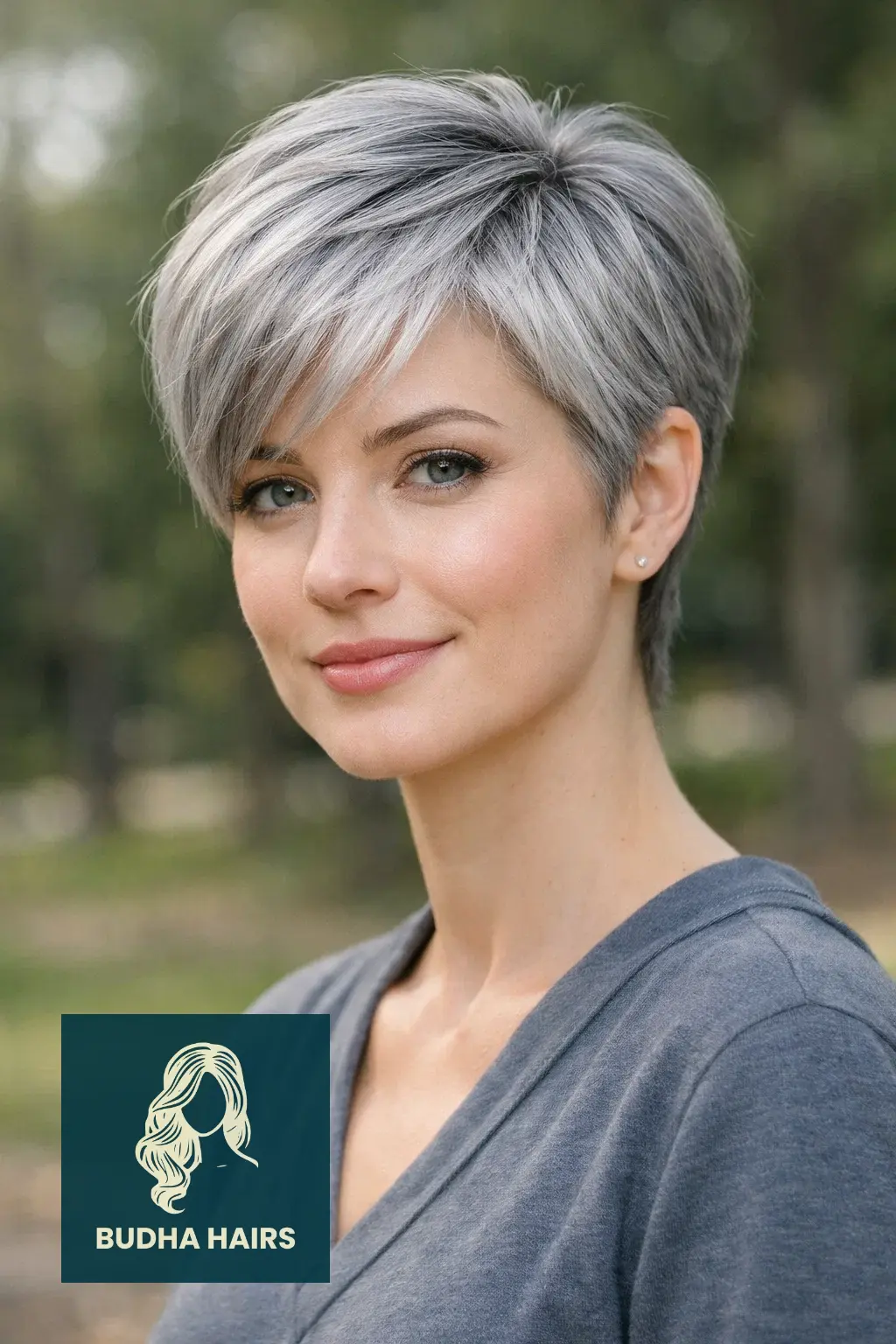
14. The Silver Fox Pixie (Gray Transition)
Embracing natural gray hair can actually be a boon for texture, and the Silver Fox Pixie is designed to highlight the coarser texture that often comes with graying hair. Gray strands tend to be wirier and stiffer than pigmented hair, which provides natural body and hold that fine hair usually lacks. We cut the hair into a sleek, layered pixie that utilizes this natural stiffness to create a shape that holds its volume without collapsing. I find that pairing a precision cut with the metallic sheen of silver or white hair reflects light brilliantly, adding a dimensional quality that makes the hair look lush and healthy, reinforcing why this is a top tier choice among Short Pixie Haircuts for Thin Fine Hair.
When styling natural gray hair, we often need to focus on hydration and shine to prevent the texture from looking frizzy or dry. Using a purple shampoo helps keep the color bright and silver, while a lightweight oil mist adds the necessary gloss without weighing down the roots. We can style this cut with a deep side part or brushed back for a sophisticated, executive look. I find that the Silver Fox Pixie exudes confidence and elegance, turning the aging process into a style advantage. It allows the hair to stand up on its own, reducing the need for heavy hold sprays and letting the natural volumizing layers do the work.
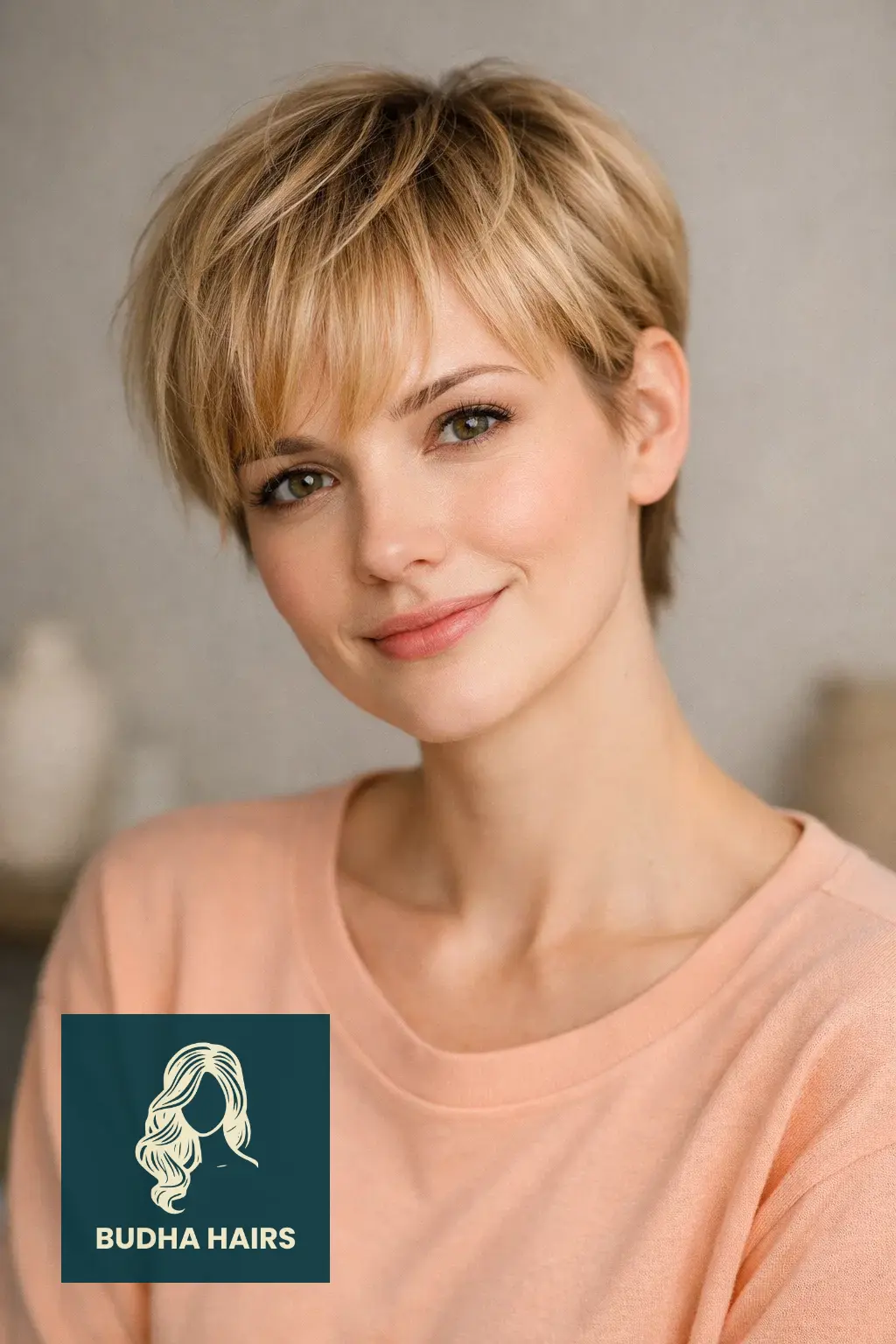
15. The Wispy Bangs Pixie
The Wispy Bangs Pixie is all about softness and delicate framing, using a fringe that is intentionally light and see-through to complement, rather than hide, fine hair. Instead of trying to force a thick, heavy bang that might leave the rest of the hair looking sparse, we cut soft, shattered bangs that graze the eyebrows. I find that this creates a cohesive look where the lightness of the bangs matches the lightness of the overall texture, making the style look intentional and balanced. This approach is central to successful Short Pixie Haircuts for Thin Fine Hair, as it creates a gentle face frame that blurs the hairline and softens the facial features without requiring a massive amount of hair density at the front.
Styling wispy bangs is effortless and requires minimal heat, preserving the health of delicate fine strands. We simply air-dry or lightly blow-dry the fringe with fingers to keep the texture natural and separated. Using a tiny bit of styling wax on the tips of the bangs helps to piece them out and keep them from clumping together. I find that this style is particularly flattering for heart-shaped or oval faces, as it draws attention to the eyes. The rest of the pixie can be kept short and textured, creating a low-maintenance, feminine look that embraces the “less is more” philosophy of short hairstyles for women.
16. The “Wet Look” Slicked Pixie
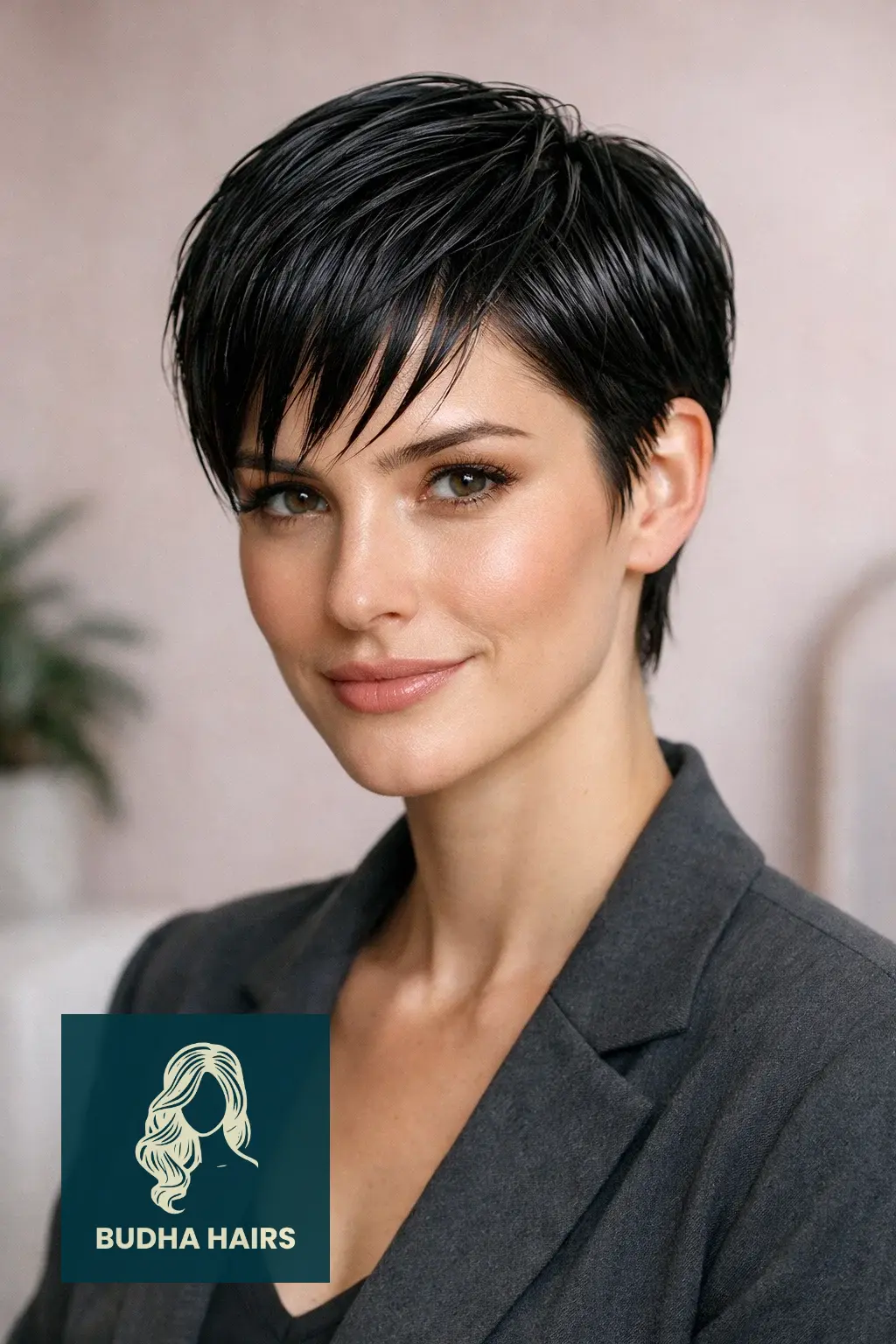
The Wet Look Pixie is a high-fashion styling variation that works surprisingly well for fine hair because it relies on the hair laying flat and close to the head shape. Instead of fighting for volume, we embrace the sleekness, using a high-shine gel or pomade to comb the hair backward or to the side. I find that this creates a sculpted, intentional silhouette that looks incredibly chic and polished. By compacting the hair, we eliminate frizz and flyaways, creating a solid, dark shape that looks denser than fluffy hair might. This is a fantastic evening or formal option within the realm of Short Pixie Haircuts for Thin Fine Hair, offering a sophisticated change of pace from textured looks.
Achieving this look requires a generous amount of product, which acts as a thickener for the strands. We apply the gel to damp hair and use a fine-tooth comb to create precise directional lines—either straight back for a slicked back pixie or with a deep side part. I find that once the product sets, it locks the hair in place for the entire duration of wear, making it weatherproof and durable. This style highlights the bone structure of the face and neck beautifully. It turns the lack of volume into a sleek advantage, proving that fine hair can pull off dramatic, runway-inspired looks just as well as female loc styles or thick braids.
17. The Razored Pixie Shag
The Razored Pixie Shag uses a razor tool instead of shears to cut the hair, resulting in soft, tapered edges that blend seamlessly rather than blunt, hard lines. This technique is perfect for creating movement and swing in fine hair, as it removes weight from the ends without compromising the internal thickness. We cut short, shaggy layers throughout the crown and sides, allowing the hair to flip and curve naturally. I find that the razor creates a “lived-in” texture immediately, avoiding the stiffness of a fresh scissor cut, which makes it one of the most organic-looking Short Pixie Haircuts for Thin Fine Hair. The soft perimeter grows out beautifully, extending the time between salon visits.
Styling a razor cut pixie is all about enhancing that soft, pliable texture. We use a salt spray or a light styling milk to encourage the hair’s natural wave pattern, scrunching it with our hands as it dries. The tapered ends created by the razor respond well to messy styling, appearing thicker as they overlap each other. I find that this style gives a youthful, modern edge that feels effortless and cool. It effectively disguises any cowlicks or thinning areas by integrating them into the overall messy texture, making it a smart choice for those wanting a low-maintenance, high-style textured pixie.
18. The Super Short “Gamine” Crop
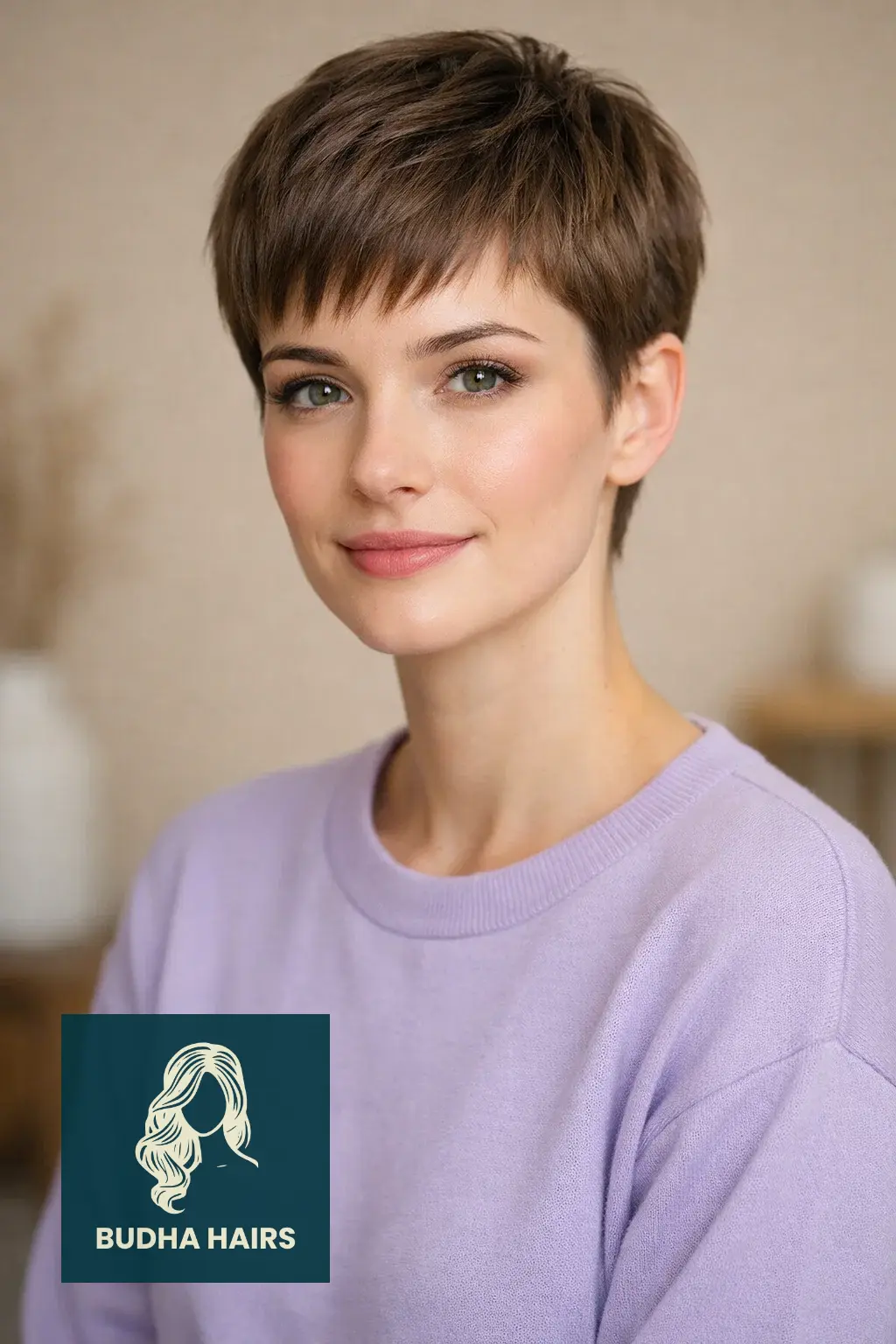
The Super Short Gamine Crop, inspired by icons like Audrey Hepburn, is a daring cut that removes almost all length, leaving a uniform layer of hair about an inch long close to the scalp. By going this short, we prevent the hair from having enough weight to lay flat, allowing the natural growth pattern to provide lift. I find that this ultra-short length often makes fine hair look thicker because we are seeing the density of the hair right at the root, where it is healthiest and strongest. It is a bold, confident choice among Short Pixie Haircuts for Thin Fine Hair that completely exposes the face and highlights facial features like the eyes and cheekbones.
Maintenance for the gamine pixie is incredibly simple, often requiring no more than a dab of texture paste and a quick tussle with the fingers. Because the hair is so short, washing and drying take minutes, and the style remains consistent throughout the day. I find that micro-bangs or a jagged hairline add character to this cut, preventing it from looking too military. It is the ultimate “wake up and go” style. This cut proves that you don’t need long flowing hair or complex loc updos to look feminine and striking; sometimes, removing the hair reveals the true beauty of the face.
19. The Two-Tone Dimensional Pixie
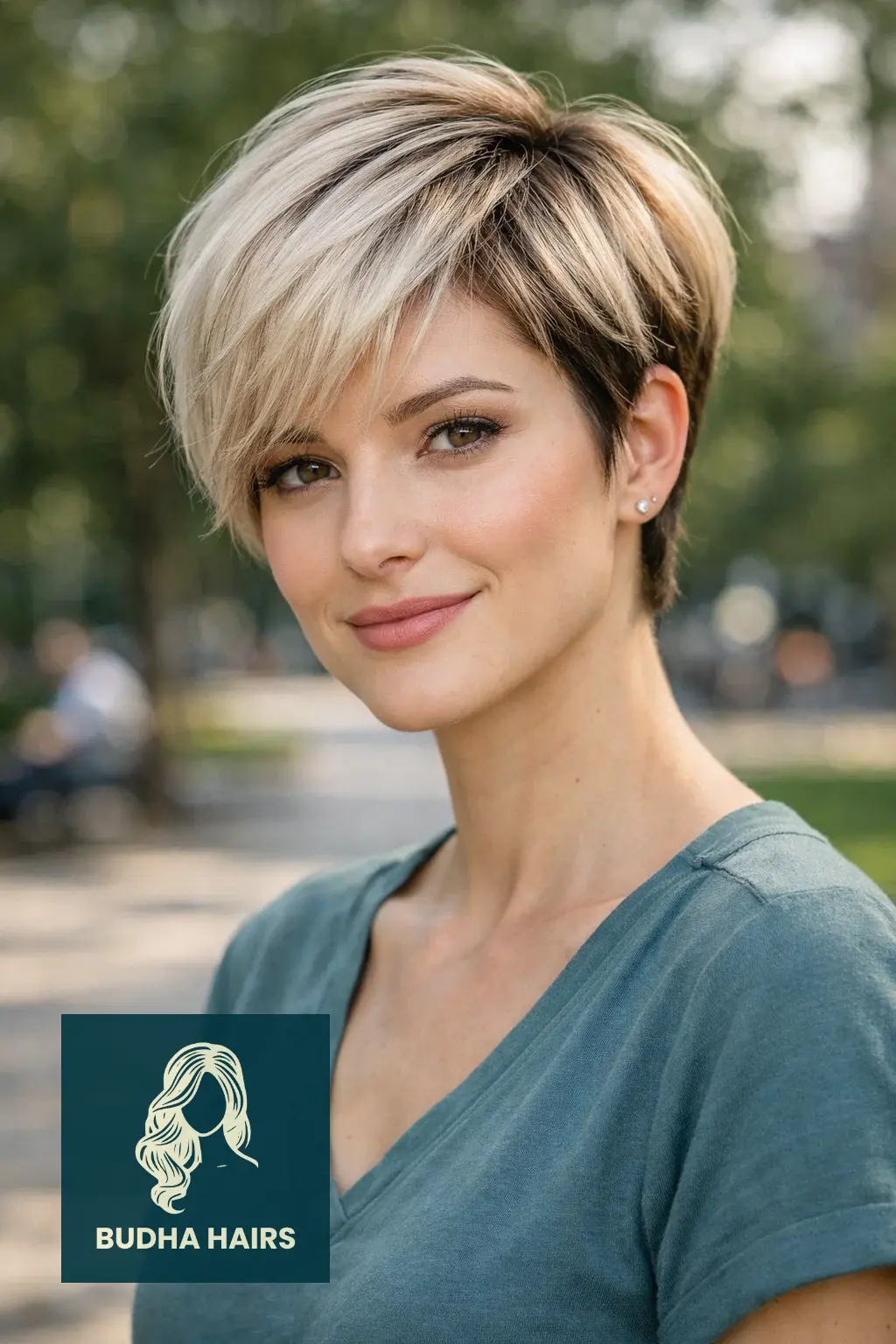
The Two-Tone Dimensional Pixie utilizes color placement to create a 3D effect that mimics depth and volume. We typically dye the bottom layer (the undercut or the nape) a darker shade, while keeping the top layer significantly lighter. This contrast creates a visual shadow that tricks the eye into perceiving more depth than actually exists. I find that when the lighter hair falls over the darker background, it pops visually, making the top section appear to float and look much fuller. This is a highly effective optical illusion utilized in many top-tier Short Pixie Haircuts for Thin Fine Hair to combat the “see-through” nature of fine strands.
Styling this look focuses on separating the top layer to reveal glimpses of the darker color underneath. We use a texturizing spray to piece out the choppy layers on top, ensuring the color contrast is visible. I find that this technique works with natural tones (like dark brown and caramel) or bold fashion colors (like black and silver). The two-tone hair adds a complexity to the style that distracts from the hair texture itself. It turns the haircut into a work of art where color and cut work in tandem to solve the problem of thinness, providing a creative alternative to standard highlighted pixie looks.
20. The Root-Lifted Layered Pixie
The Root-Lifted Layered Pixie is designed with the specific goal of mechanical lift in mind. We cut short, graduated layers that support each other, preventing the long strands from collapsing onto the shorter ones. The focus here is on the blow-dry technique: we apply a root-lifting spray to damp hair and use a small round brush to dry the hair straight up from the scalp before smoothing the ends over. I find that this combination of a supportive cut and targeted styling creates a “cushion” of air at the roots, providing substantial volume that makes this one of the most reliable Short Pixie Haircuts for Thin Fine Hair.
Once the volume is set with the blow-dryer, we lock it in with a light dusting of volume powder or dry shampoo at the roots. This adds grit and friction, preventing the hair from sliding back down flat against the head. I find that this style creates a beautiful, rounded profile that looks lush and full. It is a classic, elegant approach to short hairstyles for women that works for all ages and environments. The volumizing layers ensure that even if the hair falls slightly throughout the day, the internal structure maintains a buoyant shape that keeps the style looking fresh and lively.
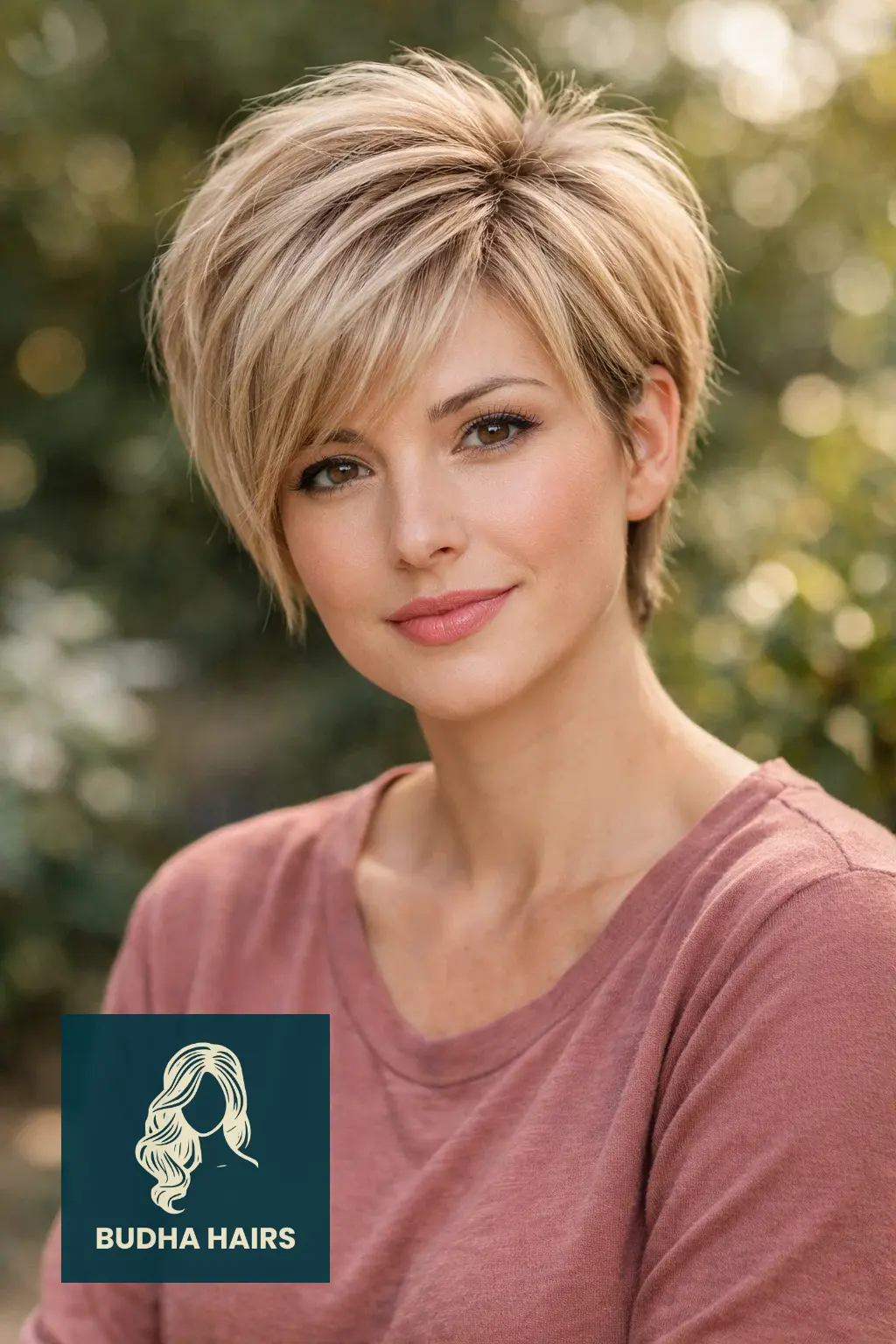
If you love bold and theatrical looks, Clown Hairstyles for Women offer dramatic styling ideas that contrast with minimalist pixie cuts.
21. The Soft Mohawk with Shaved Sides
For a rebellious yet soft aesthetic, the Soft Mohawk with Shaved Sides perfectly balances edginess with femininity. Unlike a harsh, stiff mohawk, this version keeps the central strip of hair longer and softer, allowing for movement and wave. We shave or tightly buzz the sides to remove the thinnest hair, instantly creating a clean, dense perimeter. I find that isolating the top section allows us to create a concentrated “row” of volume that looks incredibly thick because it isn’t spread out over the whole head. This concentration of density is a brilliant strategy within the realm of Short Pixie Haircuts for Thin Fine Hair.
To style, we use a curling wand or a round brush to add soft waves to the central mohawk strip, rather than spiking it straight up. This creates a romantic, cascading texture that contrasts beautifully with the sharp sides. I find that applying a flexible hold hairspray keeps the height without making the hair crunchy. This style is surprisingly versatile; you can sweep it to the side for a more conservative undercut pixie look or tease it high for a night out. It transforms the challenge of fine hair into a deliberate, architectural style statement that rivals bold looks like mohawk loc styles in impact.
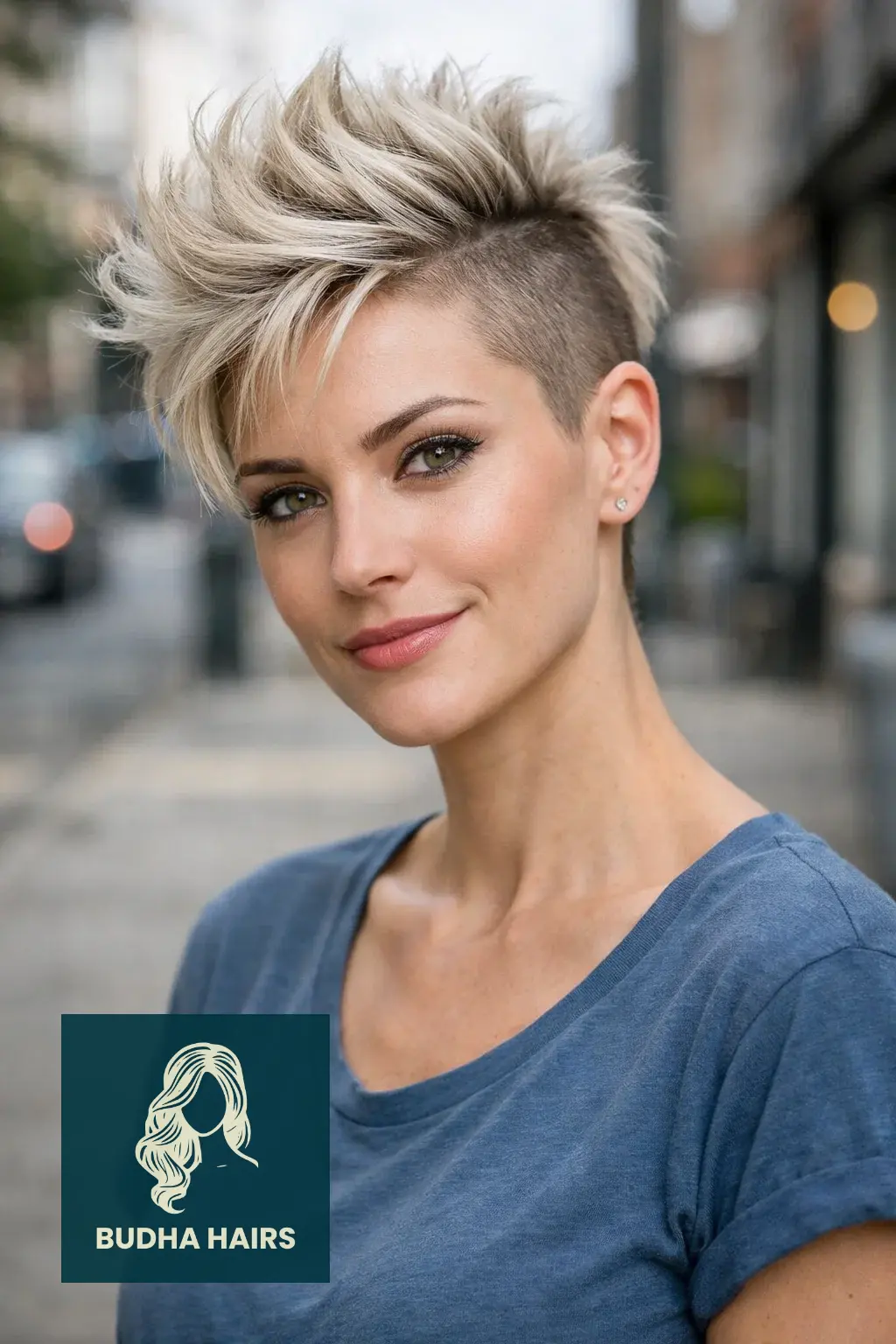
22. The Tapered Pixie with Long Front Layers
The Tapered Pixie with Long Front Layers focuses on creating a streamlined silhouette that pushes visual weight forward. We cut the back and sides very short, tapering them tight to the head shape, which acts as a foundation. In contrast, we leave the top and front sections significantly longer, creating a veil of hair that can be styled in multiple ways. I find that this juxtaposition is key for Short Pixie Haircuts for Thin Fine Hair because the tight back creates a clean line that makes the neck look elegant, while the long front provides the coverage and styling versatility of a bob.
Styling this cut allows for plenty of creativity. We can blow-dry the front layers forward for a heavy fringe, or sweep them back for a sleek, open-faced look. Using a volumizing mousse on the longer sections ensures they don’t fall flat against the forehead. I find that adding subtle highlighted pixie streaks to the front layers adds dimension and breaks up the visual solidity, making the hair appear even fuller. This style is sophisticated and professional, offering a polished solution for fine hair that feels chic and intentional.
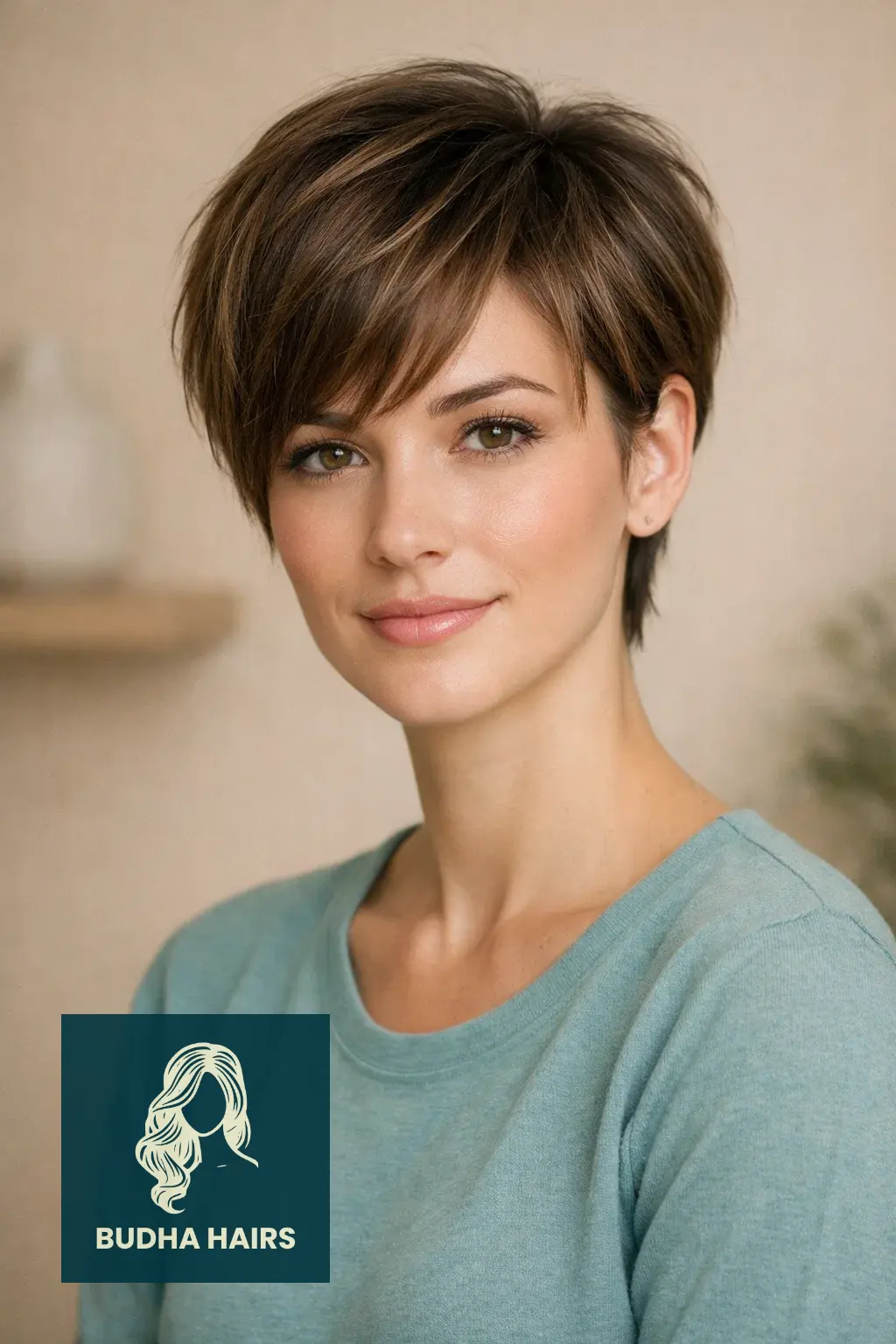
23. The Choppy Pixie with Jagged Bangs
The Choppy Pixie with Jagged Bangs is designed to break up the transparency of fine hair using texture. We use point-cutting deeply into the bangs and the crown layers to create a shattered, uneven edge. This prevents the “curtain” effect where fine hair separates and shows the forehead. Instead, the jagged pieces overlap and crisscross, creating a mesh of hair that covers the scalp effectively. I find that this intentionally messy finish is one of the most effective tricks for Short Pixie Haircuts for Thin Fine Hair, as it turns separation into a stylistic choice.
Styling is incredibly low maintenance, relying on matte pastes or clays to define the jagged ends. We simply warm the product and pinch the ends of the bangs and layers to sharpen them. I find that this cut looks best when it’s a little “lived-in,” so second-day hair often looks even better than freshly washed hair. The choppy layers create a playful, youthful vibe that distracts from the hair’s density. It’s a fun, spirited cut that brings energy to the face and requires very little effort to look cool and styled.
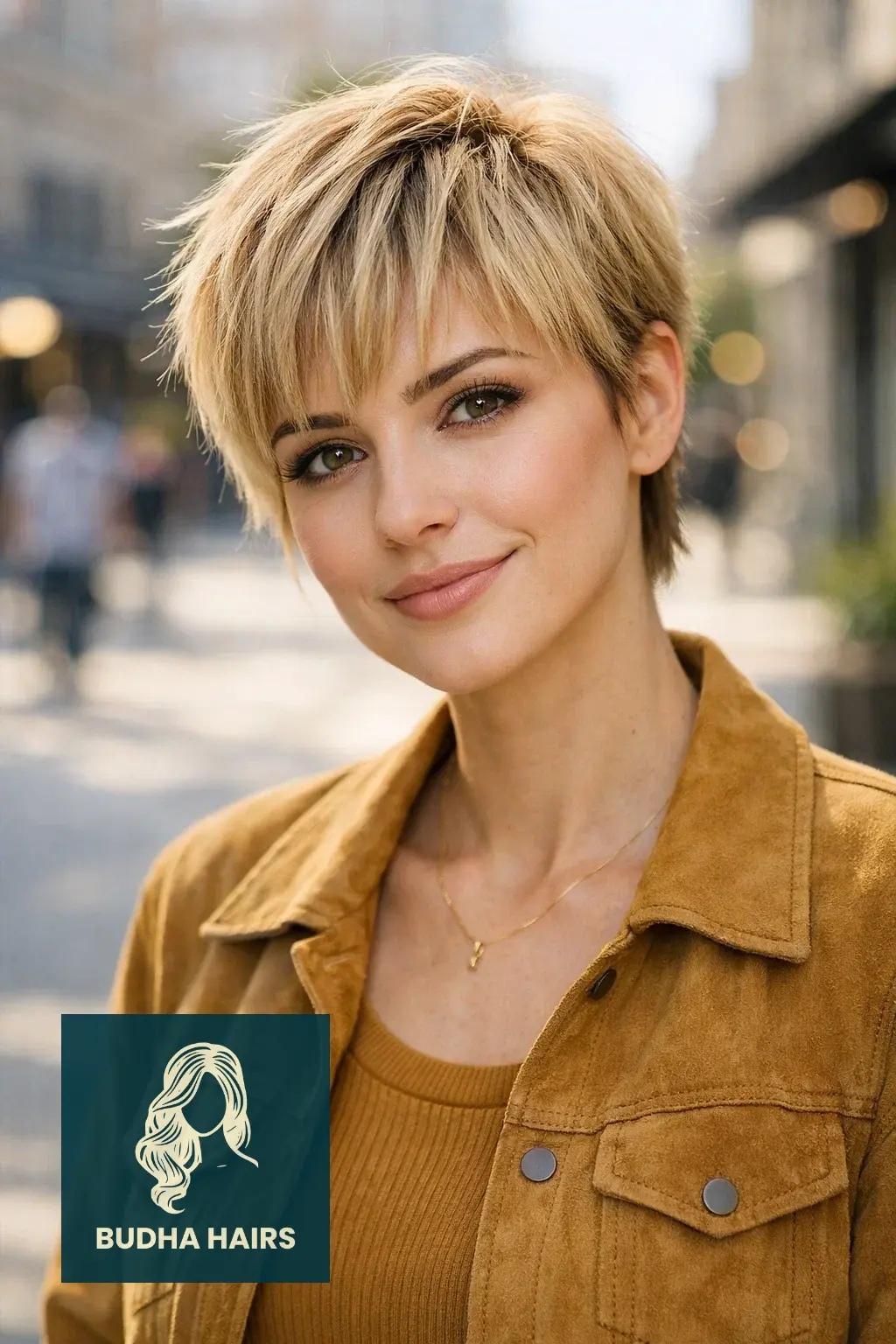
24. The Pixie-Mullet Hybrid ( The “Mixie”)
The “Mixie,” or Pixie-Mullet Hybrid, is a trendy, retro-inspired cut that is surprisingly flattering for fine hair. It features short, choppy layers on top and around the ears (like a pixie) but retains longer, wispy length at the nape (like a mullet). I find that this extra length at the back creates a shadow and visual weight that frames the neck, while the short top layers provide the necessary root lift. This unique distribution of hair creates a fuller overall silhouette than a standard crop, making it a unique option for Short Pixie Haircuts for Thin Fine Hair.
Styling the Mixie is about embracing the texture. We use sea salt spray to encourage a kick or wave in the back pieces and messy volume on top. The contrast between the short, textured front and the longer, flicked-out back creates a dynamic shape that occupies more visual space than a traditional pixie. I find that this style works exceptionally well with shaggy layers and soft fringe, creating a cool, indie-rock vibe. It’s a daring cut that shows off personality and hides thinness through sheer structural interest and movement.
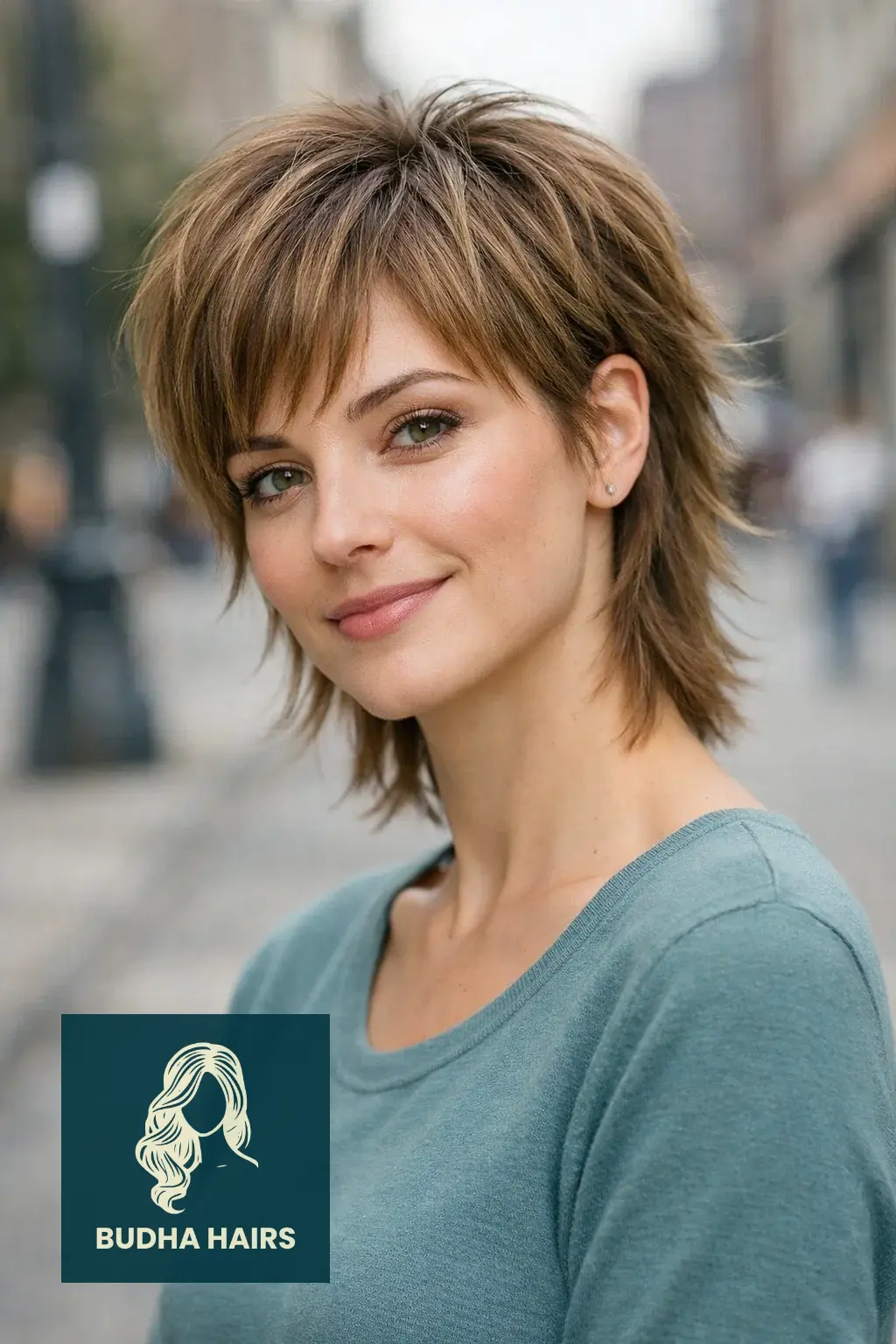
25. The Elegant Swept-Back Pixie
For a timeless, sophisticated look, the Elegant Swept-Back Pixie removes all hair from the face, creating a clean and open appearance. We cut the hair with long layers on top that are designed to be brushed backwards. Using a small round brush and a blow dryer, we lift the roots at the hairline and direct the hair back towards the crown. I find that this redirection of the hair creates a natural “bouffant” effect that adds significant height and volume, which is essential for Short Pixie Haircuts for Thin Fine Hair.
To maintain the height, we use a strong-hold hairspray or a lightweight gel that dries clear. The key is to avoid plastering the hair to the scalp; instead, we want it to float slightly above the head. I find that this style highlights the eyes and cheekbones beautifully, making it perfect for formal events or professional settings. It mimics the elegance of loc updos but for short, fine hair. The swept-back silhouette is classic and refined, proving that volume can be achieved through styling direction as much as cutting technique.
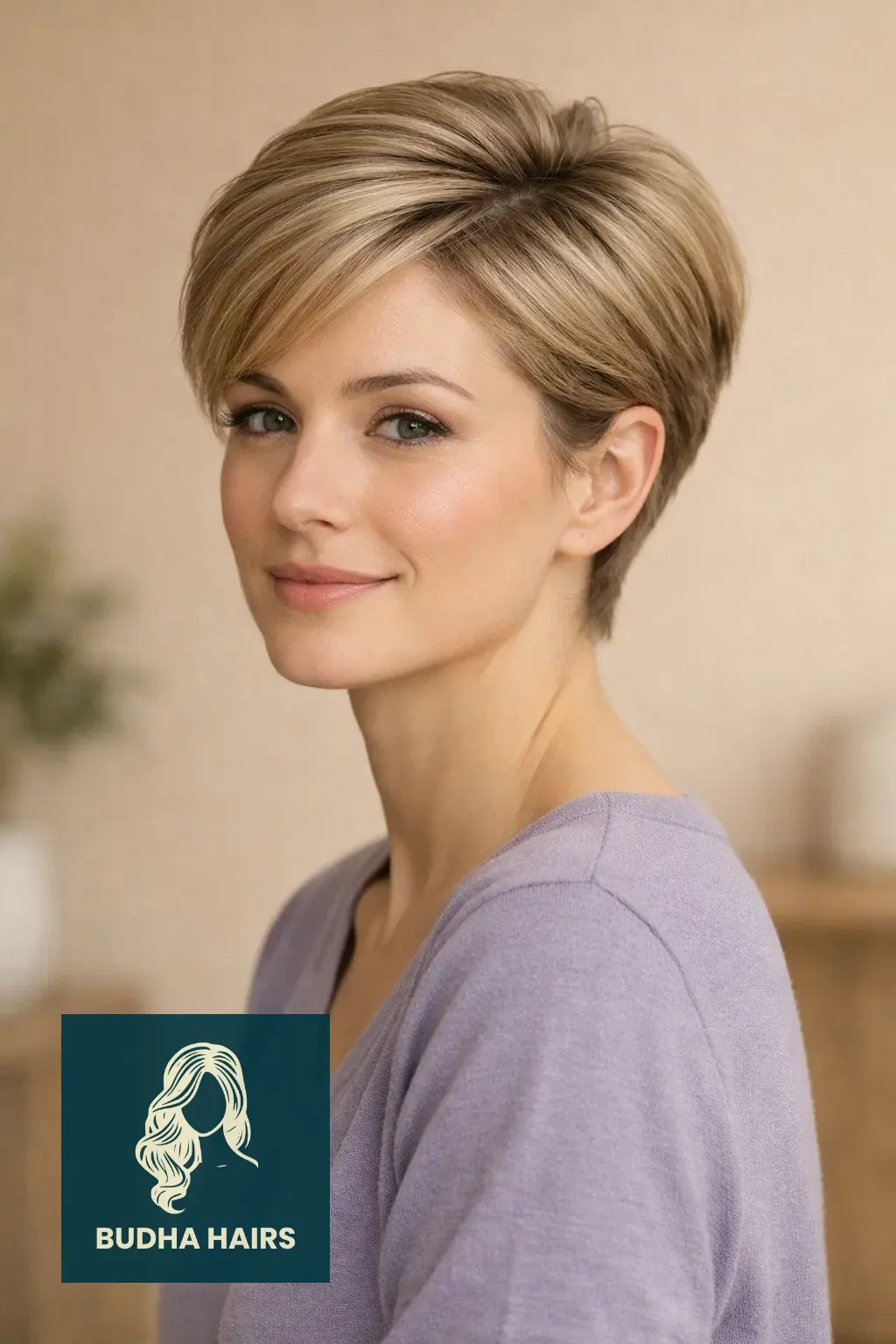
26. The Textured Crop with Fade
The Textured Crop with Fade brings a sharp, barber-style precision to the pixie world. The sides and back are faded—gradually blending from skin or very short stubble up to longer hair—creating a flawless, seamless transition. The top is left longer and heavily textured. I find that the fade creates a dark, dense gradient at the perimeter (if the hair is dark) or a clean, sharp line (if the hair is light), which acts as a strong frame for the messy top. This high-contrast look is a bold, modern take on Short Pixie Haircuts for Thin Fine Hair.
Styling the top requires a texturizing powder or dry clay. We sprinkle the powder at the roots and massage it in to create instant, matte volume that stands up on its own. I find that the fade eliminates the need to worry about thin hair at the hairline or nape, as those areas are intentionally kept minimal. The focus remains entirely on the textured crown. This is a powerful, low-maintenance cut that exudes confidence and modern style, making thin hair look deliberate and strong rather than weak.
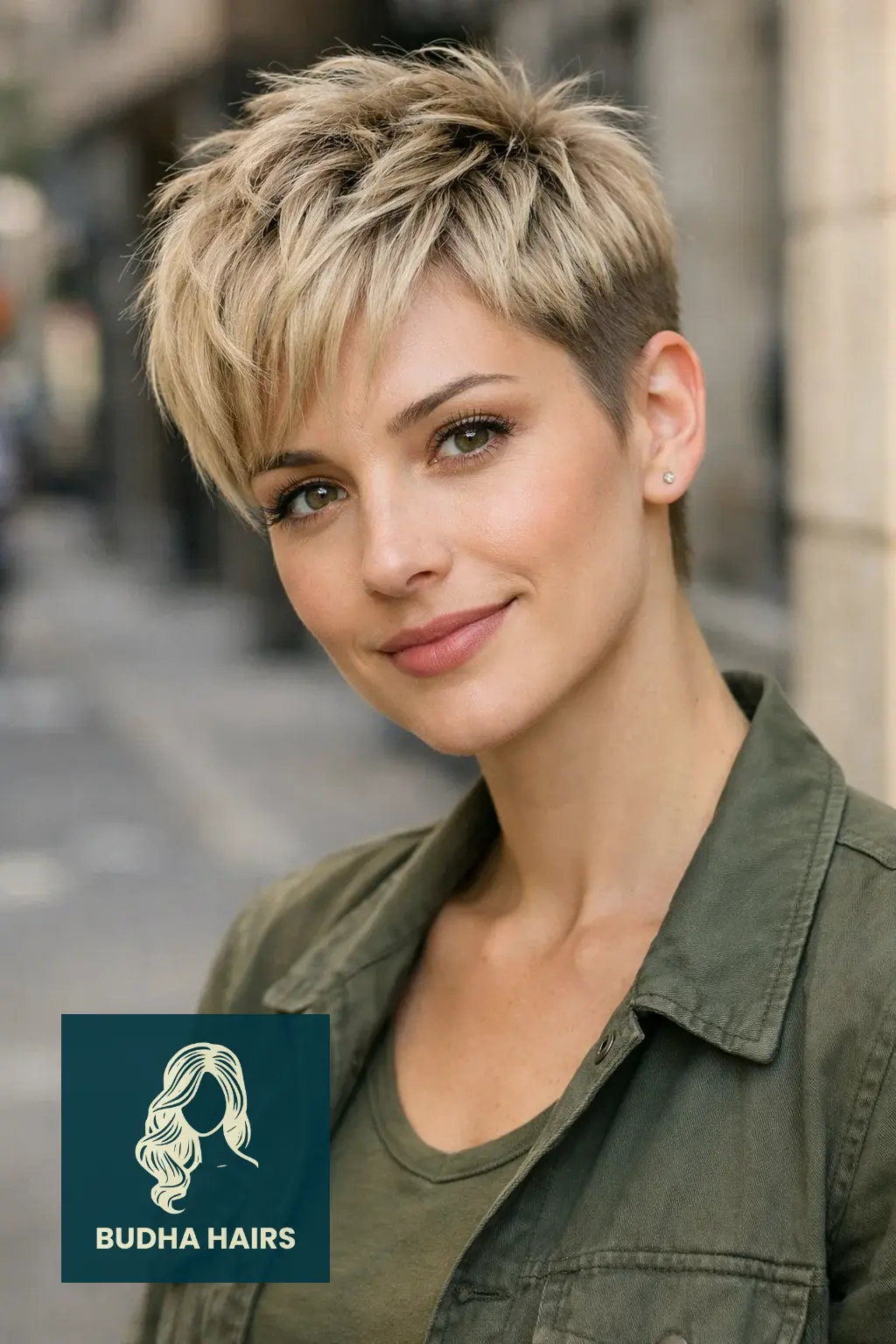
27. The Side-Parted Pixie Bob with Volume
This variation of the Bixie leans heavily into the bob territory but keeps the internal layering of a pixie. The Side-Parted Pixie Bob features a length that grazes the jawline or cheekbones, combined with a deep side part. We stack the layers in the back to create a graduated shape that builds weight at the occipital bone. I find that this graduation pushes the hair outward and upward, creating a lovely rounded profile that remedies the flat look of fine hair. It is a fantastic entry point into Short Pixie Haircuts for Thin Fine Hair for those who prefer a bit more length.
Styling involves using a large round brush to smooth the top layers while lifting the roots. We can flip the ends under for a classic bob look or flick them out for a playful vibe. I find that the deep side part is the hero here, sweeping all the density to one side for a luscious, thick look. This cut offers the swing and movement of a bob with the structural support of a pixie, making it incredibly flattering and versatile for various face shapes and hair textures.
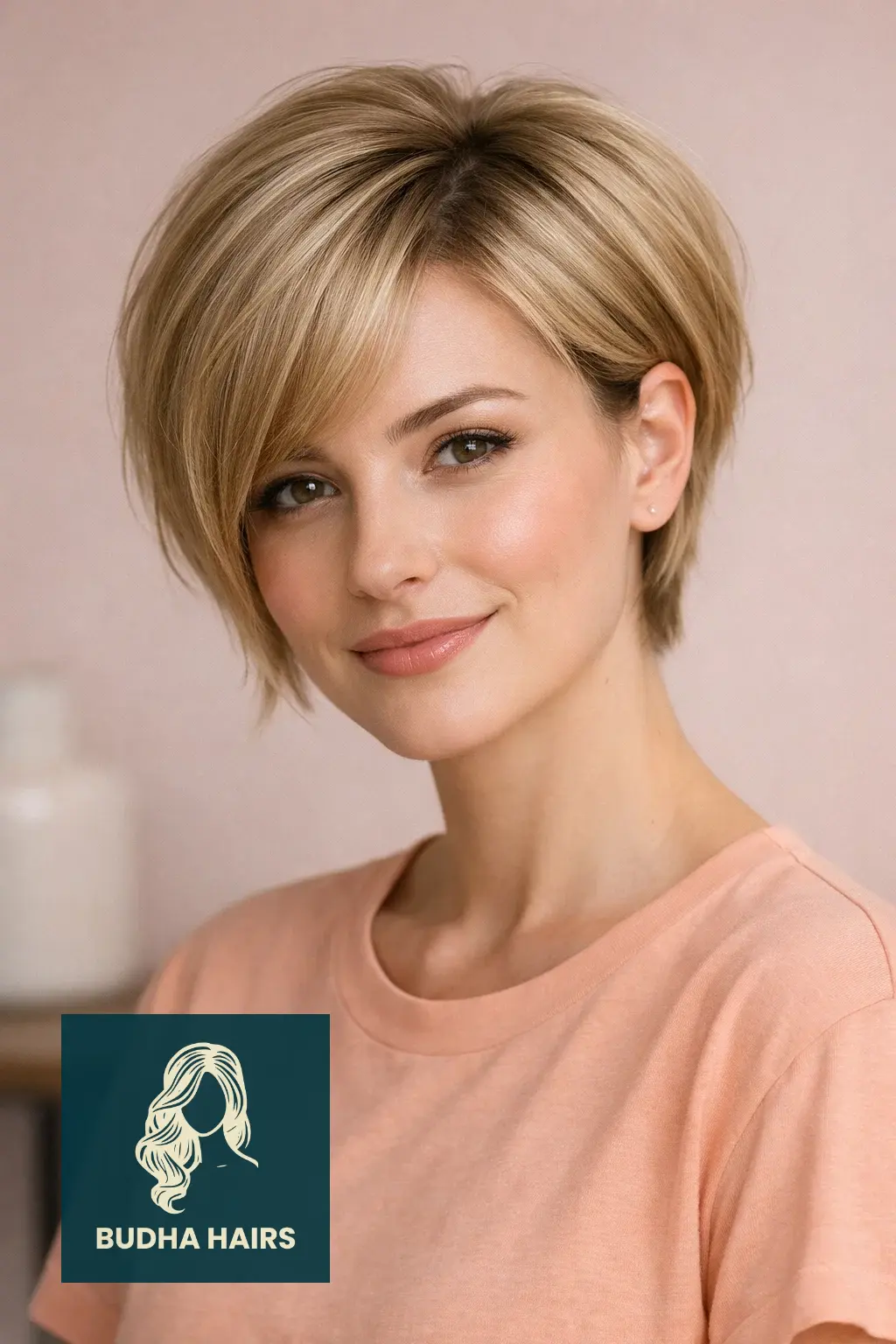
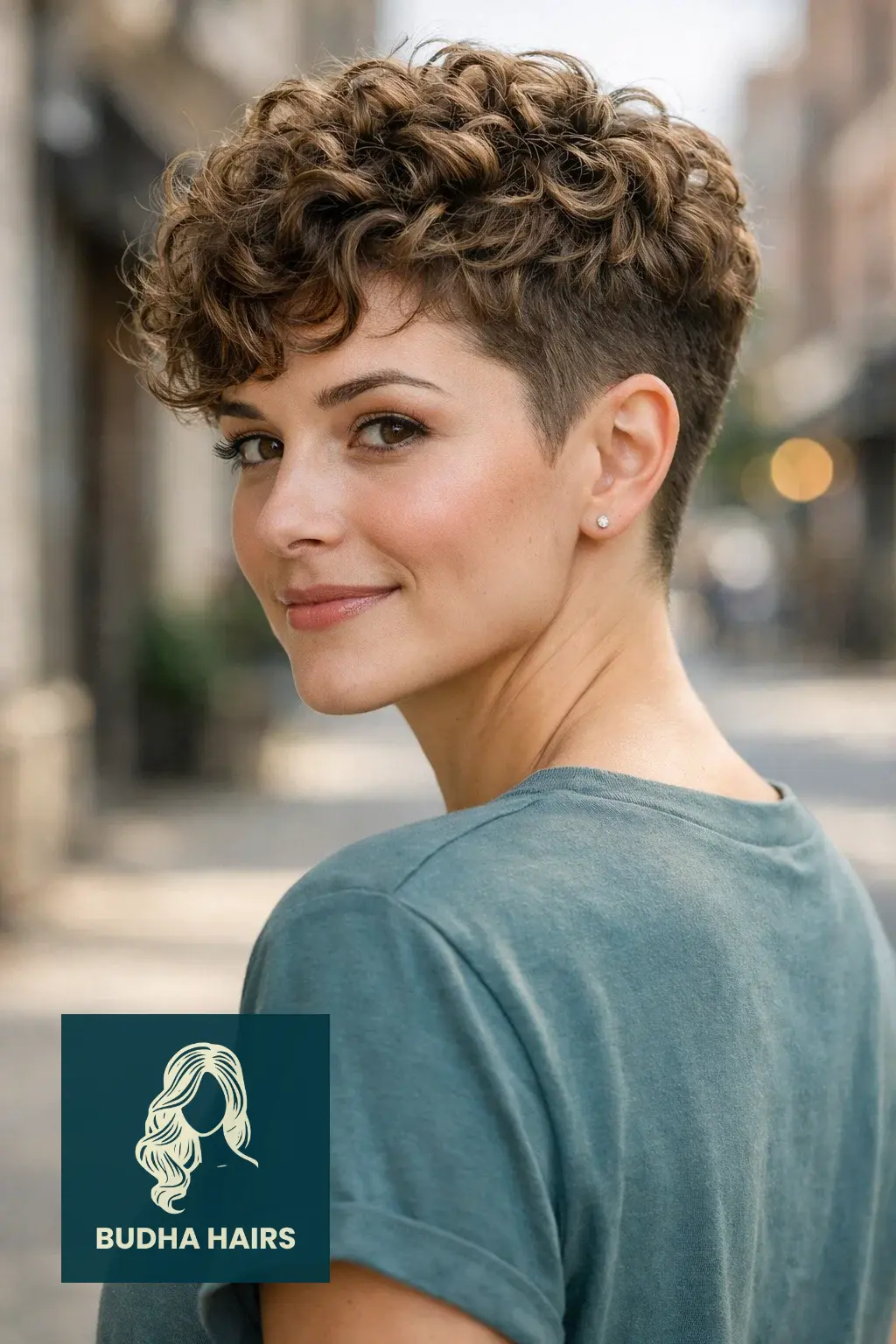
28. The Curly Top Pixie with Shaved Nape
Focusing on texture at the crown, the Curly Top Pixie with Shaved Nape is ideal for those with fine curls or who use heat to create them. We shave or tightly taper the nape and sides, leaving a pile of curls exclusively on top of the head. I find that removing the weight from the bottom allows the top curls to spring up tighter and livelier. This concentration of texture creates a focal point of volume that looks dense and playful, which is exactly what we want from Short Pixie Haircuts for Thin Fine Hair.
Styling requires a diffuser and a curl-enhancing mousse to define the ringlets without frizz. We scrunch the product into damp hair and gently dry it to lock in the shape. I find that this style looks like a burst of energy and volume, effectively hiding the scalp through the overlap of the curls. It’s a spirited, fun look that turns the volume up to the max, using the contrast of the shaved sides to make the curls pop even more. It’s a celebration of texture that makes fine hair look abundant.
29. The Architectural Asymmetrical Cut
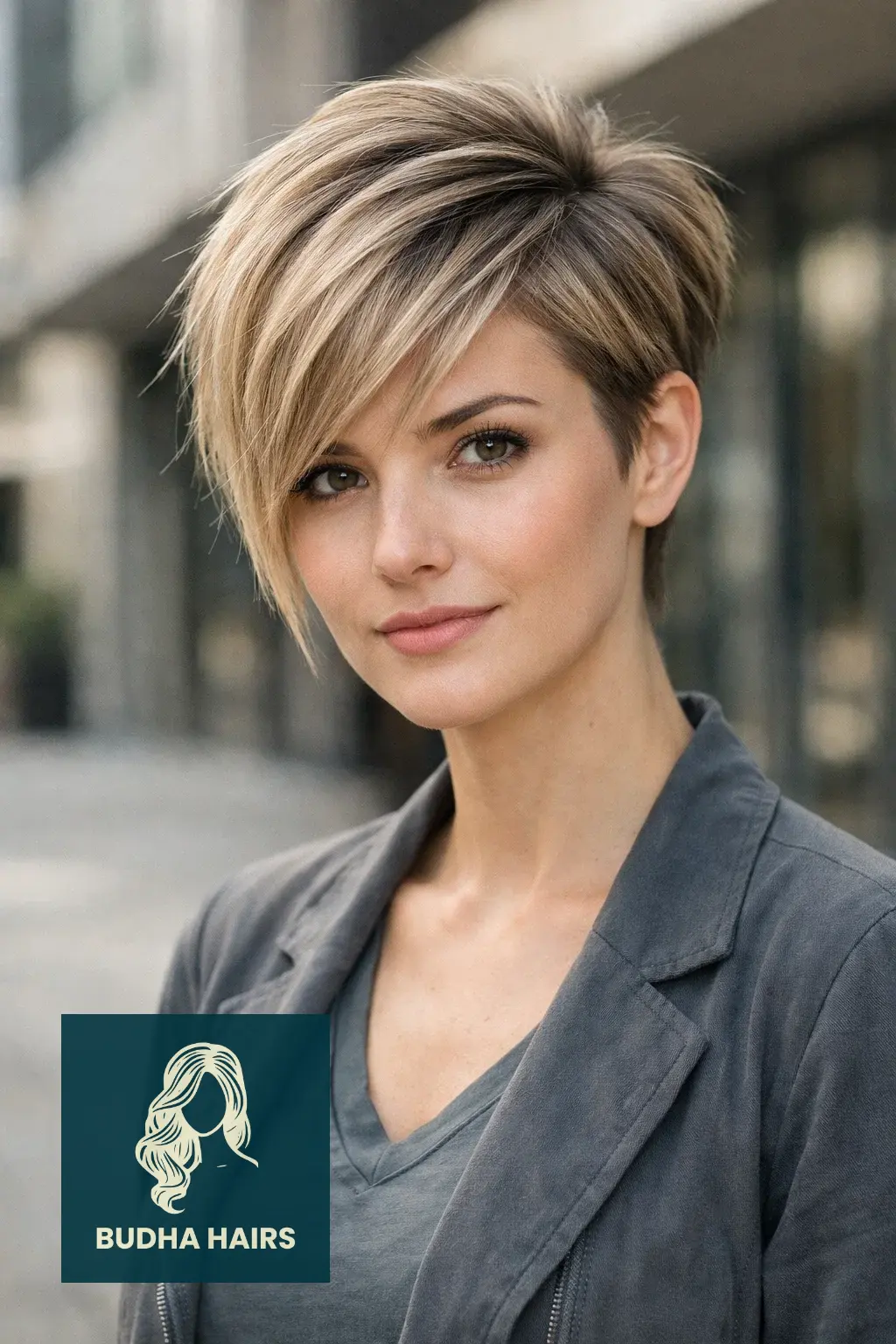
The Architectural Asymmetrical Cut treats hair like a sculpture, using sharp angles and disconnected lines to build visual interest. One side might be cut to the ear with a sharp point, while the other is longer and blunt. I find that these geometric shapes create distraction; the eye follows the lines of the cut rather than looking for scalp visibility. This avant-garde approach makes the hair look like a solid material rather than individual thin strands, making it a unique choice among Short Pixie Haircuts for Thin Fine Hair.
Styling emphasizes the sharpness of the lines, usually requiring a flat iron and smoothing serum. We keep the hair sleek to show off the precision of the cut. I find that this style creates a strong, artistic statement. It requires a skilled stylist to execute, but the result is a haircut that acts as a standalone accessory. It completely rebrands fine hair from “thin” to “sleek and modern,” utilizing the lack of volume to create sharp, crisp silhouettes that thicker hair would struggle to maintain.
30. The “Outgrown” Pixie Shag
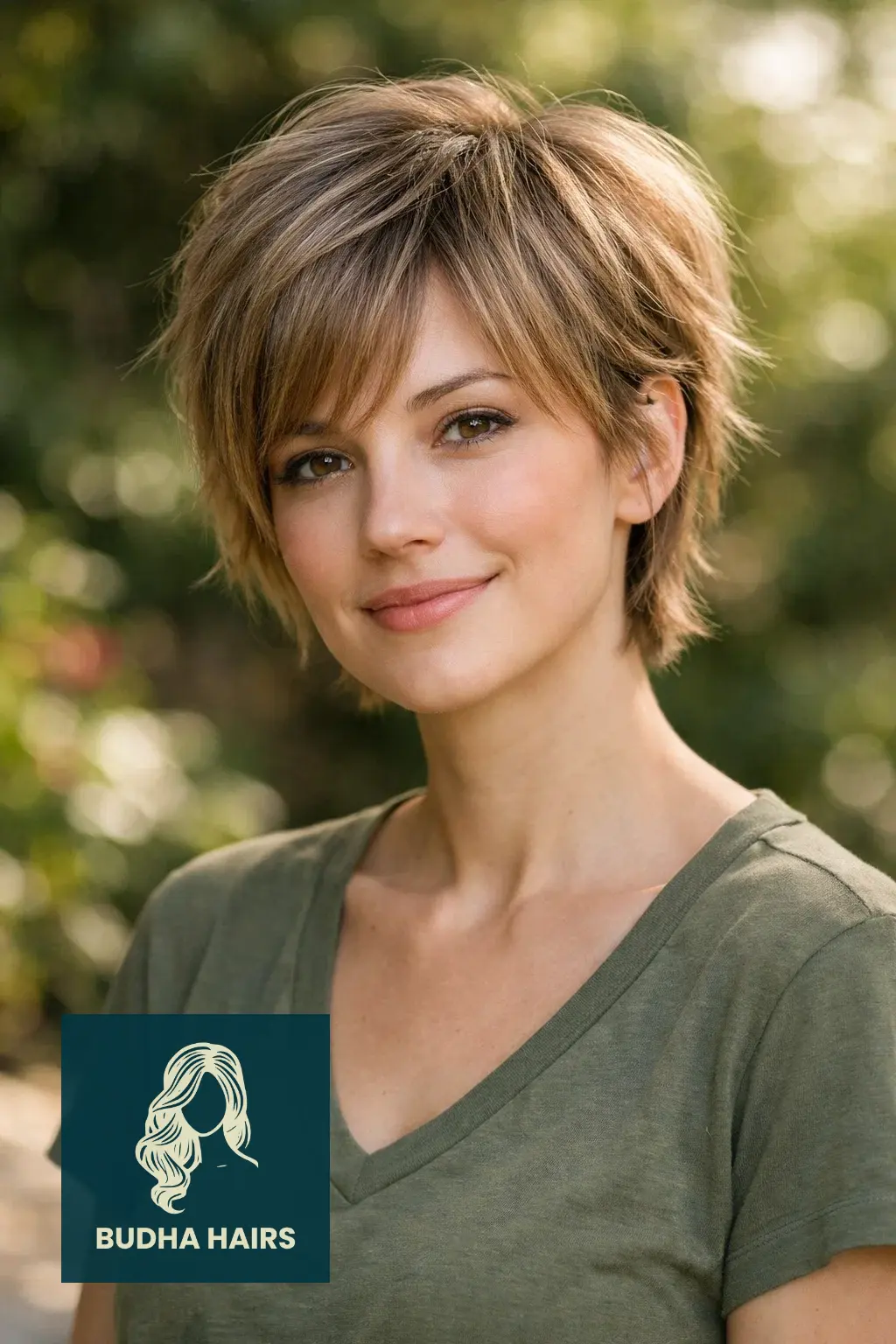
The Outgrown Pixie Shag is the ultimate low-maintenance cool-girl style. It looks like a pixie that has been growing out for a few months, featuring longer, wispy bits around the ears and a softer, shaggier neckline. However, the internal layers are refreshed to ensure volume at the crown. I find that this purposeful “in-between” length adds a lot of texture and width to the style, making the hair appear fuller than a neat, fresh crop. It captures a relaxed, bohemian vibe that fits perfectly within the spectrum of Short Pixie Haircuts for Thin Fine Hair.
Styling relies on emphasizing the imperfection. We use texture sprays or salt mists to create a bedhead look, tousling the hair with fingers. The longer pieces can be tucked behind ears or left loose to frame the face. I find that this style removes the pressure of perfection, allowing fine hair to do its natural thing while still looking stylish. It’s a forgiving cut that works with the hair’s natural growth patterns, creating volume through messy, layered movement rather than structural rigidity.
31. The Textured French Crop
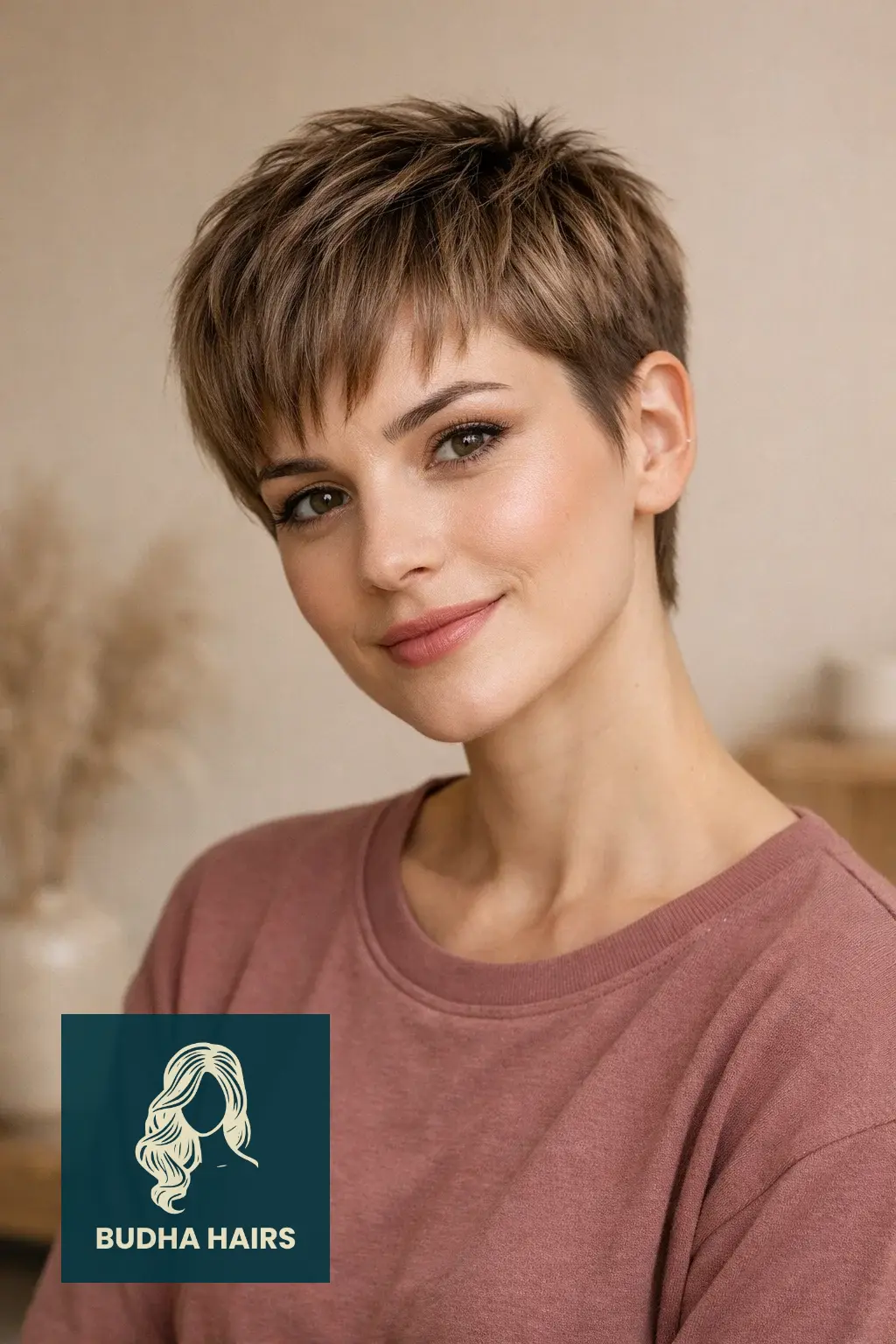
The French Crop is a timeless, sophisticated cut that has recently seen a massive resurgence due to its ability to handle finer textures with ease. This style is defined by short hair on the back and sides, paired with a slightly longer, blunt fringe that sits across the forehead. Unlike a severe bowl cut, the top is heavily texturized to create separation and movement. I find that bringing the hair forward onto the forehead is a brilliant strategy for concealing a receding hairline or sparse temples, which are common concerns for those with fine hair. The forward direction creates a “shelf” of volume at the front, creating a strong focal point that frames the eyes and cheekbones beautifully.
Styling this look is remarkably simple and focuses on matte texture. We rely on a dry clay or texturizing powder to mess up the top section, ensuring the fringe doesn’t look too perfect or flat. I find that a slightly jagged, imperfect finish makes the hair appear denser because the light catches the uneven surfaces. This cut is one of the most effective Short Pixie Haircuts for Thin Fine Hair because it minimizes the amount of styling effort required while maximizing the impact of the hair you have. It offers a chic, gamine aesthetic that feels both modern and classically elegant.
32. The “Wolf” Pixie Cut
Merging the rebellious nature of a shag with the cropped length of a pixie, the “Wolf” Pixie creates a look full of attitude and built-in volume. This cut features short, choppy layers on top that stand up for height, combined with longer, piece-y strands around the ears and nape that mimic a mullet silhouette. By removing the weight from the crown but keeping the perimeter wispy, we create a shape that occupies a lot of space without requiring dense hair to fill it. I find that this style works with the hair’s natural growth patterns, allowing cowlicks and kinks to become part of the design rather than problems to be fixed.
When we style this look, we want to emphasize the “wild” texture. Using a sea salt spray on damp hair and letting it air dry or diffusing it creates that essential gritty finish. I find that this style is perfect for those who want to transition away from bob lengths but aren’t ready to lose all coverage around the neck. The distinct silhouette of the Wolf Pixie creates a distraction, drawing the eye to the trendy shape rather than the density of the strands. It is a fantastic, edgy option for anyone seeking Short Pixie Haircuts for Thin Fine Hair that feels youthful and current.
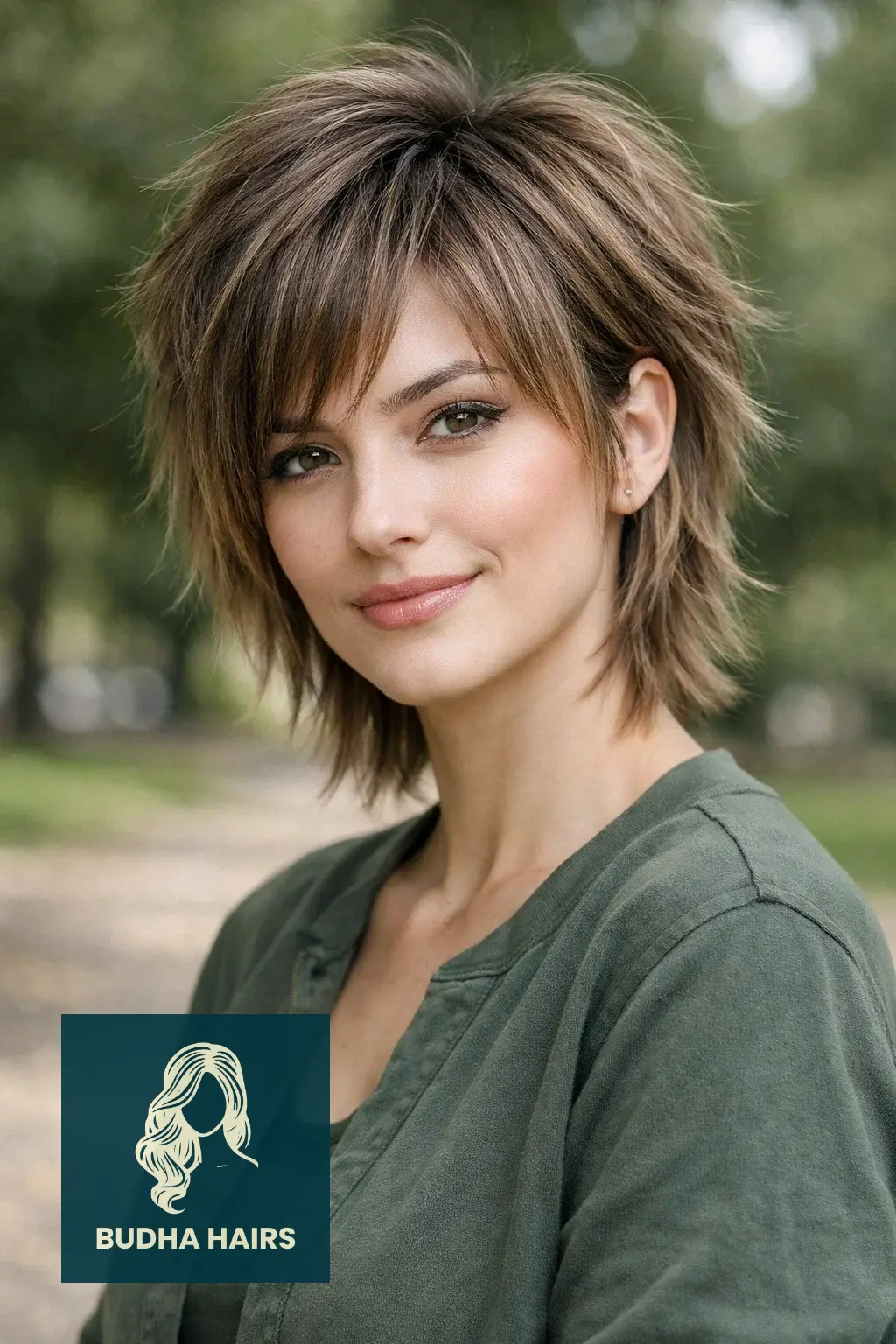
33. The Swept-Over Long Pixie
This style relies on the power of gravity and asymmetry to create immediate root lift. We keep one side cut relatively short and tapered, while the other side and top are left significantly longer, reaching ear or chin length. By taking all the longer hair and sweeping it aggressively over to one side, we stack the hair’s weight, making that side look incredibly luscious and full. I find that this deep side sweep covers the scalp effectively and creates a dramatic curtain of hair that softens angular face shapes. It is a look that reads as “bob” from one side and “pixie” from the other, offering excellent versatility.
To achieve the maximum effect, we blow-dry the hair in the opposite direction of where it will eventually sit, then flip it over at the last second. This creates a “swoop” at the roots that stands up tall. I find that adding a few highlighted pixie streaks to the sweeping fringe adds dimension and makes the texture pop. This is often the go-to choice when I am asked for Short Pixie Haircuts for Thin Fine Hair that retain a sense of length and glamour. It is polished enough for the boardroom but can be messed up for a casual weekend look.
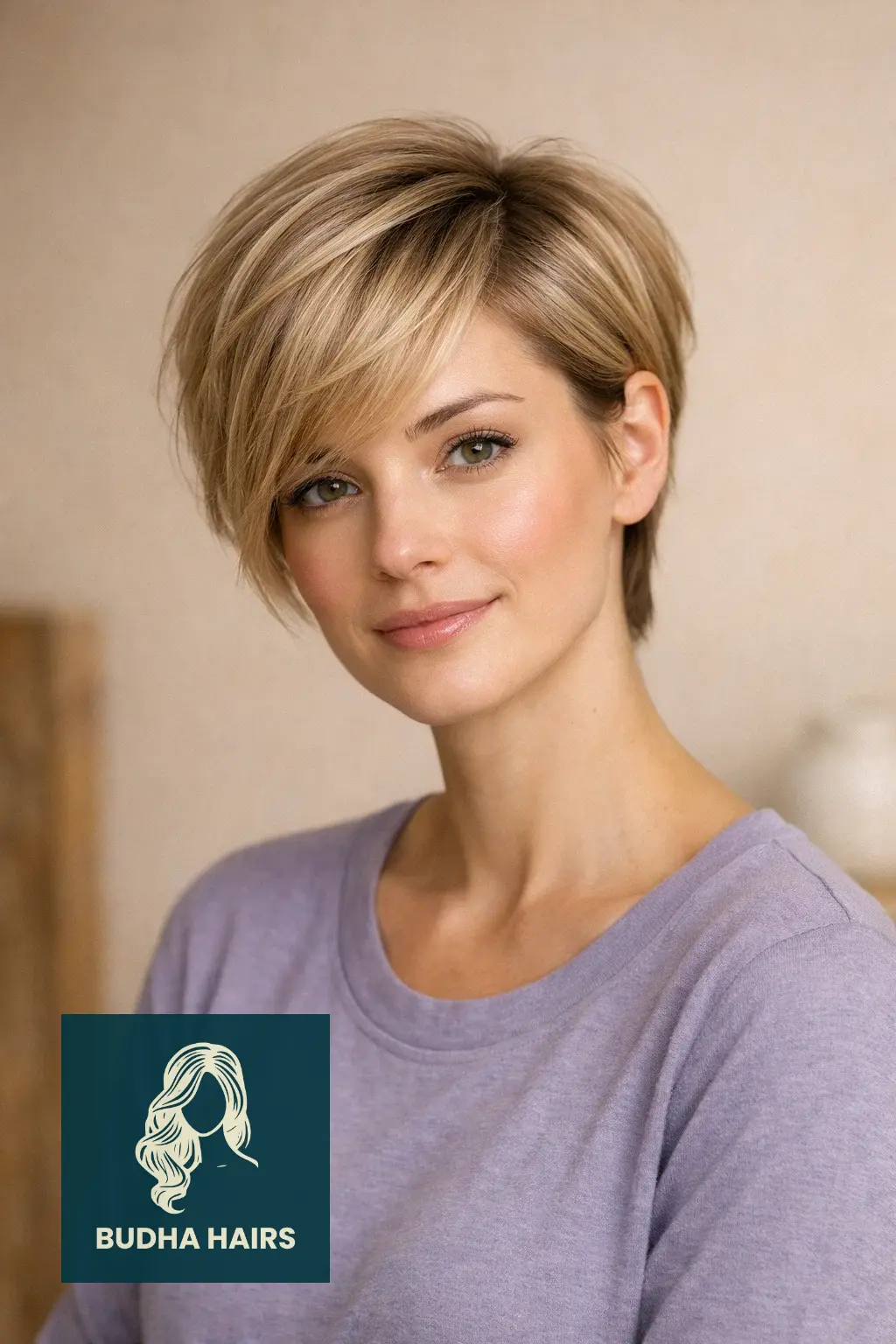
34. The Buzz Cut with Fade
For the ultimate confidence move, the Buzz Cut with Fade eliminates the stress of fine hair entirely by removing the length that makes thinness visible. We buzz the hair down to a fraction of an inch, often incorporating a skin fade on the sides for a sharp, modern edge. While it might seem counterintuitive, extremely short hair often looks thicker than straggly long hair because we see the density of the follicles right at the scalp. I find that this look highlights the head shape and facial features like no other, bringing eyes and cheekbones to the forefront. It is a liberating style that requires zero styling time.
Because there is no hair to hide behind, we can play with bold fashion colors—like platinum blonde, pink, or electric blue—which adds a layer of intentionality and high fashion to the look. The bleaching process also swells the tiny bit of hair that remains, adding texture. I find that this style exudes a level of confidence that is incredibly attractive. It stops the battle with volume and embraces a sleek, minimalist aesthetic. For those tired of fighting their texture, this is the boldest interpretation of Short Pixie Haircuts for Thin Fine Hair.
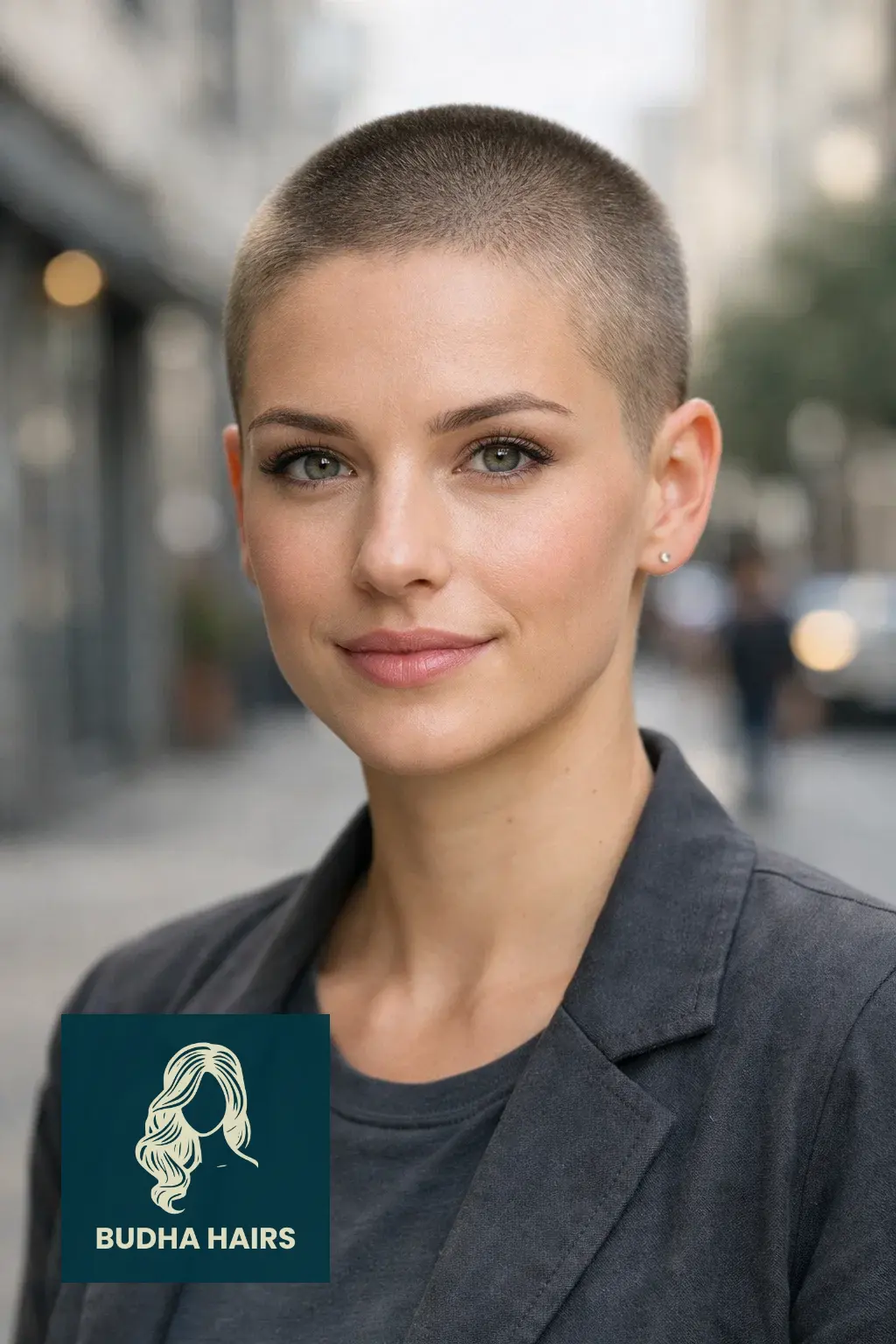
35. The Softly Spiked Quiff
The Quiff focuses on vertical height at the forehead, drawing the eye upward and elongating the face. We cut the back and sides short and neat, while leaving the forelock (the hair right at the front hairline) significantly longer. This longer section is styled upwards and backwards. I find that lifting the hair off the forehead prevents it from looking stringy or flat against the skin. The height created by the quiff mimics the volume of a much thicker head of hair, creating a balanced silhouette that looks intentional and groomed.
Styling is key here: we apply a volumizing mousse to damp hair and blow-dry the front section up and back using a round brush. Once dry, a dab of matte paste holds the quiff in place without making it look greasy. I find that this style works particularly well for professional settings as it looks tidy and commanding. It allows you to keep the comfort of a short cut while having a specific “styled” element at the front. It is a classic technique often used in Short Pixie Haircuts for Thin Fine Hair to create the illusion of abundance at the hairline.
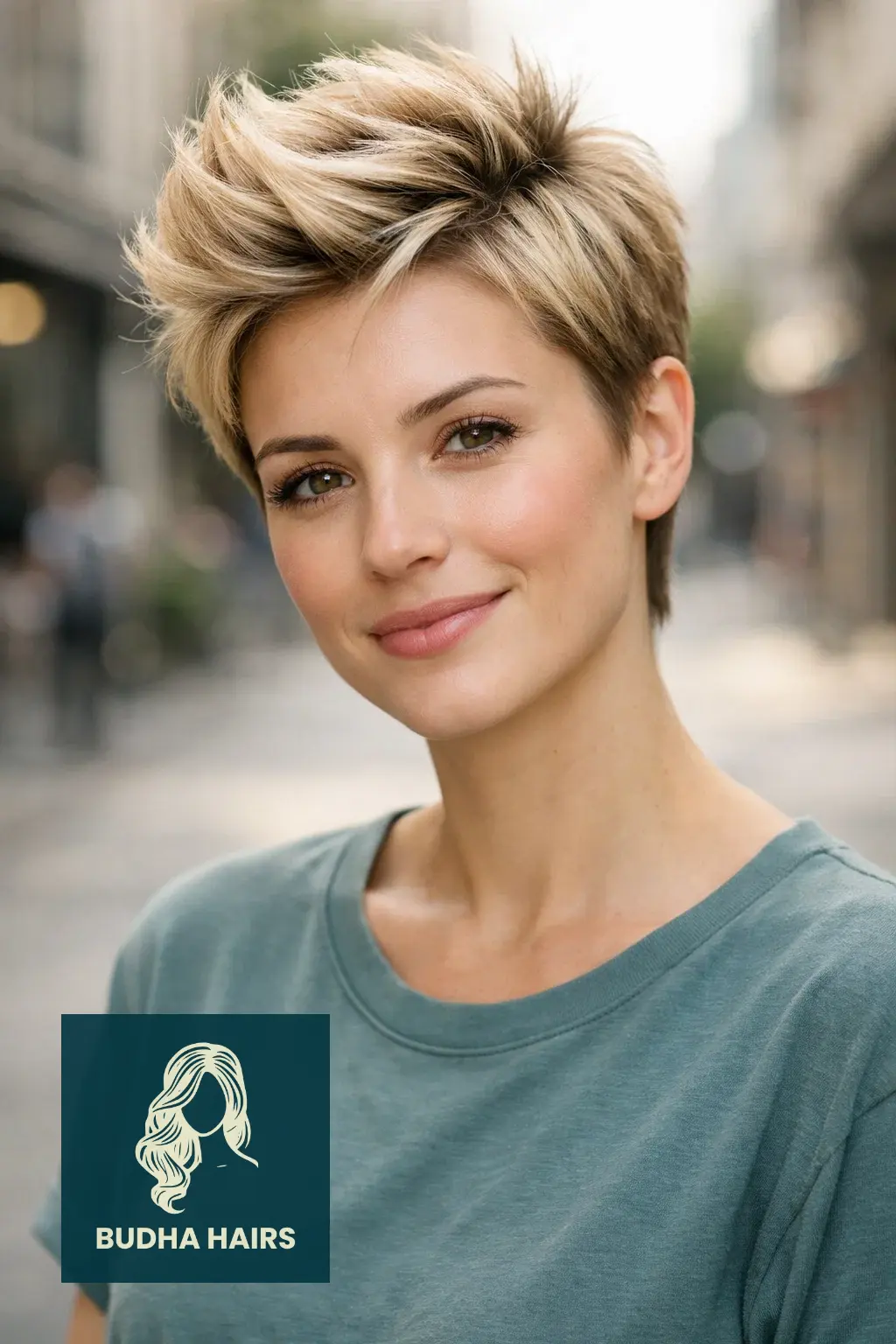
36. The Asymmetrical Bob-Pixie Hybrid
Sitting right on the border between two classic cuts, this hybrid style offers the security of length with the lift of a crop. One side is cut short to the ear, exposing the jawline, while the other side angles down sharply to chin length, resembling a bob. I find that this sharp diagonal line draws the eye across the face and creates a strong visual interest that distracts from fine texture. The shorter side pushes the volume toward the longer side, ensuring the heavy side looks thick and swinging. It is a perfect intermediate step for those scared to go fully short.
We keep the layers long and smooth to maintain the solidity of the shape. Using a flat iron to smooth the longer side enhances the shine and creates a “sheet” of hair that looks healthy and dense. I find that this cut looks fantastic with a sleek, deep side part. It allows for the feeling of long flowing hair around the face while enjoying the weightless volume of a pixie at the back. This structural imbalance is a clever trick for making Short Pixie Haircuts for Thin Fine Hair feel substantial and stylish.
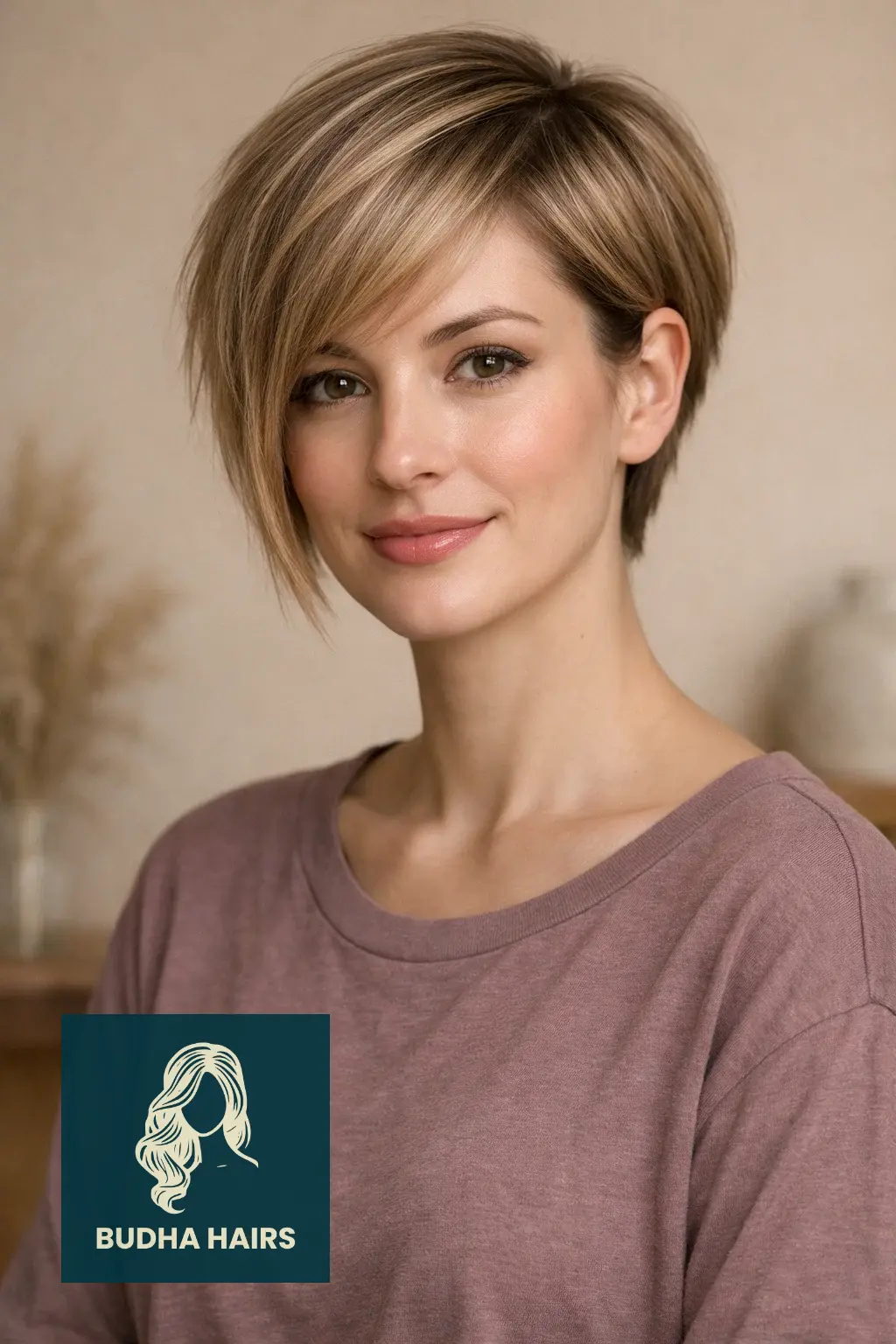
37. The Curly Faux Hawk
For those with fine hair that has natural curl or wave, concentrating that texture in a central strip creates massive impact. We taper or clip the sides very short to minimize width, which forces the eye to the strip of curls running from the forehead to the nape. I find that when curls are bunched together in a faux hawk, they support each other and stand up higher, creating a look of density that wouldn’t exist if the curls were spread out. It transforms the “frizz” of fine curly hair into a purposeful, edgy asset.
Styling involves using a diffuser to dry the center strip without disturbing the curl pattern. We use a light curl defining cream to keep the coils tight and springy. I find that this style is incredibly durable; even if the curls drop slightly, the structure of the cut keeps the volume centered and high. It’s a fun, rock-and-roll look that proves Short Pixie Haircuts for Thin Fine Hair don’t have to be straight or flat. It celebrates texture and uses the removal of hair on the sides to amplify the hair on top.
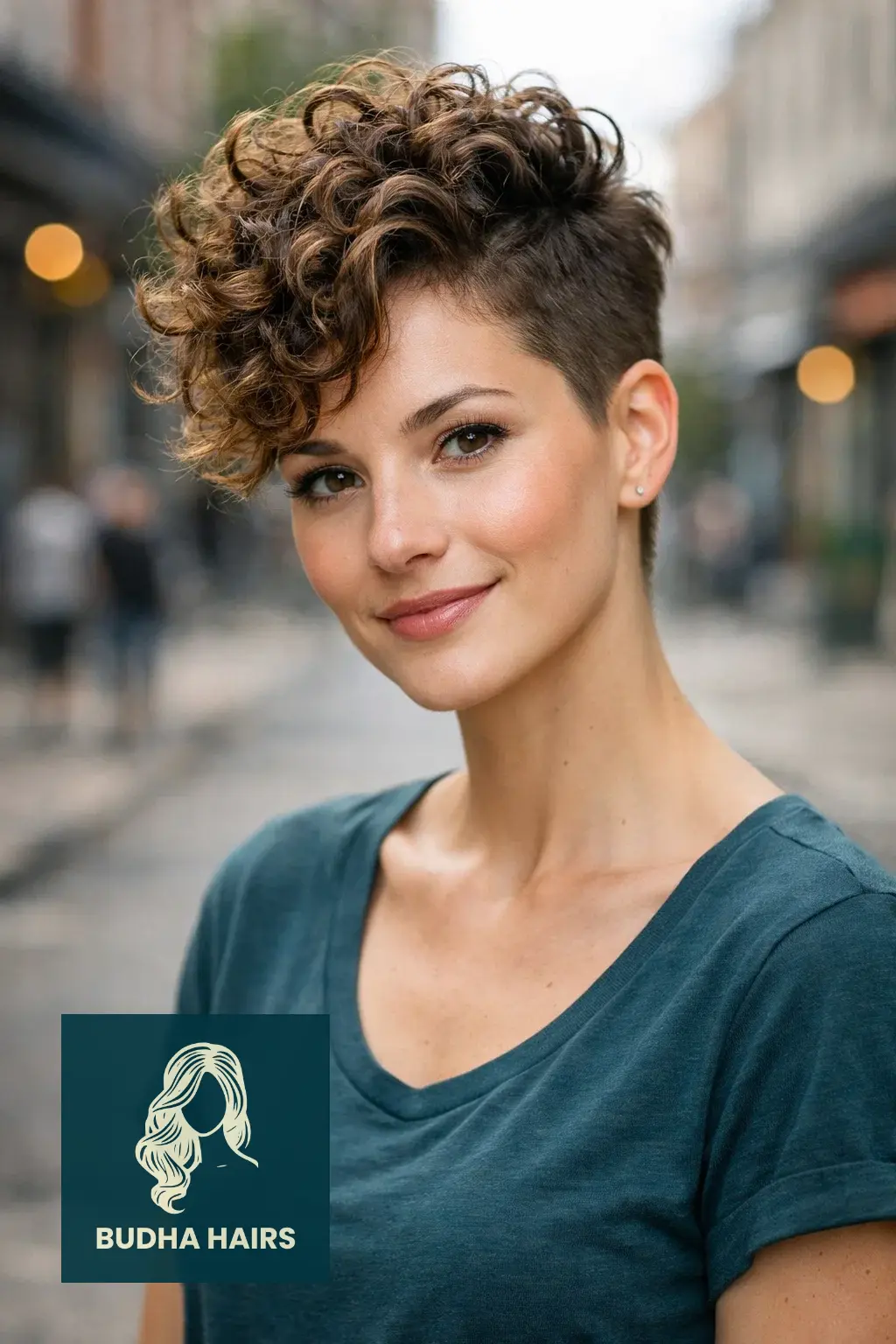
For an edgy and modern option, Shaved Sides with Ponytail for Black Women highlights striking styles that balance boldness with elegance.
38. The Wispy Face-Framing Pixie
This style is all about softness and delicacy, using wispy strands to create a halo effect around the face. Unlike blunt cuts that rely on hard lines, this cut uses razor-cutting to create feathered edges that blend seamlessly into the skin. We leave longer, tendril-like pieces around the ears and temples. I find that these soft bits blur the boundaries of the hairline, making it less obvious where the hair begins and ends, which is a great camouflage for thinness. It creates a romantic, ethereal vibe that is very feminine.
We style this by blowing drying with fingers to keep the texture airy and light. A light hold hairspray is used to keep the wispy bits in place without gluing them down. I find that this style is very forgiving of growth and movement; it doesn’t need to be perfectly coiffed to look good. The wispy layers trap air and create a fluffy silhouette that feels fuller than it is. It is a gentle, approachable version of Short Pixie Haircuts for Thin Fine Hair that suits delicate facial features perfectly.
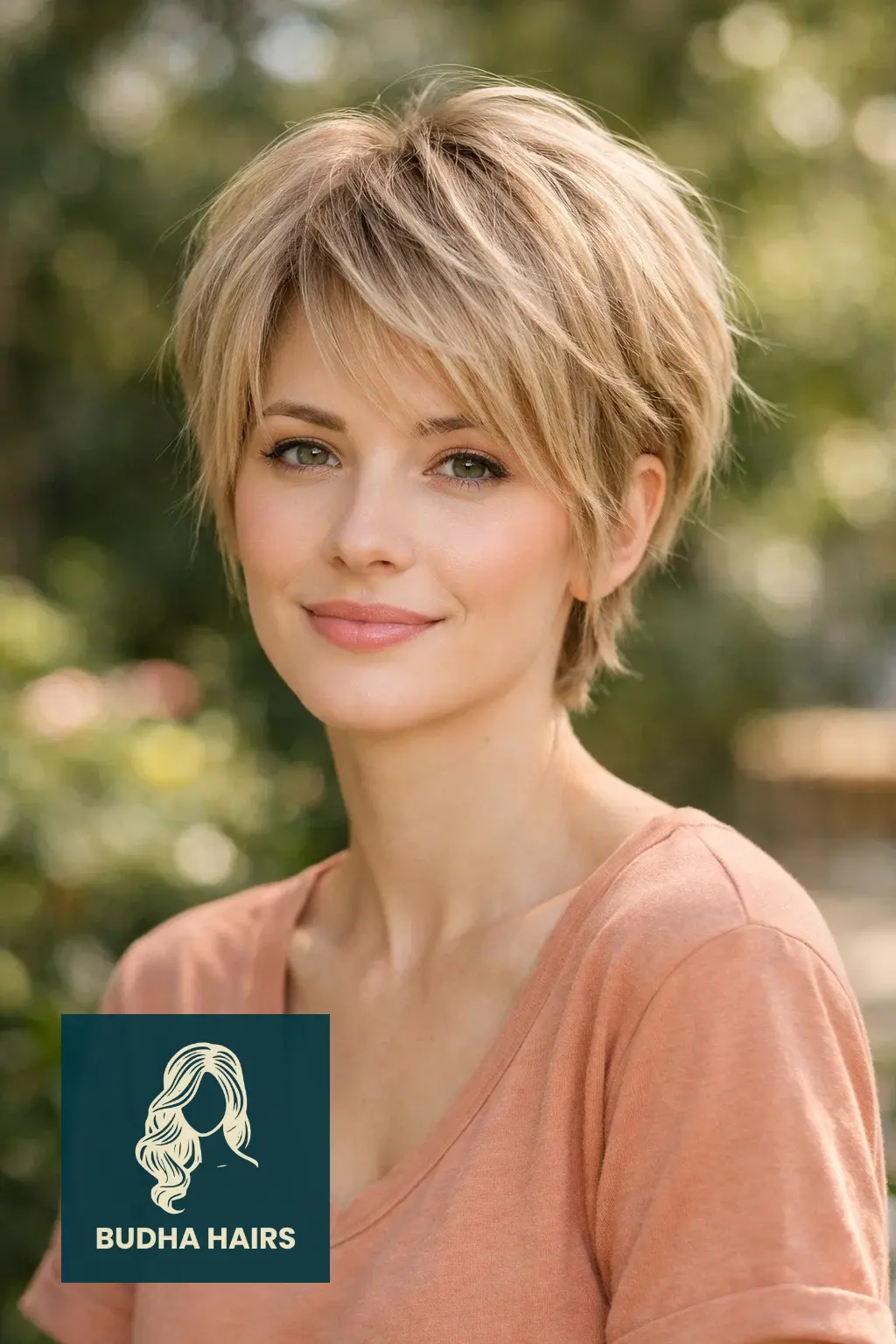
39. The Geometric Bowl Cut
Moving away from soft layers, the Geometric Bowl Cut uses precision and blunt lines to build weight. We cut a solid line that encircles the head at eyebrow or mid-ear level, creating a distinct “cap” shape. Beneath this line, the hair is faded or tapered close to the head. I find that the solid perimeter creates a visual “hem” that makes the ends of the hair look thick and robust. By stacking all the top hair together to end at the same point, we maximize density at that specific line.
This look requires straight styling to show off the geometry. We use a smoothing iron and a gloss spray to create a reflective surface. I find that while this style is bold, it is incredibly effective for fine hair because it avoids the “see-through” ends that layers can sometimes cause. It makes a high-fashion statement that looks deliberate. For those who love a graphic, modern aesthetic, this is a standout choice among Short Pixie Haircuts for Thin Fine Hair.
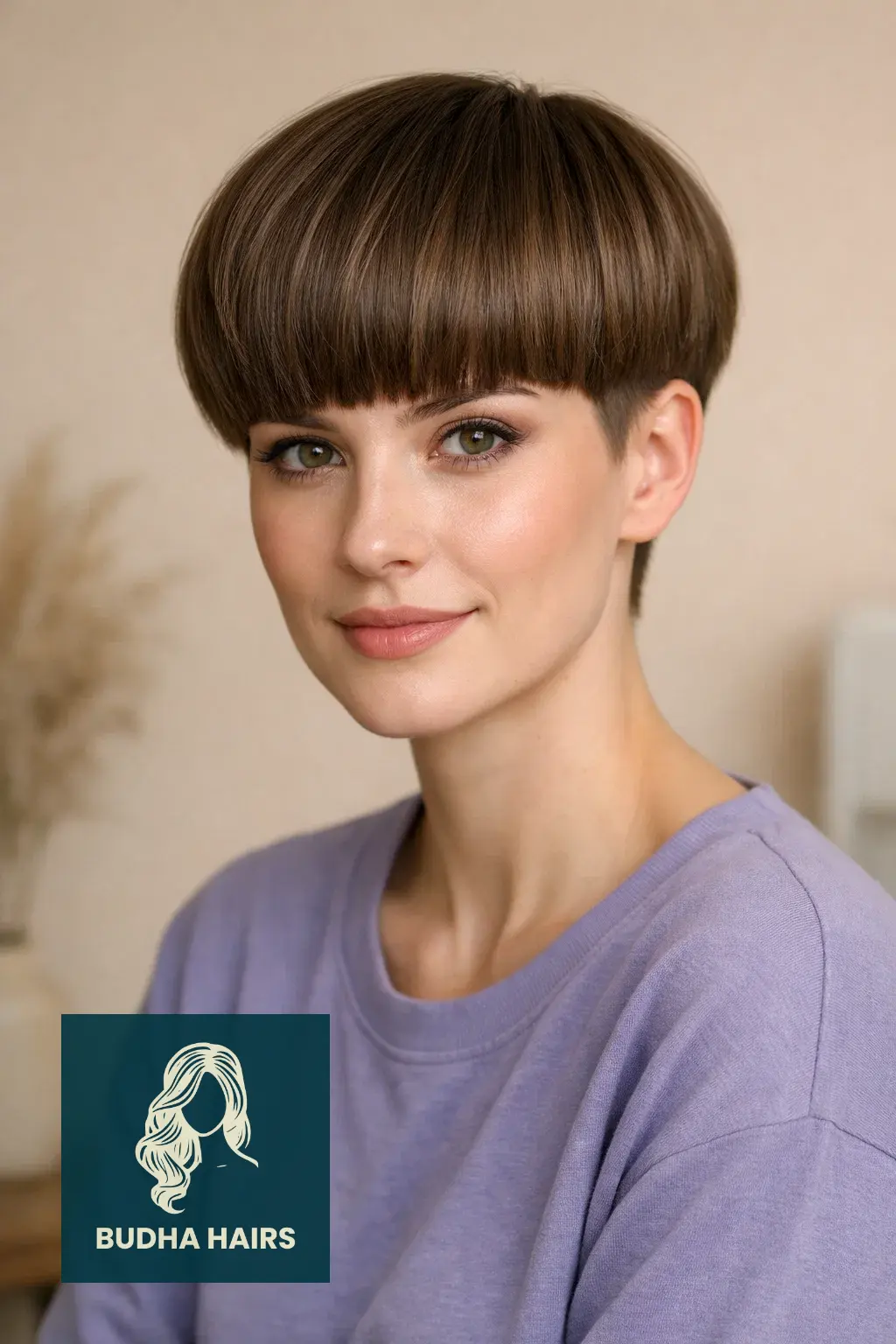
40. The Tousled Bedhead Pixie
The Tousled Bedhead Pixie is the ultimate low-maintenance style that turns “messy” into a volume-boosting strategy. The cut features uniform layers that are slightly longer than a traditional crop, allowing for plenty of movement. We rely on the concept that messy hair takes up more space than neat hair. I find that by disrupting the hair pattern and creating multidirectional movement, we hide the scalp and create a 3D texture that looks full and lived-in. It mimics the look of thicker hair that has been slept on.
Styling is product-dependent: dry texture sprays, sea salt mists, and mattifying powders are essential. We spray the product in and scrunch the hair aggressively with our hands. I find that this style gets better as the day goes on and works perfectly with second-day hair. It removes the pressure to have every hair in place. By embracing the chaos, we create a voluminous, stylish look that is one of the most practical and popular Short Pixie Haircuts for Thin Fine Hair.
Pro Tips
- Master the Blow-Dry: Always blow-dry your hair in the opposite direction of its natural growth. If your hair falls forward, dry it backward; if it falls right, dry it left. This creates mechanical lift at the root that lasts longer than product alone.
- Product Placement Matters: Avoid applying waxes, pastes, or oils directly to your roots. This will instantly greasiness and collapse your volume. Apply these products to the mid-lengths and ends for definition, and keep the roots clean or use powder.
- Use Dry Shampoo proactively: Don’t wait until your hair is dirty. Spray dry shampoo on your roots immediately after washing and drying. This adds “grit” and friction to clean, slippery fine hair, giving your style a base to hold onto volume.
- Embrace the “Pancake” Technique: If you have braids or twists in your pixie (like a small front braid), gently pull apart the loops (pancaking) to make them look wide and flat. This visual trick makes even the tiniest braid look thick and substantial.
- Color for Texture: Consider adding highlights, babylights, or a shadow root. The chemical process roughens the hair cuticle slightly, physically thickening the strand, while the multi-tonal color adds 3D depth that solid colors lack.
- Switch Your Part: Changing your parting regularly prevents the hair from getting “stuck” flat in one position. Flipping your part to the other side creates an instant, massive wave of volume at the roots.
FAQs
Conclusion
Choosing to chop your locks into one of these Short Pixie Haircuts for Thin Fine Hair is more than just a haircut; it is a strategic move to reclaim volume and confidence. By understanding the physics of fine hair—removing weight to gain lift—we can manipulate lengths, layers, and textures to create silhouettes that look full and dynamic. Whether you opt for the bold contrast of an undercut pixie, the soft romance of a feathered pixie, or the edge of a faux hawk, the key is to work with your texture, not against it. I encourage you to use the pro tips, experiment with “dry” styling products, and embrace the freedom that comes with a chic, short style. Fine hair is not a limitation; it is simply a canvas that requires the right architectural cut to shine.
I’m Budha Styler, a hair enthusiast who loves creating beautiful, confidence-boosting looks that feel true to who you are. I’m passionate about exploring new trends, techniques, and textures, and I enjoy turning that knowledge into simple, inspiring ideas anyone can try. Through my work, I hope to help you express your unique style, feel amazing in your own hair, and discover everyday looks that make you shine.


