Hard water build-up is a silent destroyer of hair health, often misdiagnosed as simple dryness, dandruff, or bad genetics. When you wash your hair in hard water, you are essentially bathing it in a mineral-rich cocktail of calcium, magnesium, and oxidized copper that refuses to rinse away. Over time, these minerals crystallize on the hair shaft, creating an impenetrable wall that blocks moisture from entering and prevents styling products from working effectively. This accumulation leads to a distinctive “straw-like” texture, dullness that no shine spray can fix, and in lighter hair, a greenish or brassy discoloration.
The Science of Mineral Accumulation
This guide explores the chemical interactions behind this phenomenon and provides fifteen elite strategies to strip away the deposits and restore your hair’s natural softness.
Understanding the Chemical Reaction
The core issue with hard water is not just the presence of minerals, but how those positively charged mineral ions interact with your negatively charged hair and shampoo. Calcium and magnesium ions bind to the fatty acids found in most soaps and shampoos, creating an insoluble precipitate known technically as “calcium soap,” or more commonly, soap scum. Unlike dirt or oil, this scum does not dissolve in water; instead, it solidifies into a waxy coating that plasters the cuticle scales down in a rough, uneven manner. This coating is incredibly stubborn, resisting standard cleaning agents and accumulating layer by layer with every single wash, eventually suffocating the hair strand and leading to severe dehydration and breakage.
Porosity and Oxidation
The damage caused by hard water is compounded by the porosity of your hair; if your cuticle is already raised due to heat or chemical processing, these minerals penetrate deep into the cortex rather than just sitting on the surface. Once inside the hair shaft, minerals like copper can oxidize—similar to how a penny turns green—causing significant discoloration in blondes and causing brunettes to look muddy and flat. Furthermore, the presence of these mineral deposits creates a rough surface texture that increases friction between strands, making detangling a nightmare and causing the hair to snap under the tension of a comb. This internal and external hardening makes the hair rigid, robbing it of its natural elasticity and bounce.
15 Expert Tips to Remove and Prevent Build Up
Now, let’s explore 15 expert tips to remove and prevent hair and scalp buildup. From clarifying treatments to smart product choices and proper washing techniques, these tips keep your hair fresh, clean, and healthy.
1. Use a Chelating Shampoo
The gold standard for removing mineral deposits is a specialized product known as a “chelating” shampoo, which is chemically distinct from a standard clarifying shampoo. Chelating agents, such as EDTA (ethylene diamine tetra-acetic acid), work like molecular claws that grab onto mineral ions and chemically unbind them from the hair shaft so they can be rinsed away. You should use a chelating shampoo once a week or twice a month, depending on the hardness of your water, to essentially “reset” your hair to a neutral state without stripping away all natural oils.
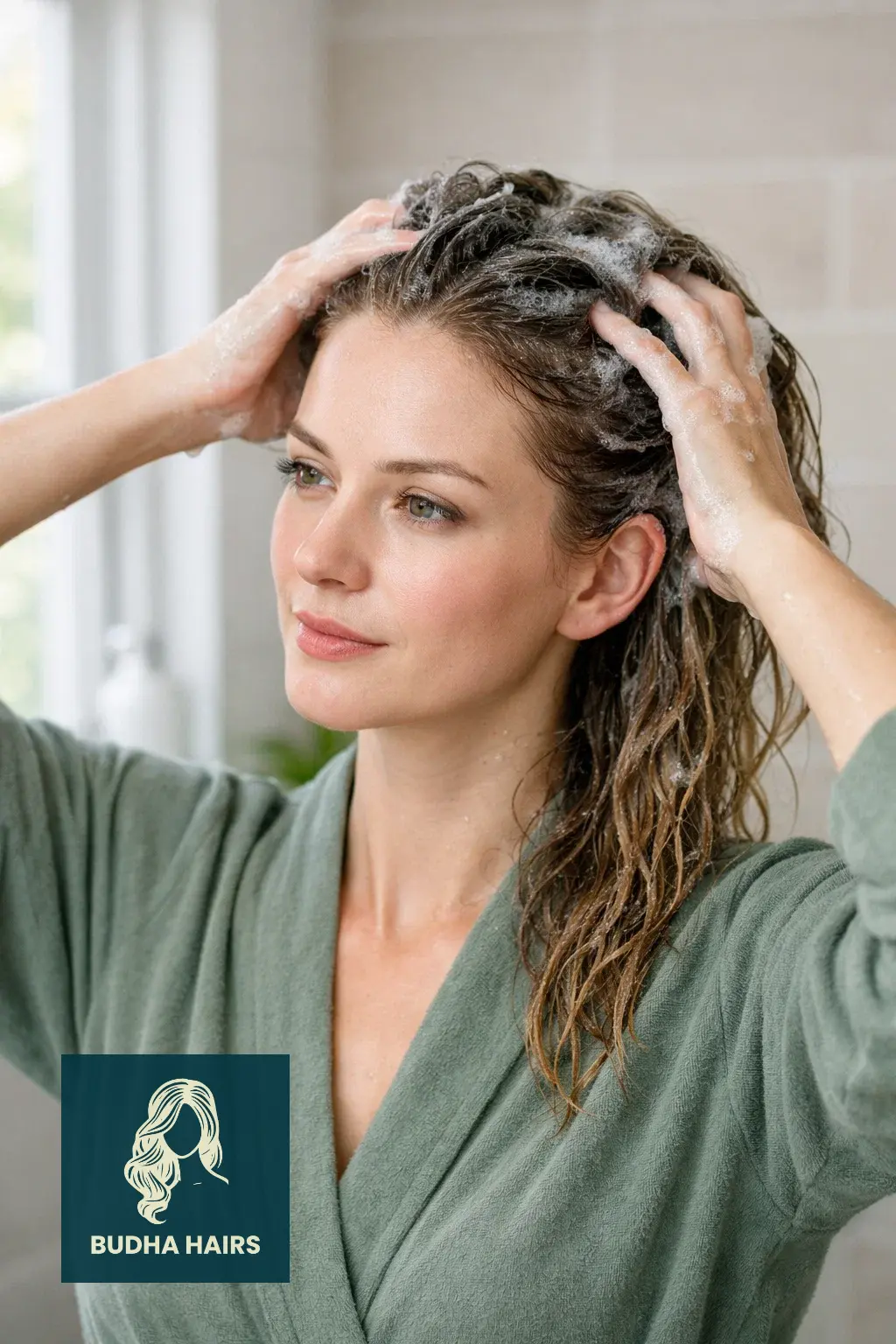
Knowing how to remove hard water build up from hair is essential for restoring softness and shine. Following repair-focused tips from How to Fix Damaged Thin Hair helps reverse dryness and brittleness caused by mineral deposits.
2. The Apple Cider Vinegar (ACV) Rinse
An apple cider vinegar rinse is a time-tested natural remedy that utilizes acidity to dissolve mineral scale, much like using vinegar to clean a coffee pot. The low pH of the vinegar helps to break down the calcium magnesium bonds and simultaneously closes the hair cuticle, which smooths the texture and restores shine. Mix one part organic apple cider vinegar with three parts water and pour it over your hair after shampooing, letting it sit for five minutes before rinsing thoroughly to ensure the acidity has time to work on the deposits.

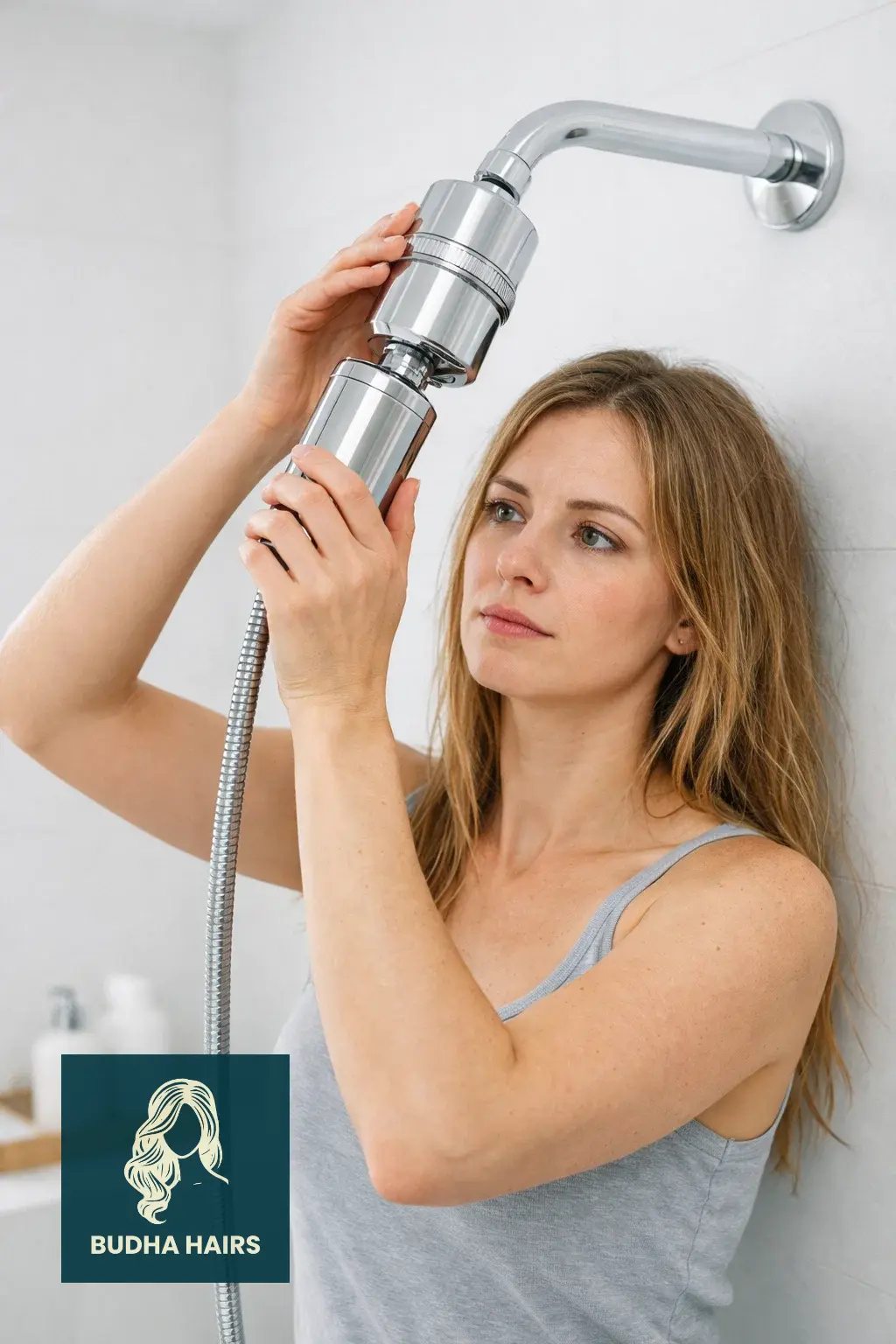
3. Install a Showerhead Filter
While removing buildup is necessary, preventing it from reaching your hair in the first place is the most effective long-term strategy. Installing a high-quality showerhead filter can significantly reduce the amount of chlorine, heavy metals, and scale-causing minerals that contact your hair during every wash. These filters usually contain KDF-55 (Kinetic Degradation Fluxion) media and carbon, which neutralize contaminants before the water hits your head, resulting in softer skin and hair immediately.
4. The DIY Vitamin C Treatment
Vitamin C (ascorbic acid) is a powerful antioxidant that is exceptionally effective at neutralizing chlorine and breaking down oxidized mineral buildup. You can create a potent treatment at home by crushing 10 to 15 vitamin C tablets into a fine powder and mixing them with a small amount of your regular shampoo to form a thick paste. Apply this mixture to damp hair, massaging it into the lengths and ends, and let it sit for 15 minutes under a shower cap; the acidity will lift the minerals while brightening the hair color significantly.
5. Lemon Juice Acid Wash
Similar to vinegar, the citric acid found in fresh lemon juice is a potent natural chelator that can eat through stubborn calcium lime deposits on the hair shaft. Mix the juice of two fresh lemons with a cup of water (add a tablespoon of conditioner if your hair is dry) and saturate your hair, focusing on the ends where buildup is heaviest. Be cautious with this method if you have color-treated hair or spend time in the sun, as lemon juice is also a natural lightener that can alter your shade if left on too long.

6. Use a Bentonite Clay Mask
Bentonite clay is a unique, absorbent substance that carries a strong negative electrical charge, allowing it to act like a magnet for positively charged toxins and heavy metals. Mixing bentonite clay with water and apple cider vinegar creates a detoxifying mud mask that physically draws impurities and mineral deposits out of the hair shaft as it dries. Apply the mask from root to tip and leave it on for 20 minutes before rinsing; this method not only clarifies the hair but also defines curls by resetting the natural pattern.

7. The Bottled Water Final Rinse
If you cannot install a filter or softener, a simple behavioral change can make a massive difference: never let hard water be the last thing that touches your hair. Keep a jug of distilled or bottled water in the shower and use it for your final rinse after you have washed out your conditioner. This ensures that the water evaporating off your hair is free of minerals, preventing that final layer of calcium from crystallizing on your strands as they dry.
Hard water residue can also irritate the scalp, especially if hair has been chemically treated. Incorporating care methods from Itchy Scalp After Hair Coloring soothes sensitivity and reduces discomfort linked to buildup.
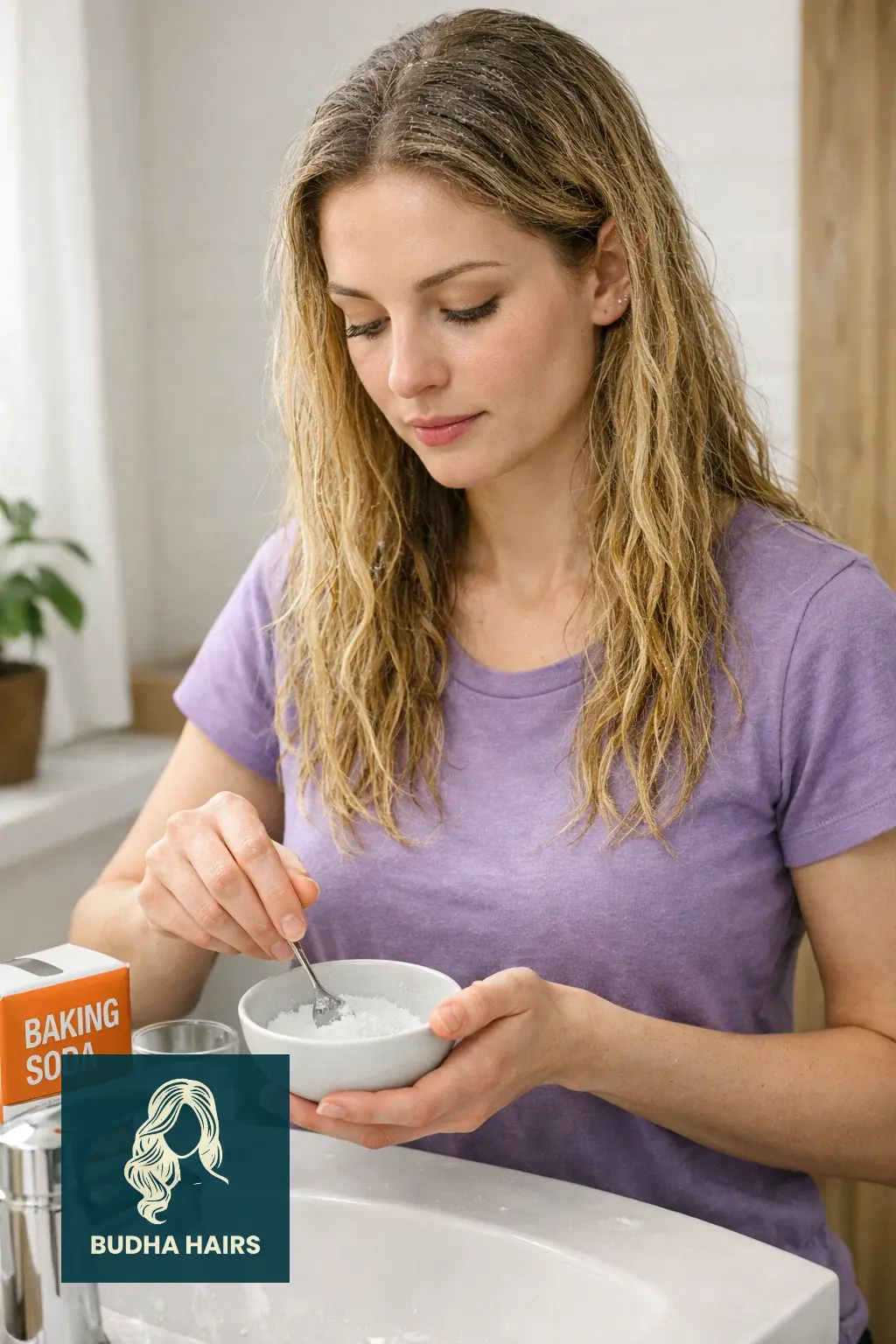
8. Baking Soda Clarification (Use with Caution)
For extreme cases of buildup where the hair feels waxy and heavy, a baking soda paste can act as a mild abrasive to physically scrub the deposits off the cuticle. Mix a tablespoon of baking soda into your shampoo to create a gritty texture and massage it gently into the hair, focusing on the scalp area where sebum and minerals mix. Because baking soda has a very high pH, you must follow this immediately with an acidic rinse (like ACV) to rebalance the hair’s pH and close the cuticle.
9. Invest in a Whole-House Water Softener
The most comprehensive and permanent solution is to treat the water at the source by installing an ion-exchange water softener for your entire home. These systems physically remove the calcium and magnesium ions from your water supply and replace them with sodium ions, converting hard water into soft water before it even enters your pipes. While this is a significant financial investment, it completely eliminates the problem of buildup, protecting not just your hair, but your skin and appliances as well.
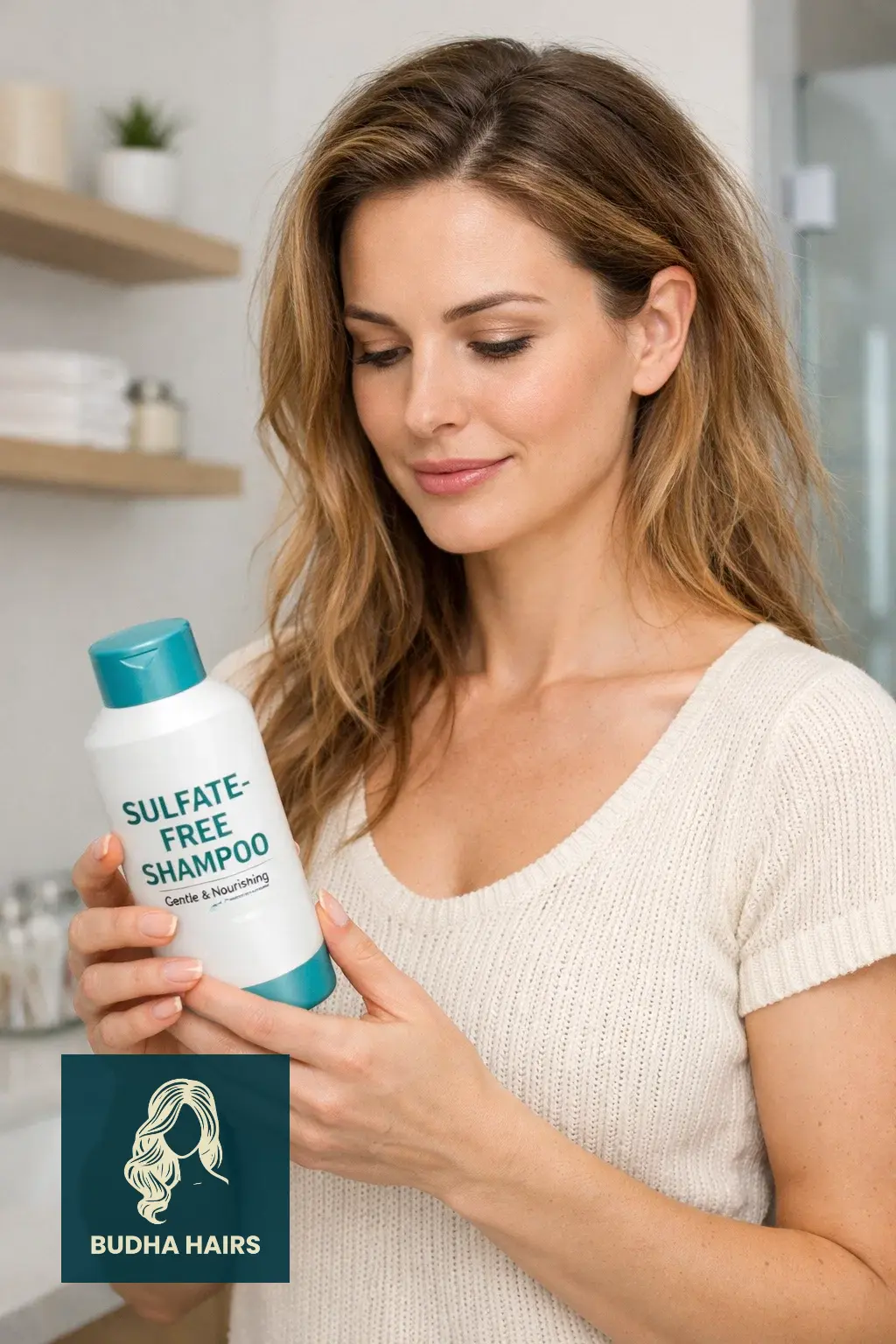
10. Switch to Sulfate-Free Shampoos
While sulfates are strong cleansers, in hard water, they can actually contribute to the problem by reacting with minerals to form difficult-to-rinse residues. Switching to high-quality sulfate-free shampoos often results in a cleaner rinse because these formulas utilize different surfactants that do not precipitate as easily in mineral-rich water. Look for ingredients like sodium cocoyl isethionate or glucosides, which provide a gentle cleanse without creating the sticky “soap scum” film associated with traditional detergents.
11. Club Soda Rinse
Club soda is surprisingly effective for fighting frizz and mineral buildup because its carbonation helps to mechanically lift dirt and debris from the hair shaft. Additionally, club soda has a slightly acidic pH level (around 5), which is closer to the natural pH of human hair than tap water is. Pouring a bottle of room-temperature club soda over your hair after conditioning helps to dissolve surface minerals and leaves the hair feeling lighter and more voluminous.
12. Apply Coconut Oil Pre-Poo
Using coconut oil as a pre-shampoo treatment creates a hydrophobic (water-repelling) barrier on the hair shaft that can reduce the amount of mineral-laden water absorbed by the cuticle. Apply the oil to dry hair at least an hour before washing; the oil penetrates the cortex to protect protein structures while coating the surface. This protective layer ensures that when you do wash, the hard water slides off the surface rather than soaking in and depositing its mineral load.

13. Professional Salon Demineralization
If home remedies are failing to restore your hair, you may need a professional-grade demineralization treatment, often referred to as a “crystal gel” treatment, at a salon. These treatments use stronger, heat-activated chelating agents that are applied under a hood dryer to remove 100% of mineral buildup, chlorine, and medicinal residues. This is essentially a “deep clean” for your hair and is highly recommended before any chemical service (like coloring or perming) to ensure even results.
14. Reduce Wash Frequency
Since every exposure to hard water adds another layer of minerals to your hair, logically, reducing the frequency of your washes will slow the rate of accumulation. Try to extend the time between washes by using dry shampoo or wearing protective styles, aiming for washing only twice a week if possible. This reduction gives your hair a break from the mineral onslaught and allows your natural oils to travel down the shaft, providing a protective coating against the water when you eventually do wash.
15. Use Leave-In Conditioners with Low pH
After washing, applying a leave-in conditioner with a balanced, low pH is critical for counteracting the high alkalinity of hard water that leaves the cuticle raised and rough. A good leave-in conditioner will seal the cuticle shut, locking in moisture and providing a smooth surface that masks the feeling of any remaining mineral texture. Look for products containing aloe vera or citric acid, which help to neutralize the pH and keep the hair soft and manageable until your next wash.
Once buildup is removed, styling becomes much easier and more effective. Techniques from How to Blow Dry Thin Fine Hair for Volume help achieve lift and movement without weighing hair down.
Conclusion
Removing hard water buildup is not a one-time event but an ongoing maintenance strategy required for anyone living in a mineral-rich region. By understanding that the “waxy” feeling is actually a chemical reaction between minerals and your hair proteins, you can move beyond standard shampoos and utilize targeted chelating agents and acidic rinses. Implementing a rotation of these fifteen tips—such as weekly ACV rinses, monthly chelating treatments, and daily protection with leave-ins—will strip away the suffocating mineral wall. Consistency in this detox routine is the key to transforming brittle, dull strands back into the soft, vibrant hair you were meant to have.

I’m Budha Styler, a hair enthusiast who loves creating beautiful, confidence-boosting looks that feel true to who you are. I’m passionate about exploring new trends, techniques, and textures, and I enjoy turning that knowledge into simple, inspiring ideas anyone can try. Through my work, I hope to help you express your unique style, feel amazing in your own hair, and discover everyday looks that make you shine.