Learning How to Make Thin Hair Look Thick is a transformative journey that I have guided countless readers through, proving that you do not need to be born with a dense mane to achieve a voluminous look. When I speak with women struggling with fine or thinning hair, the common complaint is a lack of body and movement; strands tend to lay flat against the scalp, exposing the skin and creating a lifeless silhouette. We understand that this can be a major hit to your self-esteem, but the good news is that thickness is often just a matter of visual illusion and strategic styling. By manipulating the hair cuticle, using the right volumizing products, and choosing specific cuts that build weight, we can trick the eye into seeing a much fuller head of hair. In this guide, I will share the industry secrets that stylists use on set to turn limp strands into bouncy, voluminous hair. From the way you dry your hair to the microscopic fibers you can dust onto your scalp, these methods are practical, effective, and designed for everyday wear.
As we explore the best techniques for How to Make Thin Hair Look Thick, it is important to remember that hair health plays a massive role in density; damaged hair breaks, leading to thinner ends that look stringy. Therefore, our approach combines aesthetic tricks with gentle care to preserve every strand you have. I have found that many people inadvertently make their hair look thinner by using heavy oils or over-conditioning their roots, which weighs the hair down instantly. We believe in a “less is more” philosophy when it comes to product weight, but a “more is more” approach when it comes to texture and lift.
How to Make Thin Hair Look Thick
Throughout this article, I will walk you through 15 specific tricks—starting with the first 10—that cover cutting, coloring, and styling. Whether you are dealing with genetic thinning or just naturally fine texture, these tips will give you the tools to create the lasting volume and density you desire.
1. Choose A Blunt Haircut
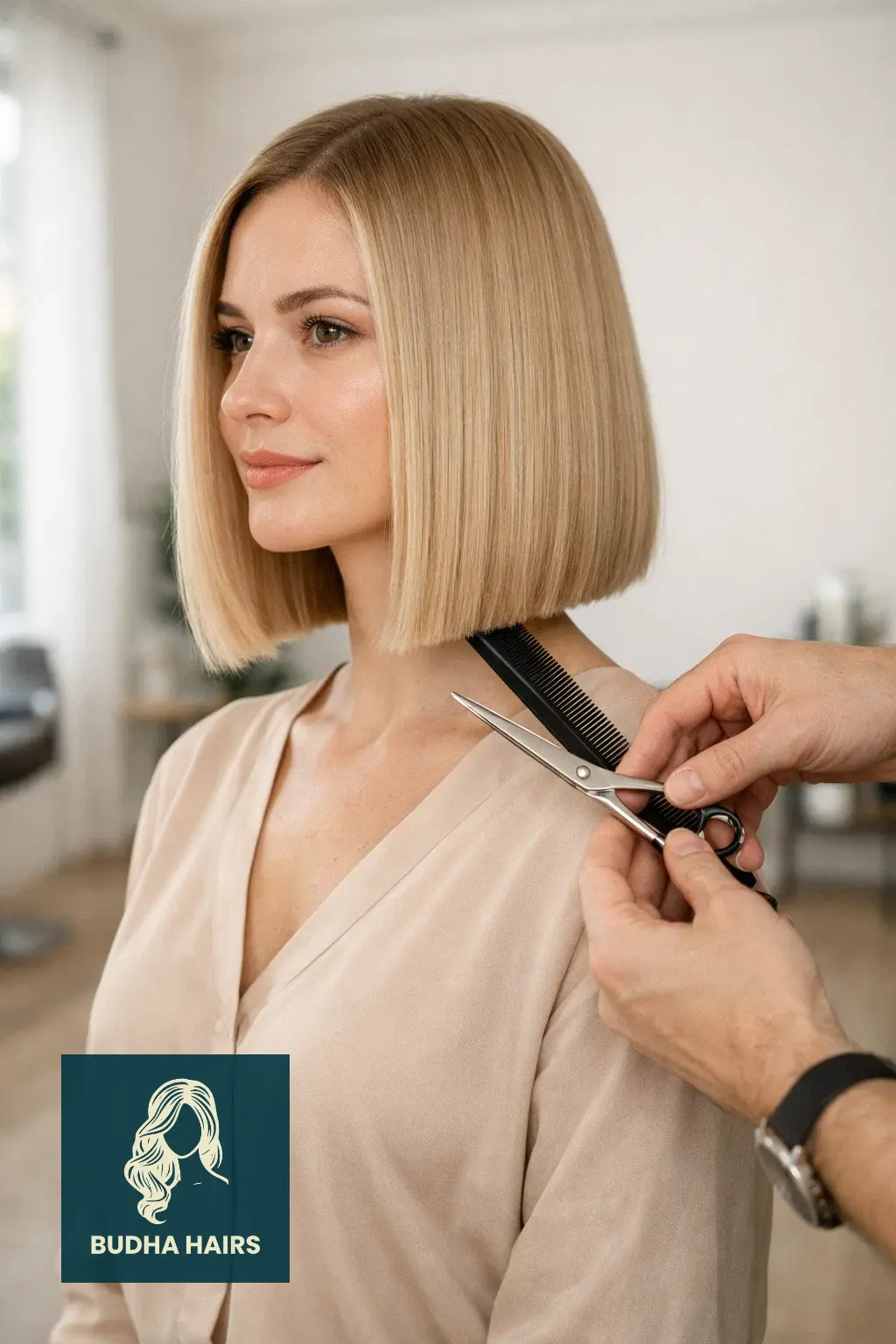
One of the most immediate ways to add visual density is to Choose A Blunt Haircut rather than one filled with wispy layers. I often advise my readers that while layers can add movement, excessive layering on fine hair actually removes too much weight from the bottom, making the ends look transparent and straggly. A blunt cut, such as a bob or a lob (long bob) where the hair is cut straight across, creates a strong, solid line that gives the illusion of thickness from root to tip. We find that this structure makes the hair appear healthier and fuller because it eliminates the thin, tapered ends that naturally occur as hair grows.
When you visit your stylist, I recommend asking for a “blunt perimeter” with minimal, long layers only if necessary for framing the face. We love this style because it stacks the hair on top of itself, building weight and bulk that fine hair desperately needs. In my experience, shorter lengths generally look thicker because the hair is lighter and not weighed down by gravity, allowing for more natural root lift. By opting for a precision cut, you are setting a strong foundation where every strand counts towards the overall shape, instantly making your ponytail feel thicker and your style look more substantial.
2. Blow Dry Hair Upside Down
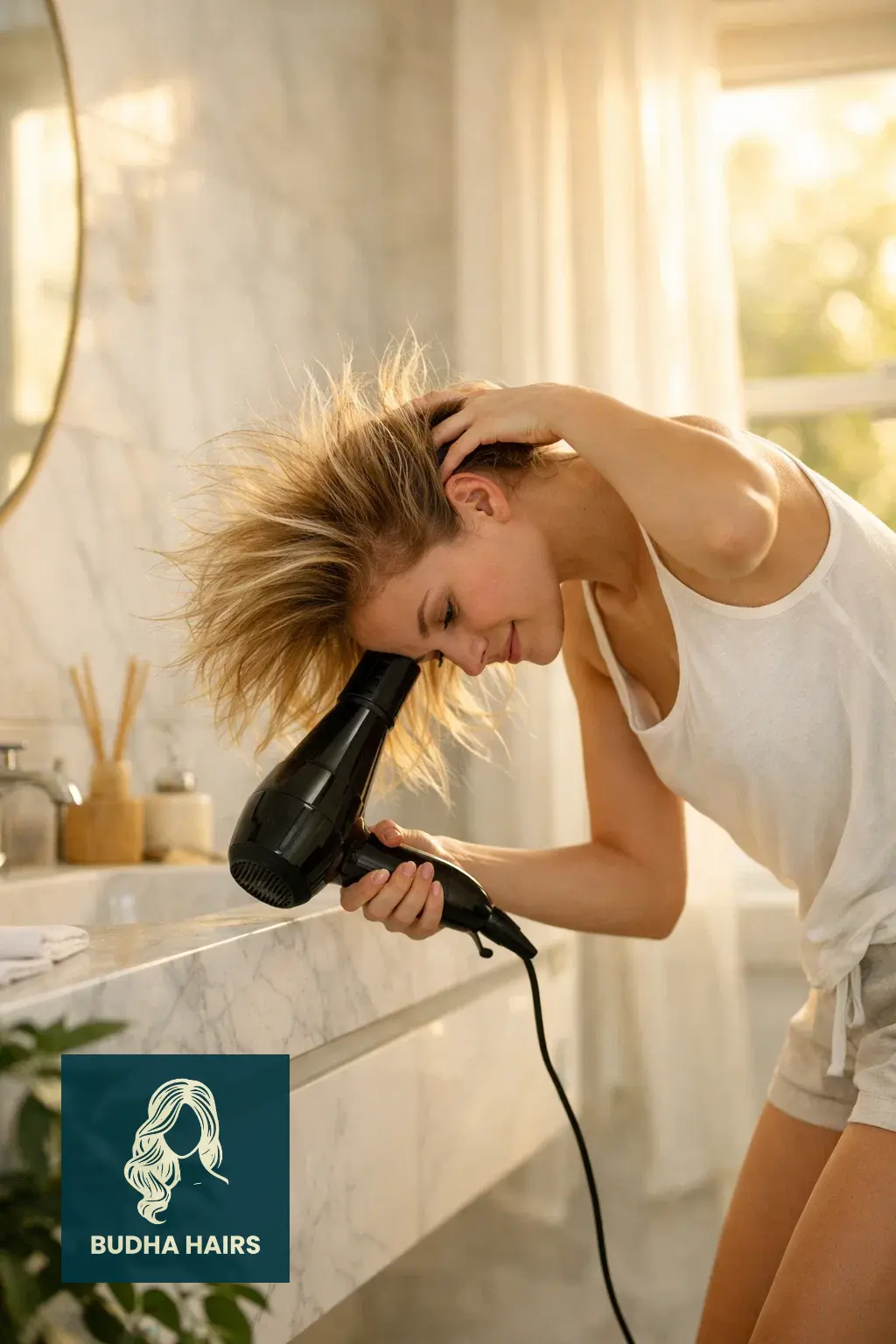
It sounds simple, but to Blow Dry Hair Upside Down is the oldest and most effective trick in the book for fighting gravity. I always tell my community that if you dry your hair standing upright, the air from the dryer pushes the hair flat against your scalp, locking in a flat style as it dries. Instead, we recommend flipping your head over and rough drying the roots in the opposite direction of hair growth. This technique forces the roots to stand up straight rather than laying flat, creating a massive amount of natural volume at the crown without any product at all.
We advise doing this until the hair is about 80% dry before flipping back up to smooth the ends with a round brush. In my experience, this method works best when you use your fingers to massage and lift the roots while the hot air hits them. We find that this “rough dry” stage is critical for texturizing the hair cuticle slightly, which helps fine hair hold its shape better than a sleek, smooth blowout. By manipulating the direction of the hair while it is wet and pliable, you are essentially training your hair to stand at attention, resulting in an effortless, voluminous look that lasts all day.
Maintaining a healthy scalp is key for thin hair to look its best. Incorporating routines from How to Get Rid of Pimples on Hairline helps keep the scalp clear and smooth, allowing thin hair to appear fuller and healthier.
3. Use Dry Shampoo For Texture
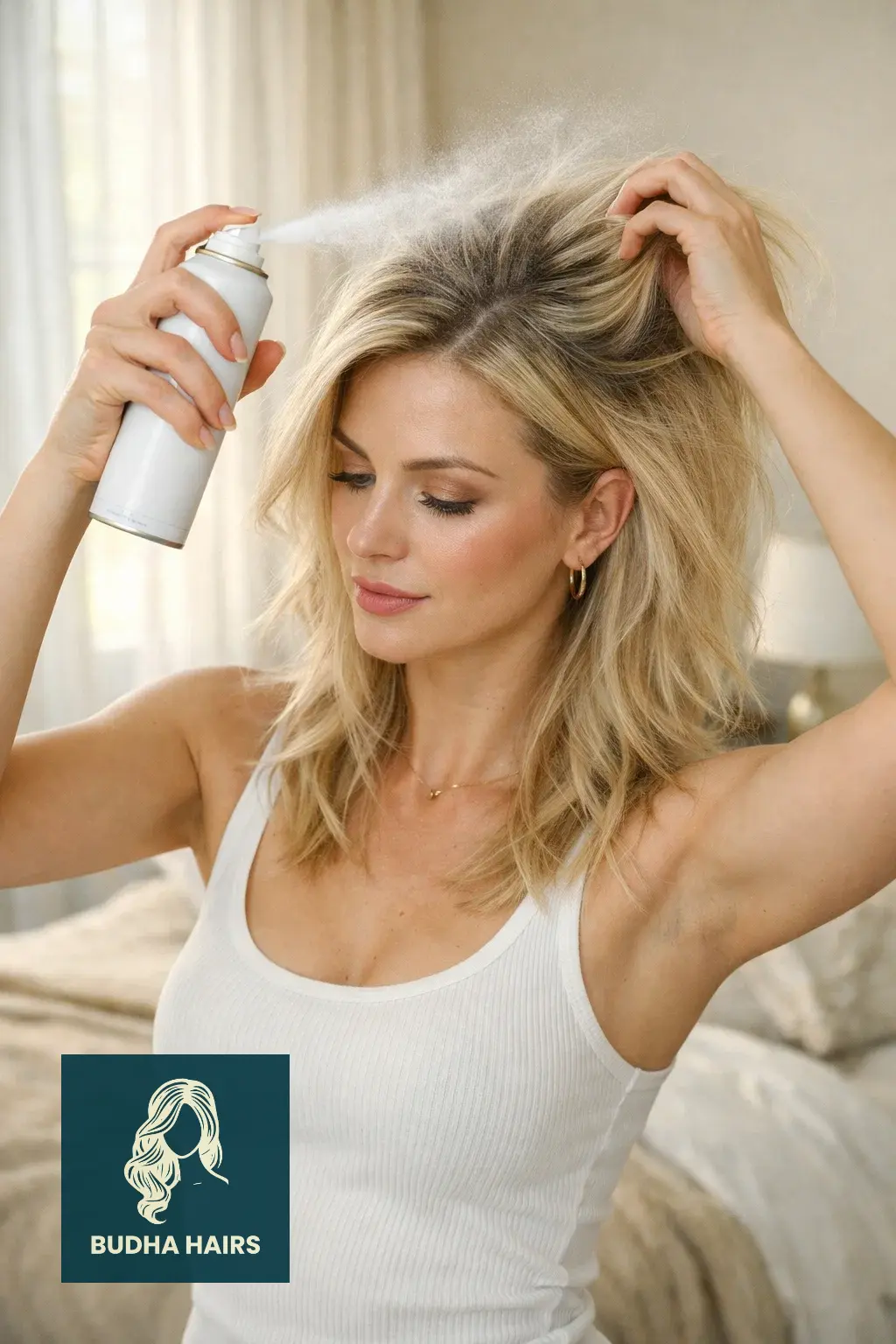
You shouldn’t just use it for cleaning; you should Use Dry Shampoo For Texture and grip even on clean hair days. I have found that squeaky-clean fine hair is often too slippery and soft to hold any volume; it just falls flat immediately. We view volumizing dry shampoo as a styling product rather than just a cleanser because the starch powders coat individual strands, increasing their diameter and creating friction. This friction prevents the hairs from sliding past each other and lying flat, allowing them to stack up and create a fuller look.
We recommend spraying a generous amount of dry shampoo at the roots and massaging it in with your fingertips to create immediate lift. In my experience, this grit is essential for holding backcombing or keeping a messy bun in place. We advise looking for formulas that are specifically labeled for volume, as they tend to be lighter and more powdery. By adding this texturizing product to your routine, you are artificially thickening the hair fiber, giving your style the “tooth” it needs to look and feel significantly denser than it actually is.
4. Apply Volumizing Mousse Correctly
Forget the crunchy residue of the 80s; modern formulas allow you to Apply Volumizing Mousse Correctly to plump up strands with soft, touchable body. I am a huge fan of mousse for How to Make Thin Hair Look Thick because it contains polymers that coat the hair shaft to make it feel thicker without the heavy weight of creams or oils. We recommend applying a golf-ball-sized amount of mousse to damp hair, focusing primarily on the roots and mid-lengths. The key is to comb it through to ensure every single strand is coated in the thickening agents.
When drying hair with mousse, I advise using tension with a round brush to activate the product’s lifting properties. We find that mousse provides a “memory” to the style, meaning your volume won’t collapse an hour after you leave the house. In my experience, it is the best product for fine hair because it evaporates quickly, leaving behind only the structure. We suggest avoiding heavy conditioners before using mousse to ensure the hair is light enough to lift. By mastering mousse application, you build an invisible scaffold around your hair that supports a fuller, more robust silhouette.
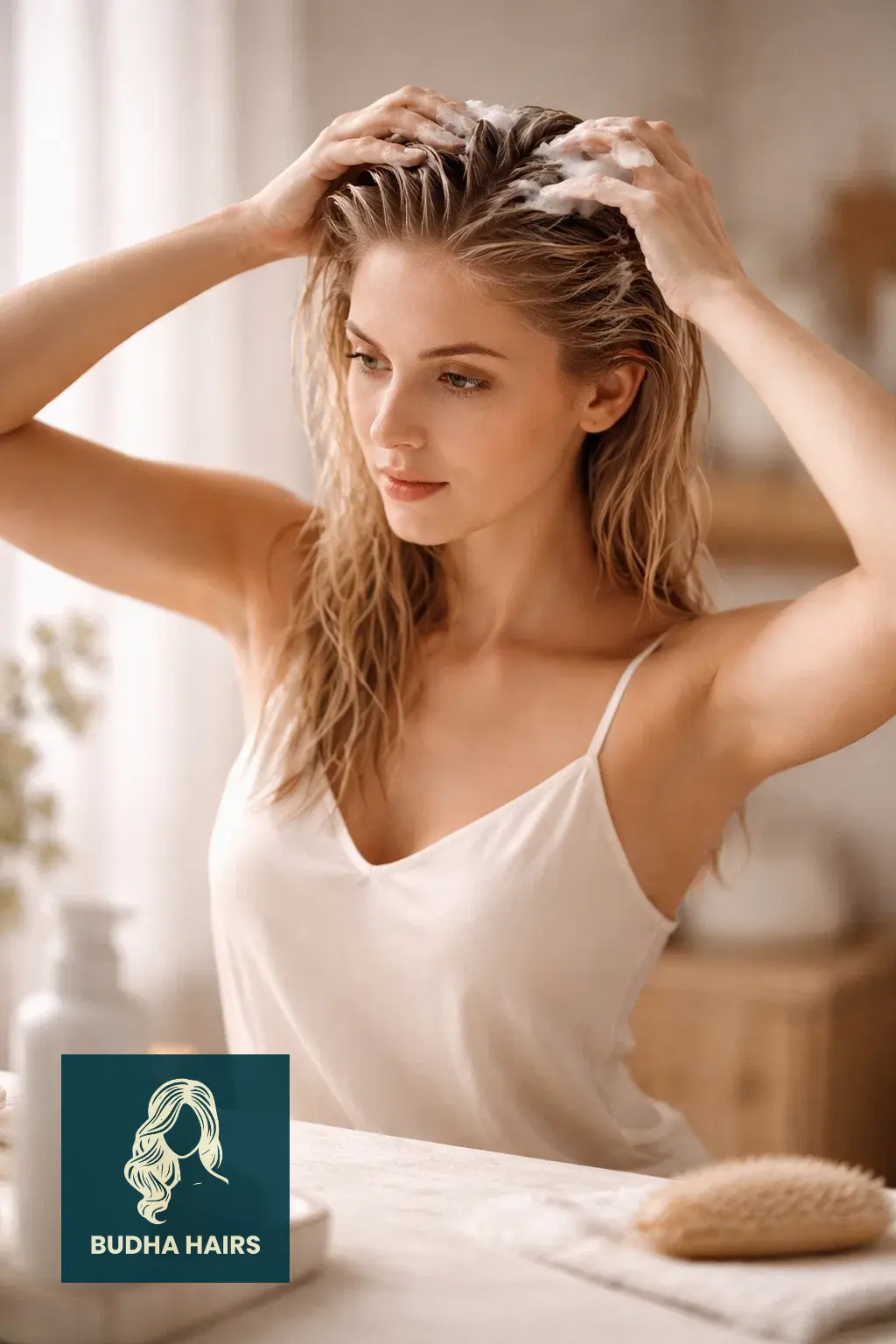
5. Switch Your Parting
If your hair has fallen flat in the same spot for years, it is time to Switch Your Parting to create instant, zero-cost root lift. I often explain that hair follicles are trained to lay in a certain direction over time; when you part your hair in the same place every day, gravity pulls it down flat against the scalp. We recommend flipping your part to the opposite side or trying a deep side part. This forces the hair to go against its natural grain, creating an immediate arch at the root that simulates thick hair volume.
We find that a messy, zigzag part is even better than a straight line for disguising a widening part or thinning scalp. In my experience, this trick works best when the hair is wet, but can also be done on dry hair with a little hairspray to hold the new direction. We advise using a tail comb to create a precise yet deep flip for a dramatic, glamorous look. It is a psychological and physical refresh for your style. By constantly changing the direction of your hair, you prevent it from getting “lazy” and flat, keeping your look dynamic and full of body.
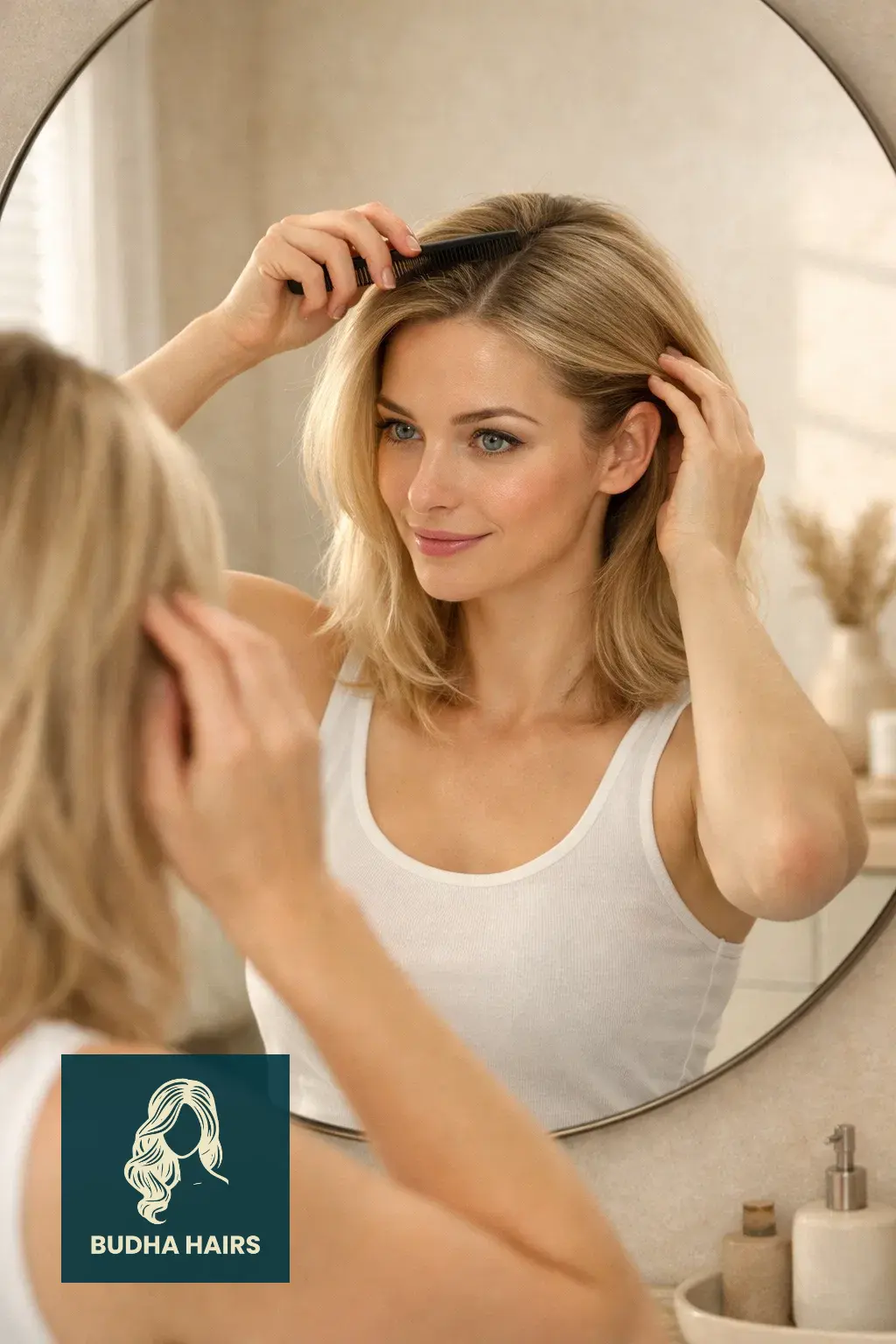
6. Fill In With Root Cover Up
For those with visible scalp showing through, to Fill In With Root Cover Up powders or sprays is a makeup artist’s secret for instant density. I have found that nothing makes hair look thinner than a bright white scalp shining through dark hair. We love using tinted root sprays or eyeshadows that match your hair color to dust onto the scalp along the part line and hairline. This camouflages the skin, reducing the contrast between hair and scalp, which tricks the eye into believing there is more hair density than there really is.
We recommend using a small, stiff brush to tap the powder into the sparse areas, blending it outwards so it looks natural. In my experience, this is particularly effective for high ponytails or updos where the hairline is exposed. We find that many of these products also contain fibers that cling to existing hairs to bulk them up. It is a confidence booster that takes seconds to apply. By shading the scalp, you are essentially “contouring” your hair, creating a seamless, opaque look that mimics the appearance of naturally thick, luscious hair.
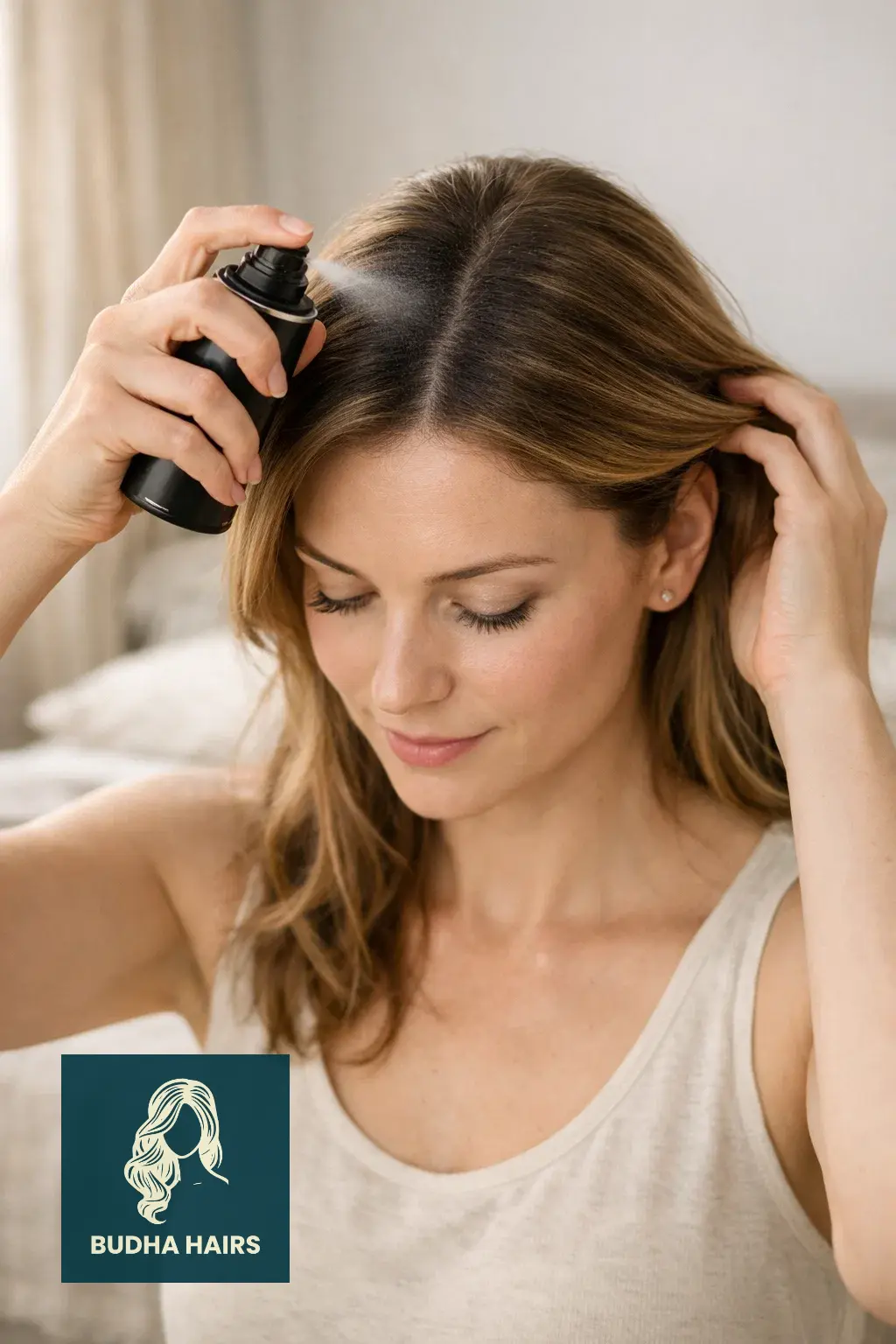
7. Add Multi-Dimensional Color
Flat, single-process color can look two-dimensional, so we suggest you Add Multi-Dimensional Color like highlights or balayage. I always tell my readers that adding different shades creates a 3D effect; the interplay of light and dark mimics depth and texture. When hair is all one solid color, it absorbs light evenly and shows the true (lack of) density. We recommend asking your colorist for “baby lights” or subtle lowlights that create shadows and highlights. This visual trickery makes the hair appear to have more layers and movement than it actually does.
Furthermore, the chemical process of coloring slightly roughens the hair cuticle, which physically thickens the strand and makes it less slippery. In my experience, bleached or highlighted hair holds volume better than “virgin” hair because of this added texture. We advise keeping the lighter pieces around the face and crown to draw the eye outward. We find that balayage techniques are low maintenance but high impact for volume. By strategically placing color, you are painting on the illusion of depth, making your thin hair look rich and substantial.
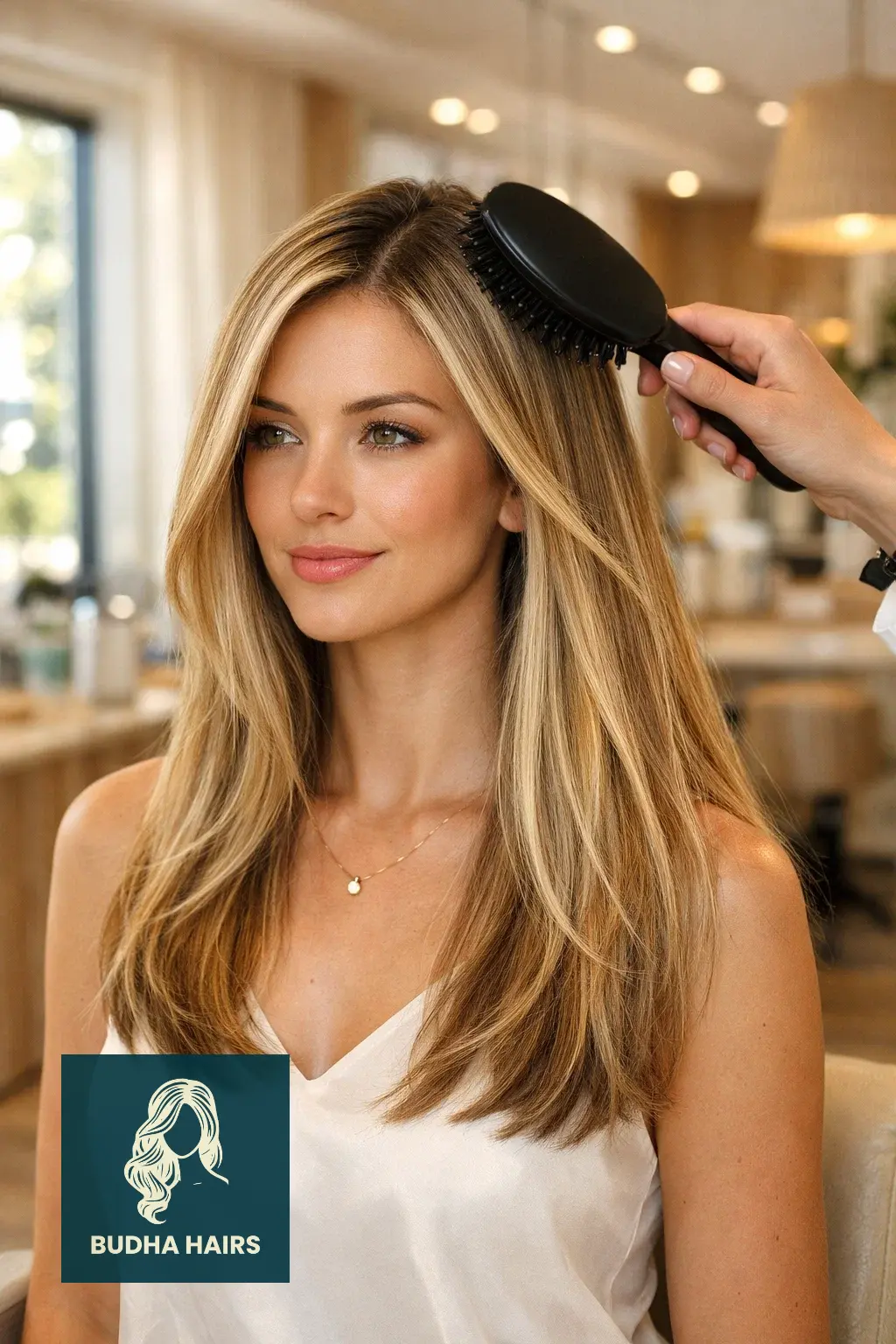
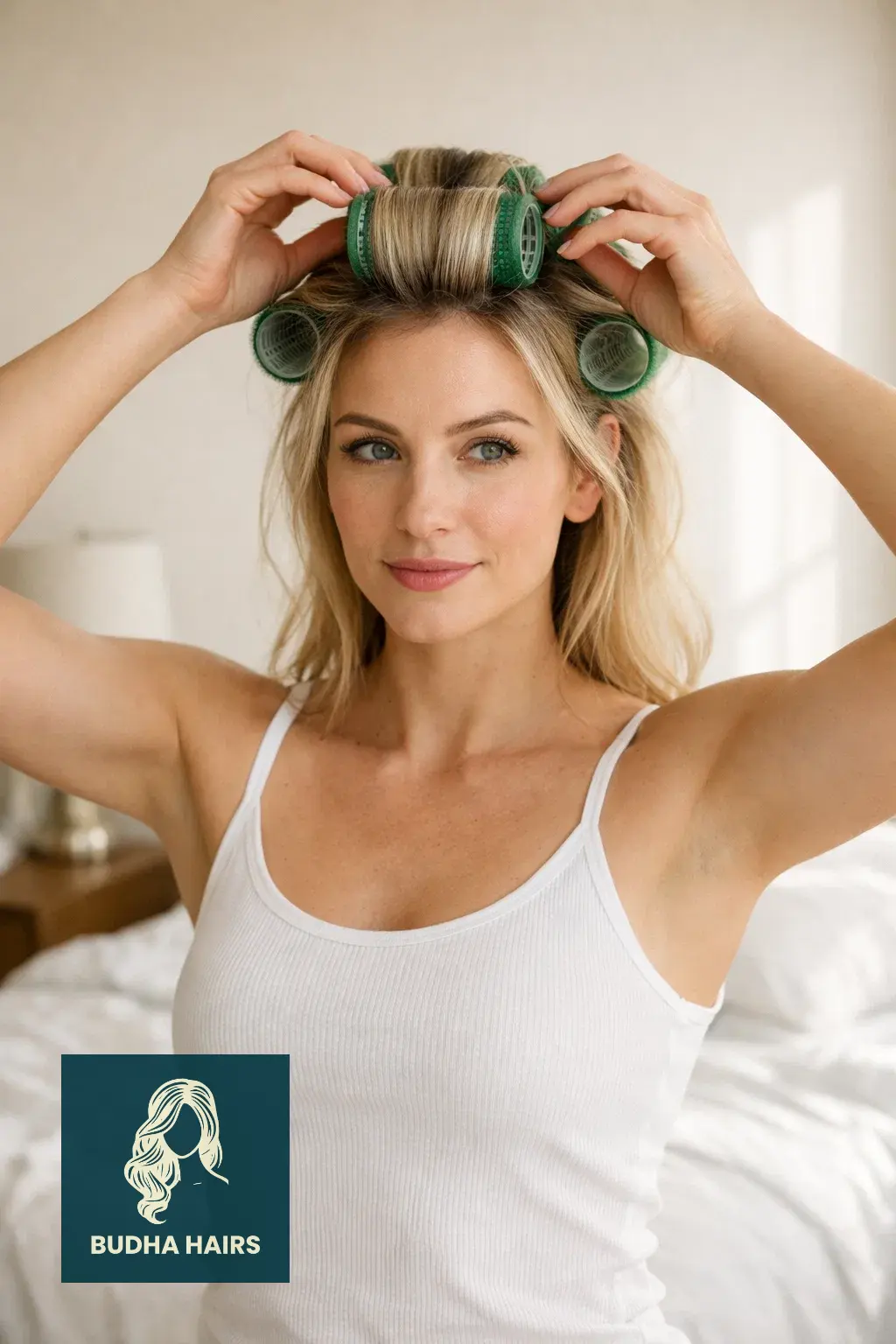
8. Use Velcro Rollers
Retro styling is back because it works; you should Use Velcro Rollers to set your hair for maximum volume. I am a huge advocate for this method because unlike hot tools that can flatten hair if used incorrectly, rollers cool the hair in a lifted position. We recommend blow-drying a section of hair until it is warm, then immediately rolling it onto a large velcro roller right at the root. The key is to let the hair cool down completely—about 20 minutes—while wrapped around the roller. This “sets” the lift, ensuring the volume lasts for hours.
We find that large rollers create volume rather than curl, which is exactly what we want for How to Make Thin Hair Look Thick. In my experience, using rollers at the crown of the head gives that “bouffant” lift that makes the whole hairstyle look bigger. We advise spraying a light hairspray while the rollers are in for extra hold. It is a heat-free (or low heat) way to style that is gentle on fine strands. By mechanically holding the roots up while they set, you achieve a salon-quality bounce that creates a fuller hair appearance.
Thin hair is more prone to absorbing odors if the scalp isn’t balanced. Following methods from Why Does My Hair Smell Bad Even After Washing? ensures your hair stays fresh and clean while boosting its overall volume.
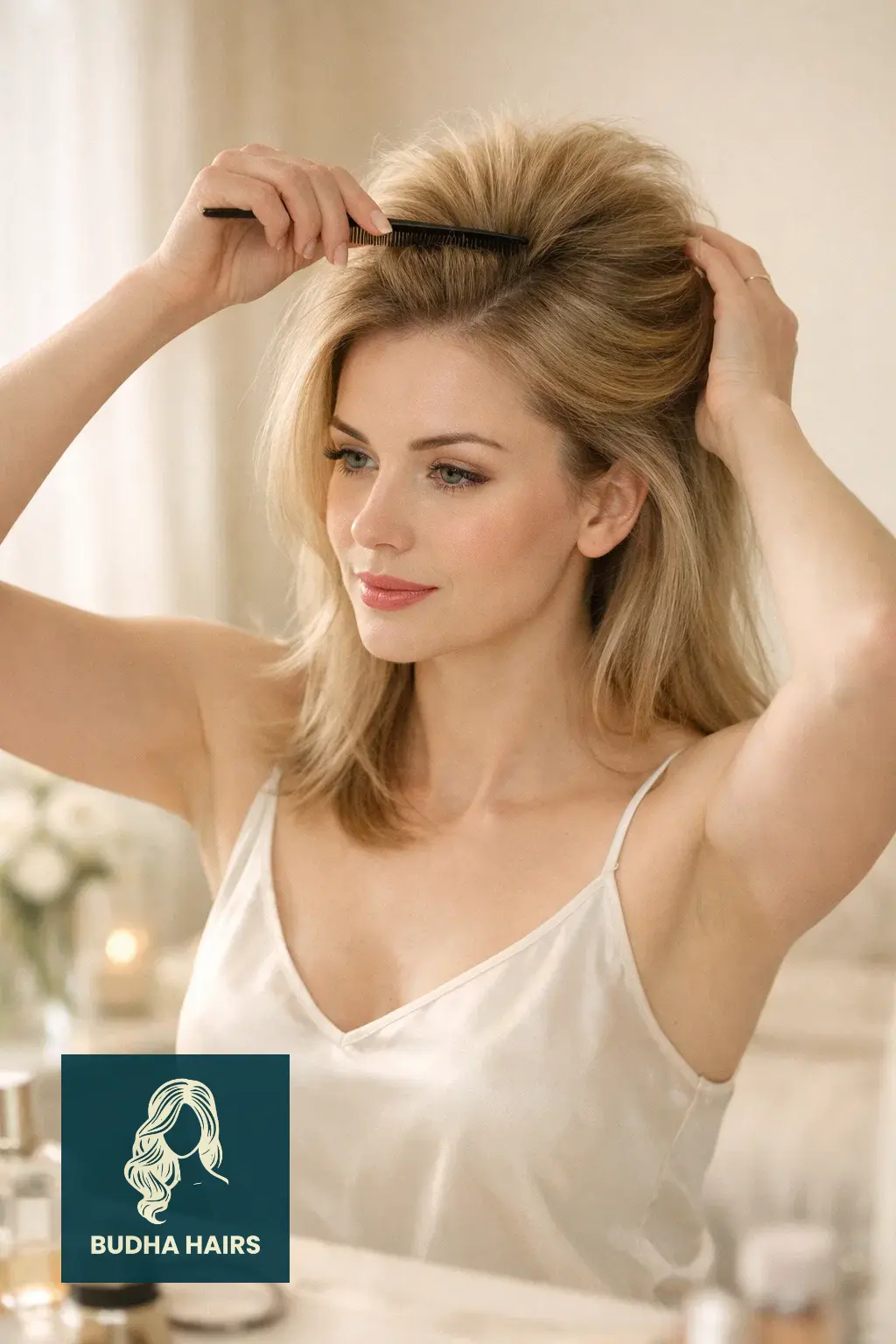
9. Tease Or Backcomb Gently
While it has a bad reputation for damage, if you Tease Or Backcomb Gently, it is the most reliable way to build a cushion of volume at the roots. I often clarify that you don’t need to aggressively rat your hair like an 80s rock star. We recommend taking small sections at the crown, holding the hair straight up, and gently pushing a fine-tooth comb downwards towards the scalp just two or three times. This creates a small tangle or “cushion” that supports the hair laying over it, preventing it from falling flat.
We advise smoothing the top layer of hair over the teased section so the messiness is hidden underneath. In my experience, using a soft bristle brush for backcombing is gentler than a plastic comb and creates a fluffier, more natural volume. We find this technique essential for updos or half-up styles on fine hair. It provides the internal structure that thin hair lacks naturally. By mastering the art of soft backcombing, you can sculpt your hair into a shape that defies gravity and looks incredibly thick.
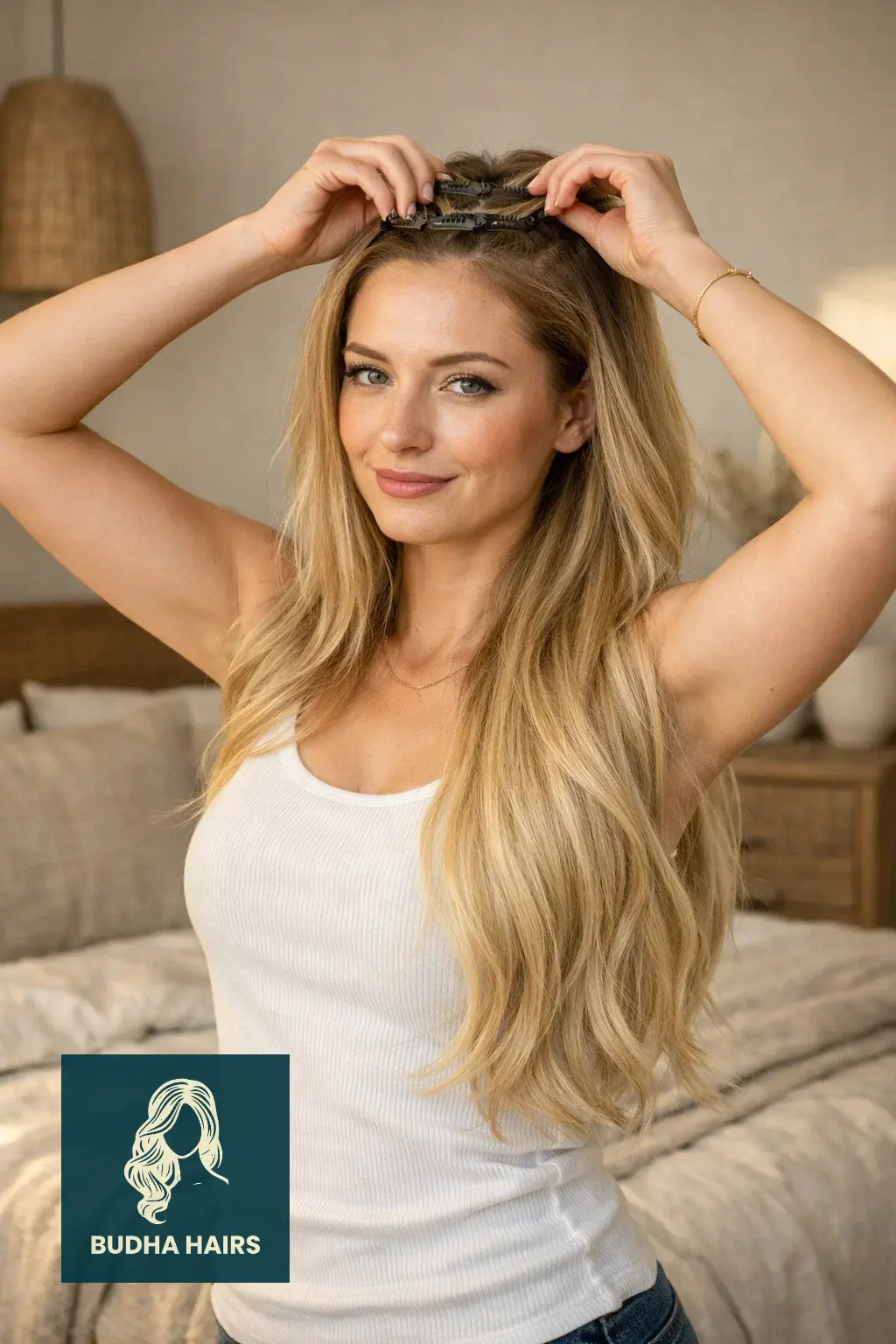
10. Try Clip-In Hair Extensions
Sometimes the best solution is to simply add more hair, so Try Clip-In Hair Extensions for special occasions or daily wear. I love this option because it offers instant gratification without the commitment or damage of bonded extensions. We recommend looking for “seamless” clip-ins that lay flat against the head, as bulky wefts can be visible in thin hair. You don’t need a full head of extensions; often, just two or three tracks added at the nape and mid-head are enough to double your volume and make your ponytail look substantial.
We advise teasing the root slightly before snapping the clip in to ensure it has a secure grip and won’t slide out of fine hair. In my experience, matching the color perfectly is crucial for a believable blend. We find that extensions also hold a curl better than fine natural hair, providing a sturdy base for your style. It is the ultimate cheat code for How to Make Thin Hair Look Thick. By physically adding hair, you solve the density problem instantly, allowing you to rock styles that might otherwise look stringy or sparse.
11. Pancake Your Braids
If you love plaits but hate how skinny they look, you must Pancake Your Braids to instantly double their width. I often share this styling secret because it transforms a sad, thin braid into a bohemian, voluminous masterpiece in seconds. The technique involves braiding your hair as usual, securing it with an elastic, and then gently pulling at the loops or “elbows” of the braid outwards to flatten and widen them. We recommend doing this slowly from the bottom moving upwards to ensure you don’t pull the layers out completely. This simple mechanical manipulation creates the illusion of thick hair density by expanding the surface area of the weave, making it look like you have significantly more hair than you actually do.
In my experience, “pancaking” works best on hair that has a bit of grit, so we suggest prepping your strands with a texturizing spray or dry shampoo before braiding. We find that clean, slippery hair tends to slide back into its original tight shape, whereas textured hair holds the expanded volume. This trick works on French braids, Dutch braids, and even simple three-strand plaits. It is a favorite technique among bridal stylists to create those massive, romantic updos on brides with fine hair texture. By loosening the tension, you trick the eye into seeing a fuller, looser texture that mimics the natural bulk of a much heavier hair type.
12. The Double Ponytail Trick
To cheat length and volume simultaneously, you should try The Double Ponytail Trick, a clever illusion that creates a fuller-looking tail. I love this hack because it stops the dreaded “pencil thin” ponytail look that often plagues fine hair. Instead of gathering all your hair into one elastic, we recommend dividing your hair into two horizontal sections. Secure the bottom half into a ponytail at the mid-head, and then gather the top half into a second ponytail directly above the first one. When the top pony falls over the bottom one, it conceals the lower elastic, creating a cascading effect that looks incredibly long and voluminous.
We advise teasing the base of the top ponytail slightly to give it extra lift and to ensure it completely covers the bottom section. In my experience, this separation prevents the hair from being pulled too tight against the scalp, which often emphasizes thinness. We find that curling the ends of both ponytails helps them blend seamlessly together, creating a unified, bouncy hairstyle. This method provides a “stacked” effect that adds instant body. It is a brilliant, damage-free way to fake a voluminous ponytail without needing clip-ins or expensive extensions, giving you a spirited and youthful profile.
Learning how to make thin hair look thick often involves adding volume and texture to create the appearance of fuller strands. Using proper hydration and scalp care techniques from Dry Scalp During Winter can prevent flakiness and help hair maintain a healthy, thick-looking appearance.
13. Use Thickening Tonics
Science has come a long way, so we suggest you Use Thickening Tonics or sprays that physically plump the hair strand. I am a huge fan of these products because they often contain ingredients like wheat proteins, panthenol, or caffeine that coat the hair shaft and swell it. Unlike mousse which provides lift, a thickening spray increases the diameter of each individual hair, making the overall mass feel denser to the touch. We recommend spraying this liberally onto damp hair from roots to ends before blow-drying. The heat from the dryer activates the ingredients, bonding them to the hair for a fuller feel that lasts until your next wash.
We find that these tonics are lightweight and non-sticky, making them perfect for fine hair that gets weighed down easily. In my experience, the difference is tactile; you can actually feel that your ponytail is thicker when you gather it. We advise layering this with a root lifter for maximum impact—one product for diameter, one for vertical lift. By utilizing volumizing formulas, you are essentially adding a temporary layer of thickness to your cuticle. It provides the grit and substance needed to hold styles that usually slip right out of silky, thin hair.
14. Keep Conditioner Off Roots
It is a cardinal rule for volume: you must Keep Conditioner Off Roots to prevent immediate flattening. I always explain to my readers that the hair closest to the scalp is new and healthy, benefiting from the scalp’s natural oils, whereas the ends are older and drier. Applying heavy conditioners or masks to the scalp creates a slick surface that causes hair to stick to the head, highlighting thinning areas. We recommend applying conditioner only from the ears down, focusing intensely on the tips. This ensures the dry parts get hydration without compromising the natural lift at the crown.
In my experience, even “volumizing” conditioners can be too heavy if massaged directly into the roots of fine hair. We find that rinsing your hair thoroughly is just as important; any residue left behind acts as a weight. If you struggle with tangles at the root, we suggest using a very lightweight, water-based detangler spray instead of a cream conditioner. By keeping the root area clean and free of emollients, you allow the hair to stand up naturally. This simple adjustment in your shower routine is often the missing link for achieving airy, weightless volume.
15. Sleep in a Pineapple Bun
Preserving your volume overnight is crucial, so you should Sleep in a Pineapple Bun to wake up with body. I often tell my community that sleeping with loose hair allows your head to crush the volume you worked so hard to create, while friction from the pillow causes flat spots. We recommend gathering all your hair to the very top of your head and securing it loosely with a silk scrunchie—resembling a pineapple. This technique lifts the roots away from the scalp while you sleep, training them to stay upright.
We find that this method protects the mid-lengths and ends from friction, but the real benefit is the root lift. In my experience, when you take the scrunchie out in the morning and shake your hair down, you are left with incredible, natural volume because the hair has been “setting” in a lifted position all night. We advise against tying it too tight, as that can cause tension headaches or creases. Combined with a silk pillowcase, this trick ensures your blowout lasts longer. It is a passive way to encourage How to Make Thin Hair Look Thick with zero effort required in the morning.
Pro Tips for Maximizing Volume
- Avoid Heavy Oils: If you have thin hair, avoid heavy oils like castor or coconut oil on your lengths. Instead, use lightweight oils like Argan or Jojoba, and only apply tiny amounts to the very ends to prevent a greasy, stringy look.
- Color Your Hair: The chemicals in hair dye roughen the hair cuticle slightly. This damage (when minimal) is actually beneficial for fine hair because it adds texture and grip, making the hair physically thicker than “virgin” silky hair.
- The “Cold Shot” Button: When blow-drying, always finish a section with the “cool shot” button on your dryer. Hot air molds the hair, but cool air sets it. This locks in the lift you created with your round brush.
- Clarify Regularly: Product buildup weighs hair down significantly. Use a clarifying shampoo once a week to strip away silicones, oils, and hard water deposits that make fine hair look limp and lifeless.
- Match Your Scalp Color: If you have a wide part, use a tinted dry shampoo or a specialized root powder that matches your hair color. Darkening the scalp reduces the contrast, making the hair appear much denser.
- Limit Heat: Thin hair burns faster than thick hair. Keep your hot tools below 350°F. Burned, damaged ends break off, leading to a thin, scraggly hemline that ruins the illusion of thickness.
- Diet Matters: Ensure you are eating enough protein and iron. Thinning hair can sometimes be internal; feeding your follicles ensures the hair growing out is as strong and thick as your genetics allow.
FAQs
Conclusion
Mastering How to Make Thin Hair Look Thick is all about using the right combination of visual illusions, styling techniques, and product choices. You don’t need to be born with thick hair to enjoy a voluminous, bouncy style. By implementing tricks like the double ponytail, using volumizing mousse, and committing to a blunt haircut, you can instantly transform limp strands into a full-bodied mane. I hope these 15 tricks empower you to embrace your hair texture and experiment with new styles. Remember, volume is built, not just born—with a little patience and the right routine, you can achieve the luscious, dense look you deserve.

I’m Budha Styler, a hair enthusiast who loves creating beautiful, confidence-boosting looks that feel true to who you are. I’m passionate about exploring new trends, techniques, and textures, and I enjoy turning that knowledge into simple, inspiring ideas anyone can try. Through my work, I hope to help you express your unique style, feel amazing in your own hair, and discover everyday looks that make you shine.


