
There is arguably nothing more frustrating in the world of hair styling than perfecting a fringe in the mirror, only to have it split down the middle or separate into greasy clumps an hour later. Whether you have curtain bangs, blunt bangs, or wispy fringe, the “split” is usually the result of a battle between your hair’s natural growth pattern (cowlicks) and the environmental factors of your face (sweat and oil). Bangs sit directly on the most oil-prone part of the face—the T-zone—and lack the weight of longer hair to hold them in place against gravity.
The Science of the Split: Cowlicks and Sebum
This guide analyzes the structural reasons why bangs refuse to stay put and provides fifteen state-of-the-art styling techniques to “train” your hair, neutralize cowlicks, and maintain a cohesive, salon-fresh look all day.
The Role of Growth Patterns (Cowlicks)
The primary culprit behind a splitting fringe is almost always a cowlick at the front hairline, technically known as a “hair whorl.” This is a section of hair that grows in a different direction—spiral, sideways, or backwards—than the rest of your mane. When you cut this hair short into bangs, you remove the weight that was previously pulling it down, allowing the root to spring back into its natural, rebellious direction. If your cowlick grows outward or to the side, your bangs will inevitably part at that exact spot, creating a gap that exposes the forehead. Understanding this growth trajectory is essential because you cannot “fix” a cowlick, but you can manipulate the hydrogen bonds in the hair to temporarily force it to lay flat.

The Impact of Sebum and Skin Care
The second major cause of splitting is the interaction between your hair and your skin’s natural oils, specifically sebum. The forehead is part of the T-zone, an area with a high concentration of sebaceous glands that produce oil to protect the skin. When your bangs sit against this oil, they absorb it like a sponge, causing the individual hairs to clump together rather than fanning out as a unified veil. Once the hair is weighed down by oil, it loses its volume and movement, sticking to the forehead in separated sections. Additionally, heavy moisturizers, sunscreens, and foundation applied to the forehead create a slippery surface that exacerbates this separation, causing the hair to slide apart at the slightest movement.
15 Expert Tips to Keep Bangs Together
Let’s explore 15 expert tips to keep bangs looking neat and together. From the right cutting techniques to styling tricks and care routines, these tips help your bangs stay smooth, styled, and frizz-free all day.
1. Blow Dry Immediately After Washing
Time is your enemy when it comes to bangs; you must blow dry them the absolute second you step out of the shower. If you allow your bangs to air-dry even partially (even for 5 minutes while you do your makeup), the hydrogen bonds begin to set in their natural configuration, which usually involves splitting at the cowlick. By applying heat and tension while the hair is soaking wet, you have the maximum amount of control to mold the roots and override the natural growth pattern before it has a chance to assert itself.

2. The “X” Drying Technique
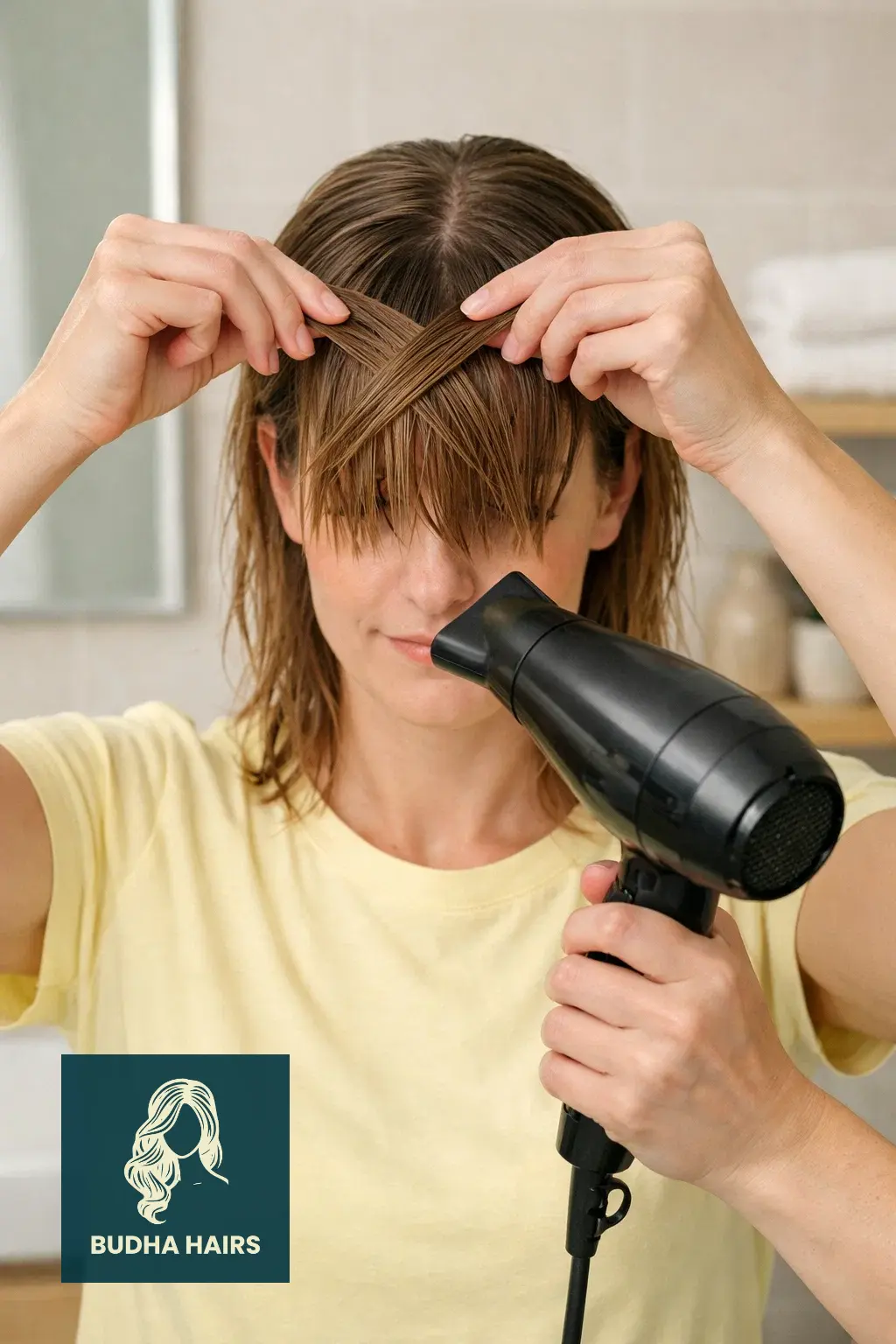
To neutralize a stubborn split or cowlick, you must use the “X” drying method, which involves confusing the root direction. Using a fine-tooth comb or paddle brush, brush all your bangs to the far left while aiming the dryer at the roots, then brush them all to the far right, repeating this back-and-forth motion rapidly. This “windshield wiper” action prevents the hair from settling into its natural part and forces the roots to lay neutral and flat against the forehead, effectively “erasing” the memory of the cowlick for the day.
Learning how to keep bangs from splitting requires proper trimming, hydration, and gentle styling techniques. Following a Hair Routine for Thin Curly Hair ensures bangs stay smooth and healthy without causing damage to the rest of your strands.
3. Use a Fine-Tooth Comb for Tension
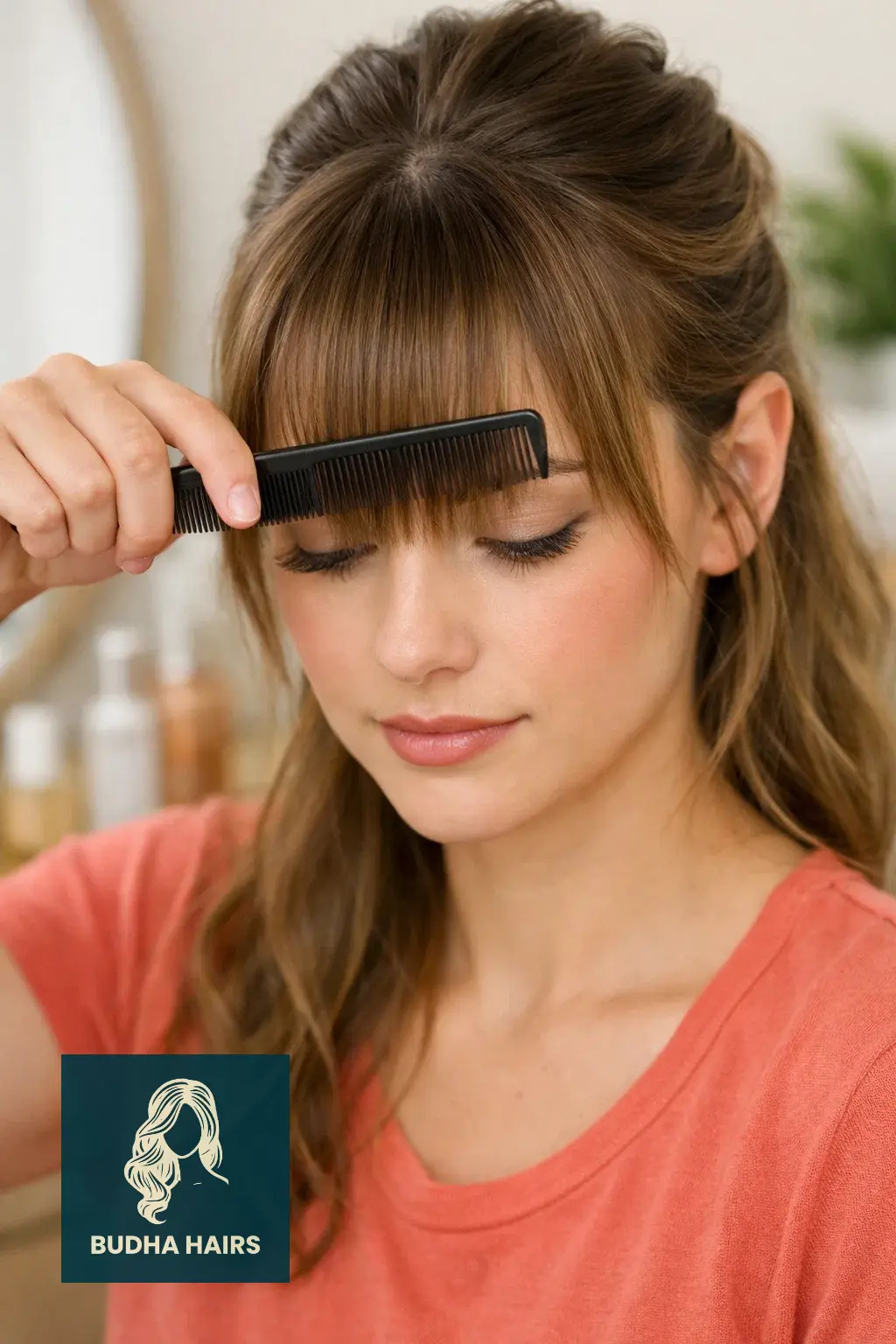
While round brushes are great for volume, a simple fine-tooth comb is the superior tool for closing gaps and preventing splits during the drying process. The closely spaced teeth of the comb grab every single strand of hair, providing uniform tension that stretches the root flat against the skull. By combing the bangs straight down (or in the “X” pattern) while following closely with the dryer nozzle, you ensure that the cuticle is smoothed and the strands are aligned perfectly parallel to one another, making separation less likely.
4. Apply Dry Shampoo Preventatively
Most people use dry shampoo as a corrective measure once hair is already greasy, but for bangs, it should be used as a preventative shield immediately after styling. Spray a light mist of dry shampoo at the roots of your freshly washed and dried bangs to create a barrier that absorbs sweat and sebum before it can penetrate the hair shaft. This “grit” also adds friction between the hair strands, helping them cling to each other rather than sliding apart, keeping the fringe looking cohesive for hours longer than usual.
5. Blot Your Forehead Skincare
Your skincare routine might be sabotaging your hairstyle; heavy creams and oils on the forehead will inevitably transfer to your bangs. After applying your moisturizer and sunscreen, wait 10 minutes for absorption, then take a blotting paper or a tissue and firmly press it against your forehead to remove any excess surface residue. Alternatively, apply a light dusting of translucent setting powder to your forehead before letting your bangs down; this matte barrier prevents the hair from absorbing skin oils and sticking to the face in clumps.

6. Avoid Heavy Products on the Fringe
While you might use oils, serums, or heavy leave-in conditioners on the lengths of your hair to fight frizz, you must strictly keep these products away from your bangs. Bangs are easily weighed down, and adding external oil to a specific area that already produces its own oil is a recipe for disaster. If you need heat protection or hold, opt for lightweight, aerosol-based products rather than creams or liquids, and apply them sparingly to the mid-lengths and ends only, never directly at the root.
7. Use a Flat Iron for the “C” Curve
If your bangs are prone to sticking straight out or splitting, use a flat iron to create a subtle “C” shape or bevel. Instead of clamping the iron and pulling straight down (which can make the split worse), clamp the hair at the root and rotate your wrist slightly inward towards your face as you glide down. This curvature forces the ends of the bangs to hug the forehead and curve inward towards the center, physically bringing the hair together and closing any gaps that might naturally form.

Split bangs can make uneven hair lengths more noticeable. Incorporating strategies from How to Grow Out Uneven Hair helps maintain a balanced look while promoting healthier growth.
8. The Velcro Roller Cool-Down
Heat molds the hair, but cooling sets it; if you release your bangs while they are still hot, they will lose their shape and separate. After blow-drying, immediately roll your warm bangs into a large velcro roller and leave it in while you finish getting ready (at least 10 minutes). The velcro material provides grip to keep the hair spread out evenly across the roller, and allowing it to cool completely in this unified shape locks the bonds in place, ensuring the bangs fall as a single, bouncy curtain when you remove it.
9. Hairspray on the Comb, Not the Hair
Spraying hairspray directly onto your forehead is a mistake; it can make the skin sticky and cause the hair to look crunchy or shellacked. Instead, spray a flexible-hold hairspray directly onto your comb or brush, and then run it through your bangs. This technique deposits a microscopic amount of product evenly between the strands, providing just enough hold to keep them together without weighing them down or creating a visible residue. It keeps the bangs soft and touchable while providing an invisible “glue” against splitting.

10. Wash Bangs Separately (The “Sink Wash”)
You do not need to wash your entire head of hair every day, but washing your bangs daily is often necessary to reset the root direction and remove forehead grease. Pull your long hair back into a ponytail and lean over the sink to wash just your fringe with a tiny drop of shampoo. This takes less than five minutes and allows you to restyle the bangs from a wet state every morning, which is the only way to truly guarantee the cowlick is tamed and the volume is restored.
11. Root Clipping for Training
If you have a particularly strong cowlick that always splits in the same spot, you can try “training” it while you get ready or while your hair cools. After drying your bangs into the desired shape, use a small, flat no-crease makeup clip to pinch the hair together at the root where the split usually occurs. Leave this clip in for 15-20 minutes to physically force the roots to stand together; over time, this can help the hair “learn” to lay in a more unified direction, although heat is usually still required.

12. Texture Spray for Grip
Silky, slippery hair is much more likely to separate than hair with a bit of texture. If your bangs are too soft, spray a texturizing spray or a sea salt spray lightly through the lengths (not the roots) to add some “tooth” to the fiber. This added friction helps the individual hairs catch onto one another, creating a web-like structure that holds its shape better than smooth, individual strands. This is especially helpful for wispy or curtain bangs that need to hold a specific swoop without falling flat.
13. Stop Touching Your Bangs
It is a natural reflex to constantly adjust your bangs when you feel them moving, but the oils and dirt on your fingertips are a major contributor to splitting. Every time you touch your fringe, you transfer oil and break up the styling bonds you created, causing the hair to clump and separate. Train yourself to use a comb or the back of your hand if you absolutely must fix them, but generally, a “hands-off” policy is best for longevity.

14. Regular Trims are Essential
As bangs grow out, they become heavier, and that extra weight can drag the root down, making the natural growth pattern or cowlick more pronounced. Additionally, when bangs get too long, they start to hit the eyelashes or the bridge of the nose, which physically pushes the hair apart and creates a split. Getting a micro-trim every 3 to 4 weeks keeps the bangs at the optimal length where they are light enough to hold volume and short enough to swing freely above the interference of your facial features.
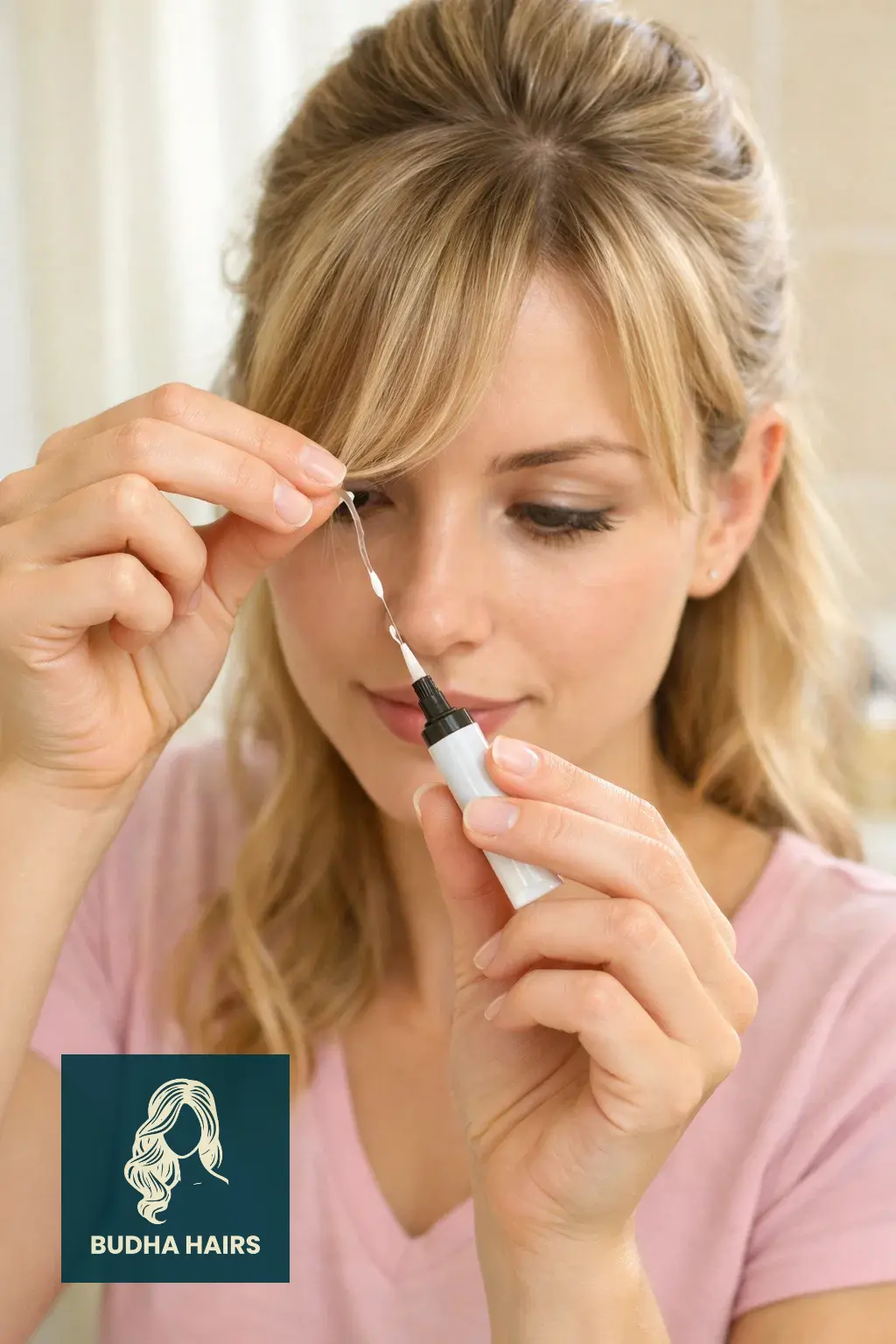
15. The “Eyelash Glue” Hack (For Extreme Cases)
For special events or windy days where you absolutely cannot afford a split, a theatrical trick used by dancers and performers is to use a tiny dot of clear eyelash glue. Apply a pinpoint amount of skin-safe adhesive to your forehead (right between the eyebrows or where the split happens) and press the ends of your bangs gently into it. This physically anchors the hair to the skin, preventing it from moving or parting regardless of wind or movement, though it should be used sparingly to avoid potential skin irritation.
If your bangs have been chemically treated or colored, extra care is essential. Tips from How to Fix Orange Hair After Bleaching at Home help restore color and prevent further splitting, keeping bangs vibrant and strong.
Conclusion
Keeping bangs from splitting is a daily discipline that combines targeted heat styling with strategic oil management. By understanding that your cowlicks and forehead oils are conspiring to separate your fringe, you can counteract them with techniques like the “X” blow-dry method, preventative dry shampoo, and the use of velcro rollers. Consistency is key; retraining your roots takes time, but by implementing these fifteen expert tips, you can transform a high-maintenance frustration into a flawless, signature look that frames your face perfectly from morning to night.

I’m Budha Styler, a hair enthusiast who loves creating beautiful, confidence-boosting looks that feel true to who you are. I’m passionate about exploring new trends, techniques, and textures, and I enjoy turning that knowledge into simple, inspiring ideas anyone can try. Through my work, I hope to help you express your unique style, feel amazing in your own hair, and discover everyday looks that make you shine.