
Growing out uneven hair—whether caused by a botched haircut, chemical breakage, or the transition from a shaved undercut—is a test of patience and creativity. The instinct is often to chop it all off to the shortest length to “even it out” immediately, but this drastic measure isn’t always necessary. With a strategic approach to trimming and some clever styling hacks, you can mask the asymmetry while allowing the shorter sections to catch up to the longer ones. This guide outlines the best strategies to manage the “awkward phase” and restore balance to your mane without sacrificing all your hard-earned length.
The Strategy: The “Catch-Up” Method
The fundamental rule of growing out uneven hair is the “Catch-Up” method. Instead of cutting the short side, you maintain the length of the short side while slowly trimming back the long side. This allows the damaged or short area to grow undisturbed. By “dusting” the longer sections every few weeks, you essentially put them on pause, allowing the shorter sections to race forward until the two lengths eventually meet. This process takes time, but it preserves the maximum amount of hair possible during the transition.
15 Expert Tips to Grow Out Uneven Hair
Now, let’s explore 15 expert tips to grow out uneven hair. From strategic trims to smart styling and proper hair care, these tips help balance lengths and promote healthy, even growth over time.
1. Adopt the “Micro-Trim” Schedule
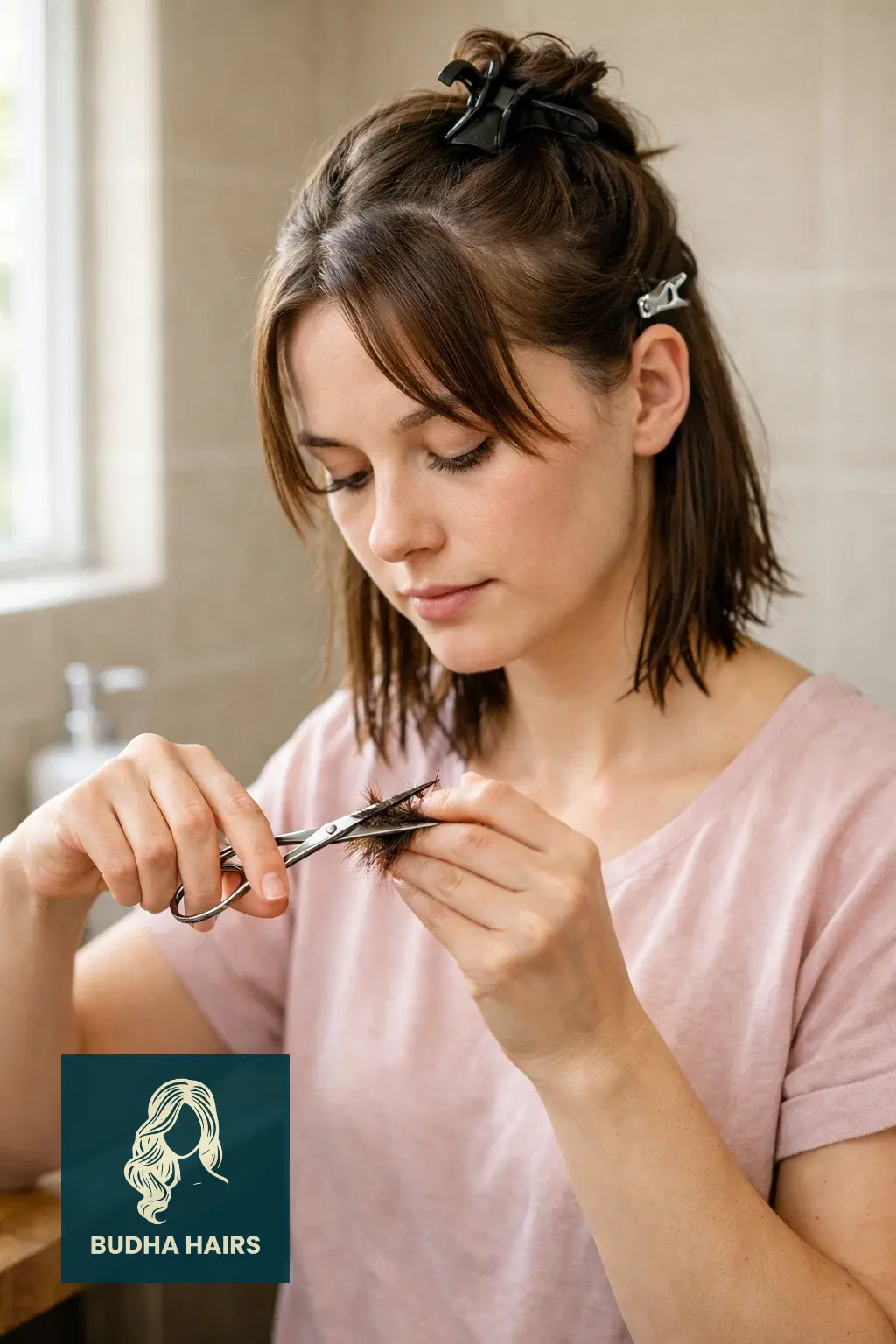
You must resist the urge to stop cutting your hair entirely. While you want growth, dead ends will travel up the shaft and break off, making uneven hair even worse. Schedule a “micro-trim” or “dusting” every 8 to 10 weeks, but instruct your stylist specifically to only touch the longest sections of your hair. This keeps the ends healthy and slowly reduces the gap between the lengths without you feeling like you’ve lost progress.
2. Master the Deep Side Part
Symmetry highlights imperfections; asymmetry hides them. If your hair is uneven, a center part will act like a ruler, showing exactly where one side is shorter than the other. Flip your hair into a deep side part to throw the balance off intentionally. This pulls a large volume of hair over the shorter side, burying the mistake under a veil of length and making the unevenness look like a deliberate, edgy style choice (like an asymmetrical bob).

3. Add Texture (Curls and Waves)
Straight hair is unforgiving; it creates distinct horizontal lines that make every chop and error visible. The best way to camouflage unevenness is to add texture. Use a curling wand or sea salt spray to create beachy waves. When hair is curled, the eye cannot track the exact endpoint of each strand, blending the short and long layers together into a cohesive, bouncy mass where the specific lengths become indistinguishable.

Learning how to grow out uneven hair requires patience, regular trims, and a healthy scalp routine. Understanding causes discussed in Why Is My Hair Shedding More Than Usual? can help prevent excess hair fall that may slow down even growth.
4. Utilize the “Half-Up, Half-Down” Style
If your unevenness is in the layers (for example, the crown layers are too short), the half-up style is your best friend. Pull the top section of your hair—including the awkward short layers—into a bun or high ponytail at the crown, leaving the longer bottom lengths loose. This effectively removes the “problem area” from sight while allowing you to show off the length you do have.
5. Ask for “Point Cutting”
If you are dealing with choppy, blocky layers that look like stairs (the “shelf effect”), ask a professional stylist to perform “point cutting.” Instead of cutting a straight line across, they cut vertically into the ends of the hair. This technique softens the harsh, blunt edge of a bad layer, making it blend more seamlessly into the rest of the hair. It doesn’t remove length, but it removes the “weight line” that makes the bad haircut obvious.

6. Use Accessories for Camouflage
Headbands, scarves, and barrettes are functional tools for growing out bangs or side-shaves. A wide cloth headband can completely cover a hairline that is growing out unevenly. Alternatively, use decorative clips to pin back the side that is awkward. Stacking two or three bobby pins in a row is currently on-trend and looks like a deliberate accessory choice rather than a frantic attempt to hide a cowlick or short patch.
7. Try Clip-In Extensions
If the difference in length is affecting your confidence, clip-in extensions are a fantastic temporary fix. You can buy a small set to fill in the sparse or short side of your head. By blending the extensions with your natural hair, you create the illusion of a full, even perimeter. This allows you to enjoy the look of long hair immediately while waiting for your biological hair to catch up underneath.

8. Slick It Back
On days when the uneven texture is refusing to blend, the “clean girl” slicked-back bun is a lifesaver. Use a strong-hold gel or pomade to brush all your hair back tightly against your skull and secure it in a low bun or knot. This style relies on the smoothness of the roots rather than the length of the ends, completely hiding the fact that your hair is different lengths.
9. Stimulate the Scalp
To make the “catch-up” phase go faster, you need to maximize your hair’s growth rate. Commit to a daily 4-minute scalp massage using your fingertips or a silicone massager. This mechanical stimulation increases blood flow to the hair follicles, delivering more oxygen and nutrients to the root. While it won’t make hair grow overnight, consistent massage can wake up sluggish follicles and ensure your hair is growing at its maximum potential speed.

Following a structured care plan is essential when growing out uneven lengths. Adopting a consistent Hair Routine for Thin Curly Hair helps strengthen fragile strands, improve curl pattern, and support balanced hair growth.
10. Prioritize Protein and Biotin
Hair is made of keratin, a protein. If your diet is lacking in protein, your body will deprioritize hair growth to focus on essential organs. Ensure you are eating enough lean meats, eggs, beans, or nuts. Additionally, a Biotin supplement (Vitamin B7) can help strengthen the hair shaft (cortex), preventing the new growth from breaking off before it has a chance to reach the desired length.
11. Focus on Moisture Masks
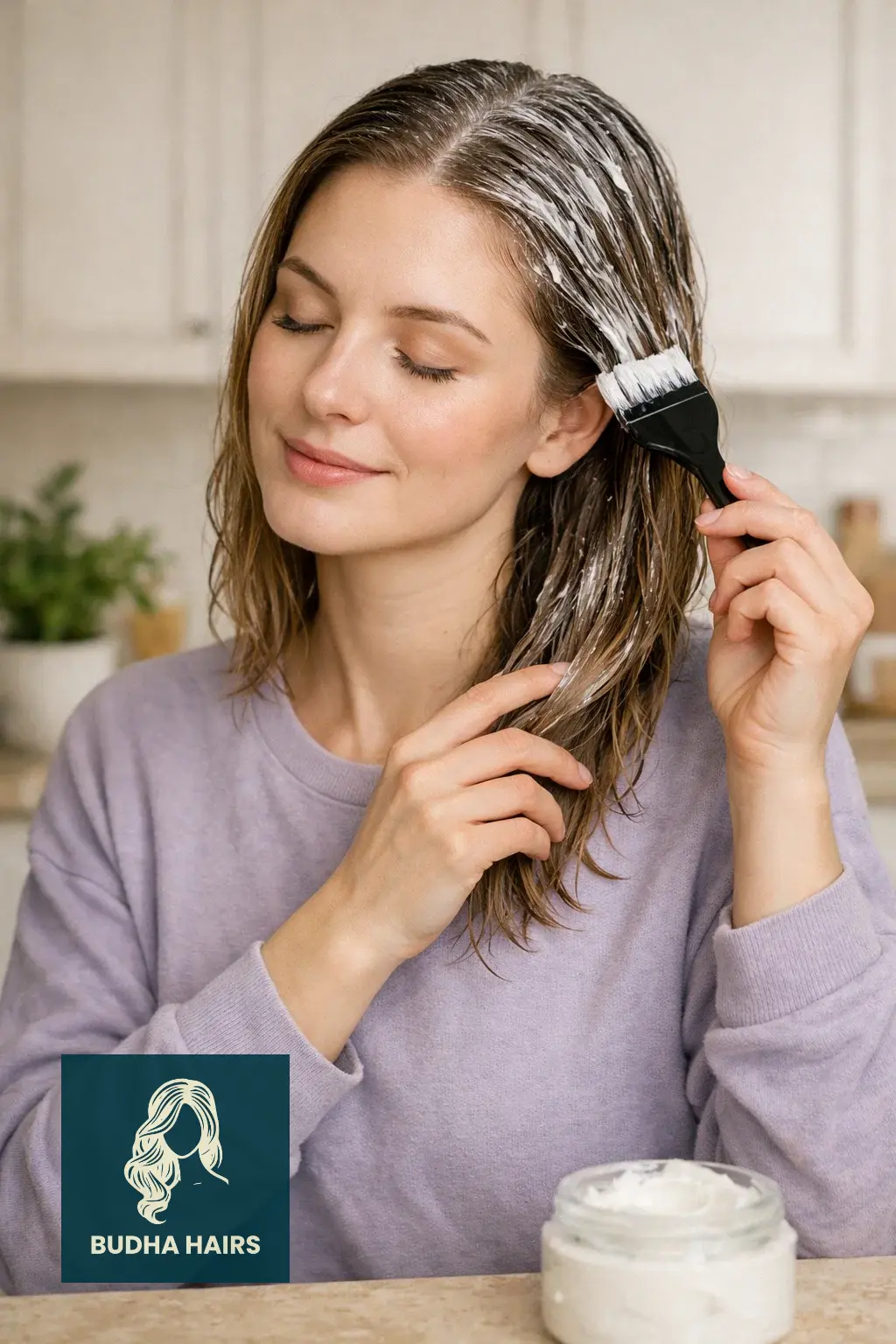
Uneven hair is often the result of breakage from dryness. To prevent the shorter side from snapping off and getting even shorter, you must keep it hyper-moisturized. Use a deep conditioning mask once a week, focusing on the ends of the shorter sections. Ingredients like shea butter and argan oil increase the elasticity of the hair, allowing it to stretch and bend without snapping.
12. Avoid High Heat
Heat styling causes damage, and damaged hair breaks. If you are trying to grow out a short section, the last thing you want is for the ends to fry off. Try to air-dry your hair whenever possible, or use the lowest heat setting on your tools. If you must use heat, apply a high-quality thermal protectant to shield the fragile ends of the shorter sections from thermal degradation.
13. Braids are a Great Hiding Spot
French braids or Dutch braids are excellent for weaving short layers into longer ones. Because the hair is tucked into the structure of the plait, pieces that would normally stick out are secured. A crown braid or “milkmaid” braid can hide almost any haircut disaster by wrapping the hair entirely around the head, making length irrelevant.

14. The “Curtain Bang” Transition
If you are growing out uneven bangs, transition them into “curtain bangs” as soon as possible. Part them in the middle and use a round brush to feather them away from your face. Once they reach cheekbone length, they cease to be “grown-out bangs” and become “face-framing layers,” which is a universally flattering style that requires less maintenance.

If uneven hair is the result of chemical damage, targeted repair is necessary. Tips from How to Fix Orange Hair After Bleaching at Home guide safer color correction while minimizing further breakage during the grow-out phase.
15. The “Reset” Cut (Last Resort)
If the unevenness is due to severe chemical damage (like “gummy” hair) and the ends are splitting up the shaft, the best option might be a “reset cut.” This means cutting the longer side to match the shorter side immediately. While it is painful to lose the length, it removes the damage in one go, giving you a healthy, thick, and even baseline to start growing afresh without the constant worry of breakage.

Conclusion
Growing out uneven hair is a journey that balances hair health with styling trickery. By using the “Catch-Up” trim method—cutting the long while saving the short—and employing visual hacks like deep side parts and texturizing, you can mask the asymmetry. Remember that hair grows an average of half an inch per month; with patience and gentle handling, even the most disastrous haircut will eventually even out. Stick to the plan, keep the scissors away from the short side, and let time do the work.

I’m Budha Styler, a hair enthusiast who loves creating beautiful, confidence-boosting looks that feel true to who you are. I’m passionate about exploring new trends, techniques, and textures, and I enjoy turning that knowledge into simple, inspiring ideas anyone can try. Through my work, I hope to help you express your unique style, feel amazing in your own hair, and discover everyday looks that make you shine.