Waking up to uneven hair color—whether it is “hot roots,” patchy absorption, or accidental stripes—is a distressing scenario that can happen to even the most experienced home colorists. This phenomenon usually occurs not because of a bad product, but due to the varying porosity levels along the hair shaft and the precise application techniques required to navigate them. Fixing these inconsistencies requires a cool head and a solid understanding of color theory, as blindly applying more dye can often exacerbate the problem by over-pigmenting certain areas while leaving others untouched.
Diagnosing the Discoloration: Why It Happened
This guide delves into the science of why color applies unevenly, provides targeted strategies for specific mishaps, and outlines the professional correction methods you can safely adapt at home.
The Science of Porosity and Texture
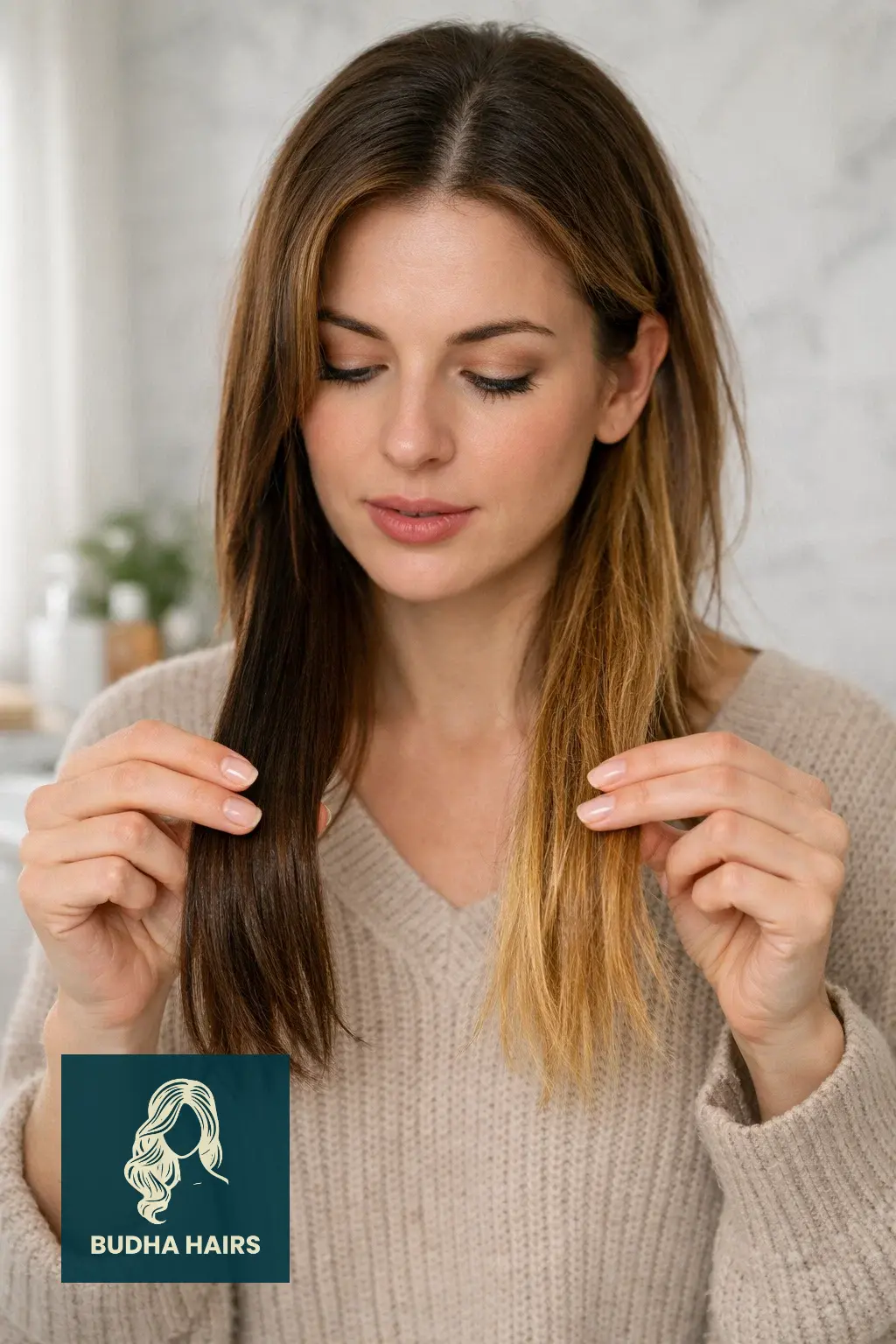
The primary culprit behind patchy results is usually uneven porosity, which refers to your hair’s ability to absorb and retain moisture and chemicals. The ends of your hair are older and have been exposed to more environmental weathering, making them highly porous and likely to “grab” color too quickly, resulting in an inky, overly dark appearance compared to the mid-lengths. Conversely, the hair near the scalp is new, healthy, and less porous, often resisting color or processing faster due to body heat, leading to the dreaded “hot roots” where the top glows lighter than the rest. Understanding where your hair falls on the porosity scale is the first step in diagnosis, as treating highly porous ends requires a completely different chemical approach than lifting dark, resistant roots.
Application Errors and Saturation
Beyond biological factors, the physical application of the dye plays a massive role in uniformity; if the hair was not sectioned cleanly, it is highly probable that the product did not fully saturate the strands in the middle of the clump. “Spotting” often occurs when users try to massage dye in like shampoo rather than painting it on layer by layer, leaving dry patches inside the density of the hair that reveal themselves as the original color after rinsing. Furthermore, overlapping new permanent color onto previously colored hair can create “bands” of darkness where the pigment has doubled up, creating a visible horizontal stripe that separates the new growth from the old length.
- Common Causes of Unevenness:
- Hot Roots: Scalp heat accelerates processing, making roots lighter/brighter than ends.
- Porosity Grab: Damaged ends absorb too much dye, turning them darker or ashier.
- Banding: Overlapping dye creates a dark horizontal line where new and old color meet.
Knowing how to fix uneven hair color ensures a polished, consistent look without over-processing. Proper styling using tips from How to Blow Dry Thin Fine Hair for Volume can enhance the finished color by adding body and movement.
The “Low-Intervention” Fixes: Washing and Toning
Now, let’s explore the “low-intervention” fixes: washing and toning. Gentle cleansing and balancing toners help remove buildup, control oil, and maintain scalp health without harsh treatments.
Using Clarifying Techniques for “Too Dark” Spots
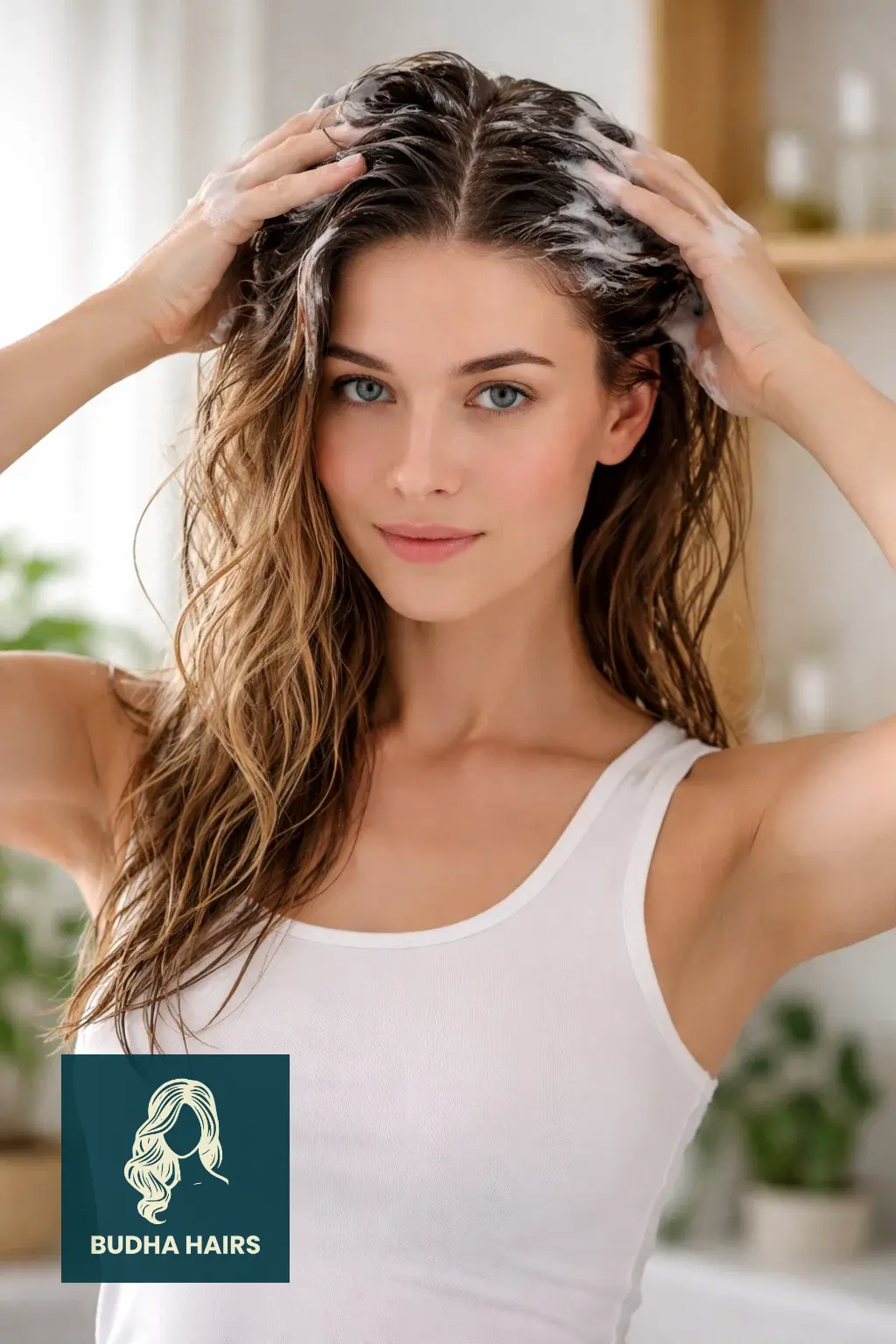
If your unevenness manifests as sections that are simply too dark or heavy looking, your first line of defense should be aggressive washing rather than more chemicals. Utilizing a clarifying shampoo or a mixture of anti-dandruff shampoo and baking soda can help lift the cuticle and strip away excess surface pigment before it fully oxidizes and sets into the cortex. This method is particularly effective for porous ends that have “grabbed” too much color; by washing these specific areas repeatedly with warm water and clarifying agents, you can often fade the darkness by one or two levels. This technique is non-damaging compared to bleach and should always be attempted immediately within the first 48 hours of the coloring mishap for the best results.
Toning to Neutralize Brassiness
Sometimes “uneven” doesn’t mean patchy darkness, but rather patchy tone, where some sections look perfect and others look bright orange or yellow. In this case, color depositing shampoos (purple for yellow tones, blue for orange tones) are the state-of-the-art solution to unify the overall hue without altering the darkness level. Apply the toning shampoo specifically to the brassy areas first—usually the transition point between roots and lengths—and let it sit for 5-10 minutes to deposit the neutralizing pigment. This visual correction tricks the eye into seeing a solid, uniform color by eliminating the jarring warmth that creates the perception of patchiness, blending the mistakes into a cohesive shade.
- Gentle Correction Tools:
- Clarifying Shampoo: Best for fading areas that absorbed too much pigment.
- Purple/Blue Shampoo: Best for neutralizing warm, brassy patches.
- Vitamin C Treatment: A crushed Vitamin C paste can gently lift surface dye without bleach.
Advanced Correction: The “Spot Treat” Method
The Bleach Wash (Soap Cap) for Dark Bands
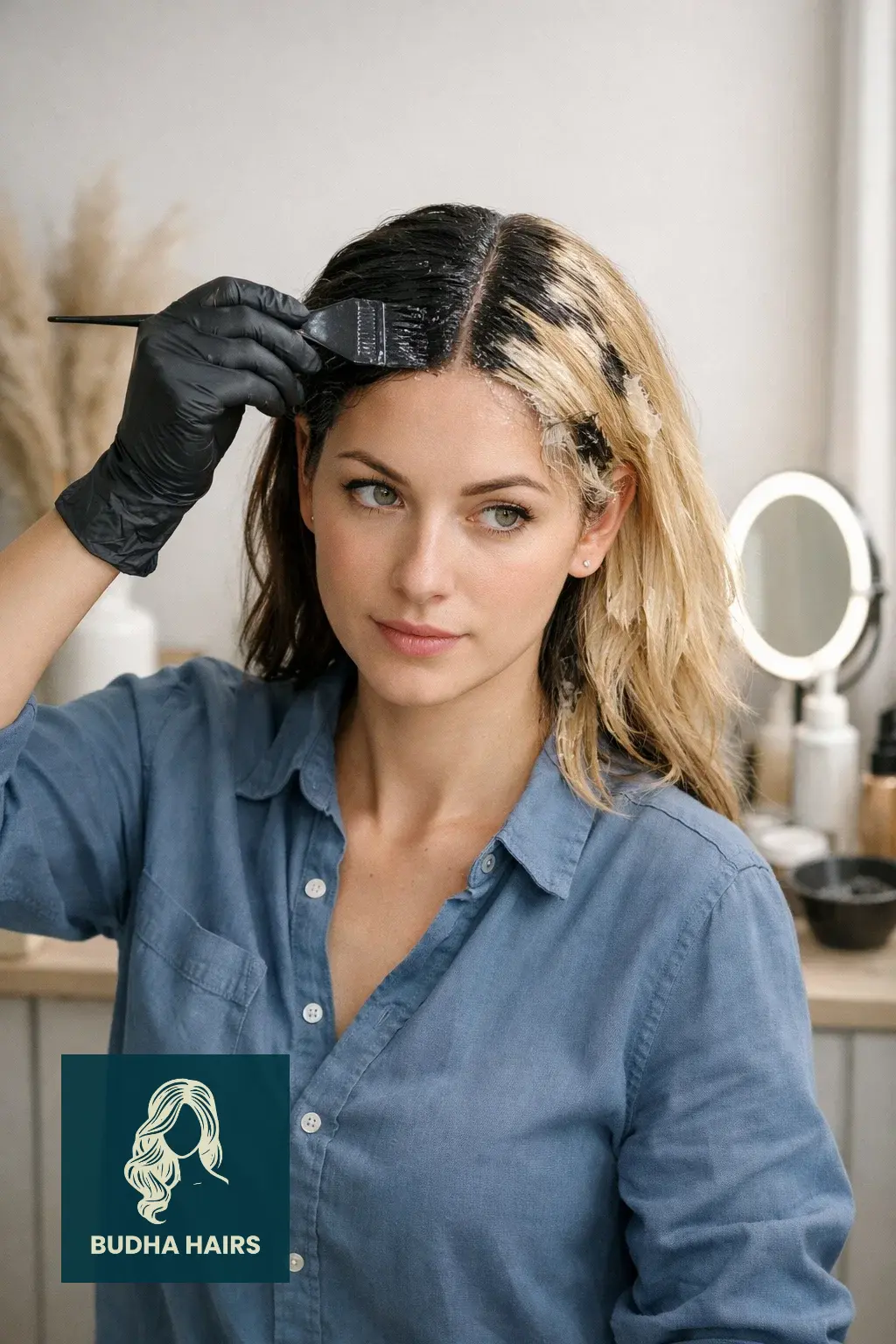
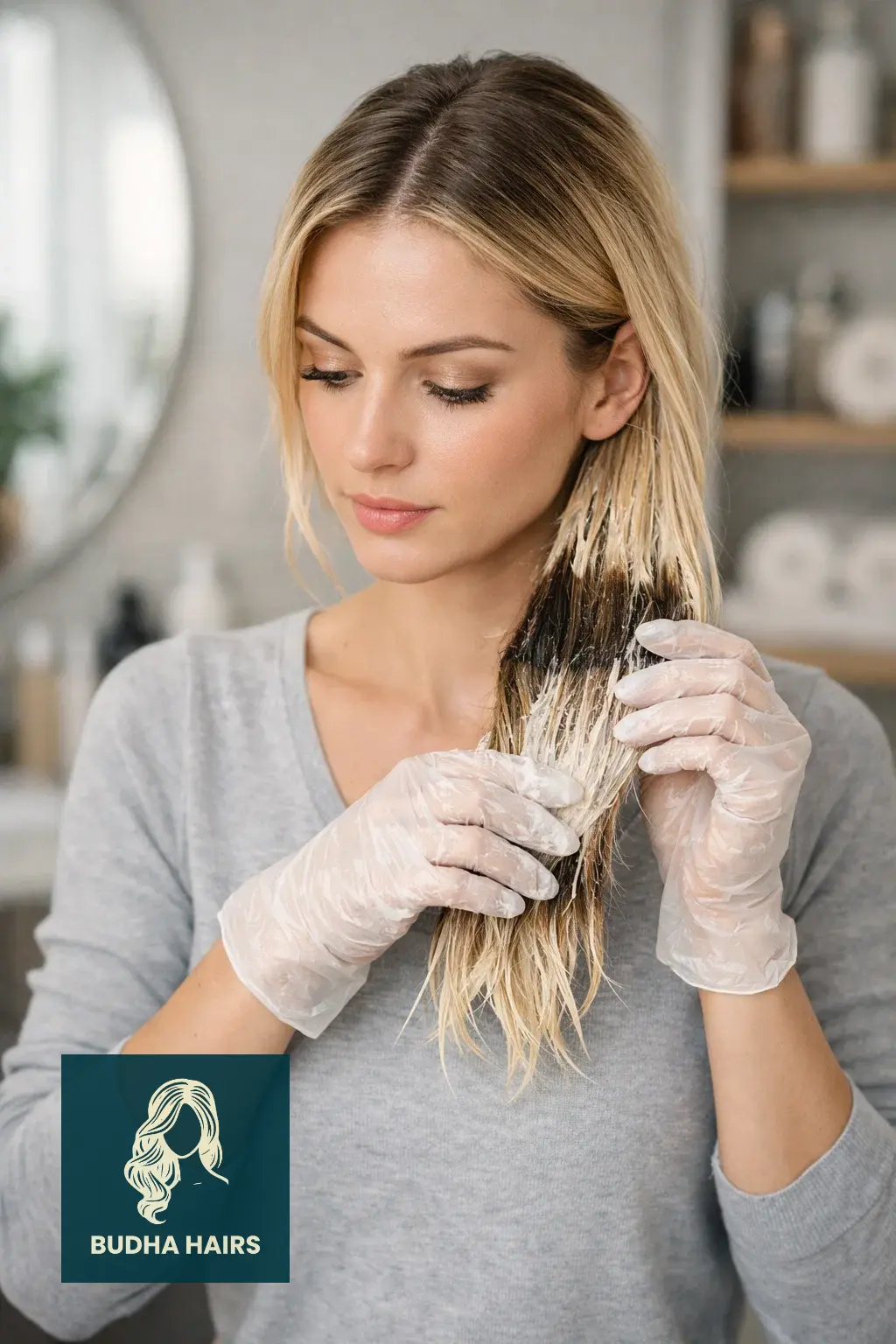
For severe cases where dark bands or splotches refuse to fade with shampoo, a “bleach wash” or “soap cap” is a professional technique used to gently lift pigment with more control than straight bleach. This involves mixing bleach powder, developer, and shampoo in equal parts to create a diluted, slower-acting mixture that is easier to spread and monitor. You must apply this mixture only to the parts of the hair that are too dark, watching it like a hawk as it lifts the pigment layer by layer to match the lighter sections. This requires precision; use a tint brush to paint the dark spots and wipe the product off immediately once the color matches the surrounding hair to avoid over-lightening.
Chemical treatments to correct color can leave hair dry or prone to buildup. Incorporating routines from How to Remove Hard Water Build Up from Hair helps restore smoothness and shine while preventing dullness.
Filling and Repigmenting Lighter Patches
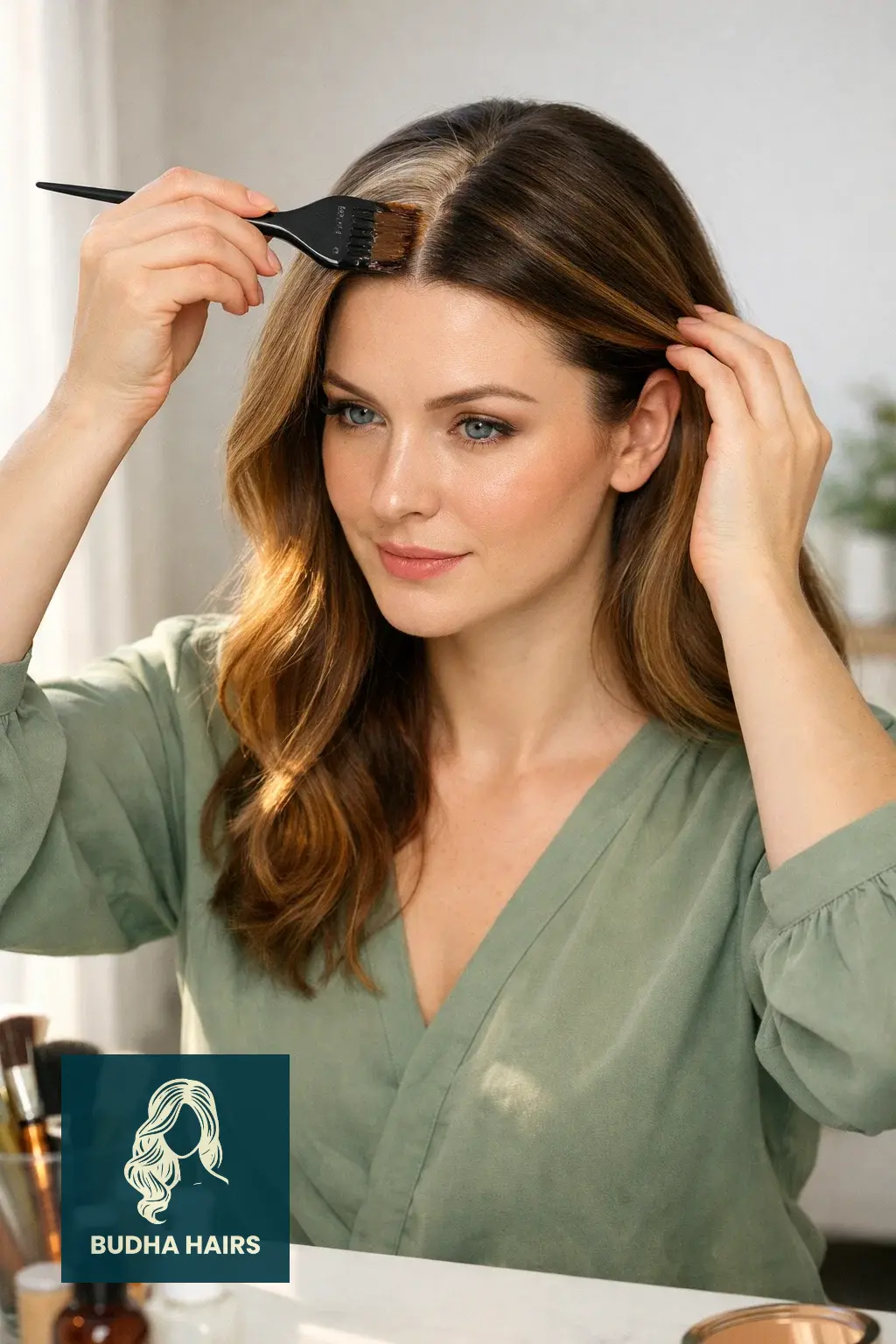
If your problem is the opposite—light patches that didn’t take the dye—you cannot simply slap the target color back on, especially if the hair has been bleached, as it may lack the underlying pigment to hold the new color. You may need to perform a “fill” step, which involves applying a semi-permanent warm shade (like gold or copper) to the light spots to put the missing building blocks back into the hair shaft. Once the light patch has been filled and rinsed, you can apply your final target color over it; this ensures the previously light patch absorbs the dye with the same depth and tone as the rest of your hair, preventing a “muddy” or green result.
- Advanced Steps:
- Sectioning: Isolate the uneven strands with clips before applying any correction product.
- Soap Cap: Use diluted bleach to gently nudge dark bands to a lighter shade.
- The “Fill”: Replace missing warm pigments in light spots before dyeing them dark again.
After color correction, scalp care is essential to avoid irritation. Applying strategies from Itchy Scalp After Hair Coloring soothes sensitivity and maintains a healthy foundation for vibrant, even hair.
Conclusion
Fixing uneven hair color is rarely a one-step process; it requires a diagnostic approach to identify whether you need to lift pigment from dark spots or deposit pigment into light ones.6 By utilizing clarifying methods for minor saturation issues and reserving spot-treatments like bleach washes for structural unevenness, you can restore balance to your hair without causing irreparable damage. The key to success lies in patience and precision—treating only the areas that need correction rather than applying a blanket solution to the whole head. With these state-of-the-art techniques, you can salvage a botched dye job and achieve a seamless, professional-looking result from the comfort of your home.

I’m Budha Styler, a hair enthusiast who loves creating beautiful, confidence-boosting looks that feel true to who you are. I’m passionate about exploring new trends, techniques, and textures, and I enjoy turning that knowledge into simple, inspiring ideas anyone can try. Through my work, I hope to help you express your unique style, feel amazing in your own hair, and discover everyday looks that make you shine.