
Repairing damaged hair is difficult for anyone, but for those with thin (fine) hair, it is a high-wire balancing act. The standard advice for damaged hair involves heavy hair masks, thick oils, and deep conditioning butters—all of which are disastrous for fine hair. Because thin strands lack the internal structural mass of coarse hair, heavy products cause them to collapse, looking greasy and stringy rather than healthy. Furthermore, thin hair has a smaller diameter and often lacks a medulla (the innermost core), making it significantly more fragile and prone to “snapping” breakage rather than just split ends.
The Science of Thin Hair Fragility
This guide outlines the specific science of repairing fine textures and provides ten expert-approved strategies to rebuild strength without sacrificing volume.
The Diameter Disadvantage
The primary reason thin hair damages so easily is simple physics: there is less of it to damage. A coarse hair strand has many layers of cuticle protection and a thick cortex; a fine hair strand has fewer cuticle layers. This means that heat, UV rays, and chemicals penetrate to the core much faster. When you use a flat iron on fine hair, the internal temperature rises rapidly, degrading the keratin protein almost instantly compared to thicker hair types.
The “Weight vs. Repair” Paradox
Damage creates holes in the hair’s cuticle, leading to high porosity (the hair absorbs water and loses it quickly). To fix this, you usually fill the holes with emollients. However, fine hair is easily weighed down. If you over-moisturize, the hair becomes “mushy” (hygral fatigue) and stretches until it breaks. If you over-proteinize, it becomes brittle and snaps. The key for thin hair is using lightweight bond builders and hydrolyzed proteins that penetrate the hair shaft rather than sitting on top of it like a heavy wax.
10 Expert Tips to Fix Damaged Thin Hair
1. Use Bond-Building Treatments (Not Just Moisture)
Traditional conditioners only smooth the surface. To fix damaged thin hair, you need to repair the broken disulfide bonds within the cortex. Invest in a bond-building treatment (like Olaplex No. 3 or K18) that works on a molecular level. These formulas are usually water-based or lightweight serums, meaning they rebuild the internal structure of the hair without leaving a heavy, greasy coating that kills volume.

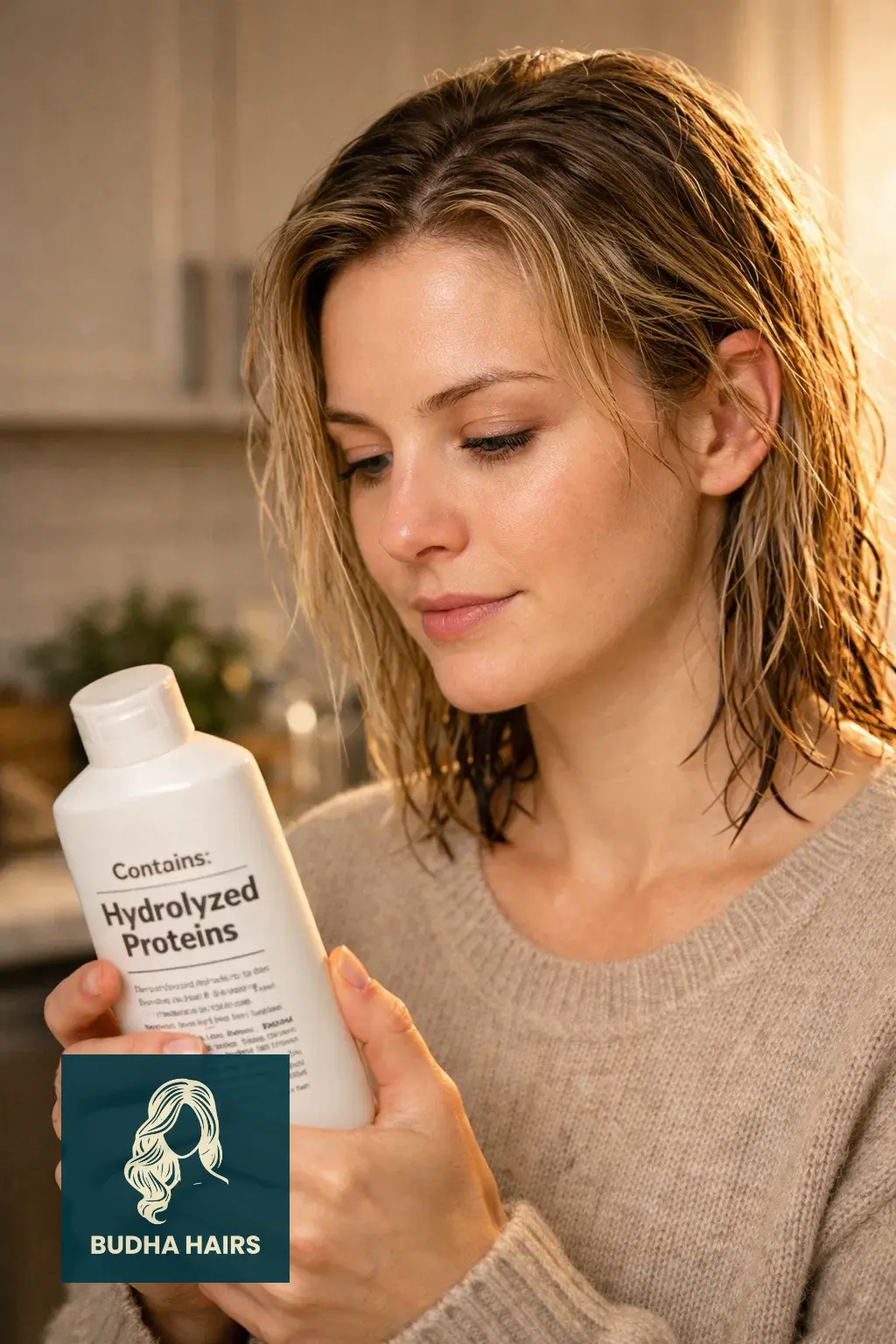
2. Prioritize “Hydrolyzed” Proteins
Check your ingredient labels for the word “hydrolyzed” (e.g., hydrolyzed wheat protein, hydrolyzed keratin). This means the protein molecules have been broken down into tiny fragments that are small enough to penetrate the fine hair shaft. Large proteins just sit on the surface and create buildup. These micro-proteins fill in the cracks in the cuticle, reinforcing the strand from the inside and adding structural stiffness that helps fine hair stand up.
3. The “Pre-Poo” Oil Method
Since heavy oils weigh thin hair down, you should apply them before you shampoo, not after. Apply a lightweight oil like Jojoba or Rosemary oil to the mid-lengths and ends of your dry hair 30 minutes before showering. This creates a protective buffer that prevents the shampoo from stripping the natural lipids from your damaged ends, but because you wash it off, you aren’t left with greasy roots.

Learning how to fix damaged thin hair starts with reducing breakage and restoring moisture. Following guidance from How to Keep Bangs from Splitting helps protect fragile sections and prevents further damage.
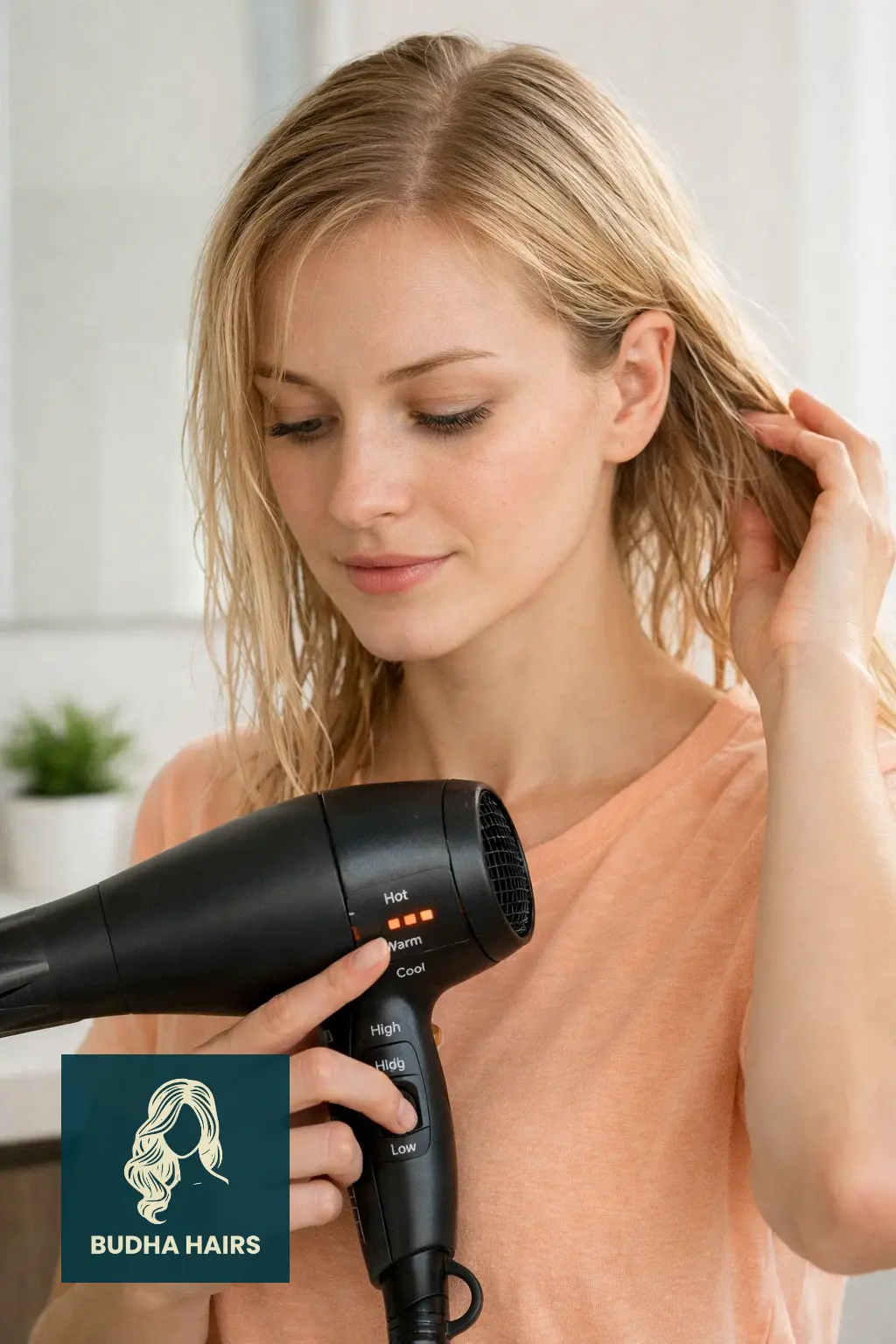
4. Turn Down the Heat (Temperature Control)
Fine hair heats up faster than coarse hair. If your styling tools are set to 400°F (200°C), you are essentially frying your hair. Lower your tools to 300°F – 325°F (150°C – 160°C). You do not need extreme heat to shape fine strands. Additionally, limit heat styling to once or twice a week to give the protein structure time to recover between sessions.
5. Micro-Trims to Stop the “Zipper” Effect
When fine hair splits at the end, the split can travel up the hair shaft like a zipper, causing the hair to break off inches higher than the original damage. This makes your hair look thinner and thinner over time. Schedule a “dusting” or micro-trim every 6 to 8 weeks. Ask your stylist to remove only the very tips (1/8th of an inch) to stop the damage from spreading without losing your length.

6. Switch to a Microfiber Towel
Wet hair is in its most fragile state. Rubbing fine, damaged hair with a coarse cotton bath towel causes friction that rips the cuticle and causes frizz. Switch to a microfiber towel or an old cotton t-shirt. Gently squeeze the water out—never rub. This simple change reduces mechanical breakage significantly, preserving the integrity of the hair fiber.

Styling damaged thin hair requires extra care to avoid heat stress. Techniques from How to Curl Thin Hair offer safer styling methods that add shape and volume without weakening already delicate strands.
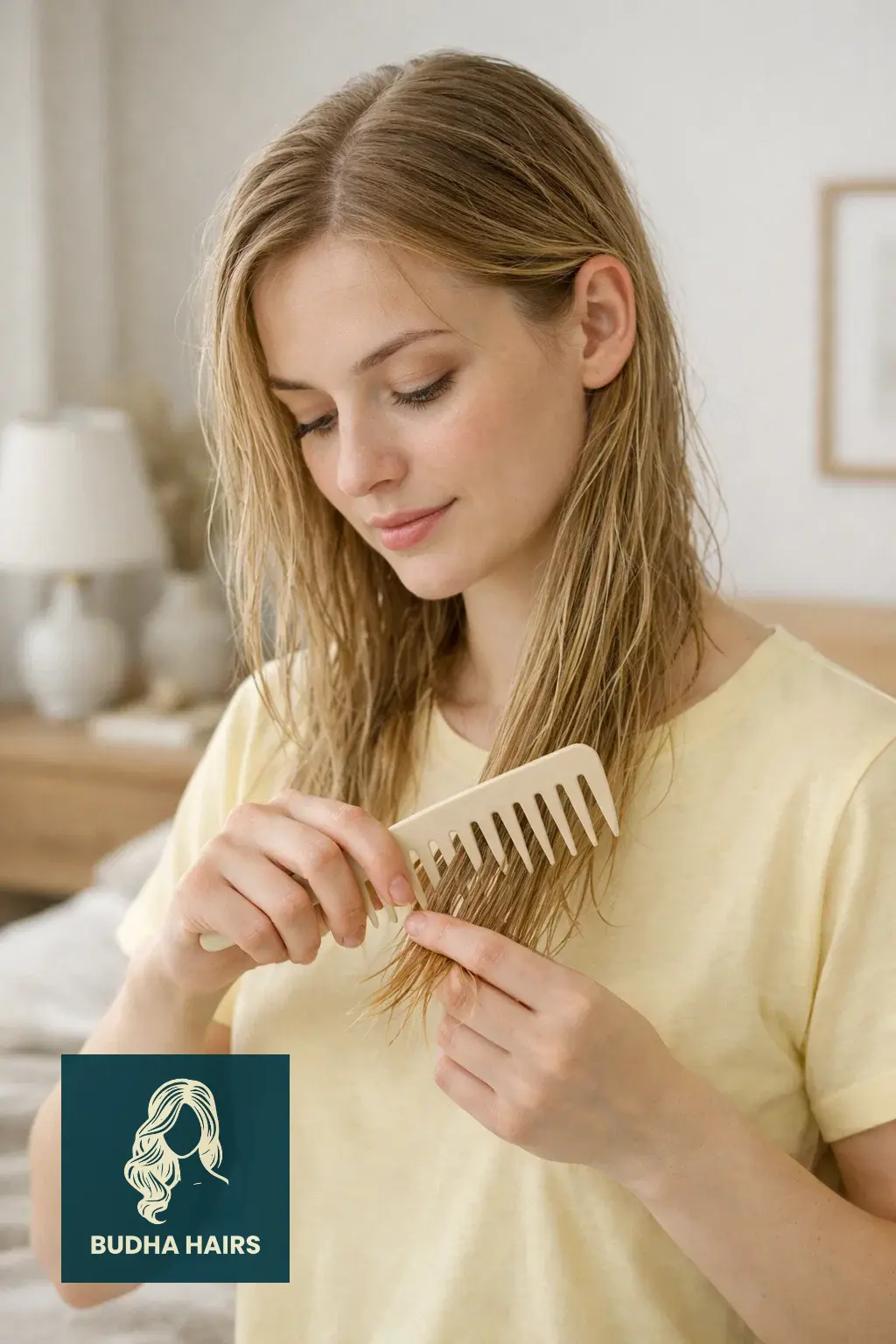
7. Detangle from the “Bottom Up”
Fine hair tangles easily, and aggressive brushing snaps it. Always detangle your hair while it is loaded with conditioner in the shower (or with a detangling spray) using a wide-tooth comb or a brush designed for wet hair. Start at the very ends and work your way up to the roots inch by inch. This prevents you from tightening knots and ripping out healthy hair along with the tangles.
8. Use a Heat Protectant Spray (No Creams)
Protection is non-negotiable, but formulation matters. Avoid heavy heat protectant creams or oils. Use a lightweight, aerosol, or liquid mist heat protectant. Spray it generously on damp hair to create a sacrificial barrier that burns off before your hair does. Look for ingredients like “PVP/DMAPA acrylates copolymer” which form a shield without weight.

9. Sleep on Silk or Satin
Friction from cotton pillowcases is a major cause of breakage for fine hair. As you toss and turn, the cotton fibers grab the hair and snap it. Switch to a silk or satin pillowcase. The slippery surface allows your hair to glide without resistance, preventing morning tangles and reducing the physical stress on your delicate strands while you sleep.

10. Avoid Tight Hairstyles (Traction)
Damaged fine hair has very little elasticity. Pulling it into tight ponytails, buns, or braids creates tension that the weakened shaft cannot handle, leading to breakage around the hairline (traction alopecia). Wear your hair down, in loose braids, or use soft silk scrunchies and claw clips instead of tight elastic bands to minimize tension on the follicles and the fiber.

A healthy scalp is essential for repairing thin, damaged hair. Using proven Itchy Scalp Remedies soothes irritation and creates the right environment for hair to recover and grow stronger.
Conclusion
Fixing damaged thin hair requires a shift from “coating” to “rebuilding.” By avoiding heavy butters that cause flatness and embracing bond-building technology and hydrolyzed proteins, you can restore strength to the hair shaft. Combine this with mechanical care—like lower heat settings and silk pillowcases—and you will stop the cycle of breakage, allowing your fine hair to grow long, full, and resilient.

I’m Budha Styler, a hair enthusiast who loves creating beautiful, confidence-boosting looks that feel true to who you are. I’m passionate about exploring new trends, techniques, and textures, and I enjoy turning that knowledge into simple, inspiring ideas anyone can try. Through my work, I hope to help you express your unique style, feel amazing in your own hair, and discover everyday looks that make you shine.


