
For those with thin, fine hair, the blow dryer is not just a tool for removing moisture; it is an architectural instrument used to build structure where none naturally exists. Fine hair lacks the internal protein core (medulla) that gives coarse hair its rigidity, meaning it naturally collapses under its own weight and lies flat against the scalp. To counteract this, you cannot simply blast hot air at your head randomly; you must employ specific laws of physics—tension, over-direction, and thermal setting—to trick the hair into standing upright.
The Physics of Volume
This guide explores the science of creating artificial volume and provides ten expert-approved steps to blow dry your way to a fuller, denser-looking mane that defies gravity all day.
The Concept of “Over-Direction”
The secret to root lift lies in a technique called “over-direction.” This involves lifting the hair and drying it in the opposite direction to which it naturally falls. When hair is dried at a 90-degree angle (perpendicular to the scalp) or even pushed forward against the grain, the hydrogen bonds at the root set in an upright position. If you simply blow dry your hair downwards or in the direction of your part, you are essentially ironing it flat against your skull. By forcing the root to stand up while it transitions from wet to dry, you create a permanent “arch” at the base of the shaft that supports the rest of the hair strand.
The Importance of Cooling (Setting the Bond)
Heat makes hair pliable, but cold makes it rigid. A common mistake is removing the brush or turning off the dryer while the hair is still hot. When fine hair is hot, it is soft and weak; if you let it drop while it is warm, gravity will pull it flat immediately. True volume is achieved during the cooling phase. By holding the hair in a lifted shape until it reaches room temperature, the hydrogen bonds harden in that expanded state. This “thermal memory” is what allows a blowout to last for hours rather than minutes, acting as an invisible scaffold that holds the style up.
10 Expert Steps for Maximum Volume
1. Prep with Mousse, Not Cream
The foundation of volume is “grit,” and nothing provides this better than mousse. Unlike creams or oils which add weight and lubrication, volumizing mousse contains airy polymers that coat the hair shaft and dry into a stiff, supportive lattice. Apply a generous, golf-ball-sized amount of mousse to your damp roots and comb it through to the ends. This ensures that every single hair strand is thickened artificially, giving the blow dryer something to grip onto and creating a texture that feels twice as dense as your natural hair.

2. The “Upside Down” Rough Dry
Before you even pick up a brush, you must remove 80% of the moisture from your hair using the “rough dry” method. Flip your head completely upside down and blast the roots with warm air, using your fingers to massage and lift the hair away from the scalp. This forces the roots to dry standing up, perpendicular to your head. By the time you flip your head back over, you will have already established a base level of volume that makes the rest of the styling process significantly easier and more effective.
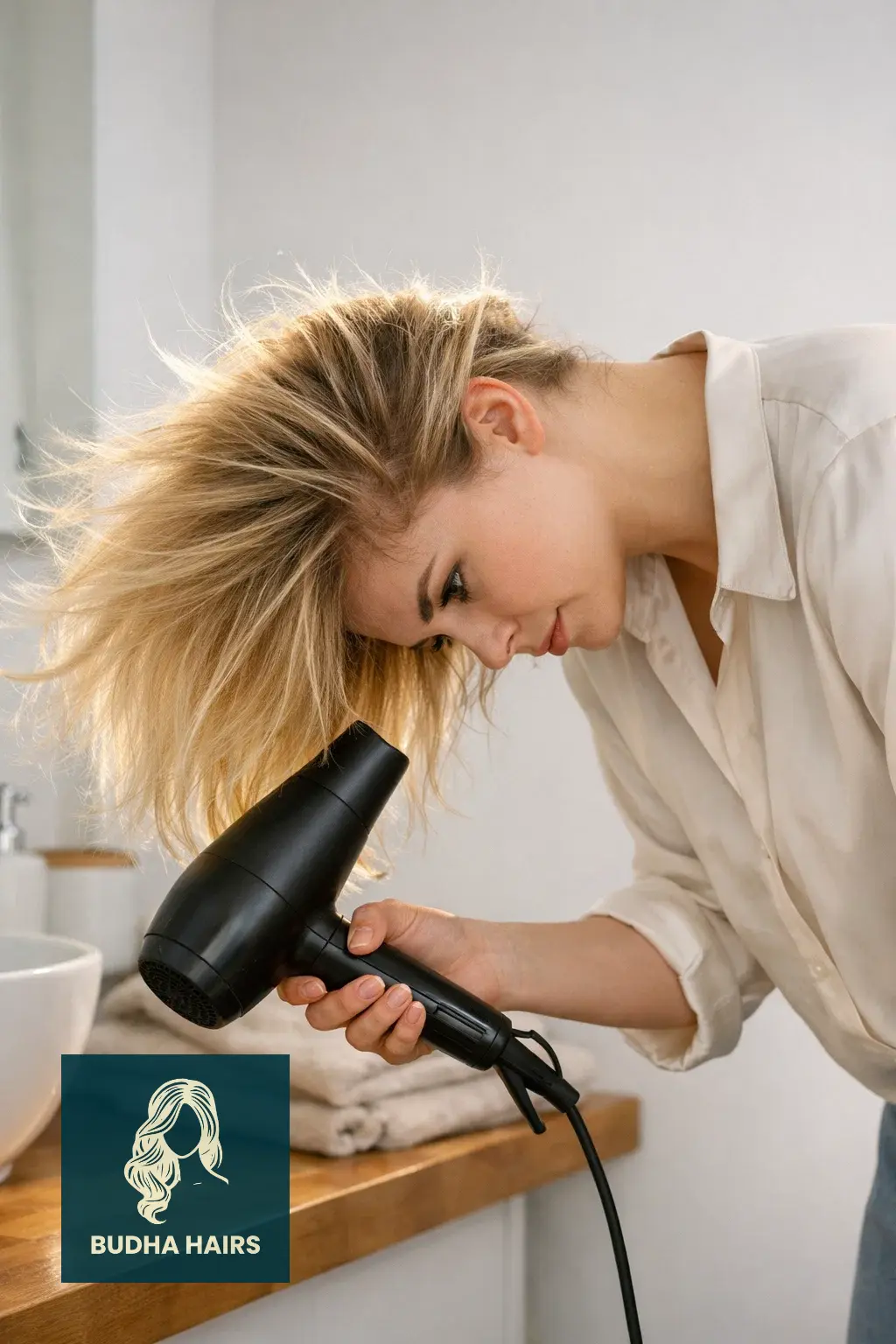
3. Use a Ceramic Round Brush
The tool you use matters immensely; for fine hair, a ceramic vented round brush is superior to a dense boar bristle brush. The ceramic barrel heats up with the dryer, effectively acting like a curling iron that smoothes the hair from the inside out while you dry. The vents allow air to flow through the brush, speeding up the drying process and preventing the fine hair from overheating. Choose a medium-sized barrel; a brush that is too large will just straighten the hair, while a medium size creates the necessary bend and lift at the root.

Learning how to blow dry thin fine hair properly helps reduce heat damage while adding natural volume. Maintaining scalp comfort with Itchy Scalp Remedies ensures dryness or irritation doesn’t interfere with healthy styling.
4. The “Mohawk” Sectioning Strategy
To avoid getting overwhelmed, section off the top “mohawk” part of your hair (from forehead to crown) and clip it out of the way, as this is the “money piece” for volume. Dry the sides and back first, as these areas don’t need as much lift. By saving the top section for last, you ensure that you have full energy and focus to devote to the roots that matter most. When you finally drop the mohawk section, dry it in smaller horizontal subsections, starting from the back and moving toward your forehead.
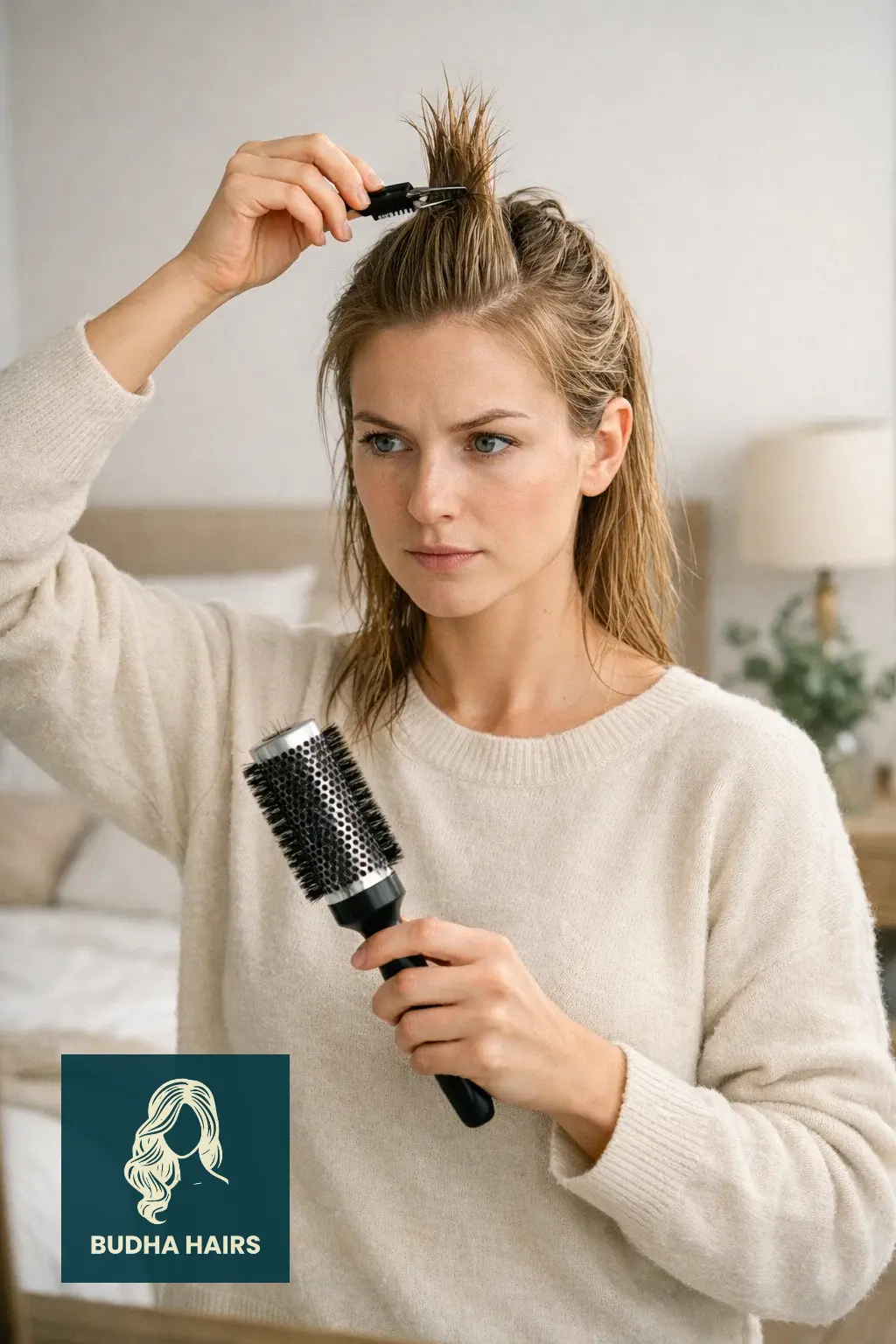
5. Utilize the Concentrator Nozzle
Never use a blow dryer without the flat concentrator nozzle attachment. Without it, the air sprays out chaotically, blowing the hair cuticles open and causing frizz that makes fine hair look damaged and wispy. The nozzle directs the airflow into a concentrated stream, allowing you to target the roots specifically for lift and then smooth the air down the shaft to seal the cuticle. This precision is required to build volume exactly where you need it—at the base—without disturbing the rest of the style.

6. Pull Hair Forwardfor Crown Lift
For the crown area (the back top of your head), brush the hair forward toward your face while drying, rather than pulling it back. By drying the hair forward, you are over-directing the roots to an extreme degree. When you eventually flip the hair back into its natural position, the roots will push against that direction, creating a massive arc of volume at the crown. This prevents the dreaded “flat spot” at the back of the head that plagues many people with fine hair.

Heat styling can weaken delicate strands if not done carefully. Following advice from How to Fix Damaged Thin Hair helps protect fine hair during blow-drying and prevents unnecessary breakage.
7. Maintain High Tension
Fine hair is slippery and likes to slide off the brush; to change its shape, you must apply significant tension. When you lock the brush into the roots, pull it taut so the hair is stretched tight before you hit it with the heat. This tension stretches the root upright and smoothes the mid-lengths. Follow the brush closely with the dryer nozzle (without touching the hair) to “iron” this lift into the strands. If the hair is loose or flapping around on the brush, you are merely drying it, not styling it.
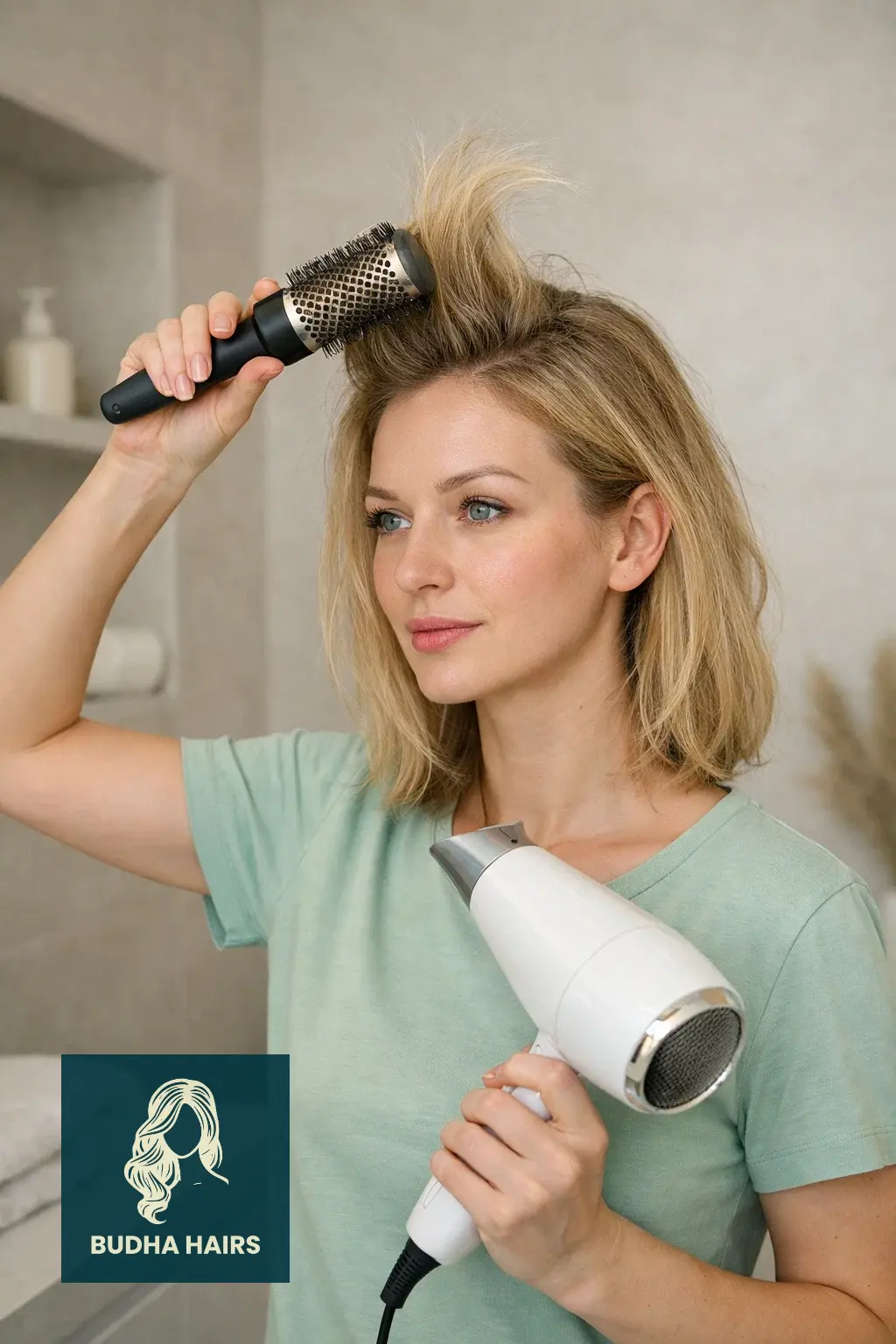
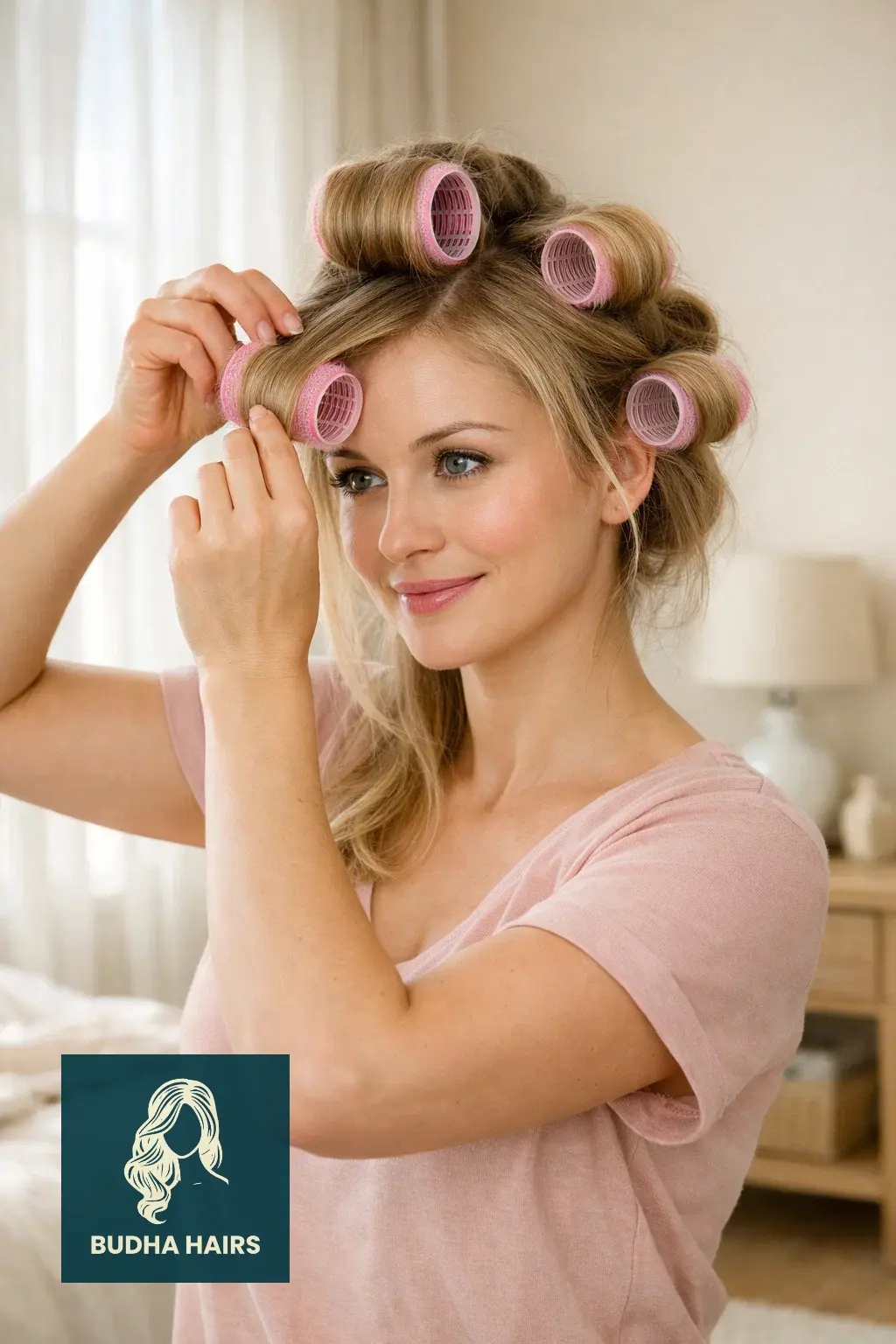
8. The Velcro Roller “Cool Down”
This is the ultimate hack for thin hair: while a section is still hot and dry, immediately wrap it into a large velcro roller. The velcro material grips the fine hairs gently, keeping them taught and lifted high off the scalp. Leave these rollers in the “mohawk” section for at least 10 to 20 minutes while you do your makeup or get dressed. The rollers physically hold the hair in a voluminous shape while it cools, setting the bonds permanently in a way that a brush alone cannot achieve.
9. The Cool Shot Finish
If you don’t have time for rollers, you must use the “Cool Shot” button on your dryer. Once a section of hair is fully dry and wrapped around your round brush, hit the cool button and hold the cool air on the brush for 10-15 seconds. Do not unroll the brush until the hair feels cold to the touch. This rapid cooling hardens the hydrogen bonds instantly, locking in the curl and volume you just created. Unwinding a hot brush is the fastest way to lose all your hard work.

10. Finish with Texturizing Spray
Avoid heavy hairsprays or shine serums, which act like weights on fine hair. Instead, finish your blowout with a dry texturizing spray or a root-lift powder. Lift sections of your hair and spray the product upwards into the airy spaces between the strands. These products add microscopic “grit” that creates friction between the hairs, allowing them to stack on top of each other and hold the volume. This keeps the hair airy and movable while preventing it from sliding flat against the scalp as the day goes on.

Blow-drying can also act as a base for soft, long-lasting styles. Techniques from How to Curl Thin Hair show how to create shape and movement without overexposing thin hair to heat.
Conclusion
Blowing drying thin, fine hair for volume is about structural engineering; you are building a scaffold using mousse, heat, and cooling techniques. By prioritizing the “rough dry” to get the roots standing up, using a ceramic brush for tension, and always cooling the hair in a lifted position (preferably with velcro rollers), you can double the visual density of your hair. Remember, gravity is constant, so your technique must be aggressive enough to counteract it. With these steps, even the finest hair can achieve a bouncy, full-bodied silhouette that lasts.

I’m Budha Styler, a hair enthusiast who loves creating beautiful, confidence-boosting looks that feel true to who you are. I’m passionate about exploring new trends, techniques, and textures, and I enjoy turning that knowledge into simple, inspiring ideas anyone can try. Through my work, I hope to help you express your unique style, feel amazing in your own hair, and discover everyday looks that make you shine.