Blow drying is often demonized as the arch-nemesis of healthy hair, but trichologists and stylists know that it is not the act of drying that causes damage, but the improper application of heat. In fact, leaving hair wet for prolonged periods can cause “hygral fatigue,” weakening the cell membrane complex; therefore, a correct blow dry can actually be healthier than air drying. However, the line between safe drying and “bubble hair”—a condition where water boils inside the hair shaft, creating blisters that burst and break the fiber—is thin. Mastering how to blow dry hair without heat damage requires a scientific understanding of thermal dynamics, cuticle direction, and the protective barriers needed to shield the keratin protein from denaturing.
The Mechanics of Thermal Damage
This guide outlines the mechanics of safe styling and provides ten state-of-the-art tips to achieve a smooth, glossy finish without compromising the integrity of your strands.
Understanding “Bubble Hair” and Protein Loss
The primary danger during blow drying occurs when the internal temperature of the hair exceeds the boiling point of water (100°C / 212°F) while moisture is still trapped inside the cortex. When this happens, the water turns to steam rapidly, expanding within the hair shaft and creating microscopic bubbles that rupture the fiber walls, leading to irreversible brittleness and breakage. Furthermore, excessive heat degrades the keratin proteins—the building blocks of hair—causing them to lose their structure and elasticity. This protein denaturation makes the hair stiff and prone to snapping, similar to how an egg white hardens when cooked. Preventing this requires managing the temperature so that the water evaporates gently rather than boiling violently inside the strand.
The Importance of Cuticle Preservation
The cuticle is the hair’s protective outer shield, resembling the scales of a fish or shingles on a roof. When hair is subjected to high heat or aggressive airflow in the wrong direction, these scales lift, crack, and eventually chip off, exposing the vulnerable inner cortex to environmental damage. Once the cuticle is compromised, the hair loses its ability to retain moisture, leading to chronic dryness and a dull, matte appearance. A safe blow-dry technique focuses entirely on smoothing these scales down, sealing the shaft to reflect light and lock in hydration. By respecting the direction of the cuticle and using mechanical smoothing rather than just searing heat, you can dry the hair while simultaneously polishing its surface.
10 Expert Tips to Blow Dry Without Damage
Now, let’s explore 10 expert tips to blow dry your hair without damage. From heat protection and proper tools to smart techniques, these tips help you achieve smooth results while keeping hair healthy and strong.
1. The “Microfiber Pre-Dry”
The less time your hair is exposed to the blow dryer, the less damage occurs, so your goal is to remove as much water as possible mechanically before introducing heat. Never use a cotton towel, which causes friction; instead, use a microfiber towel to gently squeeze and blot the hair. Microfiber is ultra-absorbent and can remove up to 50% of the moisture from the hair without roughening the cuticle. This step significantly reduces the duration of your blow-dry session, minimizing the total thermal load placed on your strands.

2. Air Dry to 60-70% First
Unless you have unruly curls that need to be set from wet, you should never put a blow dryer on soaking wet hair. Allow your hair to air dry until it is about 60% to 70% dry—damp to the touch but no longer dripping. At this stage, the surface water has evaporated, and you are only using the dryer to shape and polish the bonds. This drastic reduction in heat exposure time is the single most effective way to prevent the “boiling” effect inside the hair shaft.

3. Apply a Silicone-Based Heat Protectant
Heat protectant is not a marketing gimmick; it is a chemical necessity. Look for serums or sprays containing silicones like dimethicone or cyclomethicone, or natural alternatives like argan oil. These ingredients have low thermal conductivity, meaning they heat up very slowly. They form a sacrificial barrier over the hair cuticle, absorbing the heat shock and distributing it evenly across the surface rather than allowing it to burn one spot. Apply it generously to damp hair, ensuring every strand is coated from root to tip.
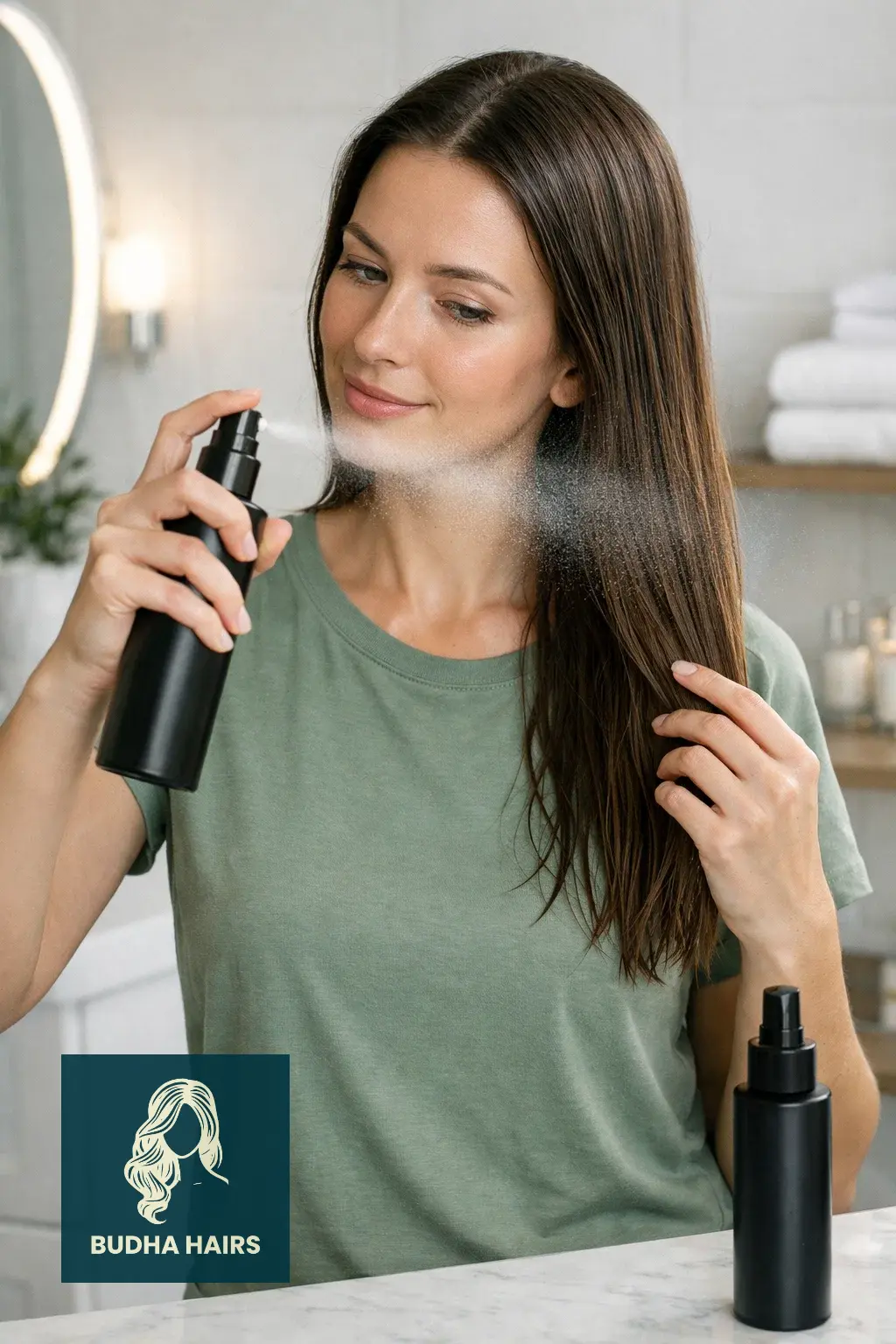
Learning how to blow dry hair without heat damage helps protect strands while maintaining smoothness and shine. Understanding How Much Hair Shedding Is Normal? can also help you identify whether heat styling habits are affecting hair health.
4. Maintain the “6-Inch Rule”
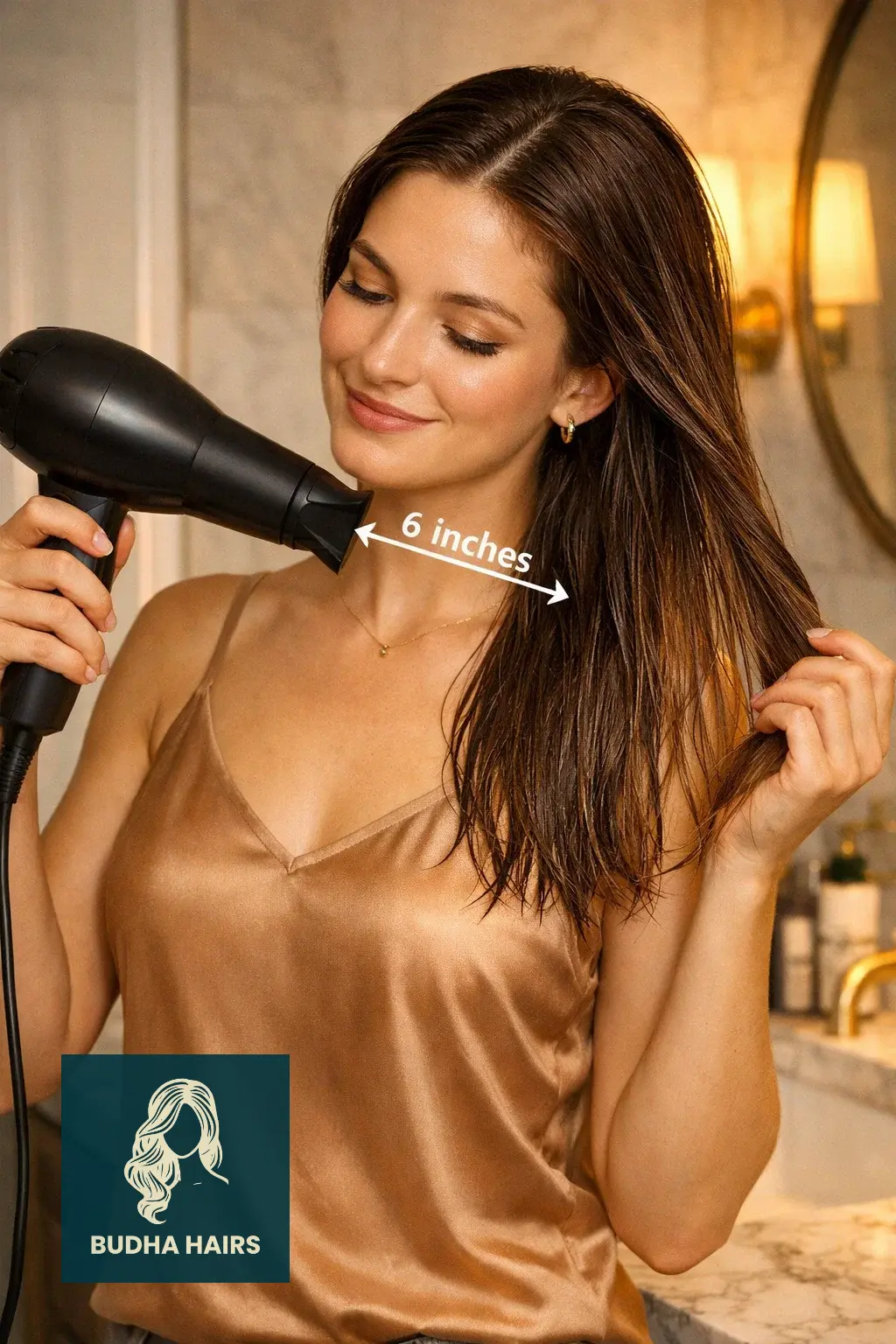
One of the most common mistakes is pressing the nozzle directly against the brush or the hair to “speed up” the process. This direct contact transfers extreme heat that can instantly melt the cuticle. You must maintain a distance of at least 6 inches (15 cm) between the dryer nozzle and your hair at all times. This distance allows the hot air to mix with cooler room-temperature air, lowering the overall temperature that hits the hair while still providing enough airflow to evaporate moisture effectively.
5. Point the Nozzle Down the Shaft
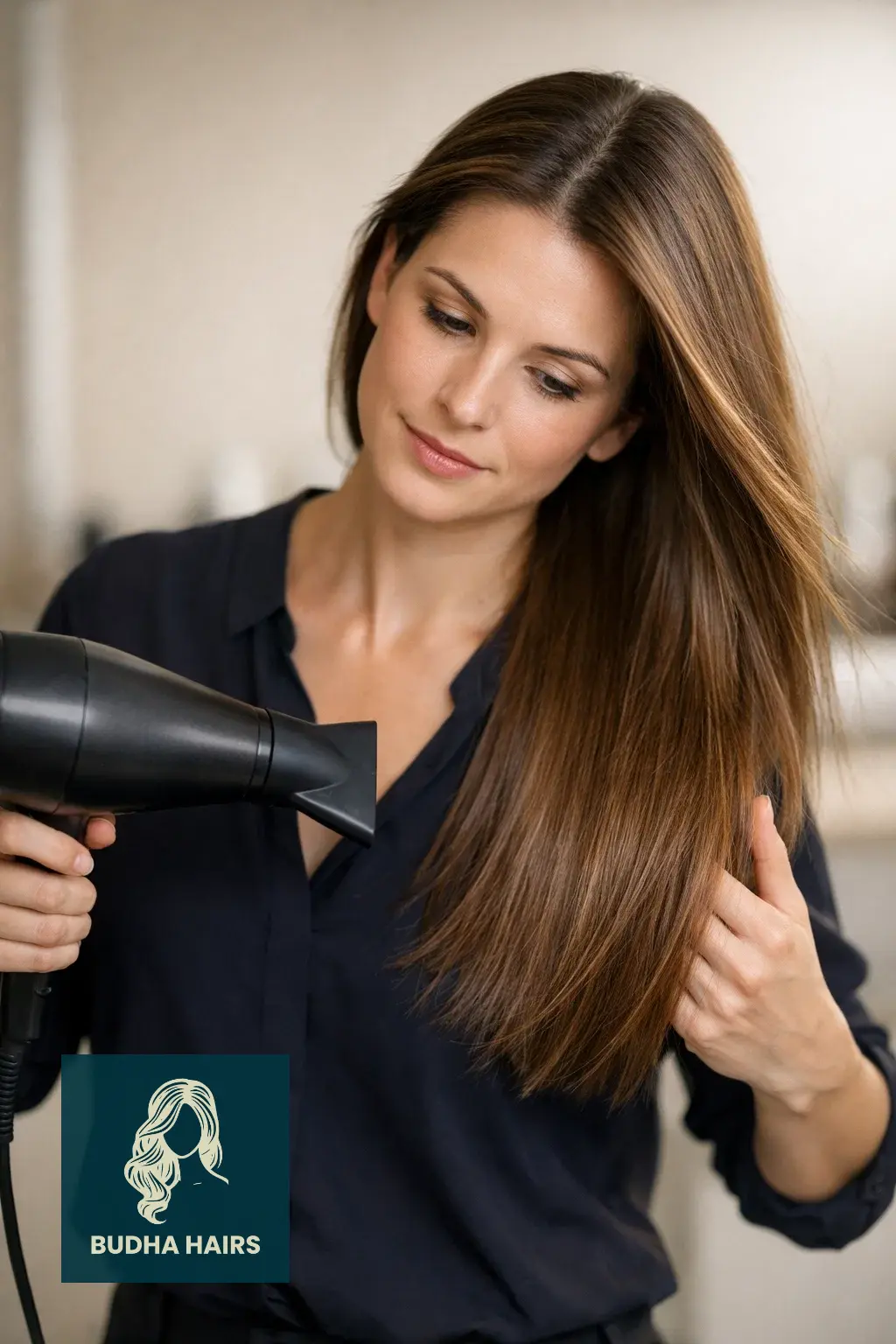
To prevent frizz and damage, you must always align the airflow with the natural direction of the cuticle growth—from the roots down to the ends. Never blow dry “up” into the hair or blast it chaotically in all directions, as this forces the cuticle scales to stand up and break off. By angling the nozzle downward, you physically smooth the shingles shut, which locks in moisture and creates a reflective, shiny surface that looks healthy and polished.
6. Use Ionic Technology
Invest in a blow dryer that features ionic technology. These dryers emit negative ions that interact with the positively charged water molecules on your hair, breaking them down into smaller clusters that evaporate faster. This technology allows you to dry your hair at a lower temperature and in less time than a standard ceramic dryer. Additionally, the negative ions help to neutralize static electricity, sealing the cuticle and reducing the need for high heat to control frizz.
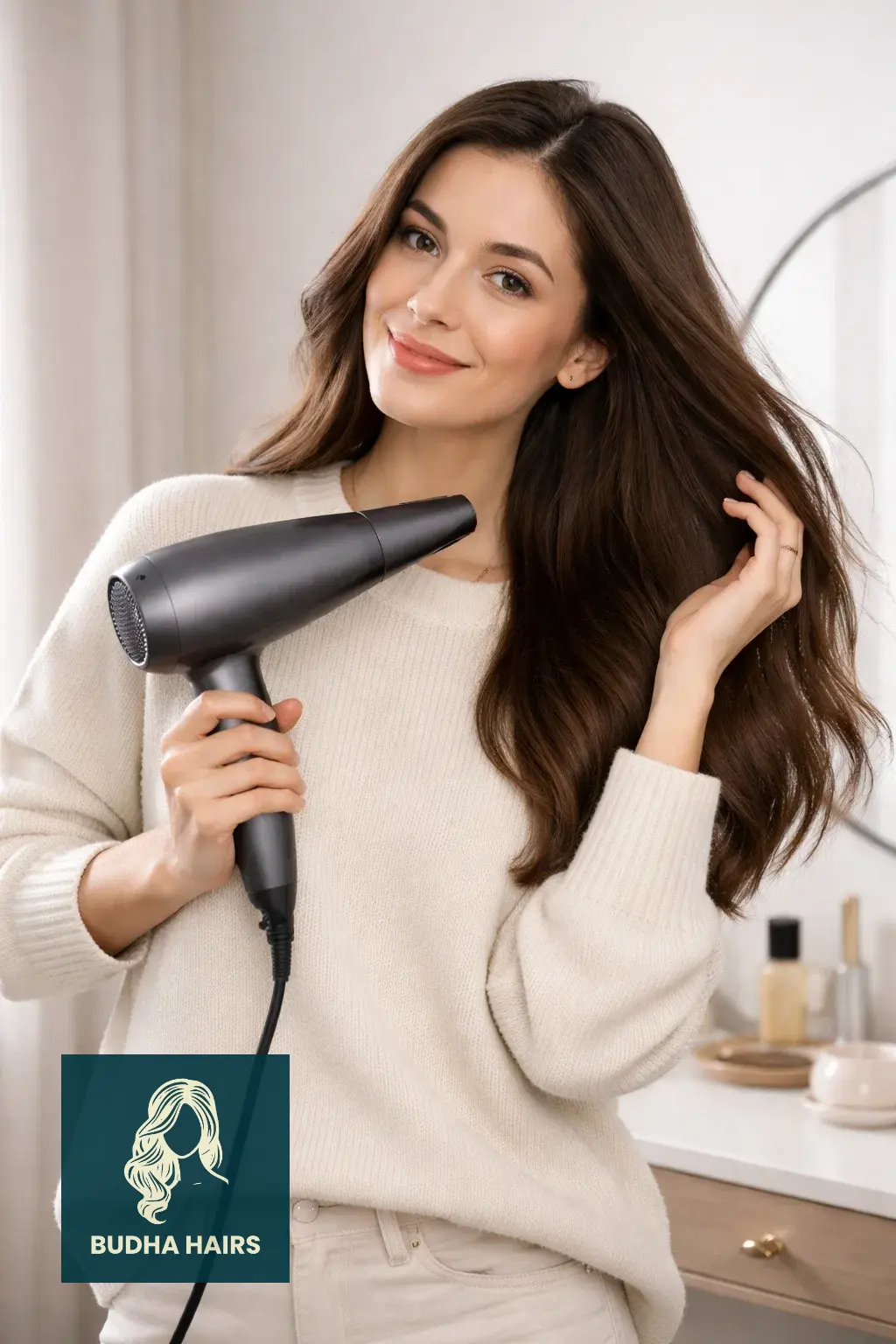
Gentle blow-drying techniques can still create lift and movement without excessive heat. Applying tips from How to Add Volume to Fine Hair allows you to achieve fullness while keeping hair strong and damage-free.
7. Prioritize Air Speed Over Heat
Most quality blow dryers have separate controls for heat and speed. To minimize damage, you should use the highest air speed setting but a medium or low heat setting. High airflow mechanically pushes the water off the hair surface without relying on damaging temperatures to “cook” the moisture out. Reserve the high heat setting only for the very last stages of styling stubborn cowlicks or thick textures, and even then, use it sparingly.
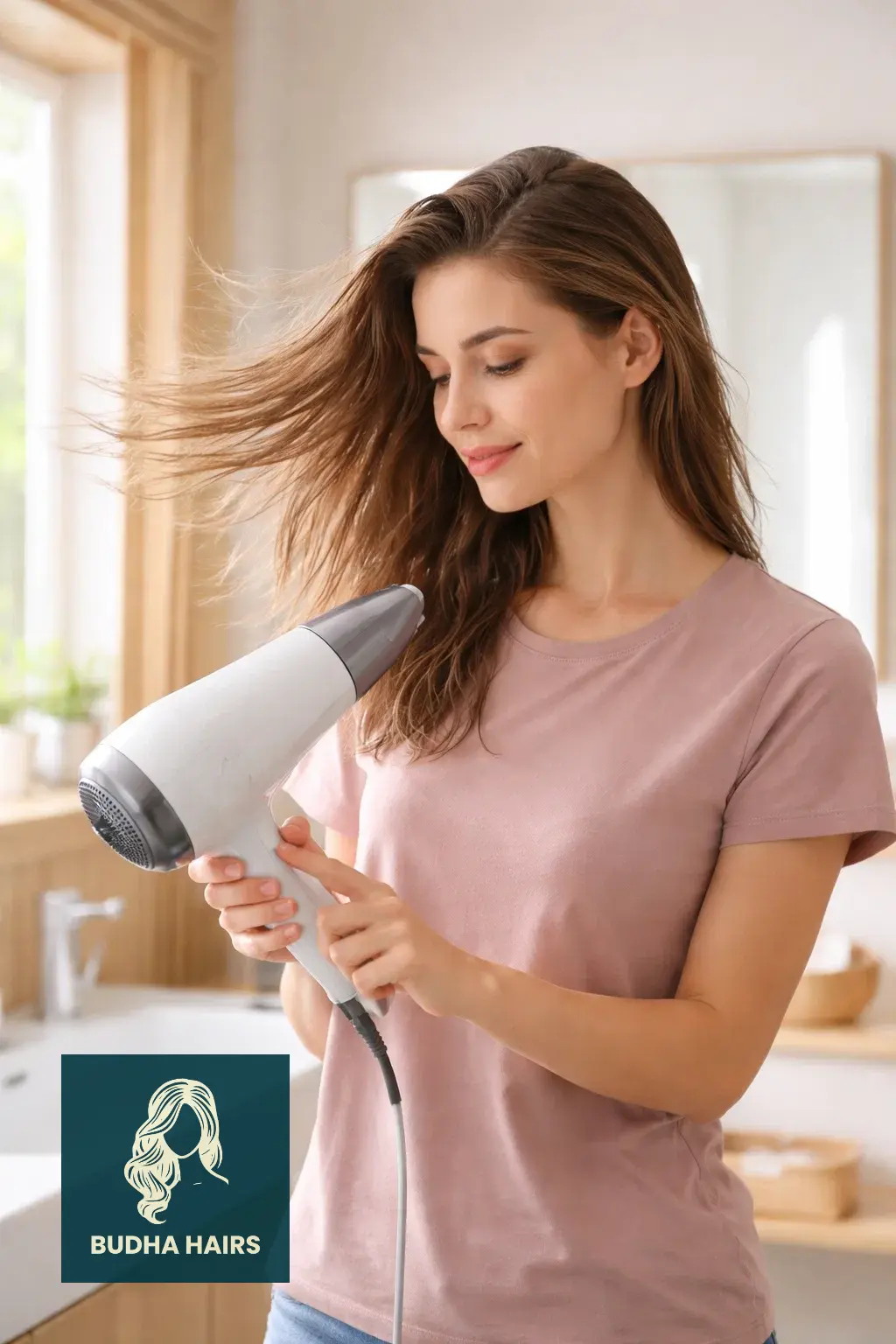
8. Keep the Dryer Moving
Never let the blow dryer linger on one section of hair for more than a second or two. Concentrating heat on a single spot causes “hot spots” where the temperature spikes rapidly, causing immediate protein denaturation. Keep your wrist moving constantly, sweeping the dryer back and forth over the section. This constant motion ensures that the heat is distributed evenly and that no single part of the hair shaft reaches a critical temperature threshold.
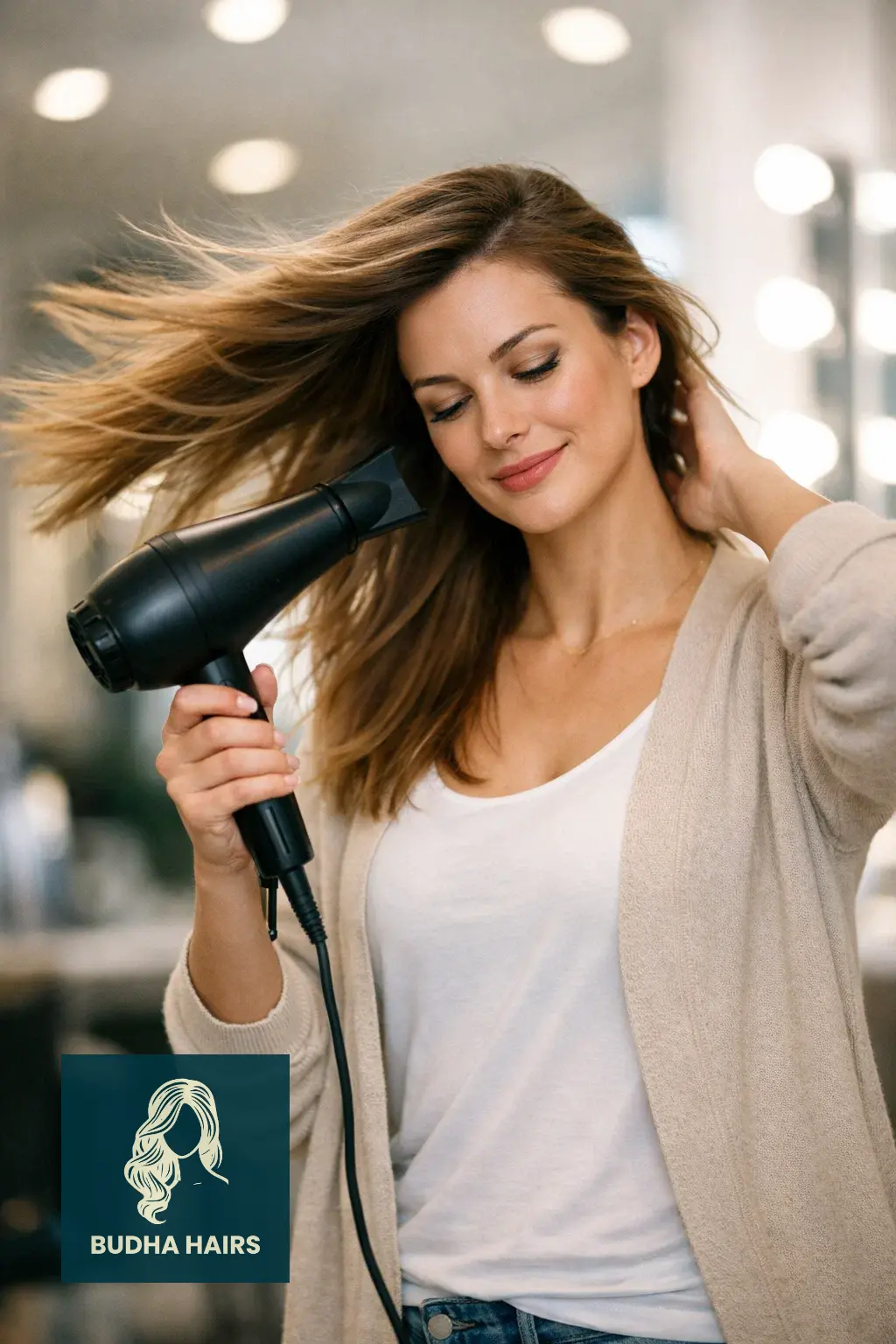
9. Section for Efficiency
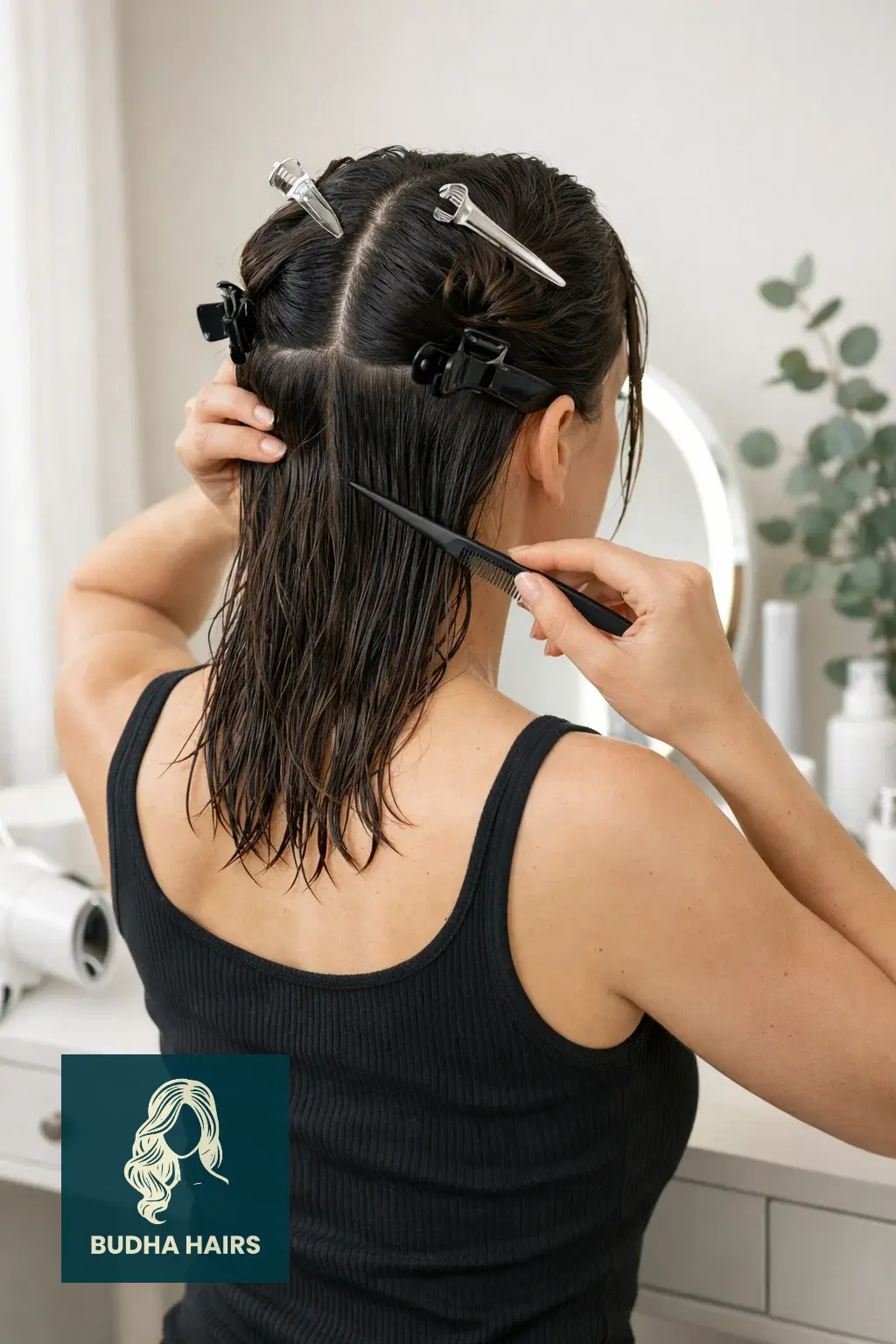
Trying to dry your whole head at once usually leads to overheating the top layers while the underlayers remain damp, forcing you to re-dry areas unnecessarily. Divide your hair into clean sections using clips—usually four quadrants. By drying one small section at a time, you ensure that you only apply heat to hair that needs it, and once a section is dry, you move on and do not touch it with the dryer again. This prevents “double-processing” the hair with heat.
10. The “Cool Shot” Finish
The “Cool Shot” button is not just an accessory; it is a vital tool for hair health. Heat makes the hair pliable and opens the bonds; cold air hardens the bonds and locks them in place. Once a section is dry, blast it with the cool shot for 10-15 seconds. This rapid cooling physically closes the cuticle tight, locking in the style and any remaining moisture. A closed cuticle is a strong cuticle, much more resistant to environmental friction and breakage than one left warm and open.
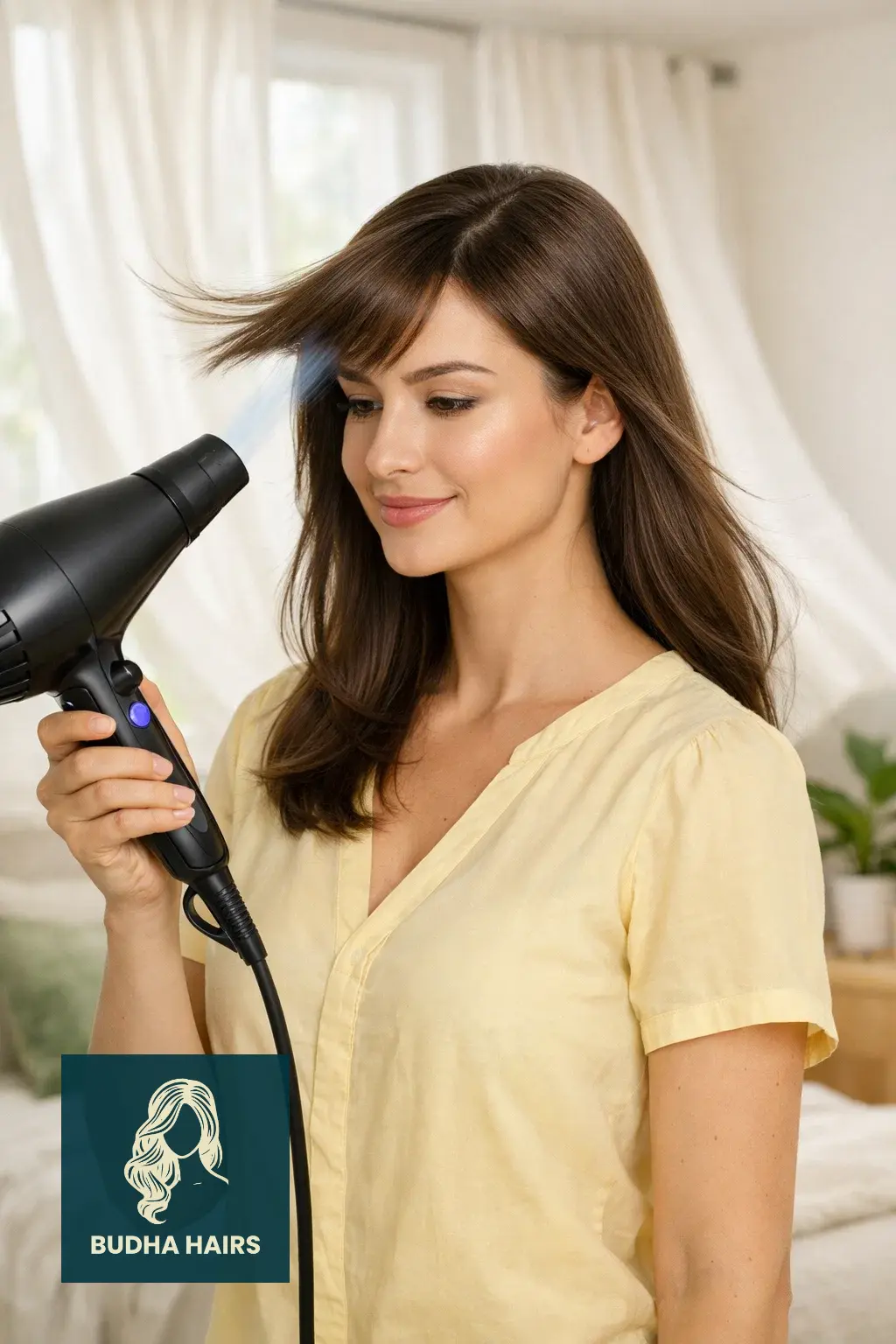
Protective styling works best when combined with consistent daily care. Following a Hair Routine for Thin Straight Hair ensures your hair remains nourished, resilient, and easier to style with minimal heat.
Conclusion
Blowing drying your hair does not have to be a choice between style and health. By adhering to the principles of distance, direction, and thermal protection, you can enjoy a salon-quality blowout without the risk of heat damage. The key lies in patience—allowing the hair to air dry partially, using lower heat settings with higher airflow, and meticulously applying heat protectants. Treat your blow dryer as a tool for polishing, not just evaporating, and your hair will retain its elasticity, shine, and strength for the long term.

I’m Budha Styler, a hair enthusiast who loves creating beautiful, confidence-boosting looks that feel true to who you are. I’m passionate about exploring new trends, techniques, and textures, and I enjoy turning that knowledge into simple, inspiring ideas anyone can try. Through my work, I hope to help you express your unique style, feel amazing in your own hair, and discover everyday looks that make you shine.