Managing thin, straight hair (often classified as Type 1A or 1B) is a constant balancing act. The two biggest enemies are oil and gravity. Because the hair shaft is perfectly straight, natural oils from the scalp slide down the strand instantly, making the roots look greasy within hours of washing. Additionally, thin strands lack the internal structure or “pith” to hold themselves up, leading to a style that falls flat against the skull, exposing the scalp. The goal of a specialized routine for this hair type is to create grit, remove weight, and lift the root.
The Science of Thin Hair
This guide outlines the specific science of fine hair and provides a ten-step routine to transform limp strands into a voluminous, bouncy mane.
Why It Gets Oily So Fast
Straight hair has a round cross-section, which creates a smooth surface with no kinks or curls to act as a roadblock. This allows sebum (scalp oil) to travel from the root to the tip at rapid speed. Unlike curly hair, which needs added oil for moisture, thin straight hair is easily overwhelmed by its own natural production. This is why “heavy” products like shea butter or silicone serums are disastrous for this hair type—they add external weight to a surface that is already slippery with natural oil.
The “Gravity” Problem
Fine hair has a smaller diameter than coarse hair, meaning it has less protein structure to support its own weight. When you add water, conditioner, or styling creams, the hair becomes even heavier and collapses. To fight gravity, you must rely on texturizers and thickeners—products that coat the outside of the hair shaft to artificially increase its diameter and create friction between strands so they stand apart rather than clumping together.
The 10-Step Expert Routine
Now, let’s explore the 10-step expert routine. This comprehensive approach combines cleansing, treatment, and styling techniques to keep hair healthy, strong, and looking its best every day.
1. The “Reverse Washing” Technique
Conditioner is essential for detangling, but it is the primary cause of flat roots. Try “reverse washing”: apply your conditioner first to dry or damp ends, let it sit for a minute, and then apply shampoo on top of it (or rinse and then shampoo). The shampoo cleanses the scalp and removes the heavy residue of the conditioner, leaving the ends hydrated but the roots completely weightless and free of waxy buildup.
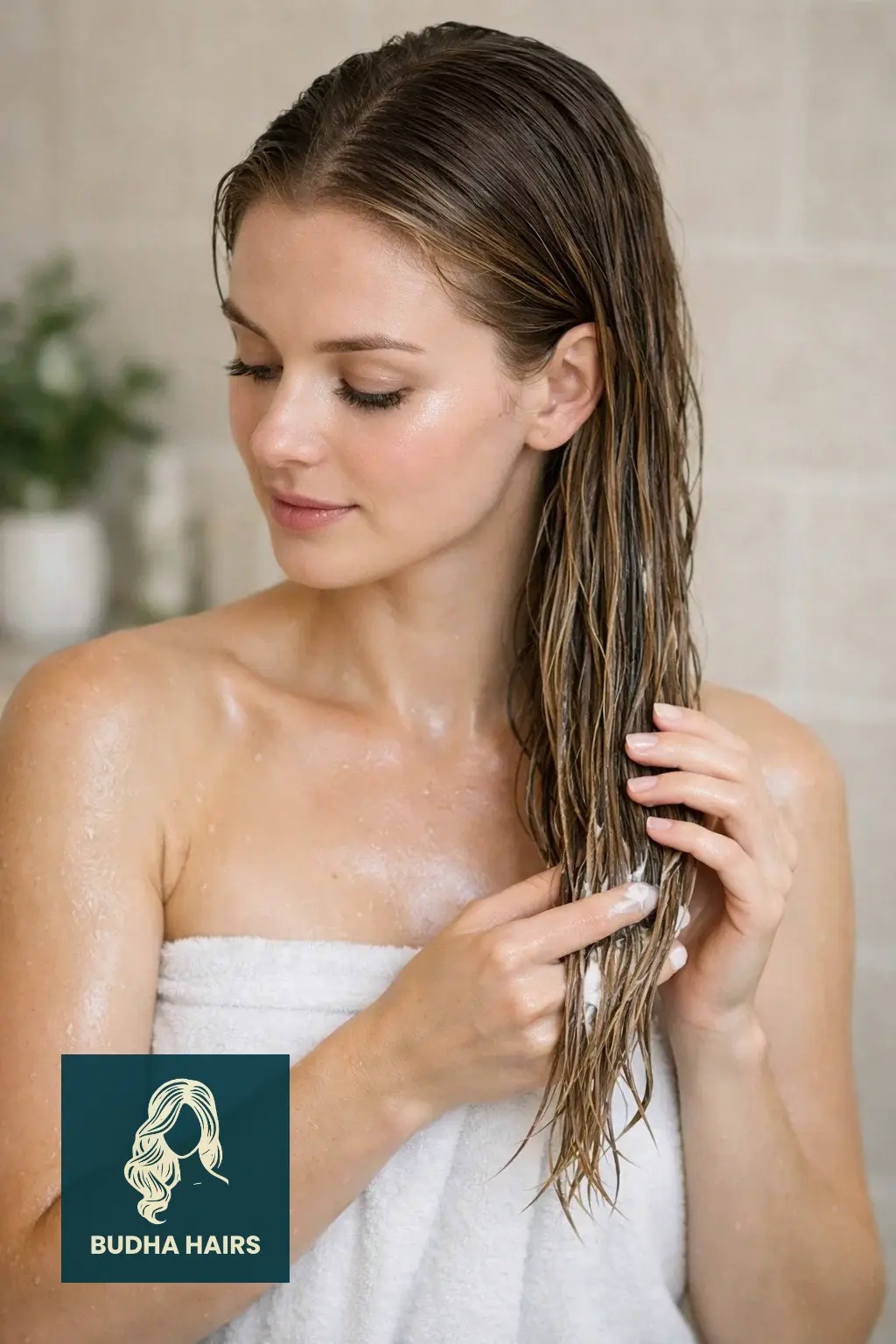
A proper hair routine for thin straight hair focuses on hydration, gentle care, and protective styling. Supporting hair health with Vitamins for Thinning Hair for Women helps strengthen strands from the inside, promoting fuller, healthier hair.
2. Use a Clear, Volumizing Shampoo
Avoid “creamy” or “pearlescent” shampoos, which are usually loaded with heavy moisturizers and silicones (like dimethicone) that coat the hair. Instead, opt for clear, gel-based volumizing shampoos. These formulas usually contain “polyquaterniums” or strengthening proteins that cleanse the scalp thoroughly without depositing a heavy film, giving the roots a natural lift.

3. Condition Only the “Ponytail”
If you wash traditionally, never let conditioner touch your scalp. Apply it strictly from the mid-lengths down—imagine you are gathering your hair into a low ponytail and only condition the “tail” part. Any conditioner near the roots will inevitably slide down and flatten your volume within hours.
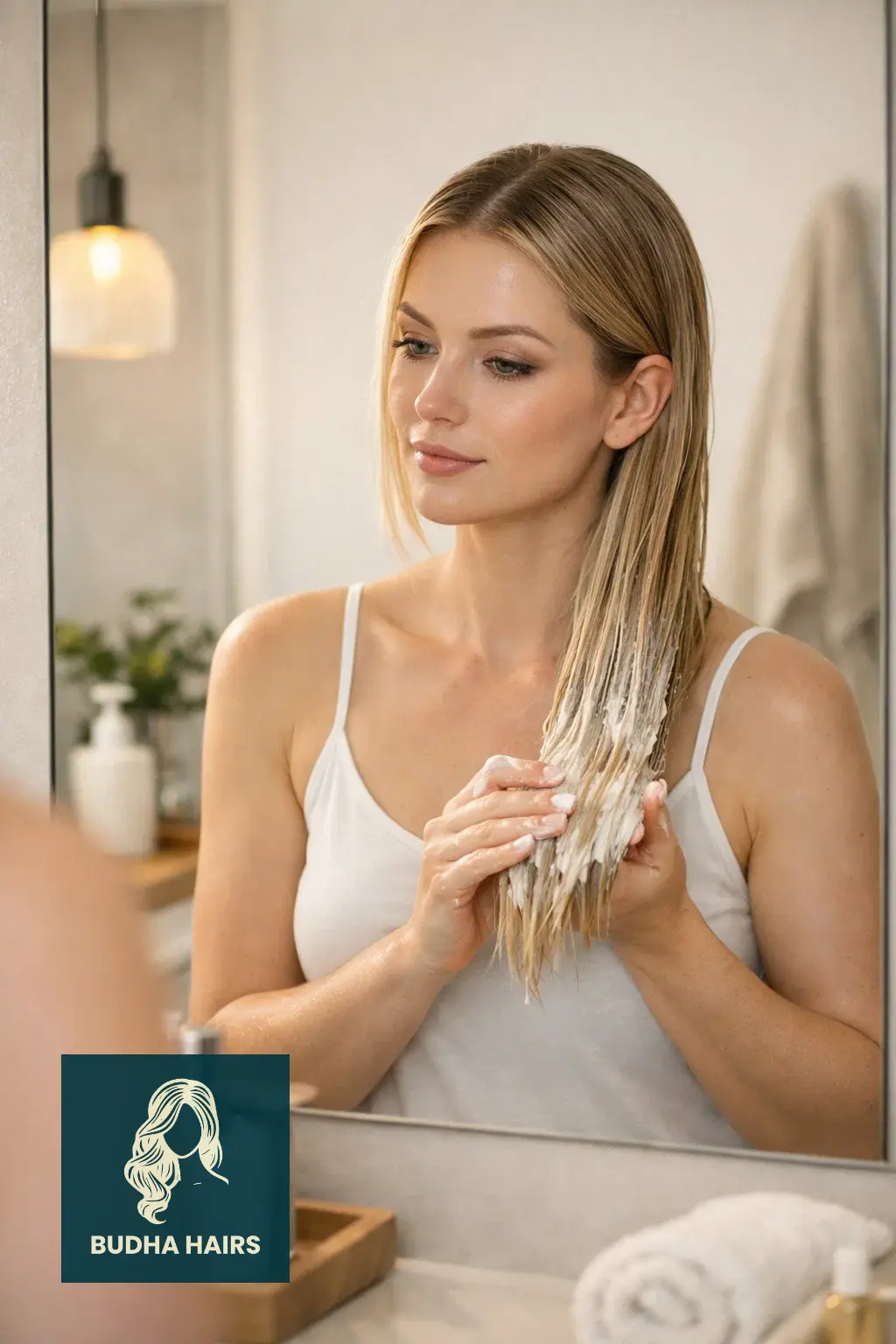
4. Cold Water Rinse
Finish every shower with a cold water rinse. While this is good for shine, it is crucial for thin hair because it closes the sebaceous glands temporarily, slowing down the oil production immediately after washing. It also stiffens the hair shaft slightly, giving it a bit more structural integrity than limp, warm hair.

Adding volume to thin straight hair requires the right combination of products and techniques. Following tips from How to Add Volume to Fine Hair ensures your hair looks thicker and more textured without weighing it down.
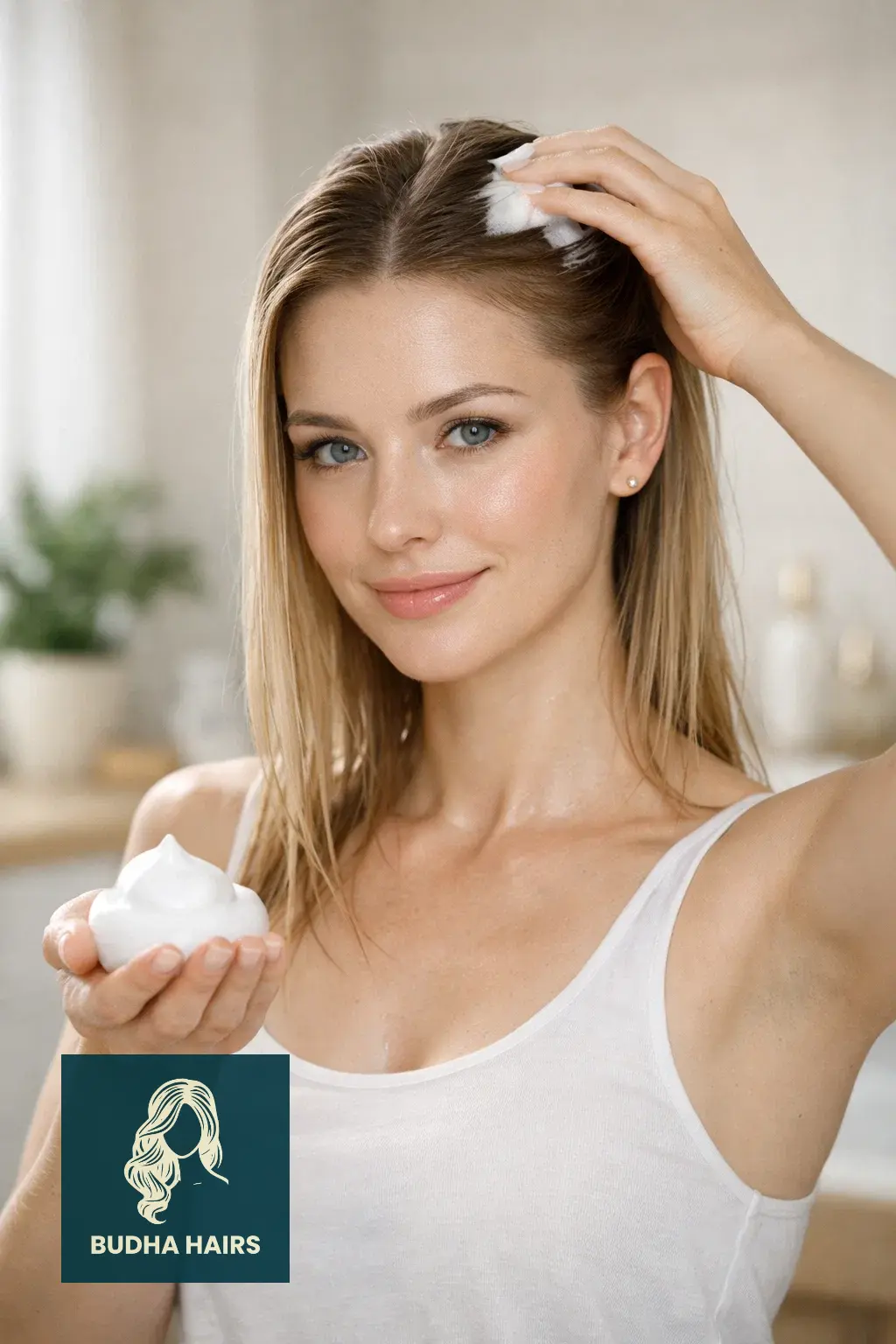
5. Apply Mousse, Not Cream
Styling creams are too heavy for thin hair. Your best friend is mousse or styling foam. Mousse contains alcohol and airy polymers that dry into a microscopic lattice structure around the hair, holding it up like a scaffold. Apply a golf-ball-sized amount to damp roots and comb it through to the ends. It provides hold and volume without the “greasy” weight of a cream.
6. The “Upside Down” Blow Dry
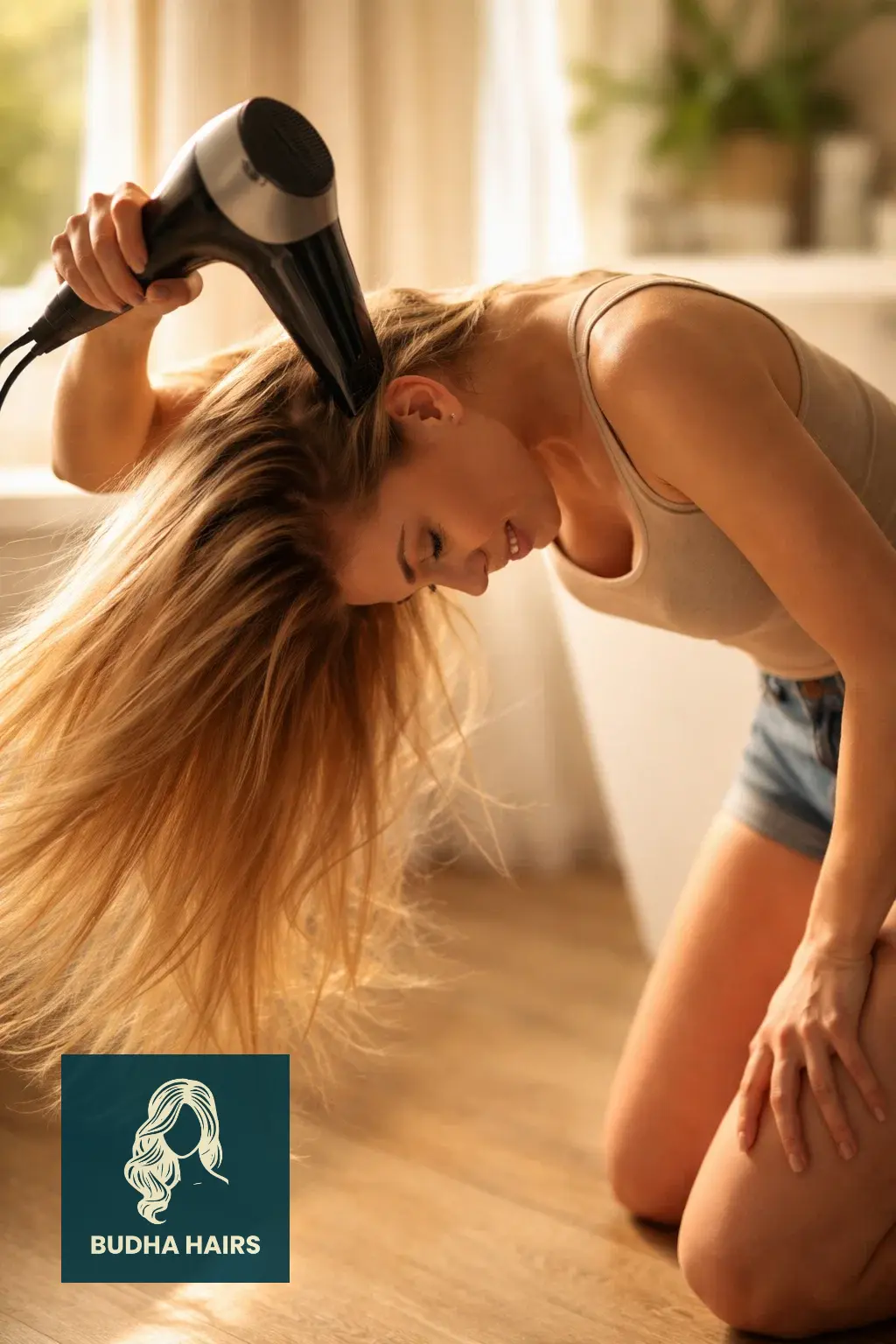
Gravity is your enemy, so use it to your advantage while drying. Flip your head upside down and rough dry your hair until it is about 80% dry. This forces the roots to dry standing up, perpendicular to the scalp. When you flip your head back over, you will have created a natural “lift” at the base that is hard to achieve with a brush alone.
7. Use Velcro Rollers for Cooling
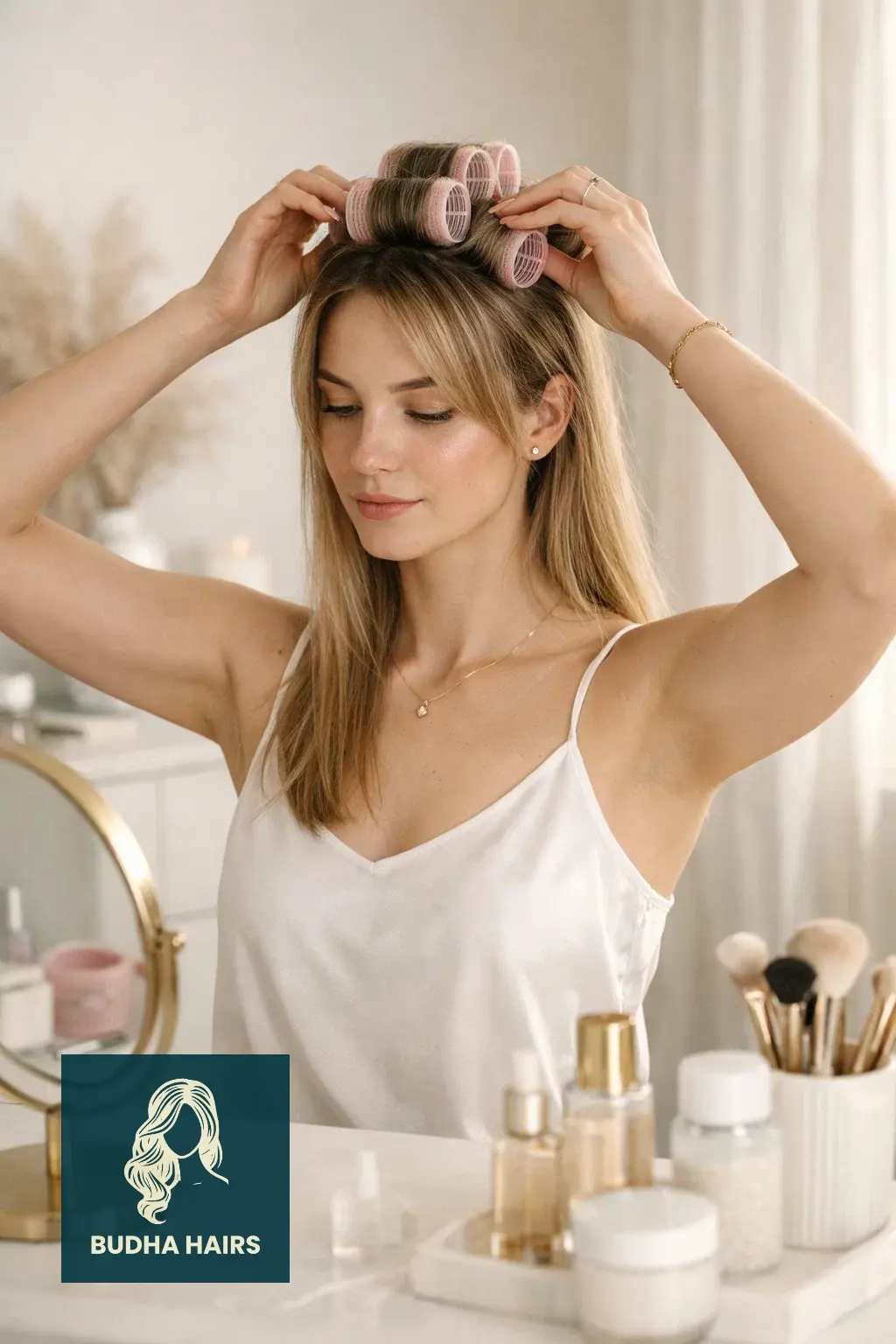
Round brushes require skill, but velcro rollers are foolproof volume tools. While your hair is still warm from the blow dryer, roll the top “mohawk” section of your hair into 3 or 4 large velcro rollers. Let them sit while you do your makeup (about 10-15 minutes). As the hair cools, the bonds set in this lifted shape. Removing them gives you a salon-quality blowout bounce that lasts all day.
8. Dry Shampoo as a Preventative
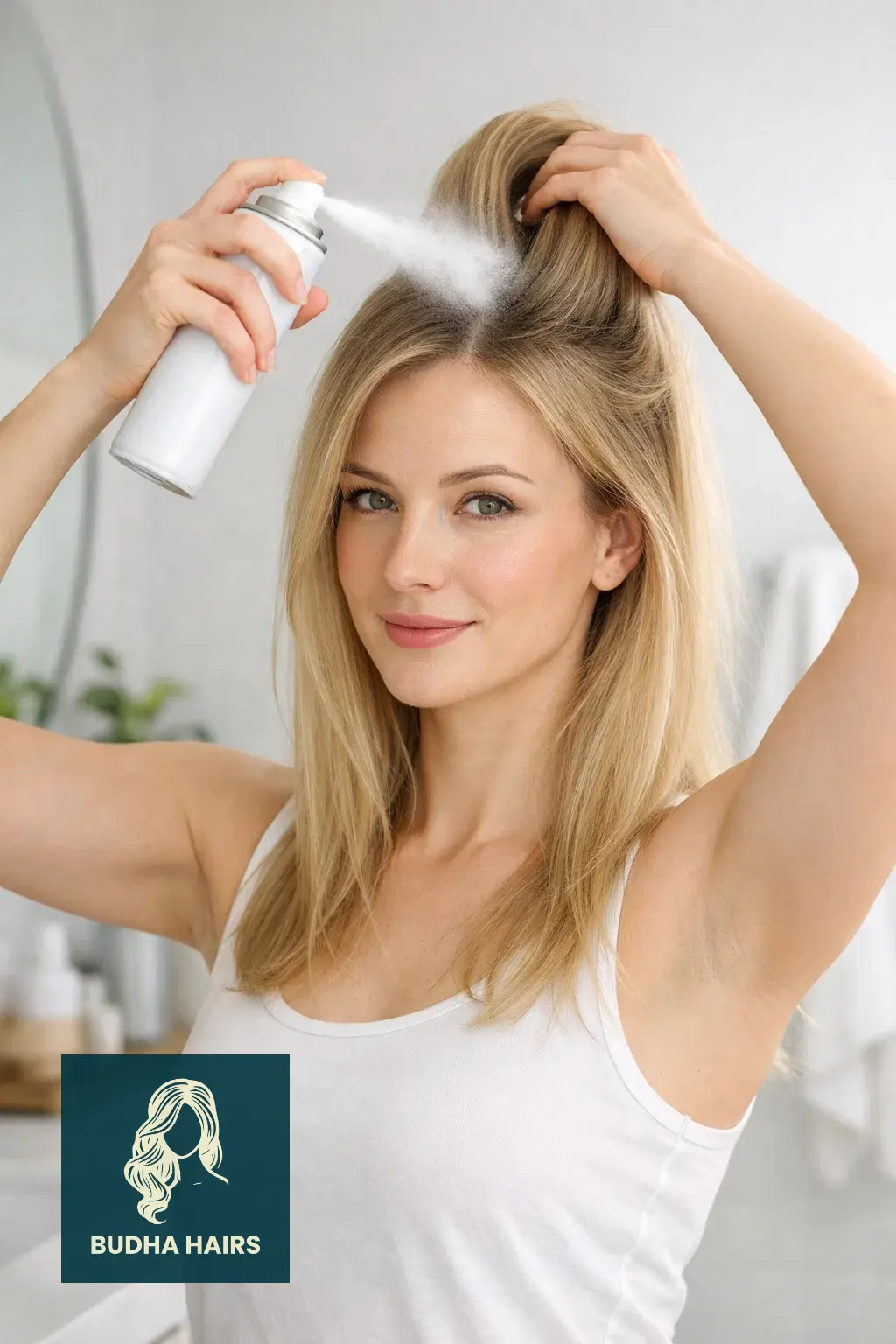
Don’t wait until your hair is dirty to use dry shampoo. Spray a little bit of dry shampoo at your clean roots immediately after blow-drying. The powder acts as a pre-emptive barrier, absorbing oil the moment your scalp produces it. It also adds “grit” or friction to the clean hair, preventing it from sliding flat against your head.
Consistent care also reduces hair fall and breakage. Incorporating strategies from How to Stop Hair from Shedding keeps thin hair strong and minimizes damage while maintaining its natural shine and softness.
9. Blunt Cuts Over Layers
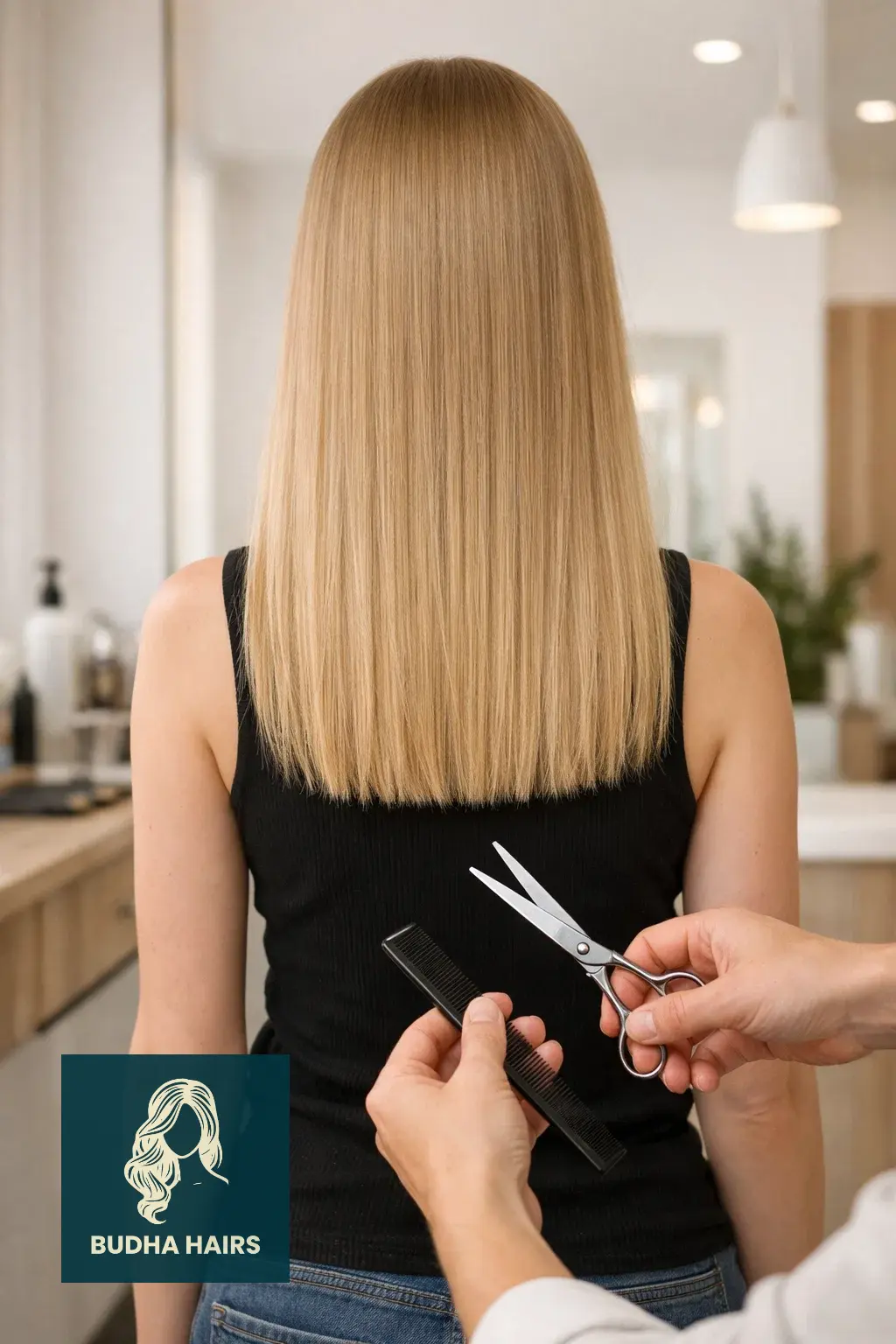
While layers can add movement, too many layers in thin hair can make the bottom look stringy and sparse. The best cut for thin straight hair is often a blunt cut (like a bob or lob) or very long, subtle layers. A blunt perimeter creates a strong weight line that makes the hair appear thicker and denser at the ends, fooling the eye into seeing more volume.
10. Avoid “Touching” Syndrome
People with thin hair often touch it constantly to fluff it up, but the oils from your fingertips transfer to your strands instantly. Every time you touch your roots, you are adding weight and grease. Train yourself to be “hands-off.” If you need to fix your style, use a comb or a pick to lift the roots without transferring skin oils.

Conclusion
The perfect routine for thin, straight hair is all about subtraction: subtracting heavy oils, subtracting silicone residues, and subtracting gravity. By switching to clear shampoos, utilizing the “reverse wash” method, and relying on lightweight mousse and velcro rollers, you can artificially build the structure your hair lacks. Consistency in this low-weight, high-friction routine will result in hair that feels thicker, stays cleaner longer, and defies the flat look.

I’m Budha Styler, a hair enthusiast who loves creating beautiful, confidence-boosting looks that feel true to who you are. I’m passionate about exploring new trends, techniques, and textures, and I enjoy turning that knowledge into simple, inspiring ideas anyone can try. Through my work, I hope to help you express your unique style, feel amazing in your own hair, and discover everyday looks that make you shine.


