
Having hair that is both thin (fine) and curly presents a unique paradox. Your curls crave moisture to fight frizz, but your fine strands are easily crushed by the heavy butters and oils found in most curly hair products. If you treat it like standard curly hair, it ends up greasy and flat; if you treat it like thin straight hair, it ends up dry and frizzy. The secret to mastering this hair type is weightless hydration and mechanical lift. You need to encourage the curl pattern to spring up without plastering it down.
The Science of Fine Curls
This guide breaks down the specific needs of fine curls and provides a ten-step expert routine to achieve defined, voluminous ringlets that defy gravity.
The “Product Weight” Struggle
The diameter of a fine hair strand is microscopic compared to coarse hair. This means it has less structural integrity to support external weight. When you apply a traditional “curl cream” rich in shea butter or castor oil, the product sits on the cuticle and physically drags the curl open, turning a spiral into a lazy wave. For fine curls, the goal is to use products that form a film around the hair (like polymers in mousse) rather than products that soak the hair in heavy lipids.
Density vs. Thickness
It is important to distinguish between having thin strands (fine texture) and low density (few hairs on the head), though many people have both. Fine curls tend to clump together easily; while clumping prevents frizz, it can also make the hair look sparse, exposing the scalp.
The 10-Step Expert Routine
The routine below focuses on separating the curls just enough to create the illusion of fullness while maintaining enough definition to prevent a halo of frizz.
1. Clarify More Often
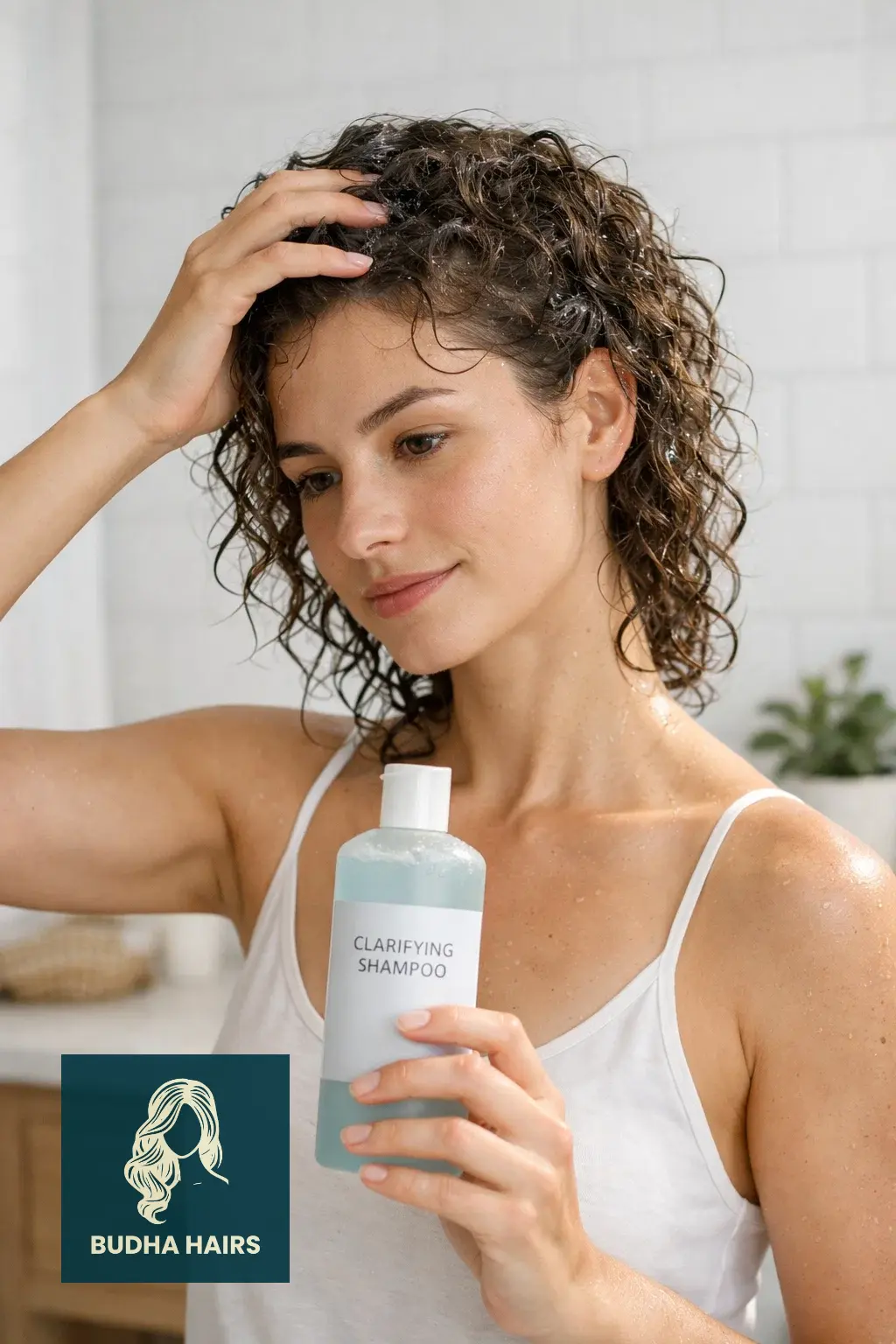
Fine curls are the first to show the signs of buildup. Minerals from hard water and residues from conditioners cling to fine strands, making them look limp and stringy. Use a sulfate-free clarifying shampoo once a week to strip the slate clean. Unlike coarse hair, which might get dry from frequent clarifying, fine hair needs this “reset” to maintain volume at the root.
2. Condition with “Squish to Condish” (But Rinse Fully!)
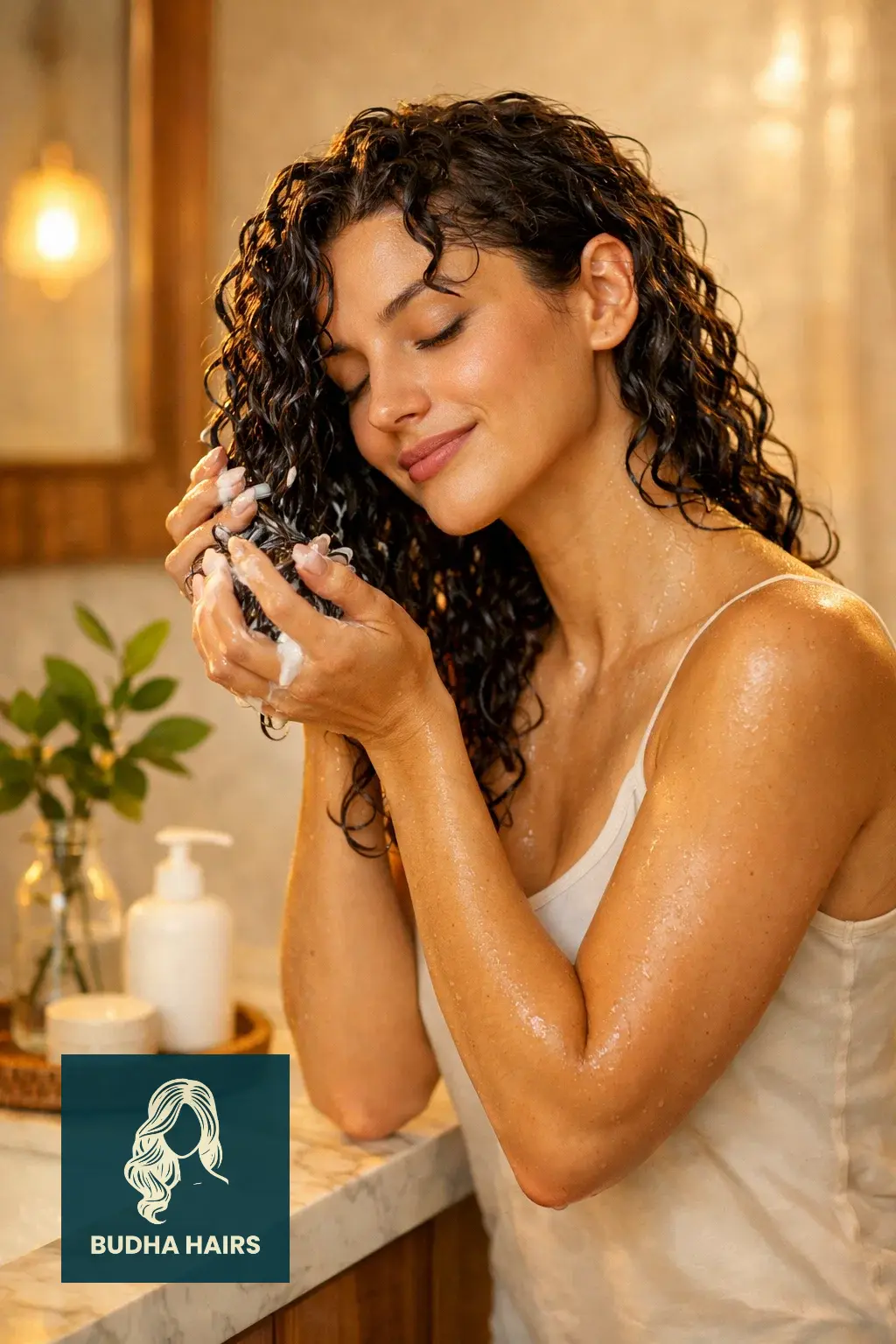
Apply a lightweight, water-based conditioner (look for “volumizing” on the label). Instead of just rinsing it out, use the “Squish to Condish” method: cup your hands with water and scrunch the conditioner into your hair while bending forward. The squishing sound indicates water is being forced into the cuticle. Crucial Step: For fine hair, rinse the conditioner out completely. Do not leave it in, or your curls will be heavy by noon.
3. Swap Creams for Leave-In Sprays
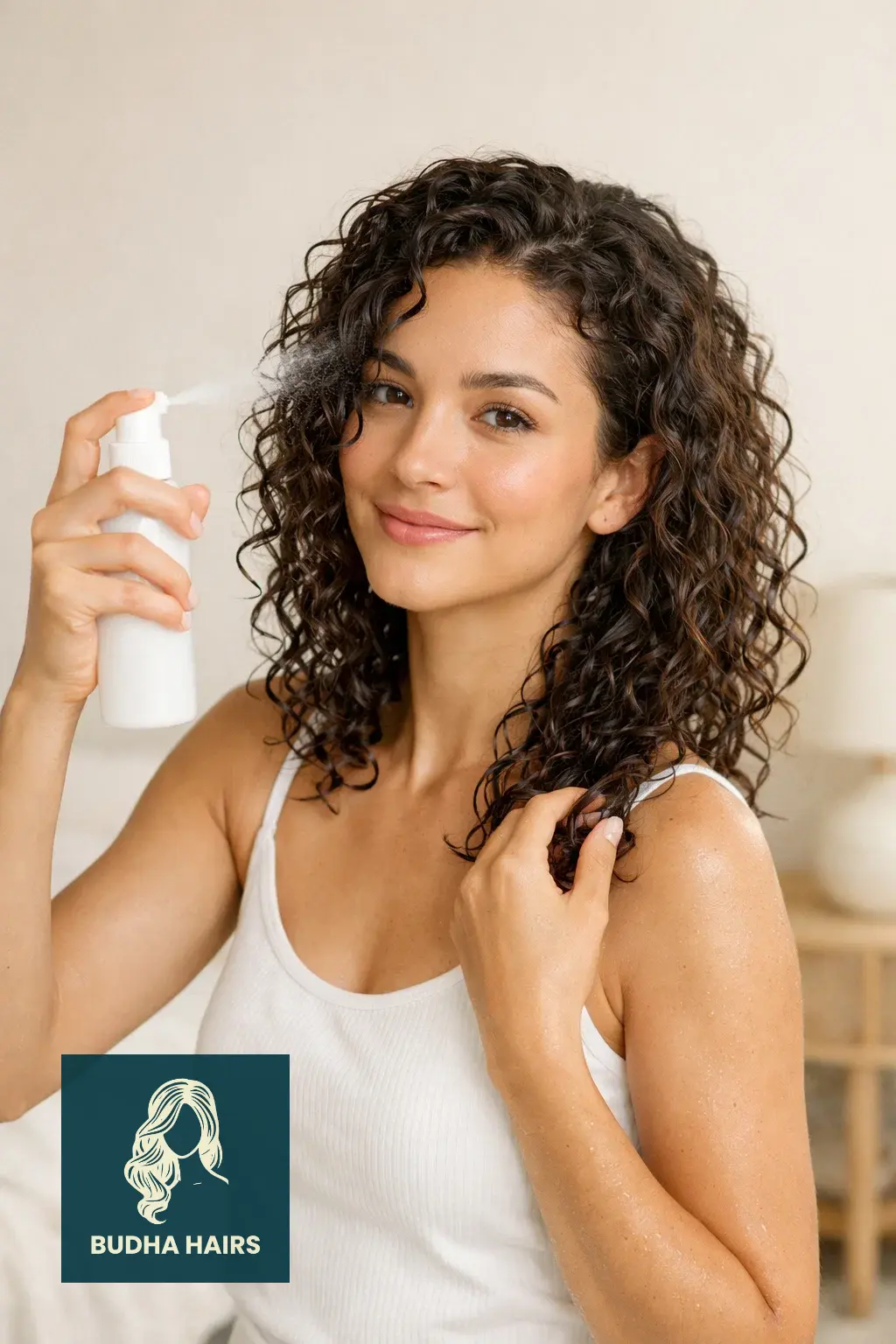
Heavy leave-in creams are the enemy of fine curls. Instead, use a leave-in conditioner spray. A few spritzes provide the necessary slip for detangling and moisture for the ends without adding the waxiness of a cream. If you must use a cream, use a pea-sized amount and emulsify it with water in your hands until it is almost invisible before applying.
4. Mousse is Your Holy Grail
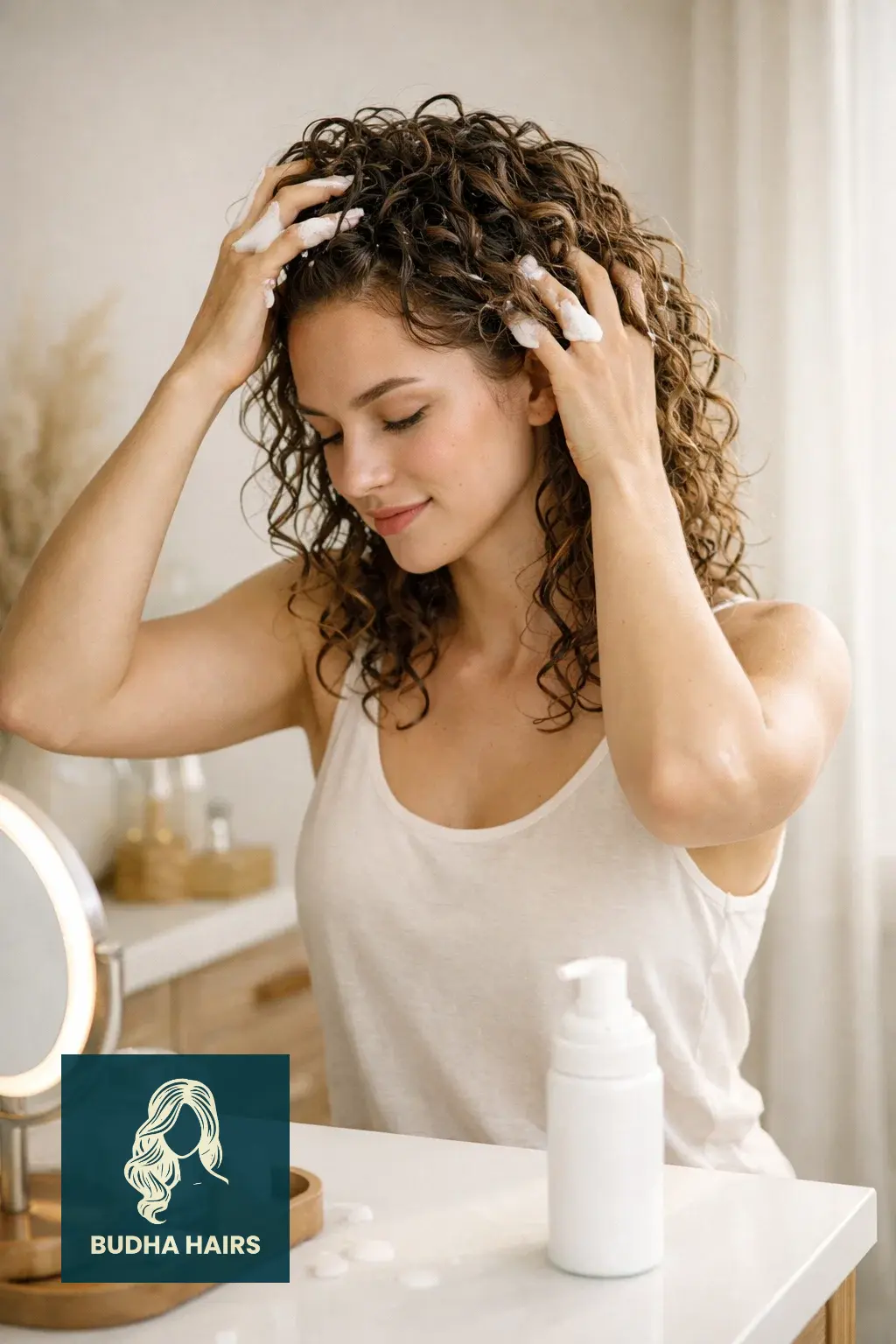
If you buy only one product, make it a volumizing mousse or foam. Unlike gel, which can be heavy and sticky, mousse is airy and contains polymers that dry stiff, holding the curl up away from the scalp. Apply a generous amount of mousse to soaking wet hair using the “glazing” method (smoothing it over the surface) and then scrunch upwards to encourage the spiral.
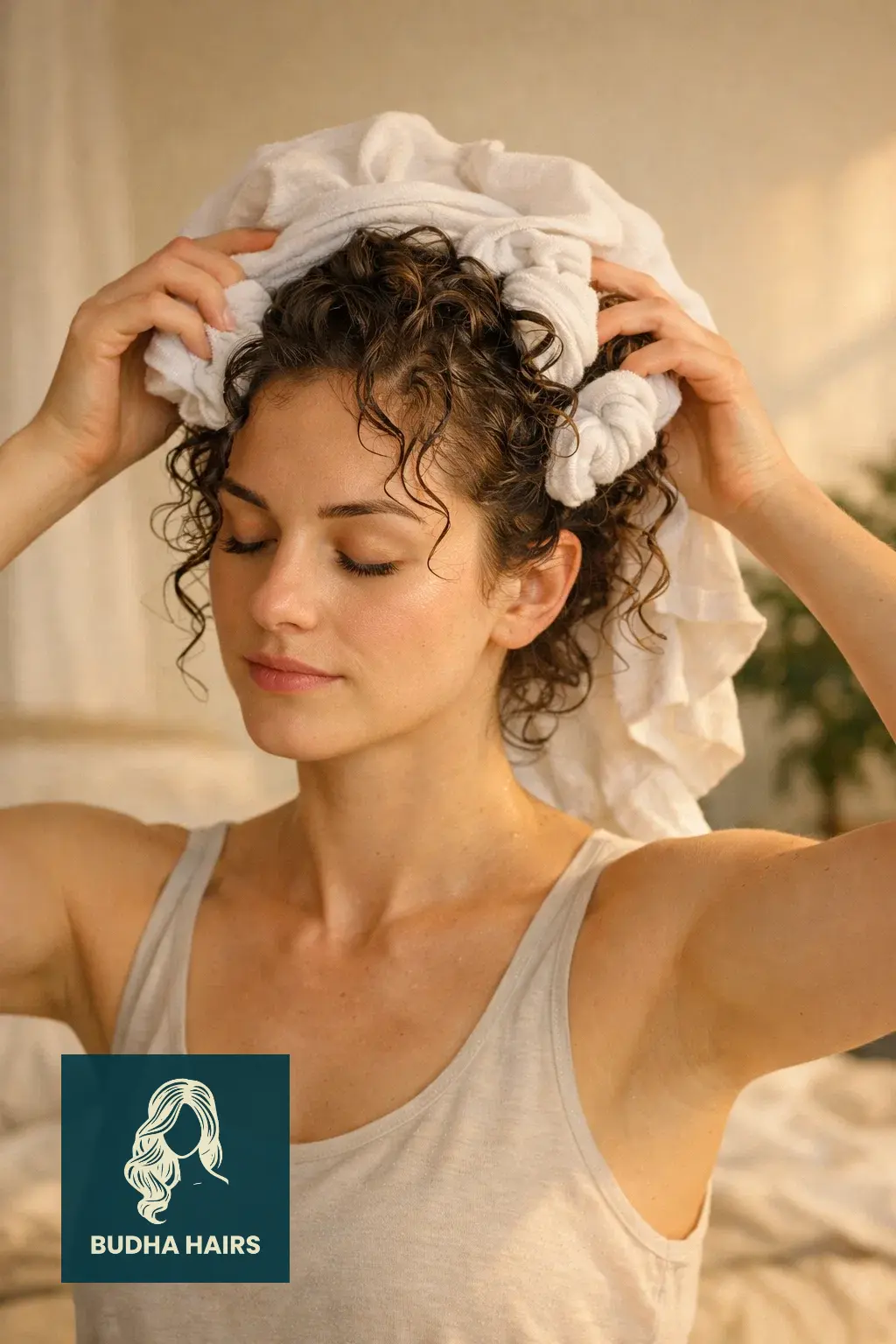
5. The “Micro-Plop” Technique
Regular “plopping” (wrapping hair in a t-shirt for 20 minutes) can sometimes squash fine curls or cause them to stick to the scalp. Instead, try micro-plopping. Use a microfiber towel or an old t-shirt to gently scrunch the excess water out of your hair section by section. push the curls up toward the scalp with the towel, hold for a second, and release. This removes water weight without flattening the roots.
A consistent hair routine for thin curly hair focuses on moisture, gentle handling, and reducing breakage. Addressing common concerns highlighted in Why Is My Hair Shedding More Than Usual? can help strengthen curls and minimize excessive hair fall.
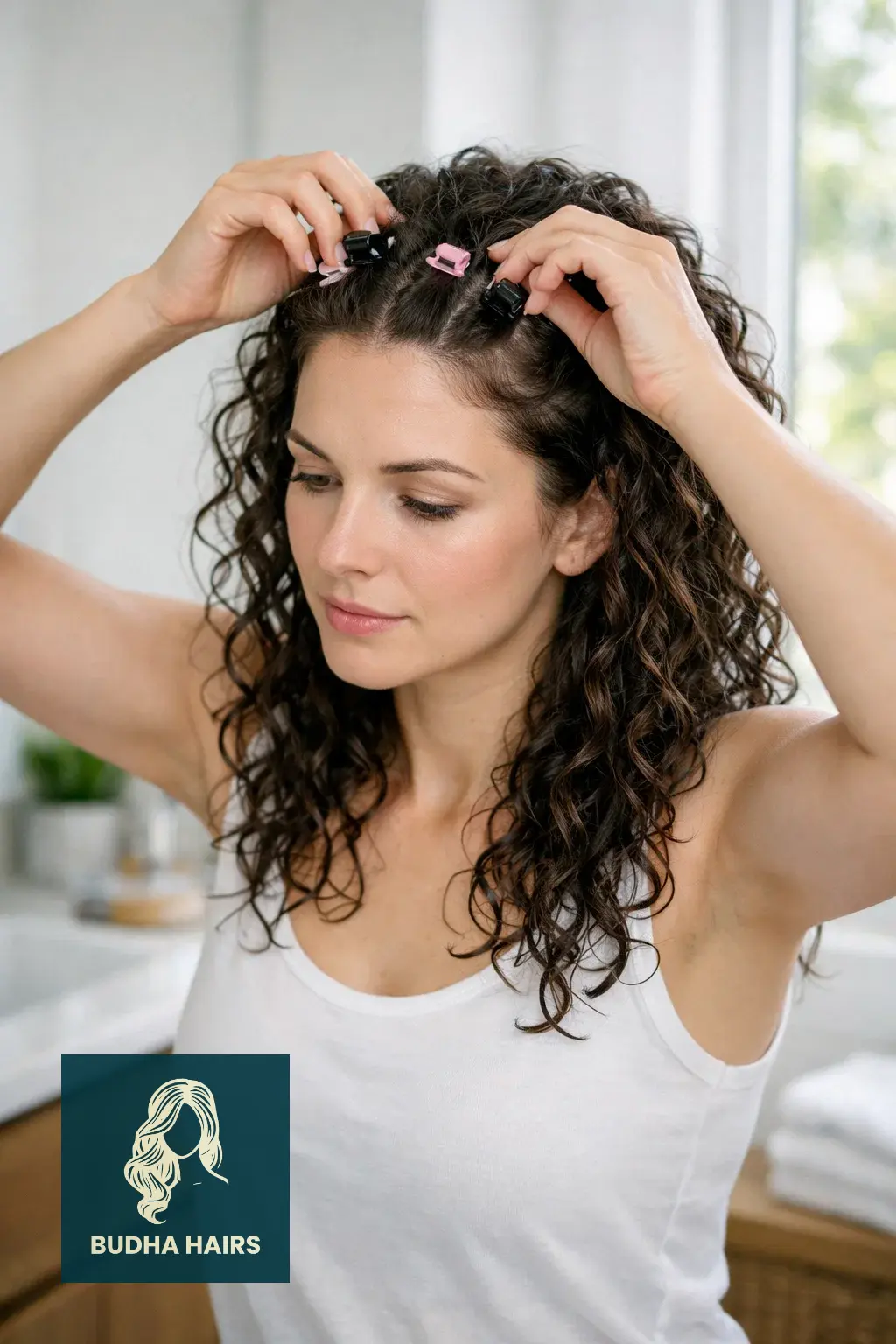
6. Root Clipping for Lift
Since fine hair lacks the strength to stand up on its own while wet, you need to mechanically prop it up. Buy small metal double-prong clips. While your hair is damp, pinch small sections of hair at the root (right at the part line) and clip them so they are standing upright, perpendicular to the scalp. Leave these in while you dry. This tricks the hair into drying with vertical volume.
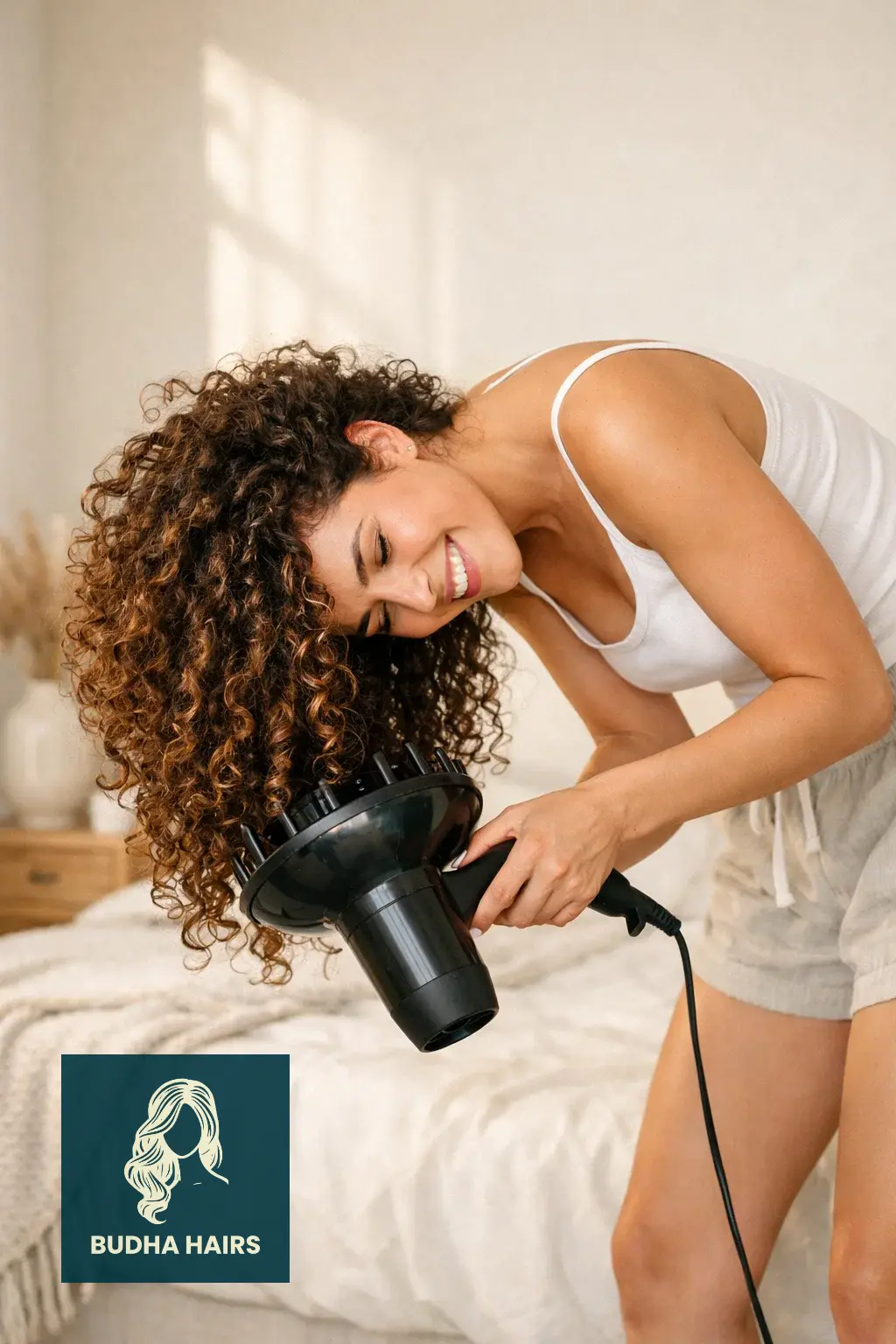
7. Diffuse Upside Down
Air drying takes a long time, and the longer wet hair sits, the more gravity pulls the curl straight. Diffusing is essential for fine curls because it “freezes” the curl pattern in place immediately. Flip your head upside down and cup sections of hair into the diffuser bowl, lifting them toward the scalp. Use low heat and low speed to avoid blowing the fine hairs into a frizzy mess.
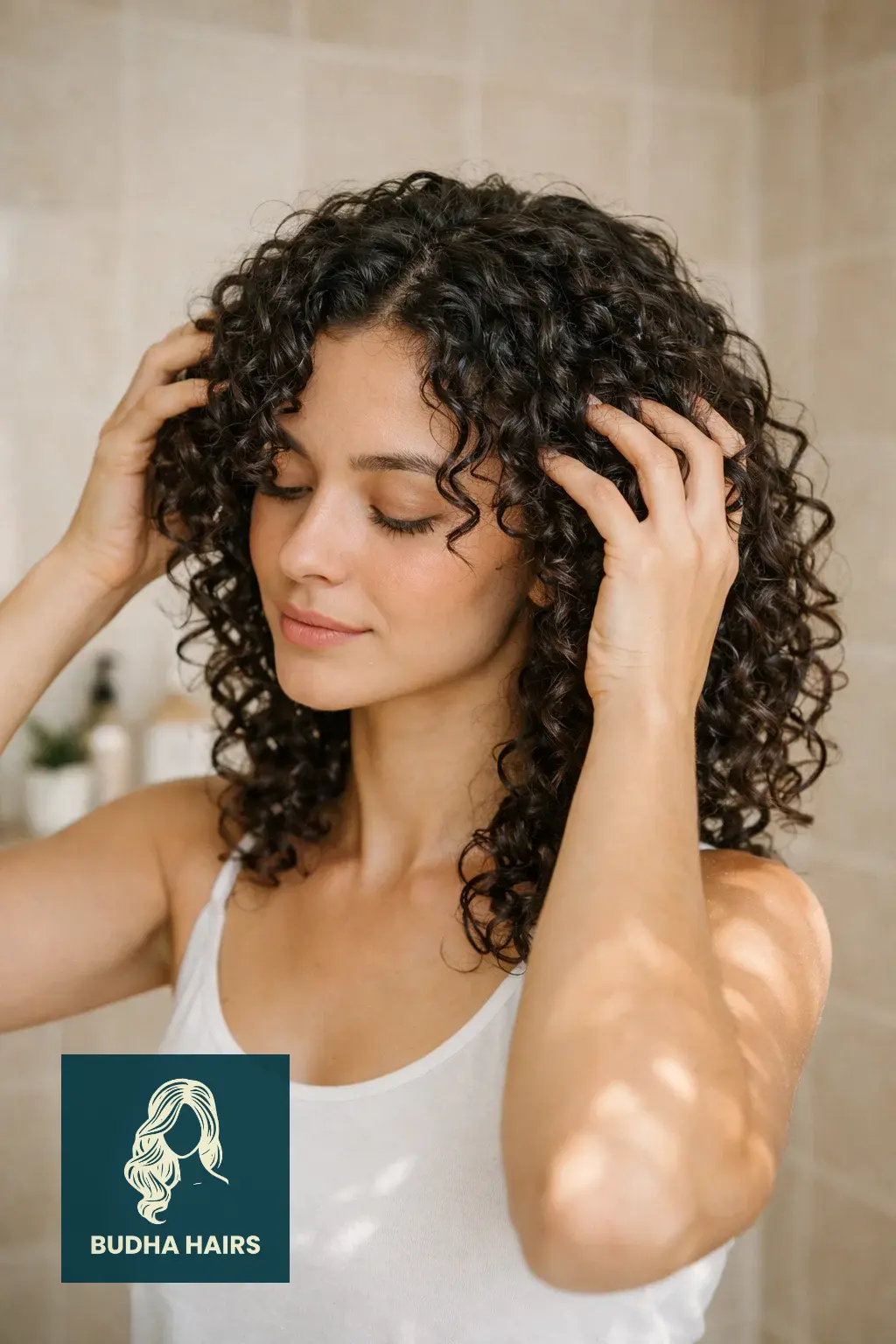
8. “Scrunch Out the Crunch” (SOTC)
If you used mousse or gel, your hair will dry with a hard, stiff cast. This is good! It means the curl is set. Once the hair is 100% dry (never before), apply a tiny drop of lightweight oil (like Argan or Jojoba) to your palms and gently scrunch the hair to break the cast. The stiffness will disappear, leaving behind soft, defined curls.
Nighttime care plays a major role in maintaining thin curly hair. Following best practices from How to Sleep With Fine Hair helps preserve curl definition while preventing tangling and friction.
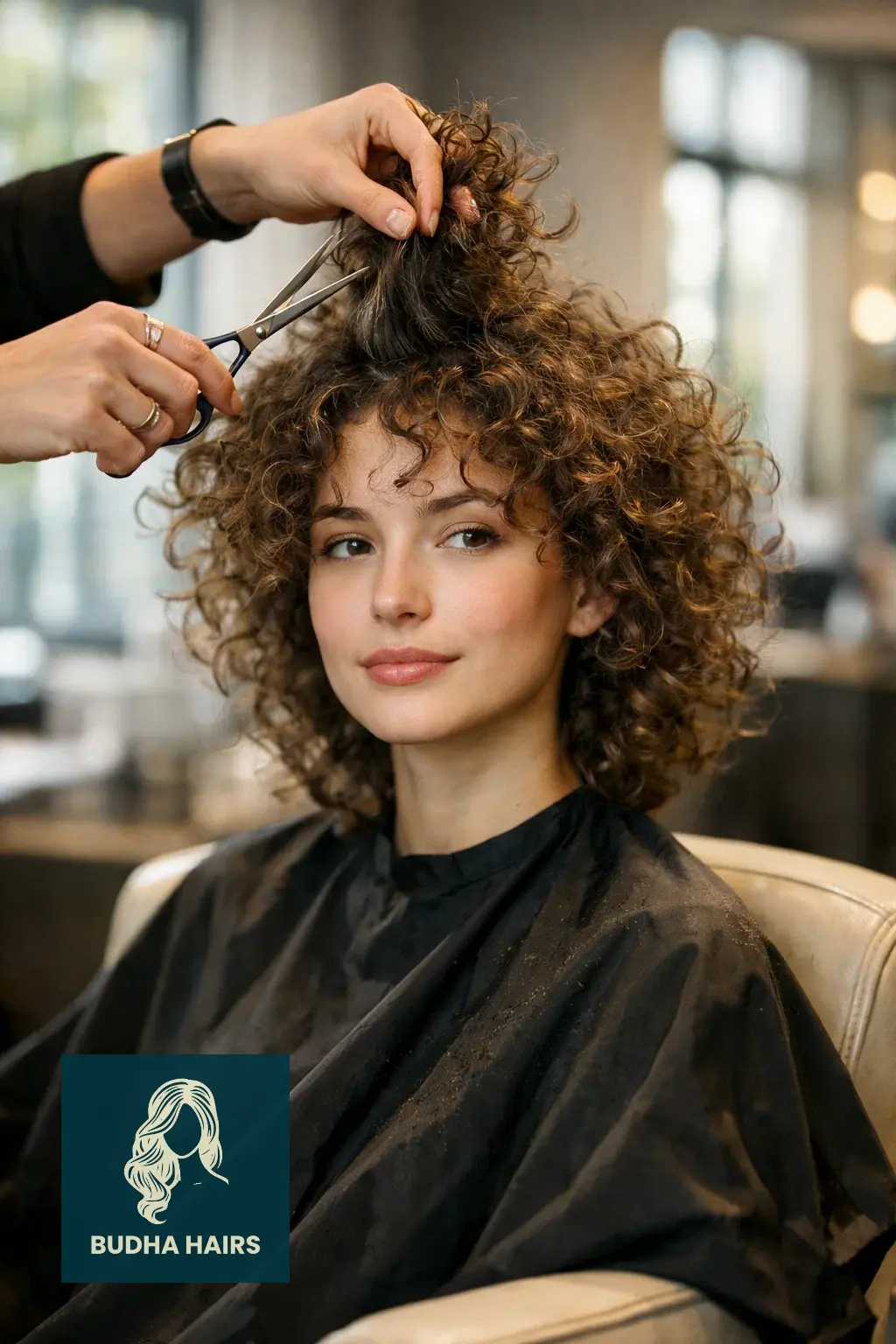
9. Get a Layered Cut
One-length haircuts are detrimental to fine curly hair because the weight of the bottom length pulls the top straight, resulting in a “triangle” shape (flat roots, poofy ends). Ask your stylist for layers. Layers remove weight from the exterior, allowing the shorter pieces on top to spring up and curl tighter. This creates a rounded, fuller shape that looks significantly thicker.
10. Pineapple for Sleep
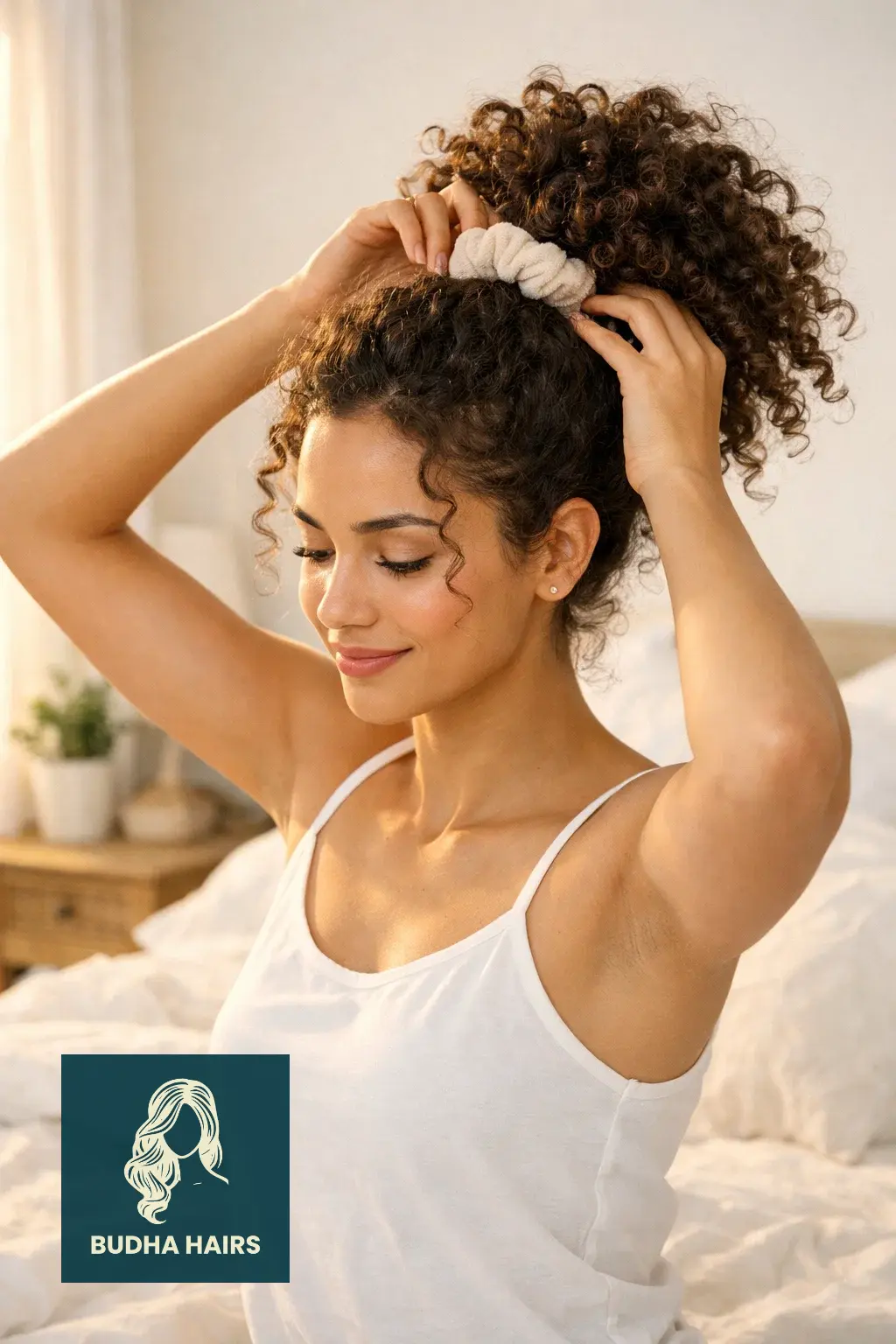
To preserve your volume overnight, use the “Pineapple” method. Flip your head over and gather all your hair into a very high, loose ponytail right at your hairline, securing it with a silk scrunchie. This keeps the curls on top of your head so you aren’t crushing them against the pillow while you sleep. Shake it out in the morning for instant volume.
If thin curly hair has been chemically treated, extra care is essential to maintain both color and strength. Tips from How to Fix Orange Hair After Bleaching at Home support healthier strands and prevent damage that can weaken curls.
Conclusion
The key to a successful routine for thin curly hair is lightness. By swapping heavy butters for airy mousses, rinsing your conditioner fully, and using mechanical tricks like diffusing and root clipping, you can manipulate your fine strands into looking dense and full. Remember, your hair’s natural state is delicate, so treat it with gentle hands and avoid products that promise “intense moisture” or “repair” unless they are specifically formulated for fine textures.

I’m Budha Styler, a hair enthusiast who loves creating beautiful, confidence-boosting looks that feel true to who you are. I’m passionate about exploring new trends, techniques, and textures, and I enjoy turning that knowledge into simple, inspiring ideas anyone can try. Through my work, I hope to help you express your unique style, feel amazing in your own hair, and discover everyday looks that make you shine.