The term “split end” (Trichoptilosis) refers to the longitudinal splitting of the hair shaft, usually caused by thermal, chemical, or mechanical stress that wears away the protective cuticle layer. Once the cuticle is gone, the inner cortex fibers unravel like a frayed rope. The hard truth of trichology is that you cannot permanently “heal” a split end; once the structure is severed, it will never physically fuse back together on its own. However, you can temporarily “glue” the split shut, conceal the damage, and prevent the split from traveling further up the hair shaft. This process allows you to maintain your length and delay a haircut for weeks or even months.
The Science of Temporary Repair
This guide provides 20 expert strategies to seal, conceal, and protect your ends without losing an inch of length.
The “Glue” Mechanism
To fix a split end without scissors, you need products that act as a temporary adhesive. Ingredients like certain silicones (dimethicone), hydrolyzed proteins, and polyelectrolyte complexes carry a positive charge that is attracted to the negatively charged damaged hair. They fill the gaps between the frayed cortex fibers and dry into a clear, flexible film that binds the split together. This lasts until your next shampoo dissolves the bond.
Bond Building Technology
Newer advancements in hair science, such as “bond builders” (like bis-aminopropyl diglycol dimaleate), go deeper. Instead of just gluing the outside, they penetrate the cortex to link broken disulfide bonds. While they cannot reconnect a physically split hair, they significantly strengthen the intact part of the shaft, stopping the “zipper effect” where the split rips upward.
20 Expert Tips to Fix & Conceal Split Ends
Now, let’s explore 20 expert tips to fix and conceal split ends. From proper trimming and nourishing treatments to smart styling hacks, these strategies help keep hair looking smooth, healthy, and polished.
1. Use a Bond-Building Treatment
Invest in a patented bond builder (like Olaplex No. 3 or K18). These are not conditioners; they are chemical repairs. They work on a molecular level to cross-link broken bonds within the hair shaft. Regular use reinforces the structural integrity of the hair, making the split ends less visible and preventing them from snapping off completely.

2. The “Search and Destroy” Method
If you refuse to lose length, you can do a manual “dusting.” Sit under a bright light with sharp hair shears (not kitchen scissors). Twist small sections of hair and snip only the individual split ends that stick out, without cutting the overall length of the section. This removes the damage while keeping your hair exactly the same length.

3. Apply a Silicone Serum
For immediate cosmetic repair, silicones are your best friend. Serums containing Cyclomethicone or Dimethicone act as a literal glue. Apply a pea-sized amount to dry ends. The silicone wraps around the frayed fibers and squeezes them together, creating a smooth, sealed appearance that reflects light and hides the white “dots” of breakage.

Learning how to fix split ends without cutting focuses on strengthening and sealing damaged strands. Techniques from Tips for Detangling Curly Hair help prevent further breakage while keeping hair smooth and manageable.
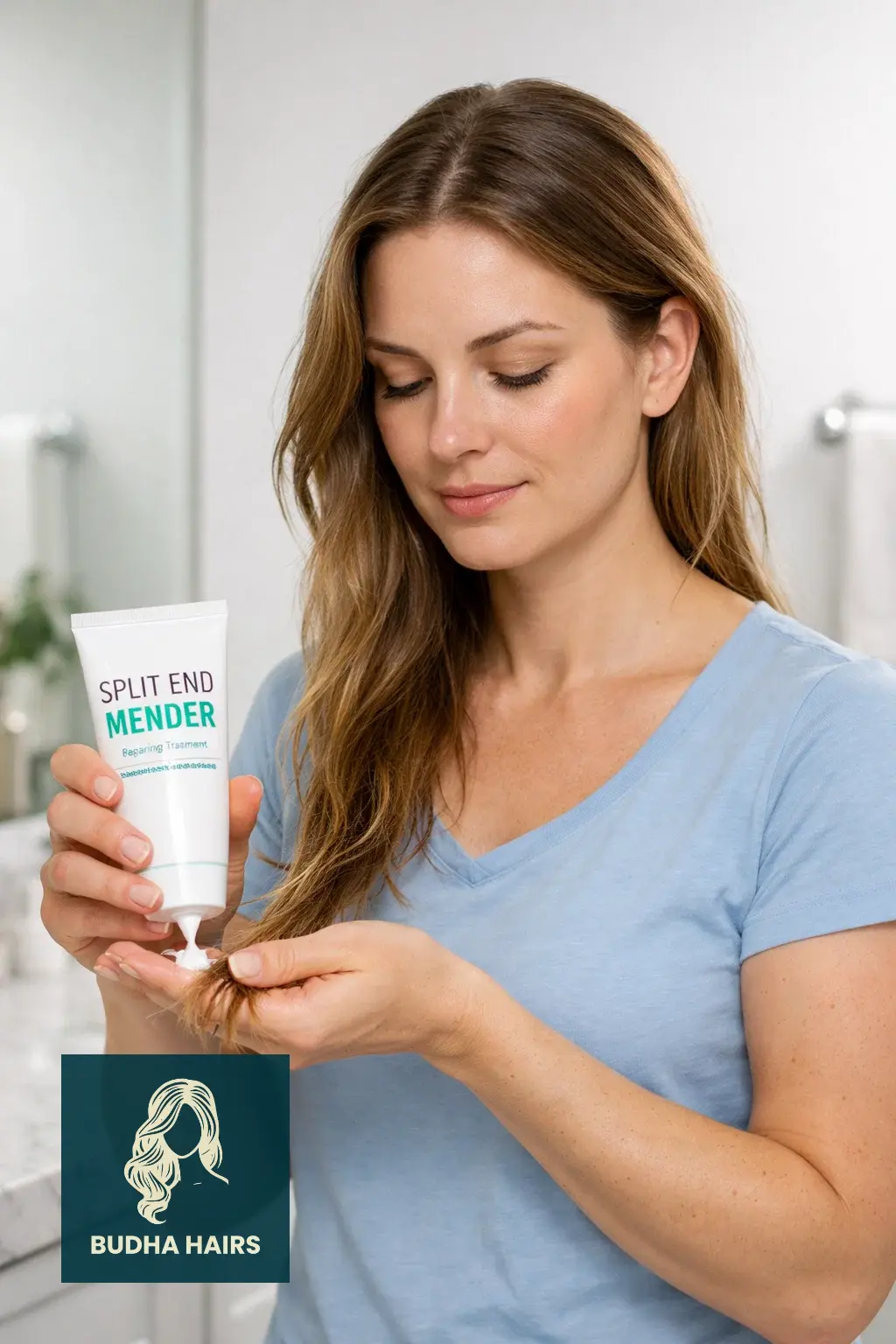
4. Try a “Split End Mender” Product
Many brands sell specific “Split End Mender” lotions. These usually contain a polymer called PEC (Polyelectrolyte Complex) that shrinks as it dries. When applied to damp hair, it physically pulls the two sides of the split together and locks them shut for one or two washes.
5. Hydrolyzed Protein Masks
Split ends are essentially holes in the hair structure. Hydrolyzed proteins (wheat, keratin, silk) are broken down into small enough molecules to fill these holes. A weekly protein mask patches the damage temporarily, making the hair feel thicker and smoother. Warning: Don’t overuse protein, or hair can become brittle.

6. The “Bagging” Method (Greenhouse Effect)
Coat your ends in a heavy oil or conditioner, put a plastic shower cap over just the ends (or your whole head), and secure it. Leave it overnight. The body heat creates a steam room effect, forcing moisture deep into the dried-out ends. This intense hydration plumps the hair shaft, making splits less obvious.

7. Coconut Oil Pre-Wash
Coconut oil is one of the few oils that penetrates the hair shaft. Apply it to your ends 30 minutes before showering. This prevents the shampoo from stripping the natural lipids from your already damaged ends, keeping them hydrated and less likely to fray further during the washing process.

8. Use a Boar Bristle Brush
A natural boar bristle brush carries sebum (oil) from your scalp down to your dry ends. Sebum is nature’s best split end sealer. By brushing gently from root to tip, you coat the damaged ends in protective oil, smoothing the cuticle down naturally.

9. Switch to a Microfiber Towel
Rubbing wet hair with a cotton towel causes friction that rips the cuticle further. Switch to a microfiber towel or an old cotton t-shirt. Gently squeeze the water out; never rub. Reducing friction prevents the splits from worsening and traveling up the shaft.

Split ends can be worsened by an unbalanced scalp. Incorporating Natural Remedies for Oily Scalp restores scalp health, reducing stress on the hair and promoting stronger, healthier strands.
10. Sleep on Silk
Cotton pillowcases act like sandpaper on damaged ends. Switching to a silk or satin pillowcase allows the hair to glide without resistance. This prevents the mechanical damage that rips split ends further apart while you toss and turn at night.

11. Avoid Heat on the Ends
When styling, stop your flat iron or curling wand two inches from the bottom. The ends are the oldest and most fragile part of your hair. They don’t need to be subjected to 400°F heat. Leaving them natural (or smoothing them with serum instead of heat) preserves what little structure they have left.

12. The “Cool Shot” Seal
After blow-drying, use the cool shot button on your dryer to blast your ends with cold air. Heat opens the cuticle; cold closes it. Sealing the cuticle with cold air helps the split ends lay flat and smooth rather than flying away.

13. Papaya Mask (Enzymatic Repair)
Papaya is rich in enzymes and amino acids. Mashing a ripe papaya and mixing it with yogurt creates a mask that helps remove dead cells and protein buildup while nourishing the hair shaft. It essentially “exfoliates” and hydrates the rough cuticle layer.

Long-term hair repair also requires protecting against thinning. Applying strategies from How to Stop Thinning Hair in Women strengthens fragile areas, preventing further damage and maintaining overall hair density.
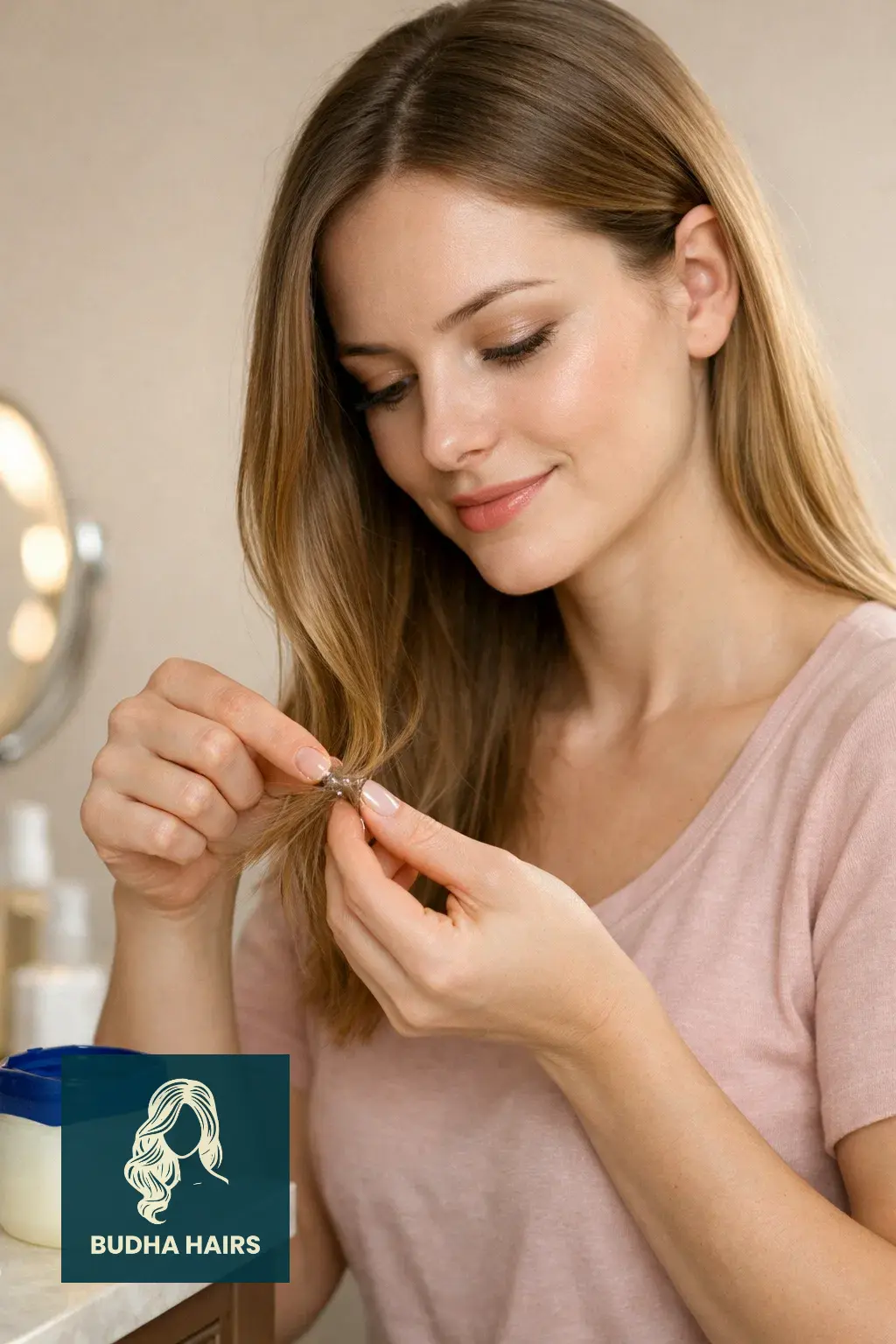
14. Vaseline (Petroleum Jelly) Barrier
In extreme cases, a tiny dab of Vaseline can be used on the very tips of the hair to glue splits together. It is heavy and occlusive, so use it sparingly. It acts as a waterproof seal that locks moisture in and keeps the split from unraveling, though it can be greasy if overused.
15. Beeswax Balms
Products containing beeswax are excellent for sealing ends because wax is solid at room temperature. It physically binds the fibers together and holds them there. Use a dedicated hair balm or pomade on the tips to keep them unified and polished.

16. Honey and Olive Oil Treatment
Honey is a humectant (draws moisture) and olive oil is an emollient (softens). Mix them together for a sticky, hydrating mask. The sticky nature of honey helps to temporarily bind the split ends, while the oil softens the crunchiness associated with damage.

17. Avoid Brushing Wet Hair
Wet hair is elastic and snaps easily. If you drag a brush through wet, split ends, you will tear them further up the shaft. Only detangle wet hair if it is coated in slippery conditioner, and use a wide-tooth comb starting from the very bottom.
18. Folic Acid and Biotin
While this won’t fix existing splits, taking supplements ensures the new hair growing in is strong. Folic acid aids in the production of red blood cells that power hair growth. Stronger hair structure from the root means it is less likely to split when it eventually reaches the ends.

19. Clear Henna (Cassia)
Cassia Obovata (often called neutral henna) acts as a glaze that coats the hair shaft, filling in rough spots and adding shine without changing the hair color. It reinforces the cuticle layer, making the hair strand thicker and more resistant to splitting.

20. The “Tuck” Hairstyle
If your ends are looking ragged, the best immediate fix is to hide them. Wear your hair in a bun, a French twist, or a “tucked” style where the ends are protected inside the hair. This not only hides the damage from the world but protects the ends from friction against your clothes and the environment.

Conclusion
While the only permanent cure for a split end is a pair of scissors, you can significantly extend the life of your haircut by using “hair glues” like serums, bond builders, and beeswax balms. By combining chemical sealing methods with mechanical protection—like silk pillowcases and the “Search and Destroy” trimming technique—you can keep your hair looking healthy and polished while preserving your hard-earned length.

I’m Budha Styler, a hair enthusiast who loves creating beautiful, confidence-boosting looks that feel true to who you are. I’m passionate about exploring new trends, techniques, and textures, and I enjoy turning that knowledge into simple, inspiring ideas anyone can try. Through my work, I hope to help you express your unique style, feel amazing in your own hair, and discover everyday looks that make you shine.