Dry Scalp During Winter is a pervasive issue that affects countless individuals as soon as the temperature plummets and the air turns crisp. I often hear from my readers who notice that the moment the heating goes on, their heads begin to itch, flake, and feel uncomfortably tight. In my experience, this seasonal shift is primarily due to the drastic drop in humidity both outdoors and indoors, which strips the skin of its natural moisture barrier. This double whammy creates an environment where the scalp cannot retain water, leading to that dreaded “winter itch” and unsightly flakes on dark clothing. We know that a dry scalp is not merely a cosmetic nuisance; if left untreated, the constant scratching can damage hair follicles and lead to inflammation or even temporary hair loss. Throughout this comprehensive guide, I will share the most effective strategies and natural treatments we have tested to combat this issue. From changing your shower habits to incorporating specific hydrating ingredients, these tips are designed to restore balance and comfort to your skin during the harshest months of the year.
When we tackle Dry Scalp During Winter, it is essential to distinguish between simple dehydration and actual conditions like dandruff or psoriasis, though winter often exacerbates all of them. I have found that for most people suffering in the colder months, the issue is simply a lack of moisture—your scalp is thirsty and needs a different routine than it does in the humid summer. We believe in a gentle, restorative approach that avoids harsh chemicals which can strip the sensitive scalp further.
Dry Scalp During Winter
In this first section, I will walk you through the top ten proven remedies that act as a healing balm for your head. These aren’t just quick fixes; they are deep treatments intended to repair the skin barrier. By implementing these changes, you can maintain a healthy, hydrated scalp environment that supports robust hair growth, ensuring you stay flake-free and comfortable all season long.
Top 10 Remedies for Dry Scalp
1. Warm Coconut Oil Mask
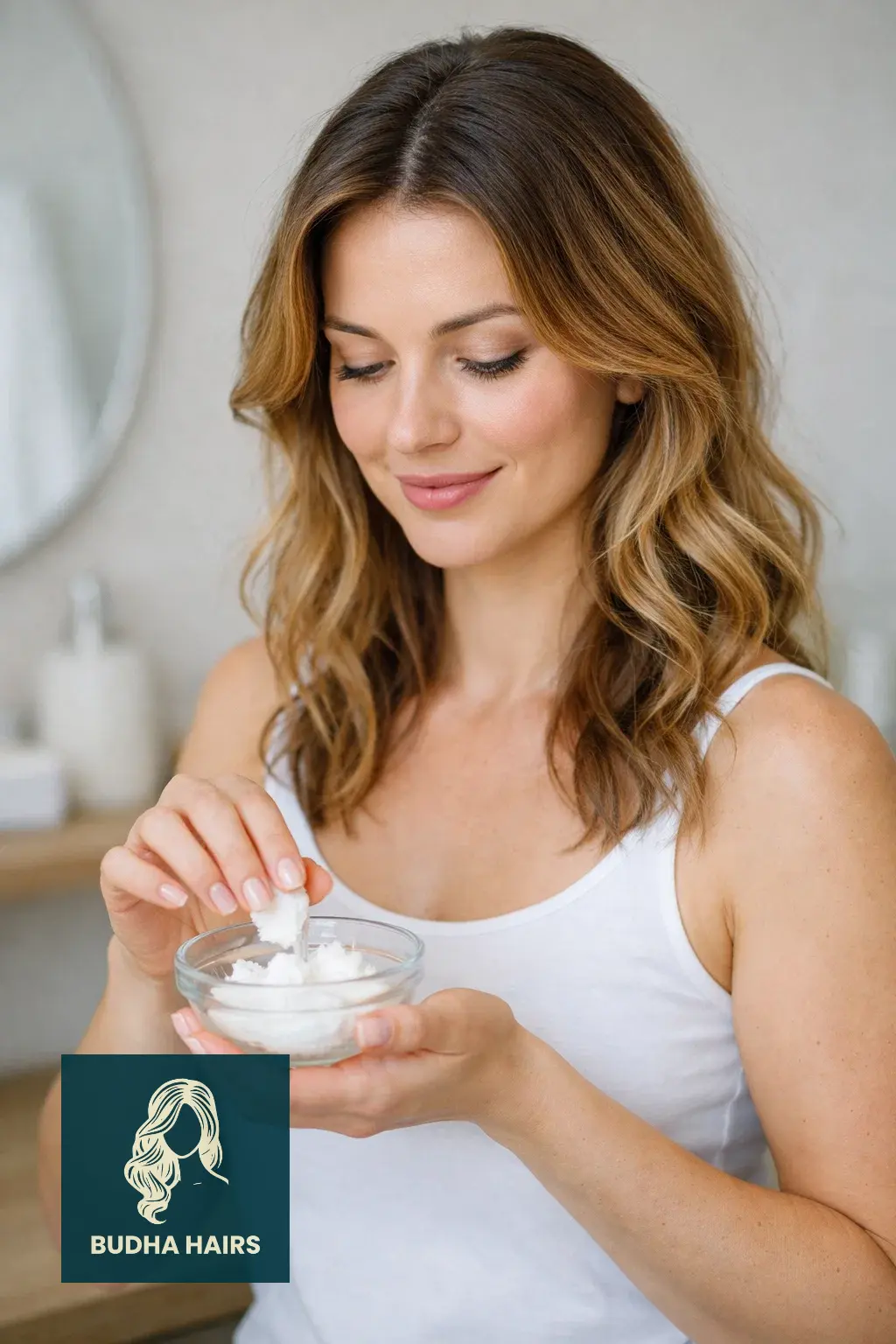
One of the most effective natural treatments is to apply a Warm Coconut Oil Mask directly to the scalp to penetrate deep into the skin layers. I love this remedy because coconut oil has a low molecular weight, allowing it to absorb much better than other oils that just sit on the surface. We recommend gently warming a few tablespoons of virgin coconut oil until it is liquid—be careful not to make it hot—and massaging it into your roots before bed. This provides an intense dose of fatty acids that replenish the lipid barrier lost to winter dryness. In my experience, leaving this mask on overnight (with a towel on your pillow) yields the best results, leaving the scalp feeling supple and significantly less itchy by morning.
Furthermore, coconut oil has natural antifungal and antibacterial properties, which helps if your dryness is complicated by yeast overgrowth or minor infections from scratching. We find that consistent use helps to seal in moisture and prevent the rapid evaporation that happens in dry, heated rooms. When I advise readers on how to treat dry scalp, this is always my first suggestion because it is accessible and safe for almost all hair types. However, if you have fine hair, you may need to shampoo twice the next morning to remove the residue. By using this deep conditioning treatment weekly, you create a protective shield that keeps the harsh winter elements at bay.
2. Tea Tree Oil Solution
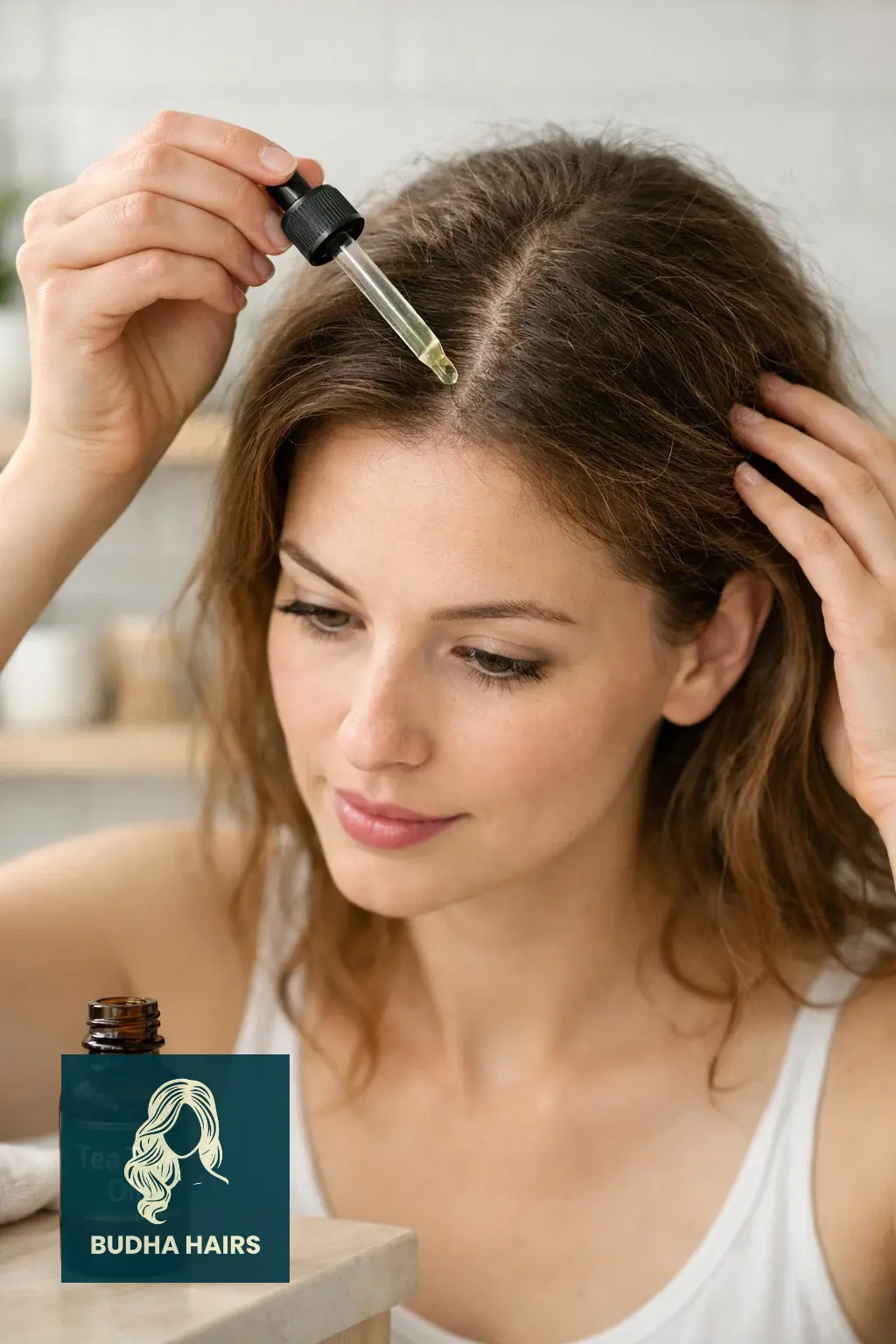
If your dryness comes with persistent itching or inflammation, a Tea Tree Oil Solution is a powerhouse remedy you should try immediately. I have found that tea tree oil is incredibly effective because of its antiseptic and anti-inflammatory properties, which soothe the irritation that often accompanies a dry, flaky scalp. We recommend mixing 5 to 10 drops of high-quality tea tree essential oil into a carrier oil like jojoba or almond oil, rather than applying it undiluted which can burn. Massage this mixture into your scalp and let it sit for 15 minutes before washing. This helps to unclog hair follicles and clear away the dead skin buildup associated with Dry Scalp During Winter.
In addition to oils, you can add tea tree oil directly to your shampoo bottle for a milder, daily maintenance treatment. We find that the cooling “tingle” of the oil provides instant relief from the urge to scratch, which is crucial for preventing broken skin and scabs. When I use this remedy, my scalp feels incredibly clean and refreshed, as if it can finally breathe again. It is particularly beneficial for those dealing with seborrheic dermatitis triggered by winter weather. By incorporating this natural antiseptic, you are not just moisturizing; you are actively healing the micro-environment of your scalp.
3. Aloe Vera Gel Hydration
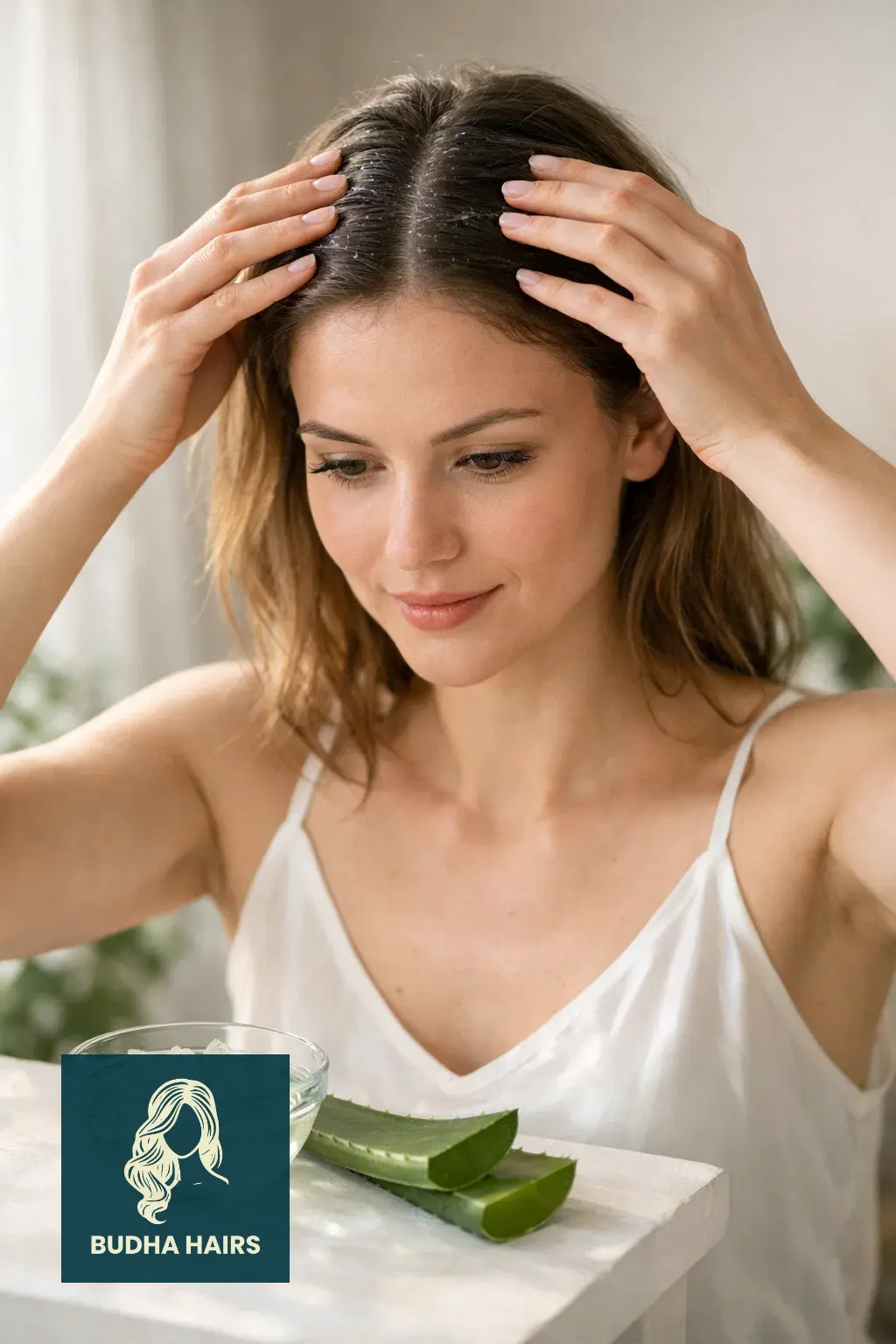
For soothing intense redness and tight skin, nothing beats the power of Aloe Vera Gel Hydration applied directly to the affected areas. I swear by aloe vera because it is packed with water, vitamins A, C, and E, and enzymes that reduce inflammation and promote cell turnover. For Dry Scalp During Winter, aloe acts as a cooling balm that stops the itch-scratch cycle in its tracks while delivering deep hydration without greasiness. We recommend using fresh gel scraped from the leaf if possible, or a 100% pure store-bought gel without added alcohol or dyes. Apply it generously to the scalp, let it sit for 20 minutes, and then rinse with cool water.
In my experience, aloe vera also helps to balance the pH of the scalp, which can be disrupted by harsh winter weather and alkaline soaps. We find it leaves the hair feeling conditioned and light, making it suitable for all hair types, including those with oily roots but dry scalps. I often mix aloe with a little honey—another natural humectant—for a super-hydrating mask that locks moisture into the skin cells. This natural remedy is gentle enough to use multiple times a week if needed. By using aloe vera for soothing, you are utilizing one of nature’s most potent moisturizers to calm the redness and tightness associated with seasonal dryness.
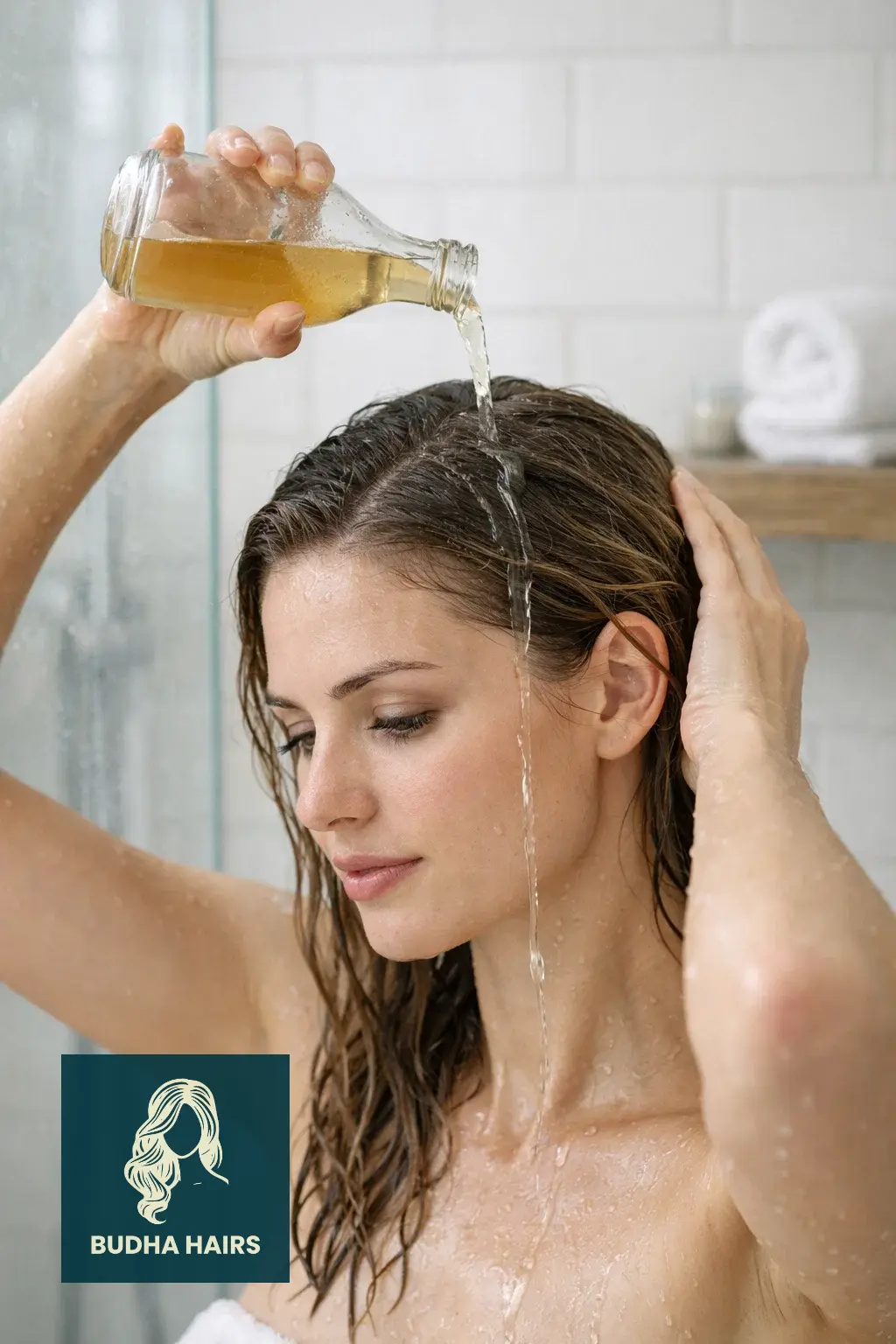
4. Apple Cider Vinegar Rinse
To reset your scalp’s pH balance and remove flakiness, an Apple Cider Vinegar Rinse is a simple yet highly effective remedy. I often explain that dry, itchy skin typically has a higher (more alkaline) pH, which weakens the skin barrier and encourages bacteria; vinegar is acidic and helps restore the natural acidity of the scalp. We recommend mixing one part raw apple cider vinegar with three parts water and pouring it over your head after shampooing. Let it sit for a few minutes to break down dead skin cells and mineral buildup before rinsing thoroughly. This process clarifies the scalp and removes the “crust” that often forms with winter dandruff.
Additionally, apple cider vinegar has antimicrobial properties that fight fungi, which can be a hidden cause of winter itchiness. In my experience, this rinse also makes the hair incredibly shiny and smooth by closing the hair cuticle. We find that the vinegar smell dissipates completely once the hair is dry, so there is no need to worry about the scent. It is a fantastic, low-cost solution for exfoliating the scalp chemically without using harsh scrubs. By using an ACV rinse weekly, you ensure that your scalp remains a clean, balanced environment where dryness struggles to take hold.
5. Mashed Banana And Avocado Mask
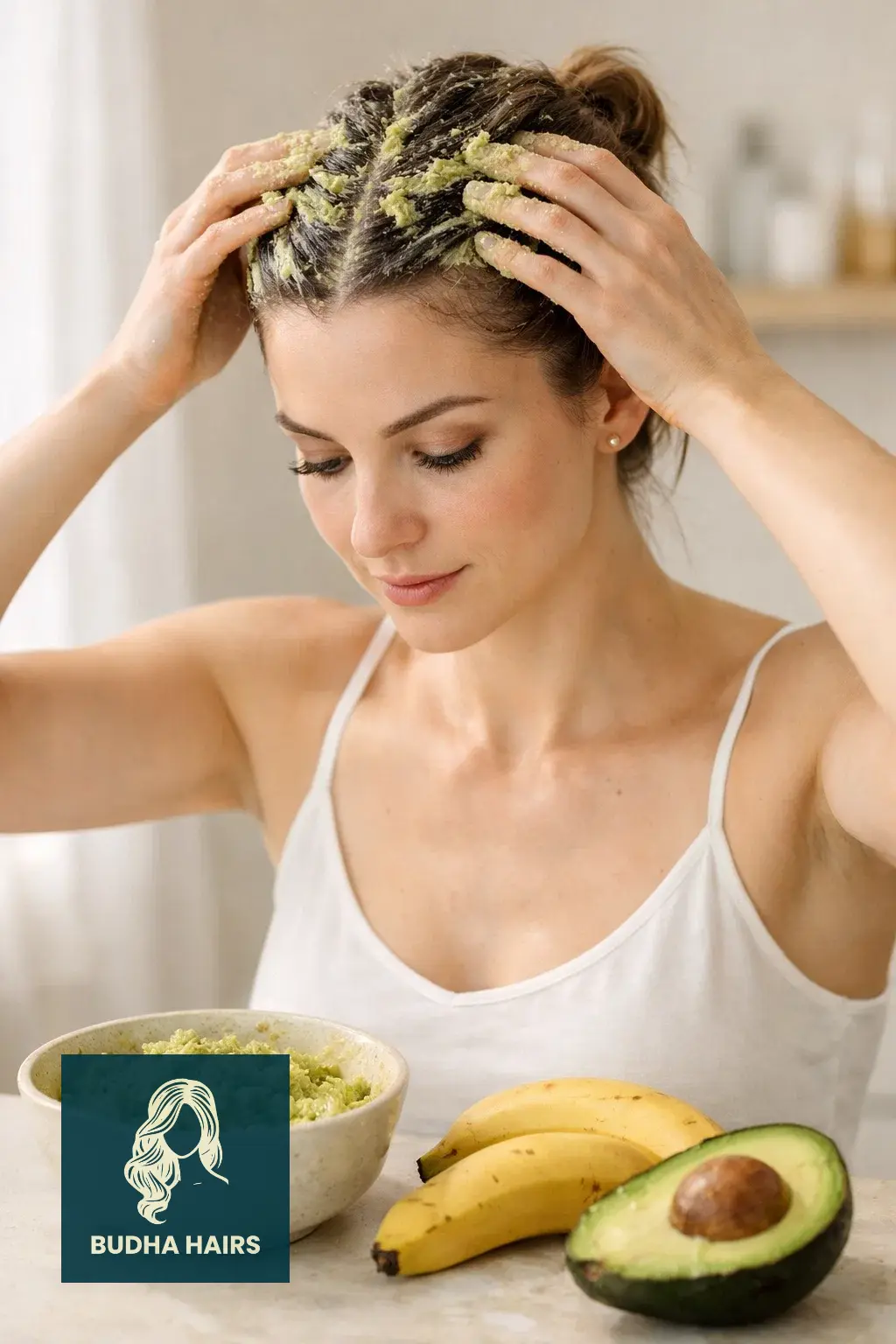
For a nutrient-dense treatment that feels like a smoothie for your head, try a Mashed Banana And Avocado Mask. I love this combination because bananas are rich in potassium and natural oils that improve elasticity, while avocados are loaded with healthy fats and vitamin E that deeply nourish the skin. We find that this remedy is particularly excellent for extremely dry, cracked scalps that need heavy-duty repair. We recommend blending one ripe banana and half an avocado until completely smooth—lumps are hard to wash out—and applying the paste to your scalp for 30 minutes. The mixture acts as a rich emollient that softens rough patches and restores the moisture barrier.
Dealing with a dry scalp during winter requires deep hydration and gentle care to prevent flaking and irritation. Healthy scalp practices can also enhance overall hair health, making it easier to maintain styles like Bob Hairstyles for Older Black Women that rely on sleek, nourished strands.
This mask also helps to strengthen the hair at the root, preventing the breakage that often happens when the scalp is dry and tight. When I use this treatment, I cover my hair with a shower cap to trap the heat, which helps the ingredients penetrate further. We find that rinsing this out requires patience, but the result is a scalp that feels incredibly soft and moisturized. It is a perfect weekend self-care ritual for combating severe scalp dryness. By feeding your skin with these whole-food ingredients, you are providing the essential vitamins and lipids needed to heal winter skin damage.
6. Jojoba Oil Leave-In
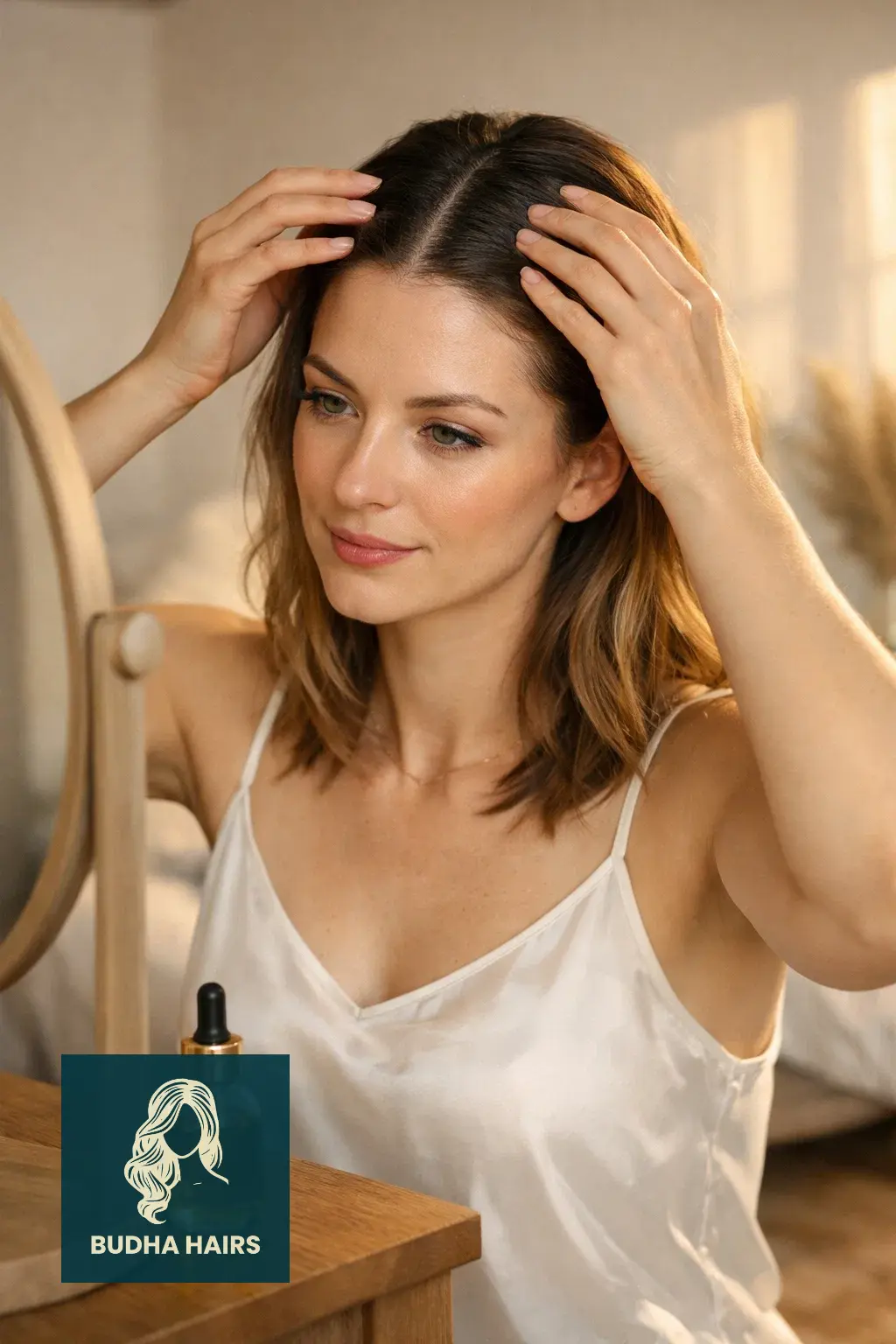
Because it mimics human sebum almost perfectly, a Jojoba Oil Leave-In is one of the best remedies for rebalancing a dry scalp without clogging pores. I often recommend jojoba oil because, unlike heavier oils, it is technically a wax ester that regulates oil production; it tricks the scalp into thinking it has produced enough oil, which is great for both dry and oily scalps. We suggest applying a few drops directly to the itchy or dry patches after washing your hair while the scalp is still damp. This seals in the water from the shower and provides a breathable barrier against the cold, dry air.
In my experience, jojoba oil is light enough to be used daily without making the hair look greasy, especially if you focus only on the skin. We find it absorbs quickly and doesn’t leave a sticky residue on your pillowcase. It is rich in vitamins and minerals like zinc and copper that are essential for skin health. When I advise clients who are prone to acne or sensitive skin, jojoba is always the safest bet. By integrating jojoba oil into your routine, you provide a consistent layer of protection that mimics your body’s natural defenses against the elements.
7. Oatmeal Scalp Scrub
To gently slough away dead skin and soothe irritation, an Oatmeal Scalp Scrub is a fantastic remedy, especially for sensitive skin. I have found that colloidal oatmeal (finely ground oats) contains compounds called avenanthramides which are potent anti-inflammatories and anti-itch agents. We recommend mixing ground oatmeal with brown sugar and a little olive oil to create a paste. Gently massage this into your wet scalp in circular motions to physically lift the flakes associated with Dry Scalp During Winter. The oatmeal soothes the skin while the sugar exfoliates, and the oil moisturizes.
This remedy is far gentler than salt scrubs or chemical exfoliants, making it perfect for scalps that are raw or tender from scratching. We find that it provides immediate relief from the tight sensation that winter brings. When washing it out, ensure you rinse thoroughly to remove all the oat particles. It acts almost like a soothing lotion that you wash off. We love this for a weekly detox that leaves the scalp feeling fresh and calm. By using natural oatmeal, you treat the inflammation and the flakiness simultaneously, providing a holistic solution to winter scalp woes.
8. Yogurt And Honey Treatment
For a probiotic boost that aids hydration, the Yogurt And Honey Treatment is a remedy we highly endorse. I am a fan of using plain Greek yogurt because it contains lactic acid, a gentle alpha-hydroxy acid that dissolves dead skin cells while cleaning the scalp. Honey is a natural humectant, meaning it pulls moisture from the air into your skin. We recommend mixing half a cup of yogurt with a tablespoon of honey and applying it to the scalp for about 20 minutes. This combination exfoliates and hydrates simultaneously, tackling two major causes of dry scalp issues.
In my experience, the probiotics in the yogurt also help to support a healthy scalp microbiome, which is often disrupted in the winter. We find that this mask feels cool and soothing on contact, instantly relieving itchiness. It washes out easily with warm water and leaves the hair feeling soft and manageable. This is a great remedy for those who want to avoid oils that might weigh their hair down. By using this kitchen remedy, you are delivering enzymes and moisture directly to the source of the problem, promoting a balanced and hydrated scalp.
9. Lemon Juice And Egg Yolk
If your dry scalp is also feeling weak, a Lemon Juice And Egg Yolk mixture can revitalize the skin and strengthen the follicles. I often suggest this because egg yolks are rich in protein and fatty acids that condition the scalp, while lemon juice helps to cleanse away dandruff and balance pH. We recommend beating one egg yolk with a few drops of fresh lemon juice and applying it to the scalp. Cover with a shower cap and leave it for 20 minutes. Be sure to rinse with cool water—never hot, or you will cook the egg in your hair! This treatment provides a potent dose of nutrients to combat winter dryness.
We find that the sulfur in the egg yolk also helps to reduce dandruff symptoms. However, lemon juice can be drying if used alone, which is why the fatty yolk is the perfect partner to buffer the acidity. When I use this, I notice my hair looks shinier and my scalp feels tighter and cleaner. It is a traditional remedy that has stood the test of time for a reason. By combining cleansing and conditioning in one step, you address the flakes and the dryness together. This protein-rich mask is a powerful tool in your winter hair care arsenal.
10. Witch Hazel Toner
To calm inflammation and reduce flaking without heavy oils, applying a Witch Hazel Toner is an excellent, lightweight remedy. I love witch hazel because it is a natural astringent that tightens the skin and reduces inflammation, but it is also moisturizing if you choose an alcohol-free version (look for one with aloe or rosewater). We recommend soaking a cotton pad with witch hazel and dabbing it directly onto itchy spots or parting the hair and spraying it onto the scalp. This is perfect for daily relief from Dry Scalp During Winter when you don’t have time to wash your hair.
In my experience, this helps to stabilize the scalp barrier and prevent the bacteria buildup that happens when we sweat under winter hats. We find it particularly useful for “spot treating” the really itchy areas behind the ears or at the nape of the neck. It dries quickly and doesn’t mess up your hairstyle. When I advise clients with braids or protective styles, this is the go-to remedy to keep the scalp fresh between washes. By using witch hazel, you soothe the nerve endings that cause itching, providing instant comfort and helping to heal the compromised skin barrier.
Top 10 Prevention Tips
1. Hydrate From The Inside Out
Topical treatments are essential, but you must Hydrate From The Inside Out to see long-lasting results in your skin health. I always remind my readers that the scalp is skin, and like the rest of your body, it relies on systemic hydration to function correctly. During winter, we often feel less thirsty because we aren’t sweating, but the dry air accelerates water loss through our breath and pores. We recommend aiming for at least 8 glasses of water daily to ensure your body has enough fluid to plump up skin cells and maintain the moisture barrier. Without adequate water intake, the blood flow to the scalp is compromised, leading to dry, brittle hair and a flaky surface.
In addition to water, diet plays a massive role preventing Dry Scalp During Winter. We suggest incorporating foods rich in Omega-3 fatty acids—like salmon, walnuts, and flaxseeds—which help to naturally lubricate the skin from within. I have found that clients who supplement with fish oil or eat a fat-rich diet often report significantly less itching and tightness. Vitamin A and E found in sweet potatoes and avocados are also critical for skin repair. By focusing on proper nutrition and hydration, you treat the root cause of dryness rather than just masking the symptoms, creating a foundation of health that withstands the harsh winter elements.

2. Use A Humidifier At Night
Since indoor heating sucks the moisture right out of the air, to Use A Humidifier At Night is a brilliant lifestyle adjustment. I often explain that central heating systems can drop indoor humidity levels to desert-like conditions (below 30%), which dries out your mucous membranes and skin rapidly while you sleep. By running a humidifier, you add water vapor back into the room, keeping the ambient humidity around the ideal 40-60%. We find that this passive prevention method works wonders for stopping that dreading morning scalp itch. It essentially stops the air from acting like a sponge that pulls moisture out of your head.
Winter dryness can make hair appear dull and lackluster. Following tips from How to Make My Hair Shine can restore luster and softness, keeping your hair looking vibrant even in cold weather.
In my experience, placing the unit on your bedside table ensures you breathe in the moist air and your scalp benefits directly for 8 hours a night. We suggest using distilled water to prevent mineral dust from settling in your room or on your hair. This tip helps not just your scalp, but your face and throat as well. When I use a humidifier consistently through the winter months, I notice my hair feels softer and my scalp feels less tight. It is an investment in your home environment that directly combats the primary external cause of seasonal dryness, giving your skin a fighting chance to retain its natural oils.

3. Lower The Water Temperature
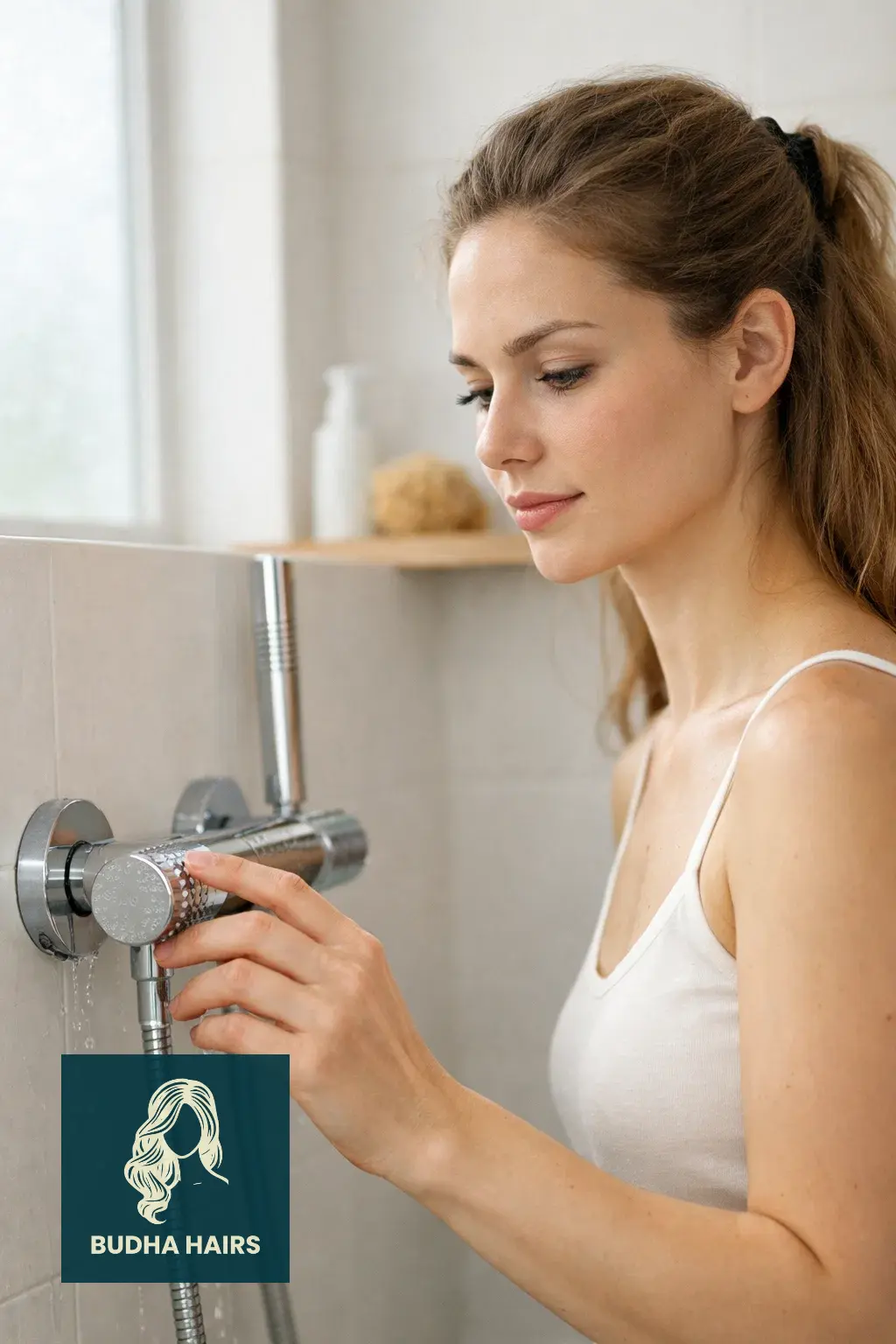
It is incredibly tempting to take steaming hot showers when it’s freezing outside, but you must Lower The Water Temperature to save your scalp. I have found that hot water is one of the biggest culprits behind dry, itchy skin because it melts away the sebum (natural oils) that your body produces to protect itself. When you strip this lipid layer, moisture evaporates rapidly from the skin, leaving your scalp vulnerable, tight, and flaky. We recommend washing your hair with lukewarm water—water that feels comfortable but not hot to the touch. This simple adjustment preserves the natural oils that are critical for fighting Dry Scalp During Winter.
In addition to preserving oils, lukewarm water prevents inflammation and redness. We often see that scalps exposed to scalding water become sensitized, making them more prone to irritation from wool hats or styling products. When I shower, I keep the water warm for my body but turn the dial down specifically when wetting and rinsing my hair. It takes some getting used to, but the difference in skin comfort is undeniable. We find that readers who make this switch report significantly less itching immediately after toweling off. By respecting your scalp’s need for cooler water, you prevent the thermal damage that leads to that uncomfortable, tight winter skin.
4. Wear Silk Lined Winter Hats
Physical protection is crucial for warmth, but you should Wear Silk Lined Winter Hats to prevent friction and moisture wicking. I love wool and cotton beanies for their insulation, but these materials are highly absorbent; they act like a towel, sucking the oil right off your scalp and causing friction that leads to breakage. We recommend wearing a satin bonnet underneath your beanie or investing in winter hats that come pre-lined with silk or satin. This creates a smooth barrier that keeps your head warm without compromising your scalp hydration or causing static electricity.
In my experience, this simple barrier prevents the “itchy hat head” feeling that plagues many of us during the commute. We find that silk is breathable yet protective, maintaining a stable temperature for your scalp so it doesn’t overheat and sweat—which can then freeze and cause irritation. It also protects your hairstyle, meaning you have to manipulate your hair less later. When I wear unlined wool, my forehead and scalp itch almost immediately; the silk lining solves this instantly. It is a stylish and functional way to combat winter hair damage. By protecting your scalp from absorbent fabrics, you maintain the moisture levels you worked so hard to build up.

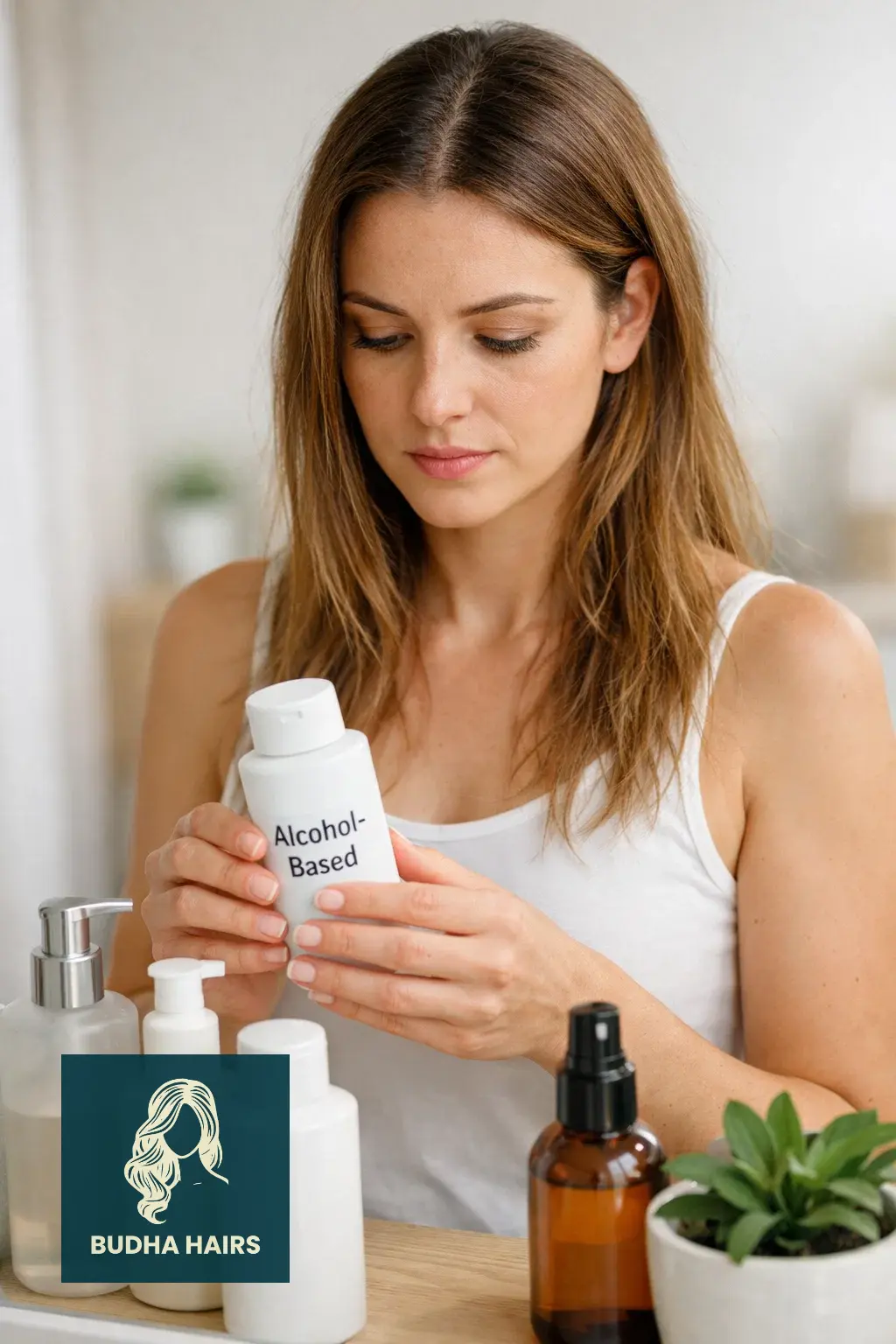
5. Avoid Alcohol Based Hair Products
A hidden enemy in your bathroom cabinet might be styling aids, so you must Avoid Alcohol Based Hair Products like strong-hold gels and hairsprays. I often point out that “bad” alcohols (like denatured alcohol, ethanol, or isopropyl alcohol) are added to products to make them dry quickly, but they do so by evaporating moisture from your hair and scalp. In the context of Dry Scalp During Winter, using these products is like throwing gasoline on a fire. They strip the protective lipid layer instantly, leading to severe tightness and flaking. We recommend switching to alcohol-free gels, mousses, or creams that use natural gums or oils for hold.
We suggest reading ingredient labels carefully; look for “fatty alcohols” like cetyl or stearyl alcohol, which are actually moisturizing and safe to use. When I advise clients, I tell them to give their scalp a break from heavy styling during the coldest weeks. If you must use hairspray, try to spray it on the hair lengths rather than directing it at the roots where it touches the skin. We find that eliminating these drying agents allows the scalp to recover its natural moisture balance much faster. By choosing gentle styling products, you stop the daily chemical assault on your sensitive winter skin.
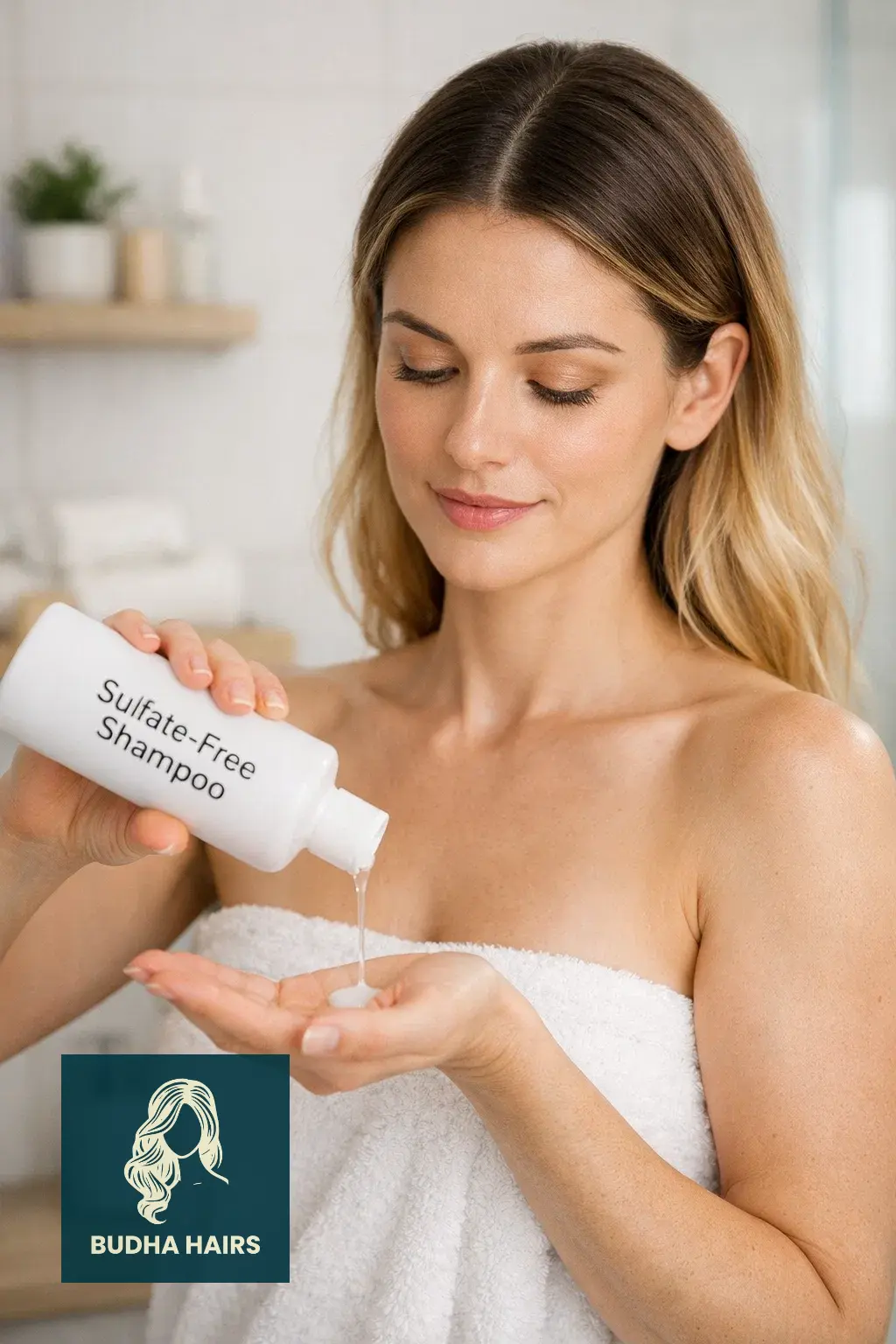
6. Switch To Sulfate Free Shampoo
The detergents you use matter immensely, so we strongly advise you to Switch To Sulfate Free Shampoo during the colder months. Sulfates like Sodium Lauryl Sulfate (SLS) are powerful cleaning agents that create lots of foam, but they are often too harsh for winter skin, stripping away beneficial microbes and oils along with the dirt. I have found that switching to a creamy, low-lather cleanser can reduce Dry Scalp During Winter symptoms by half within a week. We recommend looking for formulas labeled “hydrating,” “moisturizing,” or “soothing,” which often contain ingredients like aloe, glycerin, or oils.
In my experience, a sulfate-free wash cleanses without disrupting the acid mantle of the scalp. We suggest focusing the shampoo only on your roots and massaging gently, rather than scrubbing aggressively. The goal is to clean the scalp without leaving it “squeaky clean,” as that squeak indicates the moisture barrier is gone. We find that these gentler shampoos might not lather as much, but they are far superior for maintaining scalp health. By making this seasonal switch, you ensure that your cleansing routine supports hydration rather than working against it.
7. Limit Heat Styling Tool Usage
Heat styling is a major moisture thief, so you should Limit Heat Styling Tool Usage like blow dryers and flat irons. I always explain that blasting high heat directly onto your roots evaporates the water content in your skin cells, leading to immediate dryness and potential flaking. In winter, your scalp is already battling dry air; adding a blow dryer to the mix accelerates the dehydration process. We recommend letting your hair air-dry about 80% of the way before using a dryer on a low or cool setting to finish the style.
If you must use heat, always apply a heat protectant spray to your hair and try to direct the airflow down the hair shaft rather than directly at the scalp. We find that protective styles like braids or twists are great in winter because they require less daily heat manipulation. When I reduce my heat usage, my scalp feels significantly less sensitive and itchy. It is a preventative measure that preserves the integrity of both your hair and skin. By minimizing thermal exposure, you allow your scalp to retain its natural oils, which are its best defense against winter dryness.
8. Exfoliate Scalp Regularly With Scrub
Just like the skin on your face, your head needs you to Exfoliate Scalp Regularly With Scrub to prevent dead skin accumulation. I have found that in winter, cell turnover can slow down or become erratic, leading to a buildup of dry flakes that block moisturizers from penetrating. A gentle physical exfoliant helps to lift these flakes and unclog hair follicles, allowing your scalp to “breathe.” We recommend using a scalp scrub once every two weeks; over-exfoliating can cause irritation, so moderation is key. This prevention step is vital for avoiding the layer of debris that causes winter itchiness.
When applying a scrub, I section my damp hair and apply the product directly to the roots, massaging in gentle circular motions. We prefer sugar-based scrubs over salt for dry scalps because sugar is a natural humectant that dissolves without stinging. We find that clearing away the dead layer allows your hydrating serums and oils to actually reach the living skin cells where they are needed. By keeping the surface clear, you stimulate blood flow and prevent the bacteria trap that leads to dandruff. It results in a fresher, healthier, and flake-free scalp environment.
9. Reduce Washing Frequency In Winter
One of the easiest ways to conserve moisture is to Reduce Washing Frequency In Winter compared to your summer routine. I often tell my readers that you simply don’t sweat as much in December as you do in July, so your scalp doesn’t need to be stripped of its oils as often. Washing too frequently removes the sebum that acts as a natural conditioner and protective barrier against the cold wind. We recommend stretching your wash days; if you usually wash every other day, try every three days. If you wash weekly, try every 10 days if your hair type allows.
In between washes, you can use a dry shampoo or a refreshing tonic to keep your scalp feeling clean without water. We find that this “training” period allows the scalp to rebalance its oil production, often resulting in less grease over time. When I wash less often, my scalp feels more comfortable and less tight. It is a simple, zero-cost strategy that works with your body’s biology. By washing less, you preserve the natural lipids that are essential for keeping your scalp soft and supple during the dry winter months.
10. Manage Stress To Prevent Flareups
Finally, we cannot ignore the mind-body connection, so you must Manage Stress To Prevent Flareups of scalp conditions. I have researched how high cortisol levels (stress hormones) can trigger inflammation and disrupt the skin’s barrier function, making you more susceptible to dryness, eczema, and psoriasis. Winter can be a stressful time with holidays and shorter days (SAD), which often correlates with worsening skin issues. We recommend incorporating stress-reducing practices like meditation, yoga, or simply taking time to unwind into your daily routine.
In my experience, when stress is high, the scalp is often the first place to show signs of distress through itching and flaking. We find that getting adequate sleep is also part of stress management; it is when your body repairs skin cells. When I prioritize relaxation, I notice my skin is clearer and less reactive. It is a holistic approach to prevention. By keeping your stress levels in check, you are chemically signaling your body to reduce inflammation. This internal balance is the ultimate prevention tip for maintaining a healthy, resilient scalp all winter long.
Proper scalp care is essential for promoting hair growth and maintaining edges. Implementing routines inspired by How to Grow Edges Back Fast ensures your hair stays strong, healthy, and resilient despite seasonal challenges.
Pro Tips
- Seal with Oil: After moisturizing your scalp, always seal it with a light oil like almond or grapeseed. This locks the hydration in and prevents the dry winter air from evaporating the moisture immediately.
- Don’t Scratch: It is difficult, but scratching damages the skin barrier and can introduce bacteria, leading to infections. I recommend tapping the itchy area or applying a cold compress instead of using your fingernails.
- Check Your Diet: Winter diets can be heavy on sugar and carbs, which promote inflammation. Try to keep eating antioxidant-rich fruits and vegetables to support skin health from the inside.
- Sanitize Your Hats: Winter hats can harbor sweat, bacteria, and dead skin. We suggest washing your beanies and hats weekly to prevent re-introducing irritants to your scalp.
- Patch Test Remedies: Before applying essential oils like tea tree or peppermint to your whole head, always do a patch test behind your ear to ensure you don’t have an allergic reaction, which would worsen the dryness.
- Message Daily: Even without oil, massaging your scalp for 5 minutes a day increases blood flow. This brings oxygen and nutrients to the hair follicles and skin, promoting better health and oil distribution.
FAQs
Conclusion
Navigating Dry Scalp During Winter doesn’t have to be a season-long battle of itchiness and discomfort. By understanding that your scalp needs extra protection and moisture during these cold months, you can adjust your routine to keep it healthy. From the simple act of lowering your shower temperature to the indulgence of a coconut oil mask, these remedies and prevention tips are effective tools in your arsenal. I hope this guide empowers you to take control of your scalp health. Remember, consistency is key; treating your scalp with the same care you give your face will ensure you emerge from winter with healthy skin and luscious, strong hair. Stay warm and stay hydrated!

I’m Budha Styler, a hair enthusiast who loves creating beautiful, confidence-boosting looks that feel true to who you are. I’m passionate about exploring new trends, techniques, and textures, and I enjoy turning that knowledge into simple, inspiring ideas anyone can try. Through my work, I hope to help you express your unique style, feel amazing in your own hair, and discover everyday looks that make you shine.