How to Make My Hair Shine is one of the most frequent requests I get from readers who feel their locks look dull, lifeless, or matte despite their best efforts. We all crave that mirror-like, glass-hair finish that reflects light beautifully, but achieving it often feels like a mystery. I always explain that shine is essentially a reflection of light off a smooth surface; if your hair cuticle is raised, damaged, or coated in residue, it absorbs light rather than reflecting it. Therefore, the secret to glossy hair isn’t just about piling on products—it is about creating a healthy, smooth canvas. Throughout this guide, I will share the exact techniques and lifestyle changes we use to transform frizzy, lackluster strands into a radiant mane. From the temperature of your water to the type of pillowcase you sleep on, every detail contributes to the overall luminosity of your hair.
When we dive deeper into How to Make My Hair Shine, it becomes clear that moisture balance and cuticle health are the two pillars of success. In my experience, many people unknowingly strip their hair of its natural oils through harsh washing or excessive heat styling, which leads to a rough texture that cannot shine. We believe in a holistic approach that combines immediate topical fixes—like hair oils and serums—with long-term habits that improve the integrity of the hair shaft.
How to Make My Hair Shine
I will walk you through 15 proven tips, starting with the first 10 in this section, that cover everything from mechanical damage to chemical treatments. Whether you have curly, straight, or textured hair, these methods are universal because they focus on the science of hair health. By implementing these steps, you are not just masking the problem; you are actively repairing your hair to reveal its natural, brilliant shine.
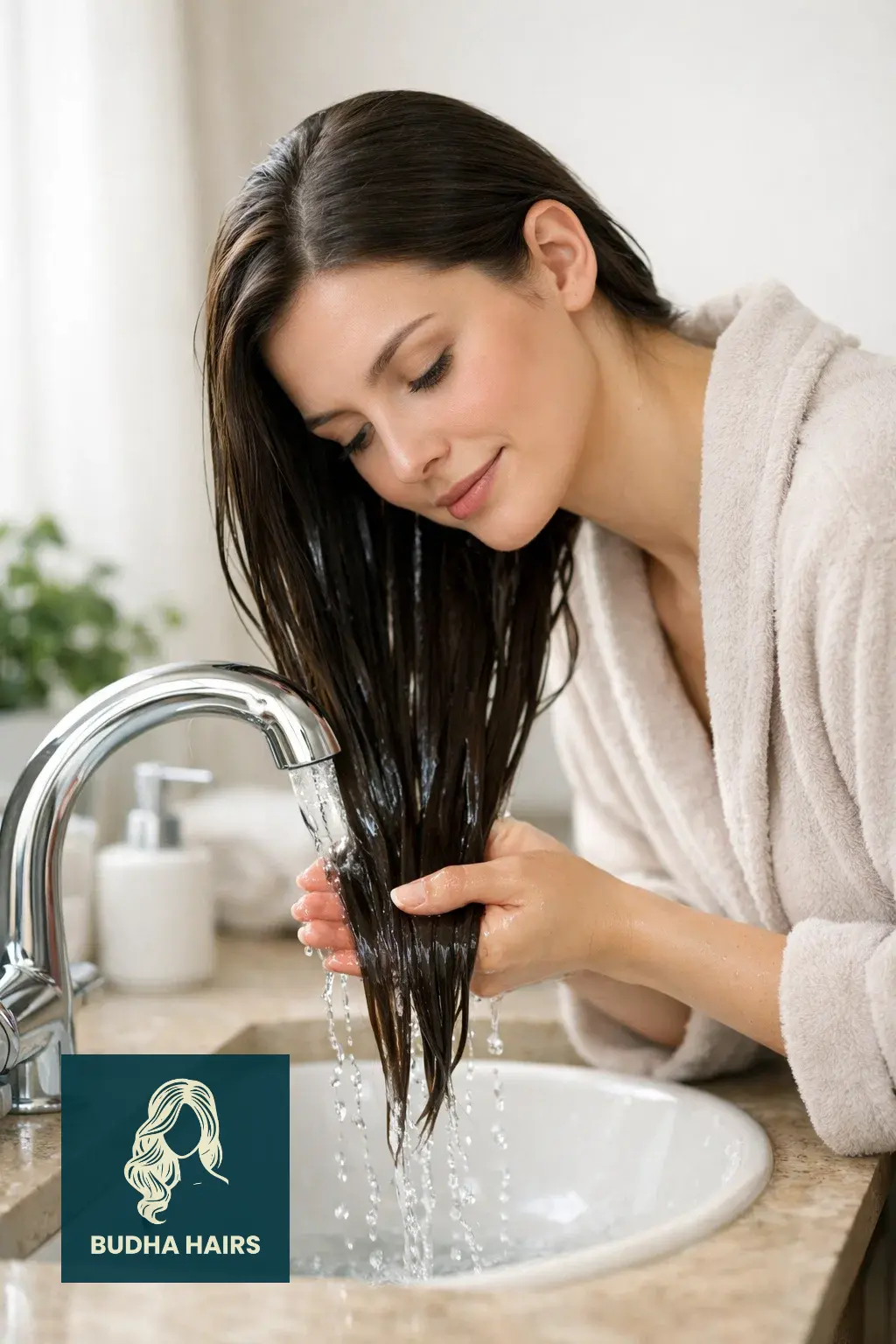
1. Finish With A Cold Water Rinse
One of the oldest and most effective tricks in the book is to Finish With A Cold Water Rinse at the end of every shower. I have found that while warm water is excellent for opening the cuticle to let shampoo and conditioner penetrate, it can leave the hair shaft slightly raised if used exclusively. By switching to cool or cold water for your final rinse, you physically shock the hair cuticle into closing tight. This flattened surface is crucial because it allows light to bounce off the hair strands more evenly, creating that coveted high-shine finish. We recommend enduring the chill for at least 30 seconds to ensure the cuticles are sealed completely, which also helps to lock in the moisture from your conditioner.
Furthermore, a cold rinse helps to minimize frizz, which is the enemy of shiny hair. When the cuticle is open, humidity can enter the shaft and cause it to swell, resulting in a rough, dull texture. In my experience, clients who adopt this simple habit notice a significant difference in smoothness within just a week. It also helps to invigorate the scalp and improve blood circulation, which supports healthier hair growth in the long run. We advise keeping a handheld showerhead or a cup in the shower if you can’t stand the cold on your body, so you can target just the scalp and lengths. This zero-cost technique is a foundational step in learning How to Make My Hair Shine naturally.
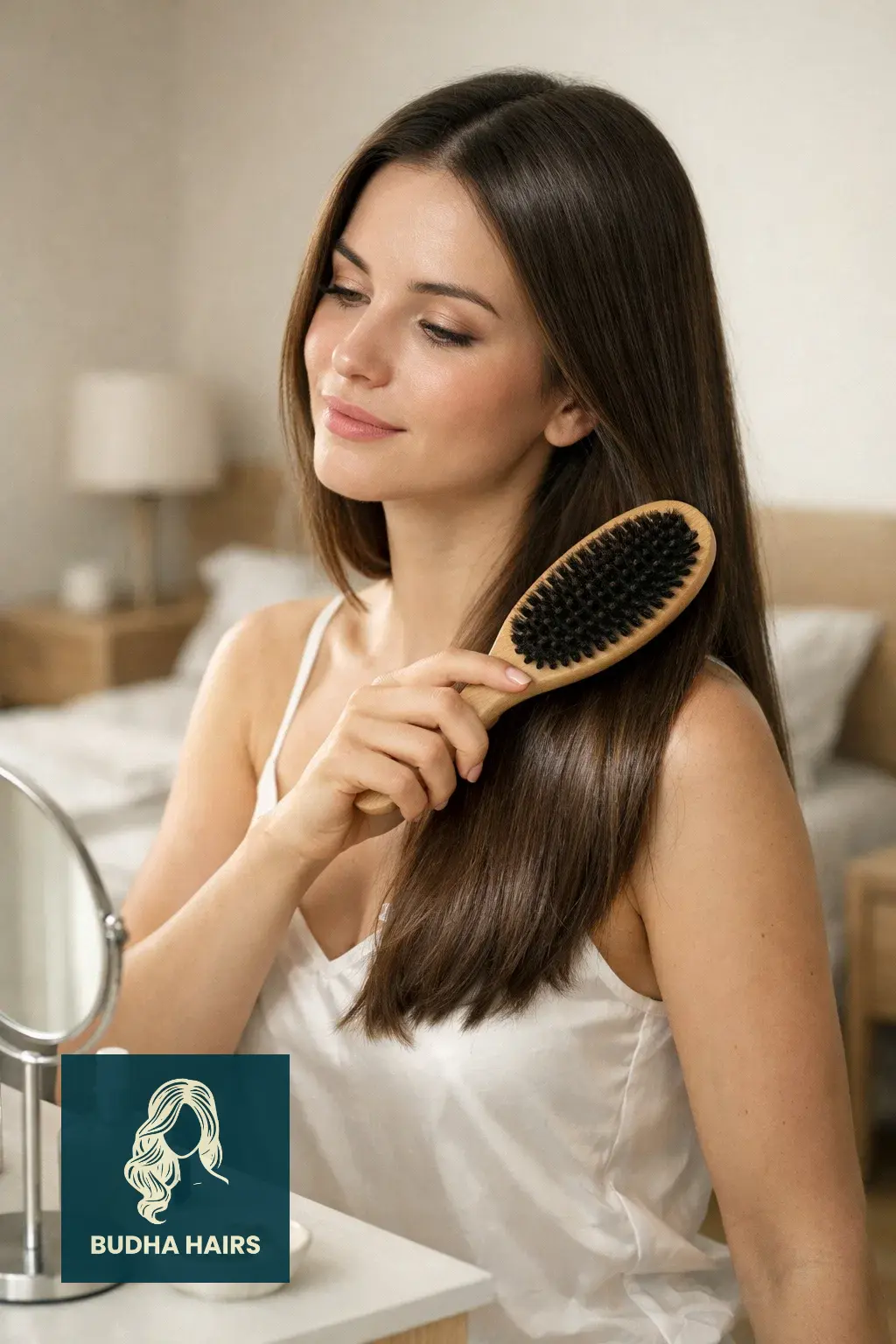
2. Use A Boar Bristle Brush
If you want to naturally condition your hair, you should Use A Boar Bristle Brush to distribute your scalp’s natural oils down to the ends. I often tell my readers that sebum is the best hair serum nature provides; it is perfectly pH-balanced and designed to protect and hydrate your strands. However, without proper brushing, this oil sits at the roots—making them greasy—while the ends remain dry and dull. We love boar bristle brushes because the natural fibers have a structure similar to human hair, allowing them to pick up the oil and sweep it along the hair shaft. This process coats each strand in a thin layer of lipid, instantly increasing the glossy appearance and reducing mechanical friction.
When we use this tool, we recommend brushing dry hair gently before bed or before washing. Start from the roots and work your way to the tips in long, smooth strokes. In my opinion, this is superior to plastic brushes which can cause static and breakage. Regular brushing also gently exfoliates the scalp, removing dust and product buildup that can block light reflection. For those with curly hair who cannot brush dry, we suggest using a mixed-bristle brush when doing a sleek style to smooth the surface. By mechanically polishing the hair with a quality hairbrush, you are essentially buffing your strands to a high shine, much like you would polish a shoe.
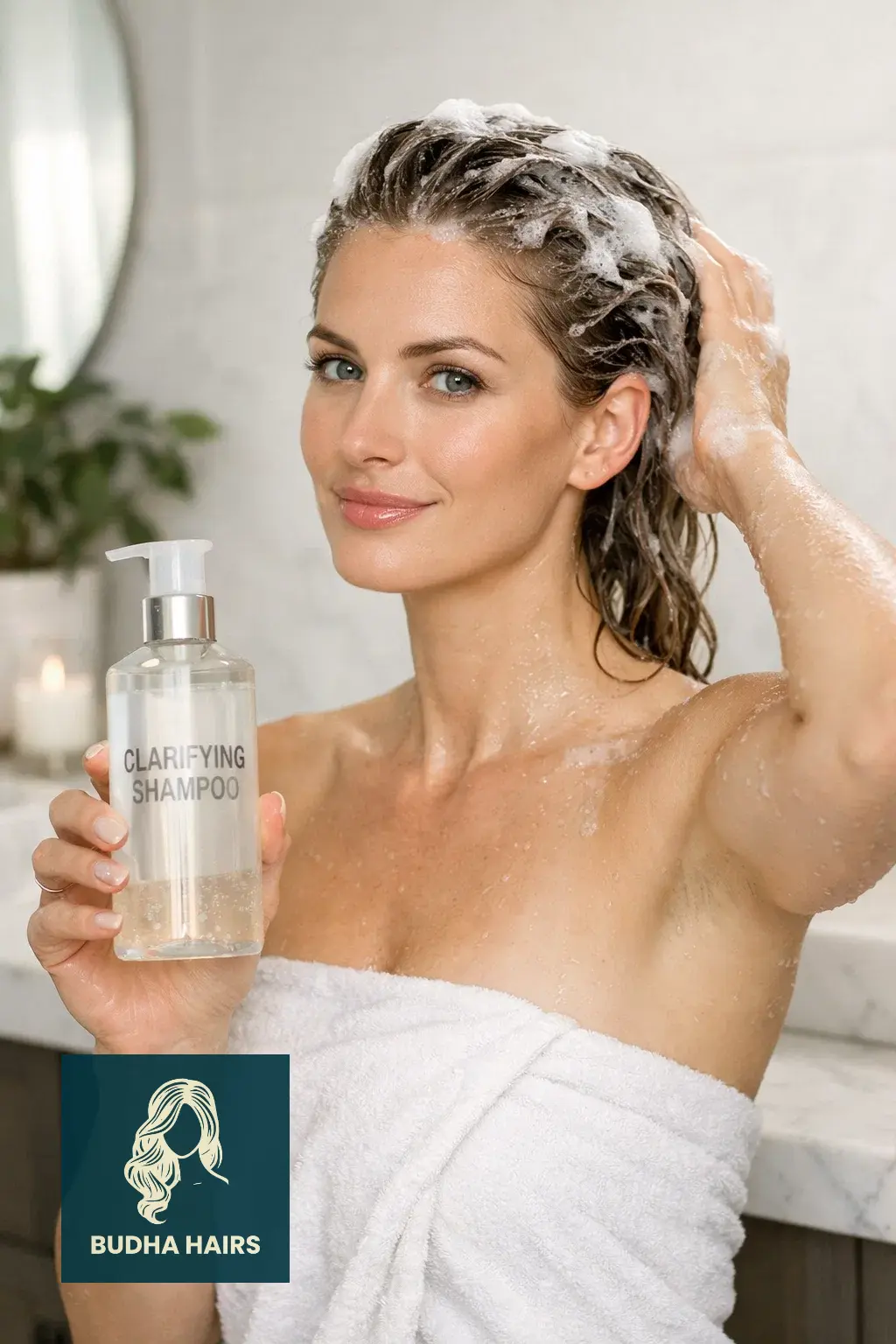
3. Apply A Clarifying Shampoo Weekly
Product buildup is a silent shine-killer, so it is essential to Apply A Clarifying Shampoo Weekly to reset your hair canvas. I frequently see women layering serums, dry shampoos, and heat protectants that contain non-water-soluble silicones. Over time, these ingredients form a cloudy film that coats the hair, making it look matte and feel heavy. We find that a standard moisturizing shampoo often isn’t strong enough to remove these stubborn residues. A clarifying wash uses stronger surfactants to strip away this gunk, mineral deposits from hard water, and excess pollutants. Once this dulling layer is removed, the true surface of your hair is revealed, which is often naturally shinier than you realized.
However, balance is key; we advise against using these strong shampoos every day as they can be drying. When I use a clarifier, I always follow up with a deep hydrating mask to replace the moisture. Think of this step as exfoliating your skin before applying moisturizer—it allows your subsequent products to work much better. We recommend looking for clear formulas rather than creamy ones, as they are typically designed for deep cleaning. By incorporating a deep cleanse into your routine, you ensure that light can reflect directly off your hair strands rather than being diffused by a layer of old product and dirt.
4. Sleep On A Silk Pillowcase
To protect your shine overnight, you must Sleep On A Silk Pillowcase instead of traditional cotton bedding. I always explain that cotton is an absorbent material; it acts like a sponge, soaking up the precious moisture and oils from your hair while you sleep. This leaves your hair dry and lackluster by morning. Furthermore, the weave of cotton fabric is relatively rough, causing friction that roughens the cuticle as you toss and turn. We love silk or satin pillowcases because they provide a slippery surface that allows hair to glide without resistance. This preserves the smoothness of the hair shaft, which is directly correlated to how much the hair shines.
In my experience, making this switch is one of the easiest “lazy girl” hacks for better hair. You literally improve your hair while you sleep. We find that silk also helps to preserve your hairstyle, meaning you need less heat styling the next day—another win for hair health. If a silk pillowcase is out of your budget, a satin bonnet or scarf works just as well to encase the hair. The reduction in friction means fewer split ends and less frizz, both of which disrupt the light reflection we are aiming for. By investing in silk bedding, you are prioritizing the physical integrity of your hair cuticle, ensuring you wake up with smooth, radiant hair.
Knowing how to make my hair shine starts with proper hydration and the right styling techniques. Sleek, glossy finishes are especially important for formal looks inspired by Prom Hairstyles for Strapless Dresses, where healthy shine enhances the overall appearance.

5. Incorporate A Hair Oil Treatment
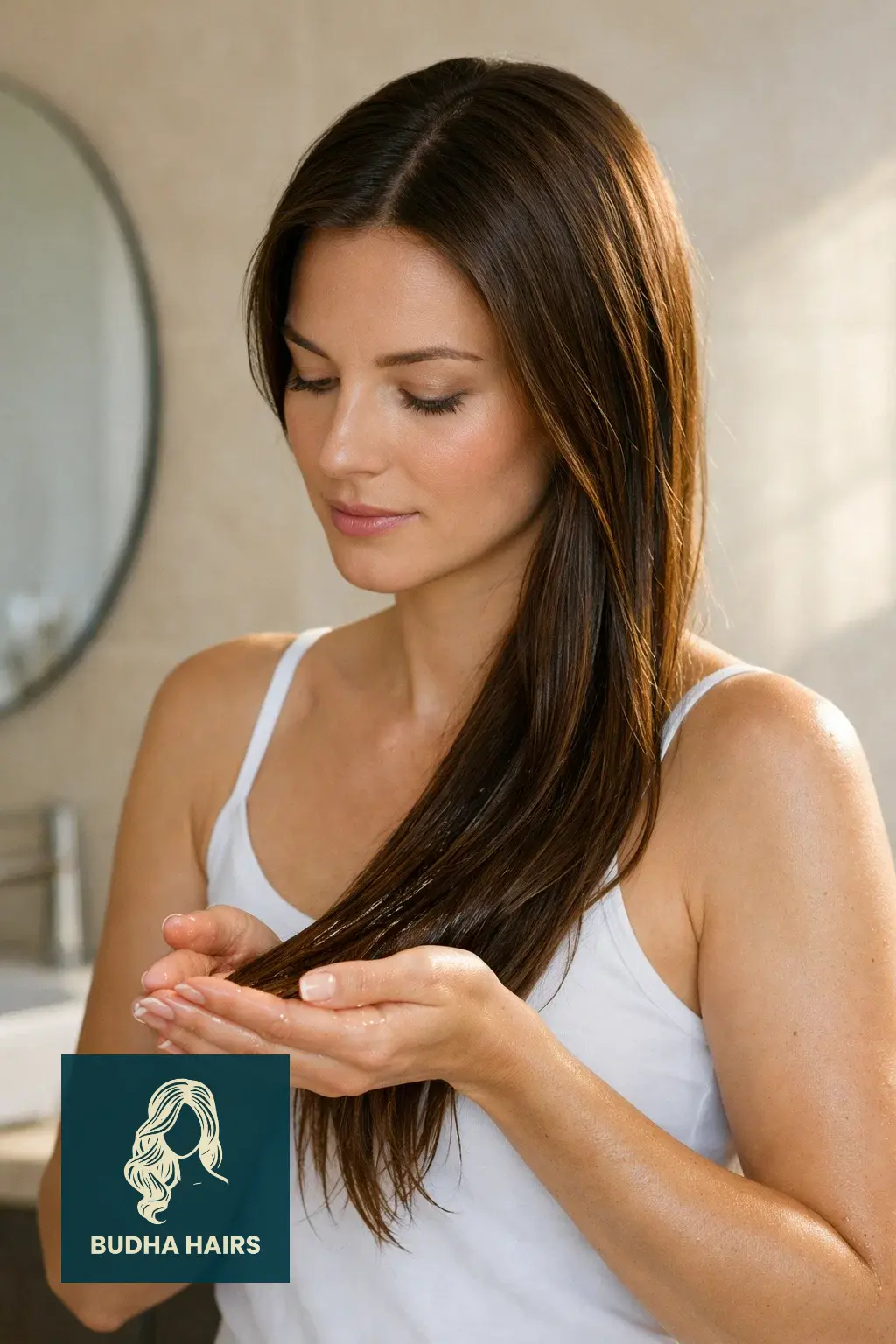
Dry hair absorbs light, so to get that reflective quality, you should Incorporate A Hair Oil Treatment into your regimen. I am a huge fan of oils like Argan, Jojoba, and Grapeseed because they mimic the natural lipids of the hair. We recommend using oil in two ways: as a pre-shampoo treatment to protect the hair from harsh water, or as a finishing product to seal the cuticle. When applied to damp or dry ends, a high-quality hair serum fills in the microscopic gaps and cracks in a damaged cuticle. This creates a temporary smooth surface that reflects light brilliantly, giving you that instant “glass hair” effect.
When applying oil, less is often more. I advise warming a few drops in your palms and smoothing it over the mid-lengths and ends, avoiding the roots to prevent greasiness. We find that lightweight oils are better for fine hair, while heavier oils like coconut or castor are suited for thick or textured hair. This step also acts as a sealant, locking in the hydration from water or leave-in conditioners. Shiny hair is hydrated hair, and oil is the gatekeeper that keeps that hydration inside. By making oiling a habit, you provide a protective barrier that combats environmental dullness and keeps your strands looking supple and glossy.
6. Do An At-Home Gloss Treatment
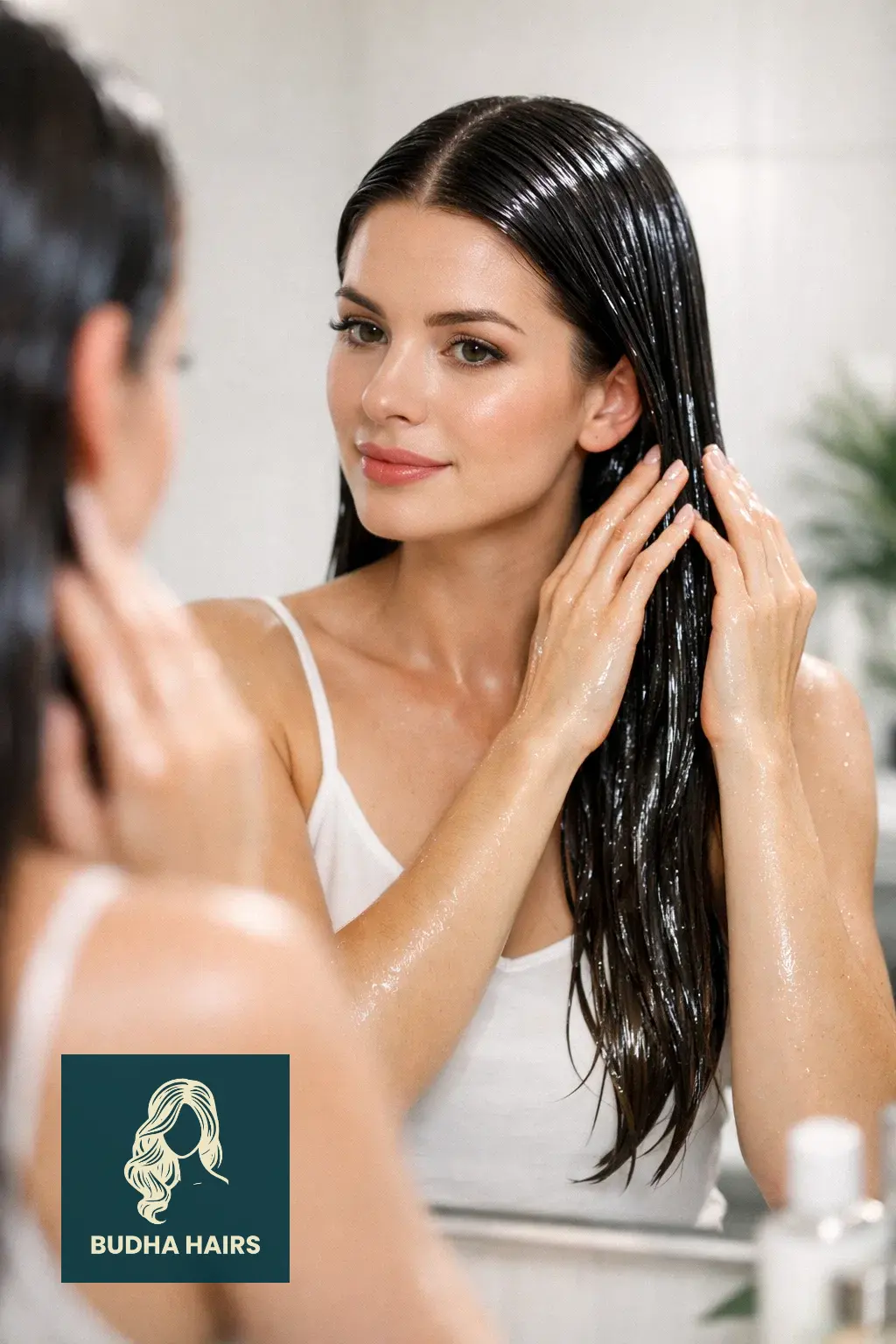
If you want salon-quality results instantly, you should Do An At-Home Gloss Treatment between color appointments. I love these products because they are essentially semi-permanent treatments that coat the hair in a clear or tinted shine-boosting formula. Unlike permanent dye, a hair gloss closes the cuticle tight and conditions the hair deeply, often correcting brassiness in the process. We find that this is the fastest way to revive dull, faded hair color, which naturally looks less shiny than vibrant color. Many modern glosses are acidic, which helps to lower the pH of the hair, smoothing the texture significantly.
We recommend using a clear gloss if you don’t want to change your color; it acts like a topcoat for your nails, adding a layer of brilliant shine that lasts for weeks. When I use a gloss, I apply it in the shower after shampooing and let it sit for the recommended time before rinsing. The results are undeniable—hair looks healthier, feels softer, and reflects light like a mirror. It is a fantastic option for special occasions or whenever your hair feels particularly “blah.” By utilizing glossing products, you are using professional-grade technology to fill porosity and create a smooth, light-reflective surface on every strand.
7. Use A Microfiber Towel
The way you dry your hair matters, so please Use A Microfiber Towel instead of rough terry cloth bath towels. I often see people vigorously rubbing their hair dry, which is a disaster for the cuticle; the coarse loops of a standard towel rip at the hair and cause friction-induced frizz. Once the cuticle is roughed up, the hair looks dull and fuzzy. We love microfiber towels or even simple cotton t-shirts because the fabric is much smoother and finer. They absorb water rapidly without the need for rubbing, allowing you to gently squeeze the moisture out.
In my experience, switching to this method drastically reduces the “halo of frizz” that many people fight. We recommend wrapping your hair in a turban style and letting the towel wick away the water for 10-15 minutes. This gentle drying process keeps the cuticle lying flat, which is the prerequisite for shiny hair. It also reduces the time you need to use a blow dryer, sparing your hair from excess heat damage. By treating wet hair—which is in its most fragile state—with care, you preserve the smooth outer layer needed for a lustrous finish.
Hair shine is also a sign of strong, well-cared-for strands. Maintaining a consistent routine similar to those used in How to Grow Edges Back Fast helps reduce breakage and promotes smoother, more radiant hair.

8. Always Use Heat Protectant
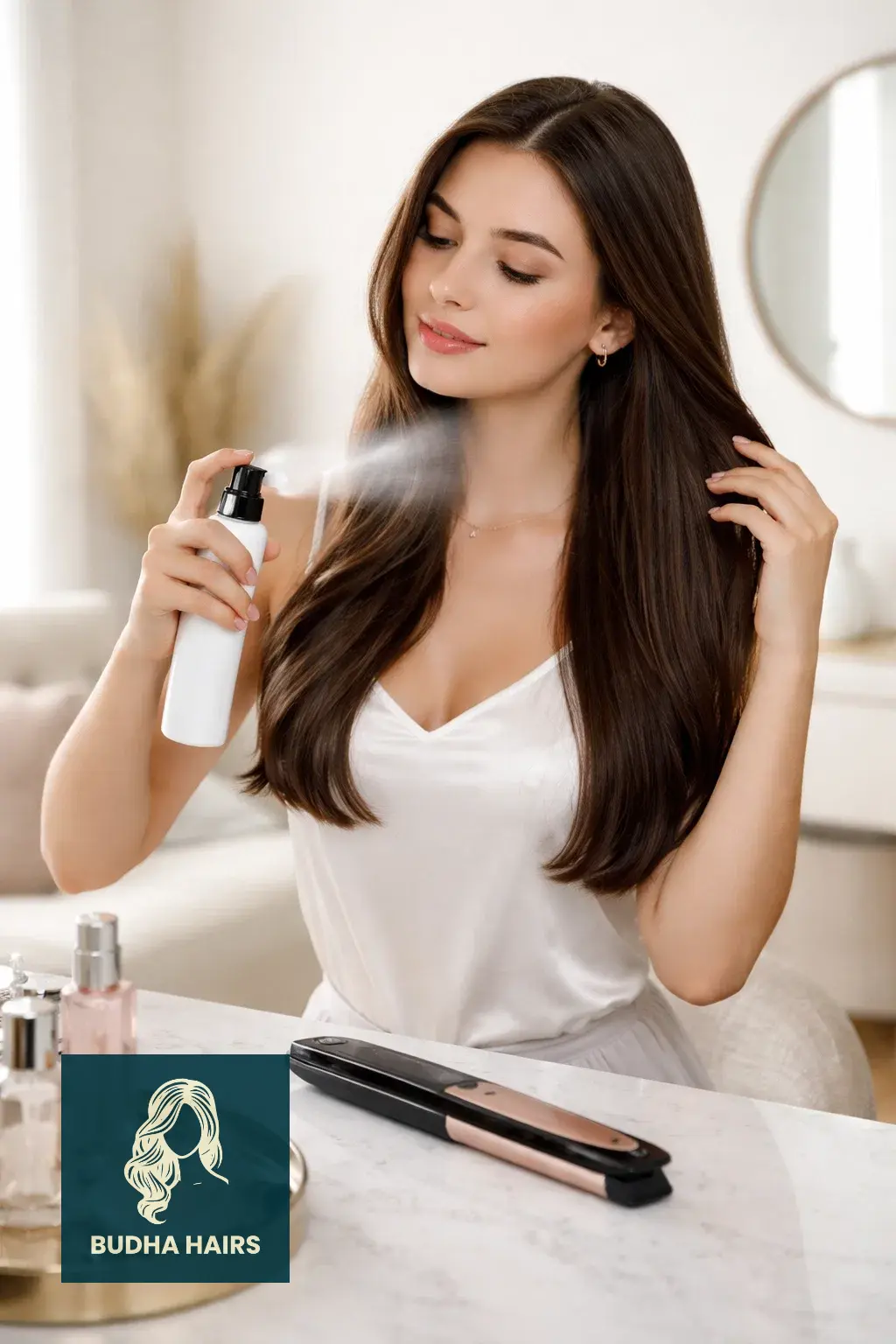
Heat damage is irreversible and leads to a matte appearance, so you must Always Use Heat Protectant before using hot tools. I cannot stress this enough: “frying” your hair creates tiny bubbles inside the hair shaft and cracks the cuticle, making it impossible for the hair to shine. We view heat protection sprays as a mandatory shield; they contain ingredients like silicones or copolymers that form a barrier, distributing the heat evenly and preventing moisture loss. Without this barrier, the direct heat zaps the hydration instantly, leaving hair straw-like and dull.
We recommend applying the protectant to damp hair before blow-drying and again lightly before flat ironing. In my opinion, you should also lower the temperature of your tools; you rarely need to go above 350-375 degrees Fahrenheit. We find that many people torch their hair at 450 degrees unnecessarily. A good heat protectant also adds a bit of slip, helping the iron glide smoothly which further polishes the hair. By prioritizing thermal protection, you prevent the structural damage that robs hair of its natural ability to reflect light, keeping your style looking healthy and glossy.
9. Deep Condition With A Mask
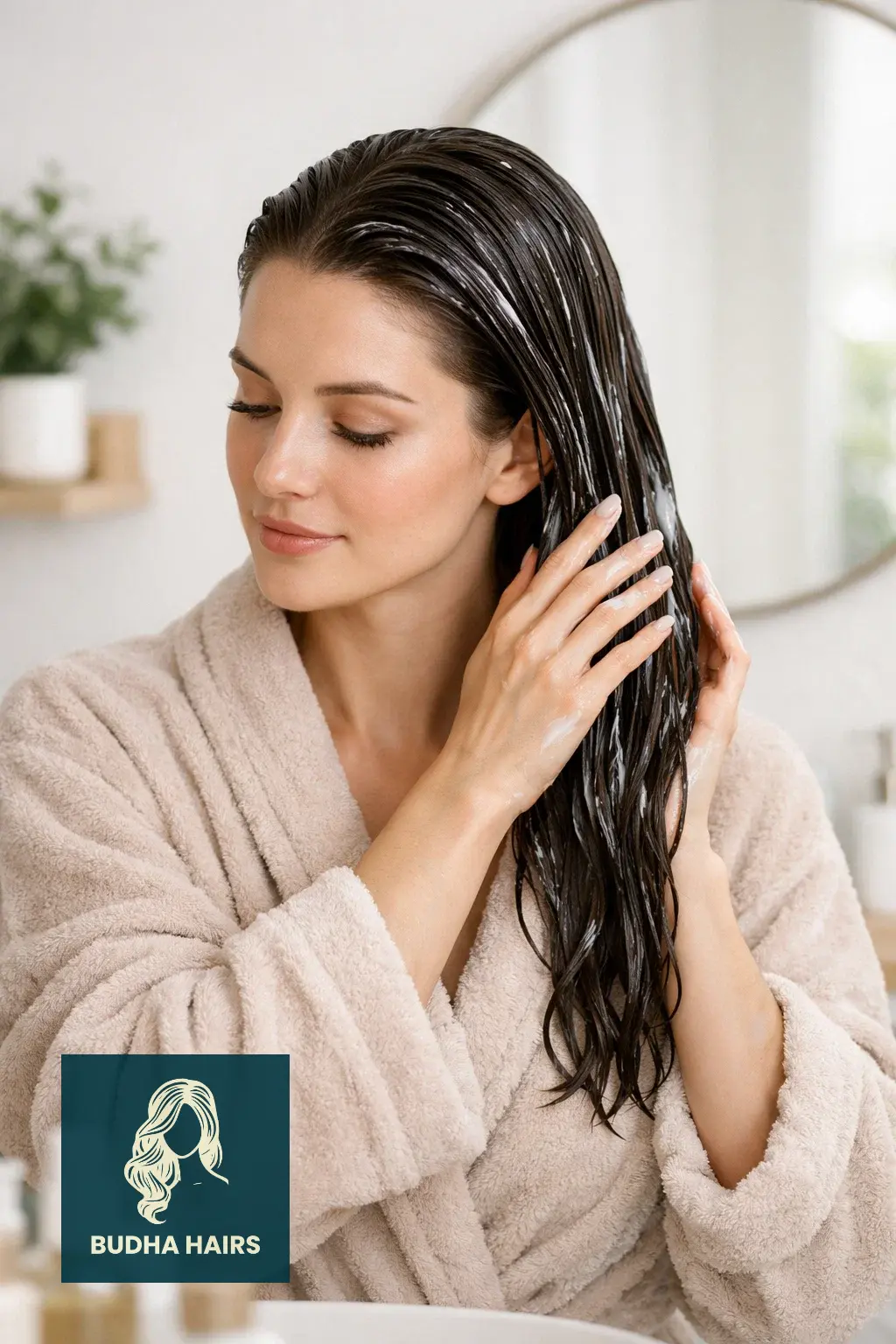
Hydration creates the plumpness needed for reflection, so Deep Condition With A Mask at least once a week. I find that regular conditioners are great for detangling, but they often work only on the surface. A deep conditioning mask is formulated with smaller molecules that penetrate the hair shaft to repair and moisturize from within. We recommend looking for ingredients like keratin, silk proteins, or shea butter depending on your porosity. When the hair is internally hydrated, it is more elastic and the cuticle is less likely to lift.
When I do a treatment, I apply the mask generously to clean, damp hair and cover it with a shower cap. Adding a bit of heat—like a warm towel or sitting under a hooded dryer—opens the cuticle slightly to let the goodies soak in deeper. We find that this weekly ritual restores the moisture balance lost to environmental exposure. Dry, brittle hair absorbs light, appearing dull, while hydrated hair provides a smooth surface for light to bounce off. By committing to intensive hydration, you ensure that your hair remains soft, pliable, and capable of a brilliant shine.
10. Try An Apple Cider Vinegar Rinse
For a natural chemical exfoliation that restores pH, Try An Apple Cider Vinegar Rinse once a fortnight. I love this DIY remedy because human hair is naturally acidic (around pH 4.5-5.5), but water and many shampoos are alkaline. This alkalinity causes the cuticle to swell and lift, leading to tangles and dullness. Apple cider vinegar (ACV) is acidic, so rinsing with it forces the cuticle to close and lie flat immediately. We find that this smooths the hair surface dramatically, making it easier to detangle and significantly shinier.
To make the rinse, we recommend mixing one part raw ACV with three parts water. Pour it over your hair after shampooing, let it sit for a minute, and then rinse with cool water. In my experience, this also helps to dissolve mineral buildup from hard water and remove soap scum. Don’t worry about the smell; it evaporates as soon as the hair dries. This simple kitchen staple acts as a powerful shine booster and scalp balancer. By resetting your hair’s pH, you create the optimal environment for smoothness and natural luster.

11. Eat Foods Rich In Omega-3s
True radiance starts from within, so it is vital to Eat Foods Rich In Omega-3s to nourish your hair follicles. I always remind my readers that hair is a non-essential tissue, meaning your body will send nutrients to vital organs first; if your diet is lacking, your hair is the first thing to suffer. We find that a diet rich in healthy fats—like salmon, avocados, walnuts, and chia seeds—provides the internal lubrication needed for shiny hair. Omega-3 fatty acids help to keep the scalp hydrated and prevent dry, brittle strands that look dull. When we improve our nutrition, the new hair that grows in is stronger, more elastic, and naturally has a smoother texture.
In addition to healthy fats, hydration is equally important. I recommend drinking plenty of water throughout the day to flush out toxins and keep cells hydrated. We often see a direct correlation between dehydration and limp, matte-looking hair. Incorporating vitamins like Biotin and Vitamin E can also support hair health, protecting the lipid layer of the hair shaft. By focusing on a nutrient-dense diet, you are building a strong foundation. No amount of expensive serum can fully replicate the natural luster that comes from a healthy, well-nourished body. It is the most sustainable way to maintain How to Make My Hair Shine long-term.
12. Get Regular Trims For Health
It might seem counterintuitive if you are growing your hair out, but you must Get Regular Trims For Health to maintain a glossy appearance. I find that split ends are the biggest culprit when it comes to frizzy, dull-looking hair. When the end of the hair shaft splits, it travels up the strand, causing the cuticle to fray and creating a rough texture that absorbs light instead of reflecting it. We recommend visiting your stylist every 6 to 8 weeks for a “dusting”—a very micro trim that only removes the damaged tips without sacrificing length. This simple maintenance keeps the bottom of your hair looking thick and polished.
We often compare split ends to a raveled rope; once it starts unravelling, it looks messy and lacks structure. By removing these dead ends, you instantly improve the overall silhouette and smoothness of your hair. In my experience, freshly cut ends always look sharper and shinier. If you skip trims, the damage accumulates, leading to breakage and a “straw-like” feel that no product can fix. A precision cut ensures that your hair lies flat and moves fluidly. Prioritizing regular maintenance is a non-negotiable step for anyone serious about having healthy, reflective hair.
13. Don’t Over-Wash Your Hair
One of the most common mistakes is washing too frequently, so please Don’t Over-Wash Your Hair if you want to preserve its natural sheen. I often explain that shampoos are detergents designed to remove oil, but stripping your scalp of all its natural sebum leaves the hair unprotected and dry. Your natural oils are the best conditioning agent available. We recommend washing your hair every 2 to 3 days, or even less frequently if you have textured or dry hair. This allows the natural oils to travel down the hair shaft, coating it and providing a natural gloss.
If you feel greasy in between washes, I suggest using a dry shampoo just at the roots, or rinsing with water and conditioning the ends only. We find that “training” your hair to go longer between washes can take time, but the payoff is incredible. Your scalp eventually balances its oil production, and your lengths become naturally softer and shinier. Over-washing creates a cycle of dryness that requires heavy synthetic products to correct. By respecting your body’s natural oil production, you allow your hair to protect itself, resulting in a healthy, vibrant shine that doesn’t wash down the drain.
14. Use A Leave-In Conditioner
To keep moisture locked in all day, you should Use A Leave-In Conditioner after every wash. I consider this the “primer” for your hair; it fills in porosity and smooths the cuticle before you apply styling products. How to Make My Hair Shine relies on moisture retention, and rinse-out conditioners often aren’t enough for thirsty strands. We recommend finding a lightweight spray for fine hair or a rich cream for thick hair. A good leave-in treatment provides a barrier against environmental zappers like wind, sun, and dry air, which can suck the moisture right out of your strands.
When applying, I focus on the mid-lengths and ends where the hair is oldest and most damaged. We find that this step significantly reduces static and flyaways, which disturb the smooth surface needed for light reflection. It also aids in detangling, preventing mechanical breakage while brushing wet hair. Think of it as a daily moisturizer for your hair, just like you use for your face. By keeping the moisture levels consistent, you prevent the cuticle from lifting and becoming rough. This creates a uniform surface that allows for maximum light reflection and touchable softness.
15. Invest In An Ionic Hair Dryer
The tools you use make a massive difference, so we suggest you Invest In An Ionic Hair Dryer to speed up drying time and boost shine. I love ionic technology because it emits negative ions that break down water molecules faster, allowing them to evaporate without excessive heat. Furthermore, these negative ions neutralize the positive charge of static electricity, which helps to seal the hair cuticle down tightly. We find that drying your hair with an ionic tool results in a sleeker, smoother finish compared to standard dryers which can leave hair frizzy and puffy.
We recommend using the dryer with a concentrator nozzle attachment. This directs the airflow downwards along the hair shaft—from root to tip—which physically pushes the cuticle flat. In my experience, blowing air upwards (against the grain) ruffles the cuticle and creates a matte, messy texture. Using the cool shot button at the end of your blowout sets the style and locks in the shine. While professional tools can be an investment, they pay off by preserving the integrity of your hair. By using advanced heat technology, you minimize damage and maximize the glossy finish you are striving for.
Shorter styles benefit just as much from shine-focused care. Polished looks inspired by Bob Hairstyles for Older Black Women highlight glossy texture and clean lines, creating a refined and confident finish.
Pro Tips
- Avoid Sulfate Shampoos: Sulfates are harsh detergents that strip natural oils. I always recommend switching to sulfate-free formulas to maintain your hair’s natural moisture barrier and color vibrancy.
- Protect From Sun: UV rays oxidize hair and damage the cuticle, leading to dullness. We suggest wearing a hat or using a UV-protection hair spray when spending long hours outdoors.
- Don’t Touch Your Hair: Constant touching transfers dirt and oils from your hands to your strands, weighing them down and making them look greasy rather than shiny. Keep your hands off your finished style.
- Use A Wide-Tooth Comb: When hair is wet, it is fragile. Use a wide-tooth comb to detangle gently, starting from the ends and working up, to prevent snapping and cuticle damage.
- Clean Your Brushes: A dirty brush simply redistributes old product and dust back onto clean hair. Wash your brushes with warm soapy water once a month to ensure you are polishing, not dirtying, your strands.
- Try A Silk Scarf: On bad hair days or windy days, wrapping your hair in a silk scarf protects the cuticle from friction and environmental elements, preserving your shine for later.
FAQs
Conclusion
Achieving glossy, radiant hair is not about finding a single miracle product; it is about cultivating a routine that prioritizes the health of your hair cuticle. By understanding How to Make My Hair Shine, you move away from damaging habits like over-washing and high-heat styling, and towards nourishing practices like deep conditioning and oiling. I hope these 15 tips empower you to take control of your hair’s texture and health. Remember, consistency is key—shiny hair is healthy hair, and healthy hair takes time and care to grow. Start with the basics, be gentle with your strands, and you will soon see that brilliant, mirror-like reflection you have been dreaming of.

I’m Budha Styler, a hair enthusiast who loves creating beautiful, confidence-boosting looks that feel true to who you are. I’m passionate about exploring new trends, techniques, and textures, and I enjoy turning that knowledge into simple, inspiring ideas anyone can try. Through my work, I hope to help you express your unique style, feel amazing in your own hair, and discover everyday looks that make you shine.


